


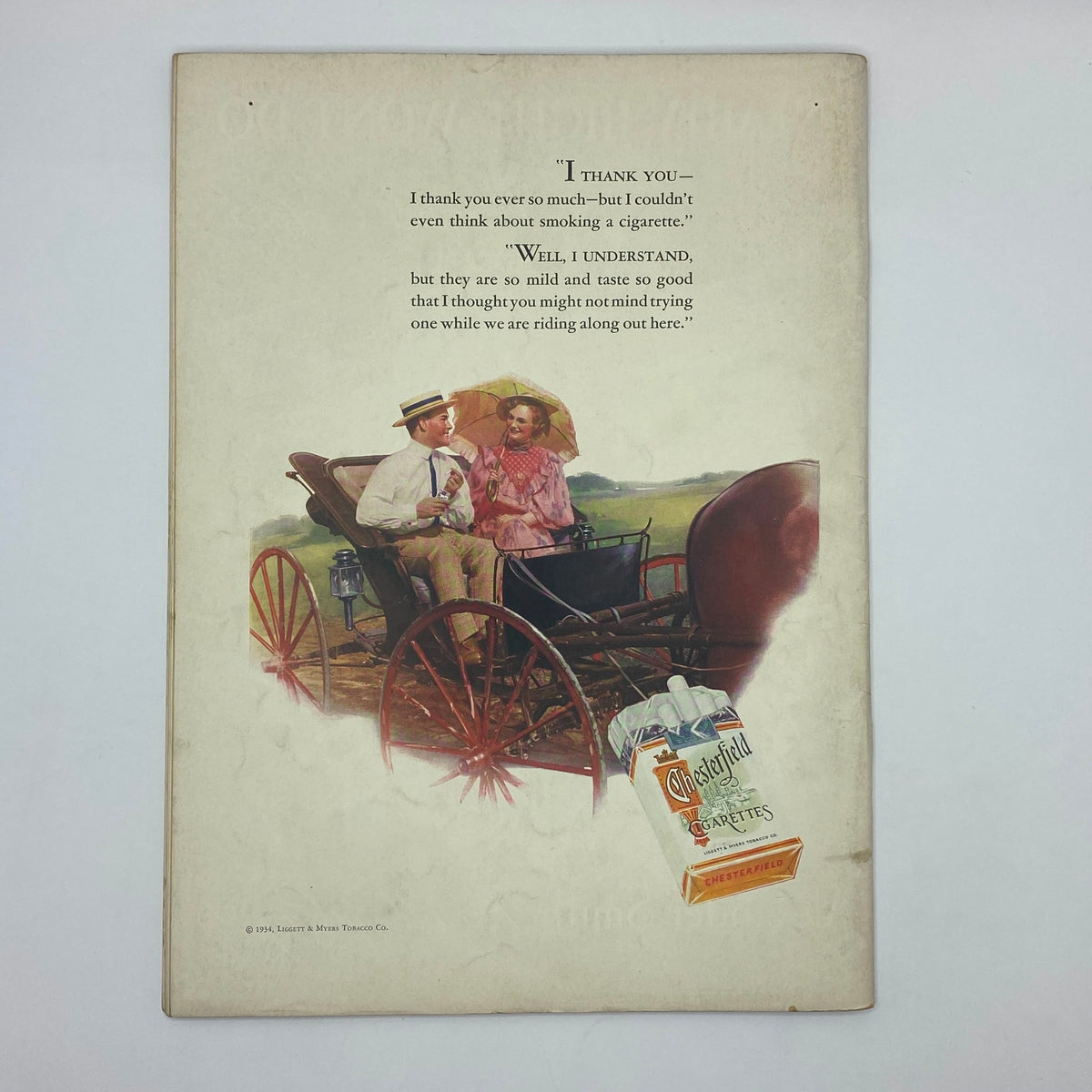


Description
Collector's Note – Why This Issue Matters
September 22, 1934 places this issue of The New Yorker in the heart of the Great Depression's most complex and politically charged phase. Franklin Roosevelt had been in office for eighteen months, the New Deal was in full operation, and the country was engaged in a sustained and sometimes bitter argument about whether and how the federal government could engineer a recovery from the worst economic catastrophe in American history. In New York, the Depression's effects were visible on every block even as the city's cultural life continued with remarkable resilience — the theater world, the publishing industry, the galleries and nightclubs that The New Yorker covered with such attentive wit were all operating, diminished but undeterred, against a backdrop of genuine economic suffering. For collectors building a documentary archive through original magazines from 1934, issues from this autumn document a particularly interesting inflection point — the New Deal midway through its first phase, American culture stubbornly vital, and the world beyond American shores beginning to darken in ways that the magazine's most attentive readers were already registering.
The cover by Harry Brown gives this issue a specific place within the magazine's mid-Depression visual history. Brown contributed cover art and illustrations to The New Yorker during the 1930s, working in the tradition of whimsical, observational illustration that the magazine's art department — shaped by founding art editor Rea Irvin — had established as its defining visual mode. The listing's description of Brown's work as depicting scenes rich with urban life, capturing the lively spirit of the era with whimsical charm, is consistent with the broader aesthetic sensibility that characterized the magazine's cover art throughout this decade. A Brown cover from September 1934 represents the work of a contributing artist who understood the magazine's visual language and deployed it to document the specific texture of 1930s New York with the lightness of touch that the format demanded. For collectors tracing the full visual history of the publication through original New Yorker issues, covers by contributing artists of this kind — skilled, characteristic of their moment, and less universally recognized than the magazine's canonical names — often represent the most historically interesting and least competed-for material available.
The timing within the magazine's seasonal calendar also deserves attention. A late September issue marks the beginning of The New Yorker's most editorially intensive period — the autumn season when the theater calendar reopened, the literary year shifted into high gear, and the magazine's critical and reportorial voices operated with their fullest engagement. In September 1934, that editorial energy was running alongside a national political atmosphere shaped by midterm election season and the ongoing debates about the New Deal's direction. The combination of cultural vitality and political urgency gives any surviving issue from this specific autumn a density that purely summer or winter numbers from the same year cannot quite replicate.
About the Publication
Founded in February 1925 by Harold Ross, The New Yorker was by the autumn of 1934 a fully established institution of American cultural life, nine years into its run and operating with the editorial confidence of a publication that had found and secured its audience. Its readership was urban, educated, and expected the combination of wit, literary quality, and intellectual seriousness that Ross enforced with unusual editorial discipline. The magazine's format was consistent and mature: "Talk of the Town" commentary opened each issue, followed by reported features, fiction, poetry, and critical reviews spanning theater, books, art, and film, all interwoven with cartoons and spot illustrations that had developed by mid-decade into one of the most celebrated traditions in American periodical art. Covers were individually commissioned works of illustration, each a complete artistic statement, produced by a rotating roster of contributing artists whose collective Depression-era output constitutes a remarkable visual record of American urban life in one of its most difficult and most creative periods.
Key Highlights Inside
- Harry Brown cover illustration: The cover is the most historically documentable feature of this issue — original artwork by a contributing illustrator known for whimsical depictions of urban life rendered with the charm and observational precision that defined The New Yorker's mid-1930s visual identity.
- New Deal midterm autumn: Published in the autumn of 1934, this issue appeared as the first midterm elections of the Roosevelt era were approaching — a political moment that dominated American public conversation and informed the magazine's commentary throughout the season.
- Depression-era New York cultural life: By late 1934, New York's cultural institutions had adapted to Depression conditions with remarkable resilience, and The New Yorker's autumn editorial content reflected that adaptation — critical, engaged, and operating at full intensity despite the surrounding economic hardship.
- Opening of the autumn editorial season: Late September marks the beginning of the magazine's most substantive editorial period, with the theater season reopening and the literary and critical calendar shifting into its highest gear.
- Period cartoons and advertising: Issues from the mid-1930s are consistently valued by collectors and cultural historians for the cartoons, spot illustrations, and advertising that together provide a granular record of everyday life, consumer culture, and social observation in Depression-era New York.
Note: Specific article titles, bylines, and interior content for this exact issue have not been independently confirmed beyond what appears in the listing. The highlights above reflect only what is verifiable from the cover credit, publication date, and the magazine's well-documented editorial format during this period.
Condition & Rarity
A surviving copy of a weekly newsstand magazine from September 1934 presenting in very good condition — with minor edge wear as the only noted imperfection — is a genuinely impressive preservation result for a publication now approaching ninety years old. The New Yorker was printed on acidic wood-pulp paper stock standard for weekly periodicals of the era, a material inherently prone to toning, brittleness, and structural degradation over time. Edge wear of the kind described is entirely consistent with honest age and does not indicate mishandling or poor storage. When evaluating any surviving copy of this issue, the meaningful criteria are the integrity and color fidelity of Brown's cover art, the completeness of all interior pages, the absence of subscription label adhesive residue or moisture damage, and the structural soundness of the spine. A copy meeting the standard described — visually strong at nearly nine decades of age, with wear confined to the margins — represents the preservation grade that serious collectors of Depression-era periodicals actively seek, particularly for issues from the first half of the 1930s where attrition rates over time have been most significant.
Looking for More Issues Like This?
Harry Brown covers from the mid-1930s are among the less commonly encountered in the New Yorker collector market, and a September 1934 date — placing it squarely in the Depression's most complex political and cultural phase — makes this a find worth pursuing with some patience. If it is no longer available, the extensive original New Yorker collection at OriginalMagazines.com is one of the deepest archives of the magazine accessible to collectors, with issues spanning many decades of its publishing history. For those drawn specifically to the Depression years, the full 1934 magazine collection is worth exploring carefully — it is a year that sits at the precise midpoint of the Depression decade, and every surviving issue from it carries that historical weight.