




Description
Collector's Note – Why This Issue Matters
September 27, 1941 is a date that sits at one of the most tension-saturated moments in modern American history. The United States was still technically neutral, but that neutrality had become increasingly difficult to sustain or believe in. The Lend-Lease Act had been signed in March, effectively aligning American industrial capacity with the Allied cause. Germany had invaded the Soviet Union in June, transforming the nature of the European war entirely. In the Pacific, relations with Japan were deteriorating rapidly — Pearl Harbor was ten weeks away. New York in late September 1941 was a city that knew, at some level, that its world was about to change permanently, even if the precise form that change would take remained unclear. The New Yorker of this period was producing some of the most acute and carefully observed journalism and commentary in American publishing, written by a staff acutely aware of what was coming. For collectors building a serious historical archive through original magazines from 1941, issues from this particular autumn occupy a uniquely charged position — documents produced in the final weeks of American peacetime, before everything shifted.
The cover by Constantin Alajalov makes this issue a distinctive and highly collectible object within the magazine's visual history. Alajalov was one of the most celebrated and prolific cover artists The New Yorker ever employed, contributing covers to the magazine from the late 1920s through the 1950s — a run spanning nearly three decades that produced some of the most recognizable images in the magazine's visual archive. His style was characterized by the qualities the listing identifies accurately: vivid illustration combined with satirical social observation, a capacity to find humor and sharp commentary in the textures of everyday American life. Alajalov's covers from the early 1940s in particular carry an additional layer of meaning — they document a society trying to maintain the rhythms of ordinary life against a backdrop of gathering crisis. For collectors tracing the visual history of the magazine through original New Yorker issues, an Alajalov cover from September 1941 represents one of the most historically resonant intersections of artistic achievement and documentary significance in the magazine's pre-war archive.
The timing within the seasonal calendar adds another dimension. A late September issue marks the beginning of The New Yorker's most editorially intensive season — autumn, when the theater calendar reopened, the literary year shifted into high gear, and the magazine's critical and reportorial voices operated at their sharpest. In September 1941, that editorial energy was running alongside a national consciousness increasingly fixed on the question of war. The result is an issue that captures, in both its cover art and its editorial content, a very specific and unrepeatable American moment.
About the Publication
Founded in February 1925 by Harold Ross, The New Yorker was by the autumn of 1941 one of the most editorially distinguished publications in the English-speaking world. Its readership was urban, educated, and expected the combination of wit, intellectual rigor, and serious journalism that Ross had enforced from the magazine's founding. The format was consistent and mature: "Talk of the Town" commentary opened each issue, followed by reported features, fiction, poetry, and critical reviews across theater, books, art, and film, all interwoven with cartoons and spot illustrations representing one of the most celebrated creative traditions in American periodical publishing. Covers were individually commissioned works of illustration, each a complete artistic statement, produced by a roster of contributing artists whose collective output defined the visual culture of sophisticated American publishing across the interwar and wartime decades.
Key Highlights Inside
- Constantin Alajalov cover illustration: The cover is the defining collectible feature of this issue — original artwork by one of The New Yorker's most celebrated and longest-serving cover artists, known for vivid illustration and satirical social commentary that made his covers among the most recognized in the magazine's history.
- Final weeks of American neutrality: Published ten weeks before Pearl Harbor, this issue appeared at the precise moment when American neutrality was most visibly strained — Lend-Lease in operation, the Atlantic war intensifying, and the Pacific situation deteriorating week by week.
- Opening of the autumn editorial season: Late September marks the beginning of The New Yorker's most substantive editorial period, with the theater season reopening, the literary calendar active, and the magazine's critical and reportorial voices at their most engaged.
- wartime social observation: Alajalov's covers from this period are particularly valued for their capacity to document the texture of American civilian life at the moment it was about to be transformed by war — a quality that gives any surviving issue from this autumn unusual documentary weight.
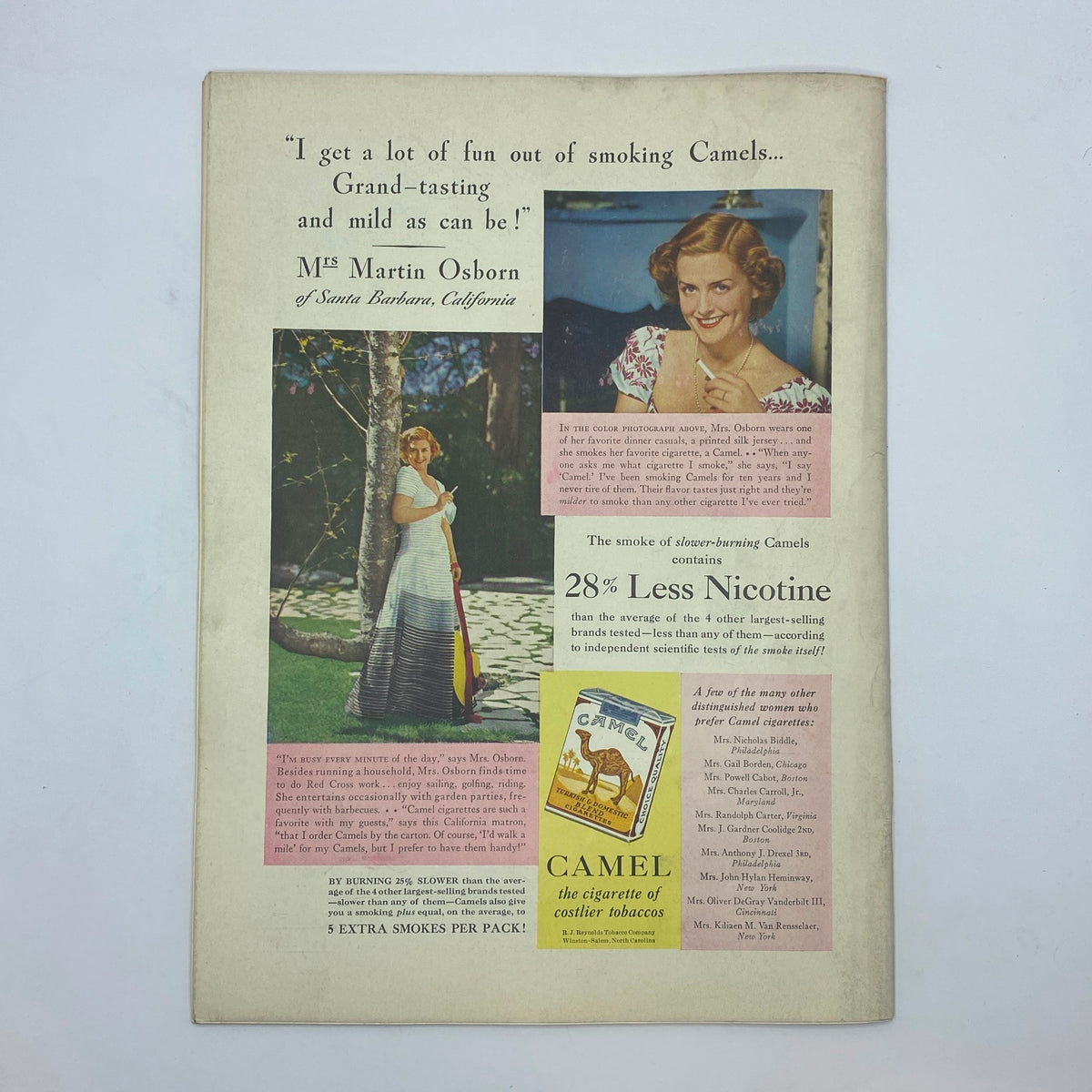
- Period cartoons and advertising: Issues from late 1941 are sought by collectors and cultural historians for the cartoons, spot illustrations, and advertising that together record the details of American life in the final weeks before the country's entry into World War II.
Note: Specific article titles, bylines, and interior content for this exact issue have not been independently confirmed beyond what appears in the listing. The highlights above reflect only what is verifiable from the cover credit, publication date, and the magazine's well-documented editorial format during this period.
Condition & Rarity
A surviving copy of a weekly newsstand magazine from September 1941 presenting in very good condition — with minor edge wear as the only noted imperfection — is a sound and desirable preservation outcome for a publication now more than eighty years old. The New Yorker was printed on acidic wood-pulp paper stock standard for weekly periodicals of this era, a material prone to toning, brittleness, and structural fatigue over time. Edge wear of the kind described is the natural and expected result of honest age and does not indicate mishandling. When evaluating any surviving copy of this issue, the meaningful criteria are the vibrancy and integrity of Alajalov's cover art, the completeness of all interior pages, the absence of subscription label adhesive residue or moisture damage, and the structural soundness of the spine. A copy meeting the standard described — visually strong at over eight decades of age, with wear confined to the margins — represents the grade that serious collectors of wartime-era periodicals actively pursue.
Looking for More Issues Like This?
Constantin Alajalov covers are among the most pursued in the pre-war and wartime New Yorker market, and this specific September 1941 date — sitting at such a consequential hinge point in American history — makes it a particularly meaningful find. If it is no longer available, the deep original New Yorker collection at OriginalMagazines.com is one of the most extensive archives of the magazine accessible to serious collectors, spanning many decades of its history. For those drawn to the charged atmosphere of the final months before American entry into World War II, the full 1941 magazine collection is worth exploring with care — it is a year whose historical significance is present on every page of every issue that has survived it.