




Description
Collector's Note – Why This Issue Matters
September 7, 1935 places this issue of The New Yorker at one of the most legislatively consequential and internationally alarming moments of the entire Depression decade. The Second New Deal had just completed its most productive summer — the Social Security Act had been signed on August 14, the National Labor Relations Act on July 5, the Banking Act in August — a transformation of American social and economic policy whose scope and speed were without precedent. At the same time, Mussolini's preparations for the invasion of Ethiopia were in their final weeks, the conflict beginning on October 3 just four weeks after this issue's publication. The League of Nations was about to be exposed as incapable of restraining fascist aggression, and the international order constructed at Versailles was visibly and rapidly deteriorating. For collectors building a serious documentary archive through original magazines from 1935, a September 7 issue documents the American cultural and political moment at one of the most consequential thresholds of the decade — the New Deal at its legislative peak and the pre-war international crisis at its opening phase, simultaneously.
The cover by Constantin Alajalov makes this issue a particularly distinguished object within the magazine's mid-Depression visual archive. Alajalov was one of the most celebrated and prolific cover artists in The New Yorker's history, contributing covers from the late 1920s through the 1950s — nearly three decades of work that produced some of the most recognized images in the publication's visual record. The listing notes his contributions to both The New Yorker and The Saturday Evening Post, underscoring his position as one of the most prominent commercial illustrators of the mid-twentieth century — an artist whose cover work appeared in the two most widely read magazines in America. His style was defined by witty, socially observant illustrations that captured the textures of American life with precision, humor, and a draftsmanship that set his work apart from virtually all of his contemporaries. By September 1935, Alajalov had been producing cover art for the magazine for nearly a decade, and a cover from this specific autumn represents his style in full mid-career confidence. For collectors tracing the visual history of the publication through original New Yorker issues, Alajalov covers from the mid-1930s represent some of the most historically resonant and visually accomplished material in the magazine's Depression-era archive.
September 7 also marks the opening of The New Yorker's most intensive annual editorial season. After the lighter summer register, the first September numbers signal the full resumption of the magazine's critical and journalistic engagement — theater season reopening, literary year in full swing, the editorial voice returning to its most substantive mode. In September 1935, that resumption was taking place in a world that had just been fundamentally reshaped by the New Deal's most ambitious legislative summer, and was weeks away from a fascist military invasion that would change the international situation permanently.
About the Publication
Founded in February 1925 by Harold Ross, The New Yorker was by the autumn of 1935 a fully established institution of American cultural life, ten years into its run and operating with the editorial confidence and literary ambition that would define its reputation for generations. Its readership was urban, educated, and expected the combination of wit, critical intelligence, and serious engagement with the world that Ross enforced with unusual editorial discipline. The magazine's format was mature and consistent: "Talk of the Town" commentary opened each issue, followed by reported features, fiction, poetry, and critical reviews spanning theater, books, art, and film, all interwoven with cartoons and spot illustrations that had developed by mid-decade into one of the most celebrated creative traditions in American periodical publishing. Covers were individually commissioned works of illustration, and Alajalov's contributions were among the most consistently accomplished in the publication's mid-century visual history.
Key Highlights Inside
- Constantin Alajalov cover illustration: The cover is the defining collectible and historically significant feature of this issue — original artwork by one of the most celebrated and prolific cover artists in The New Yorker's history, whose contributions to both the magazine and The Saturday Evening Post made him one of the most prominent commercial illustrators in mid-twentieth century America.
- First September issue following the New Deal's most productive summer: Published on September 7, 1935 — weeks after the Social Security Act, the National Labor Relations Act, and the Banking Act were all signed into law — this issue opens the autumn season in the immediate aftermath of the most consequential domestic legislative summer of the decade.
- Four weeks before the Italian invasion of Ethiopia: Published on September 7, 1935 — four weeks before Mussolini's invasion of Ethiopia on October 3 — this issue appeared at the threshold of the first major act of fascist military aggression of the decade, an event that would expose the League of Nations' inability to restrain authoritarian power.
- Opening of the autumn editorial season: September issues mark the full resumption of The New Yorker's most intensive editorial engagement — theater and literary seasons reopening, the magazine's critical and journalistic voice returning to its most substantive mode after the lighter summer register.
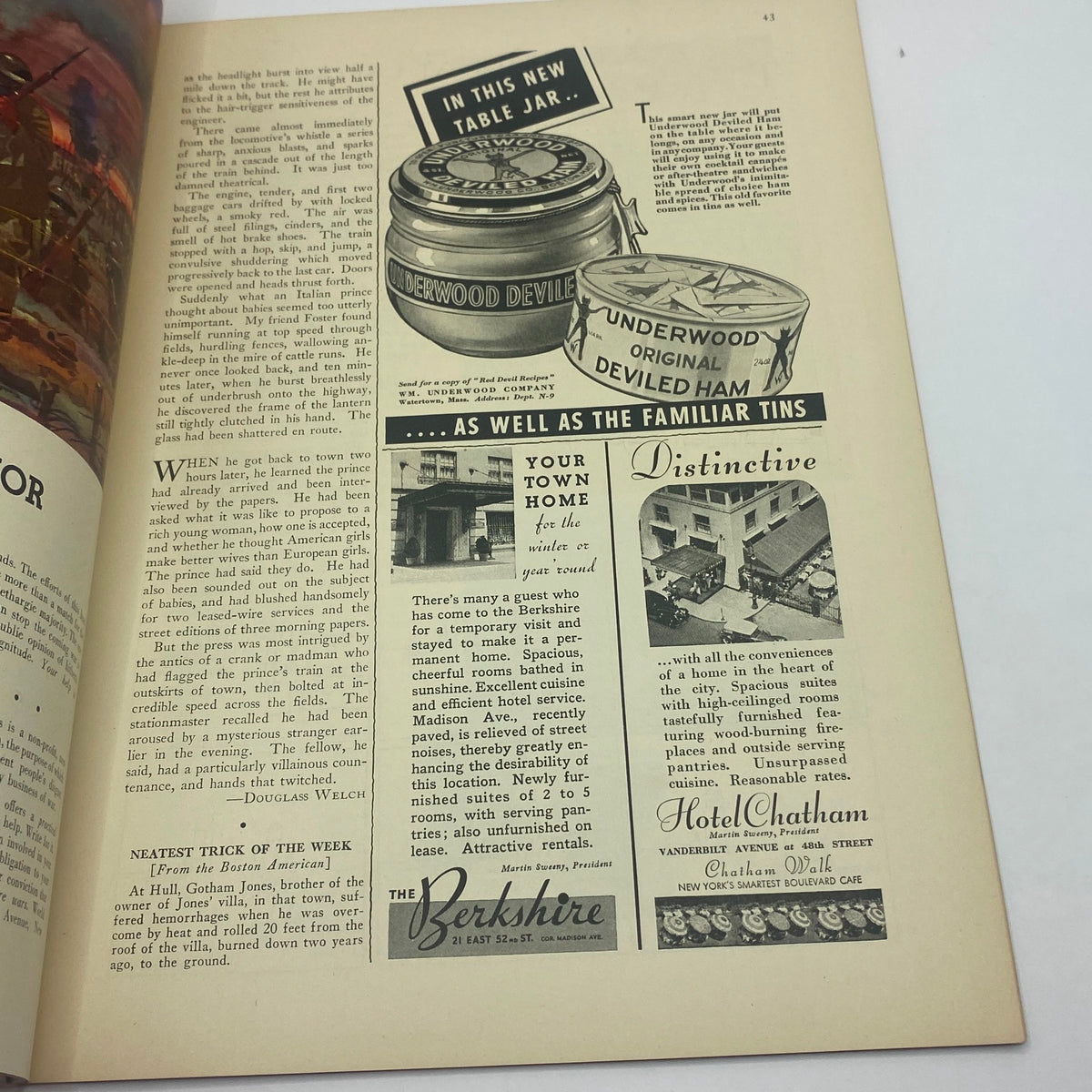
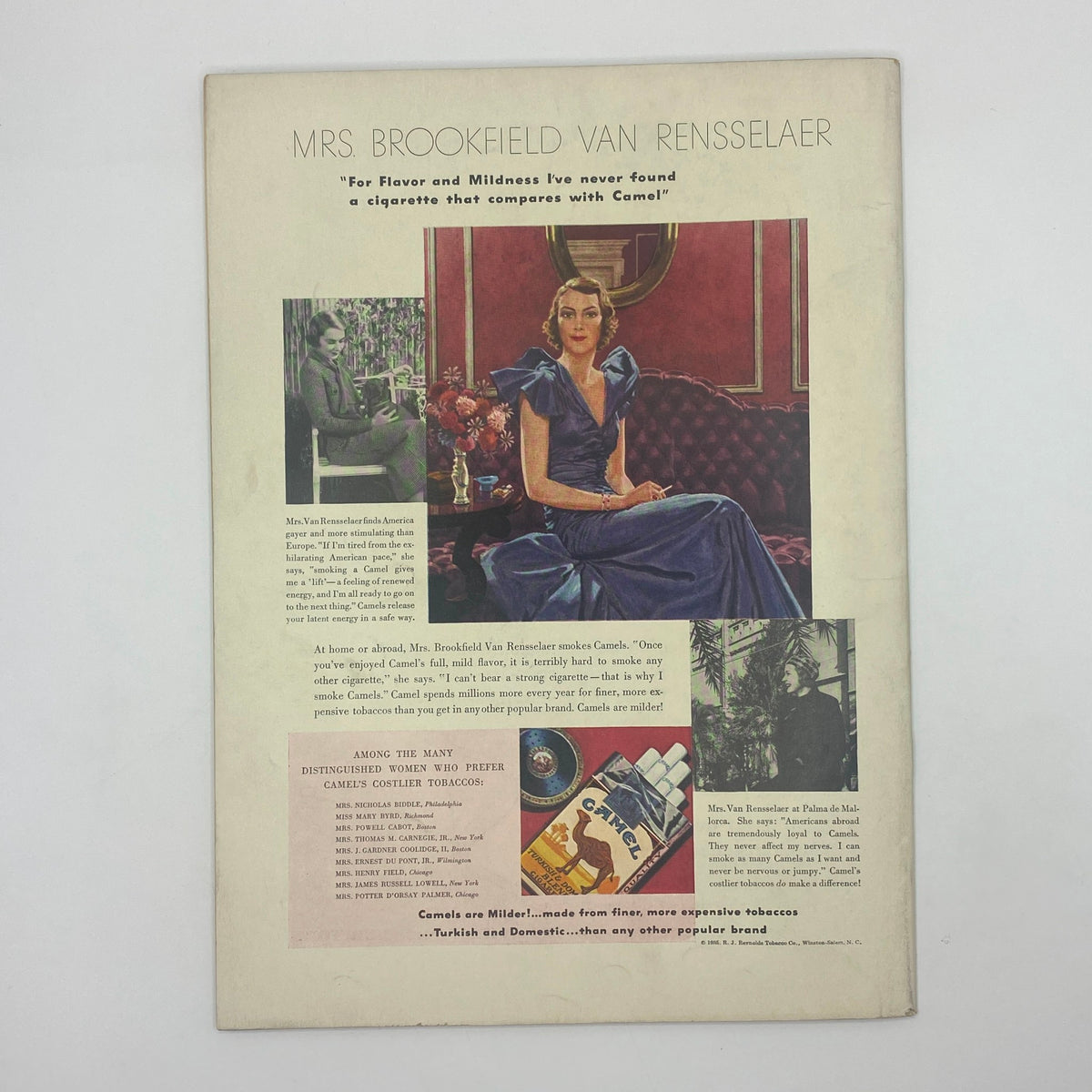
- Period cartoons and advertising: Issues from early autumn 1935 are valued by collectors and cultural historians for the cartoons, illustrations, and advertising that together document American social life and everyday observation at one of the decade's most historically charged moments.
Note: Specific article titles, bylines, and interior content for this exact issue have not been independently confirmed beyond what appears in the listing. The highlights above reflect only what is verifiable from the cover credit, publication date, and the magazine's well-documented editorial format during this period.
Condition & Rarity
A surviving copy of a weekly newsstand magazine from September 1935 presenting in very good condition — with minor edge wear as the only noted imperfection — is a strong preservation result for a publication now ninety years old. The New Yorker was printed on acidic wood-pulp paper stock standard for weekly periodicals of the era, a material inherently prone to toning, brittleness, and structural degradation over time. Edge wear of the kind described is entirely consistent with honest age and careful storage rather than mishandling or neglect. When evaluating any surviving copy of this issue, the meaningful criteria are the integrity and color fidelity of Alajalov's cover art, the completeness of all interior pages, the absence of subscription label adhesive residue or moisture damage, and the structural soundness of the spine. A copy meeting the standard described — visually strong at nine decades of age, with wear confined to the margins — represents the preservation grade that serious collectors of Depression-era and pre-war periodicals actively seek.
Looking for More Issues Like This?
A Constantin Alajalov cover from the first September issue following the New Deal's most productive summer — four weeks before the invasion of Ethiopia — is one of the most historically precise and visually accomplished objects in the mid-Depression New Yorker collector market, and September 7, 1935 is a date whose layered significance rewards the collector who understands it fully. If it is no longer available, the extensive original New Yorker collection at OriginalMagazines.com is one of the deepest archives of the magazine accessible to collectors anywhere, spanning many decades of its publishing history. For those drawn to the Depression-era magazine at its most historically charged and legislatively abundant, the full 1935 magazine collection rewards careful and unhurried exploration — it is a year whose legislative ambition and darkening international atmosphere are present in every issue that has survived to the present day.