

Description
Collector's Note – Why This Issue Matters
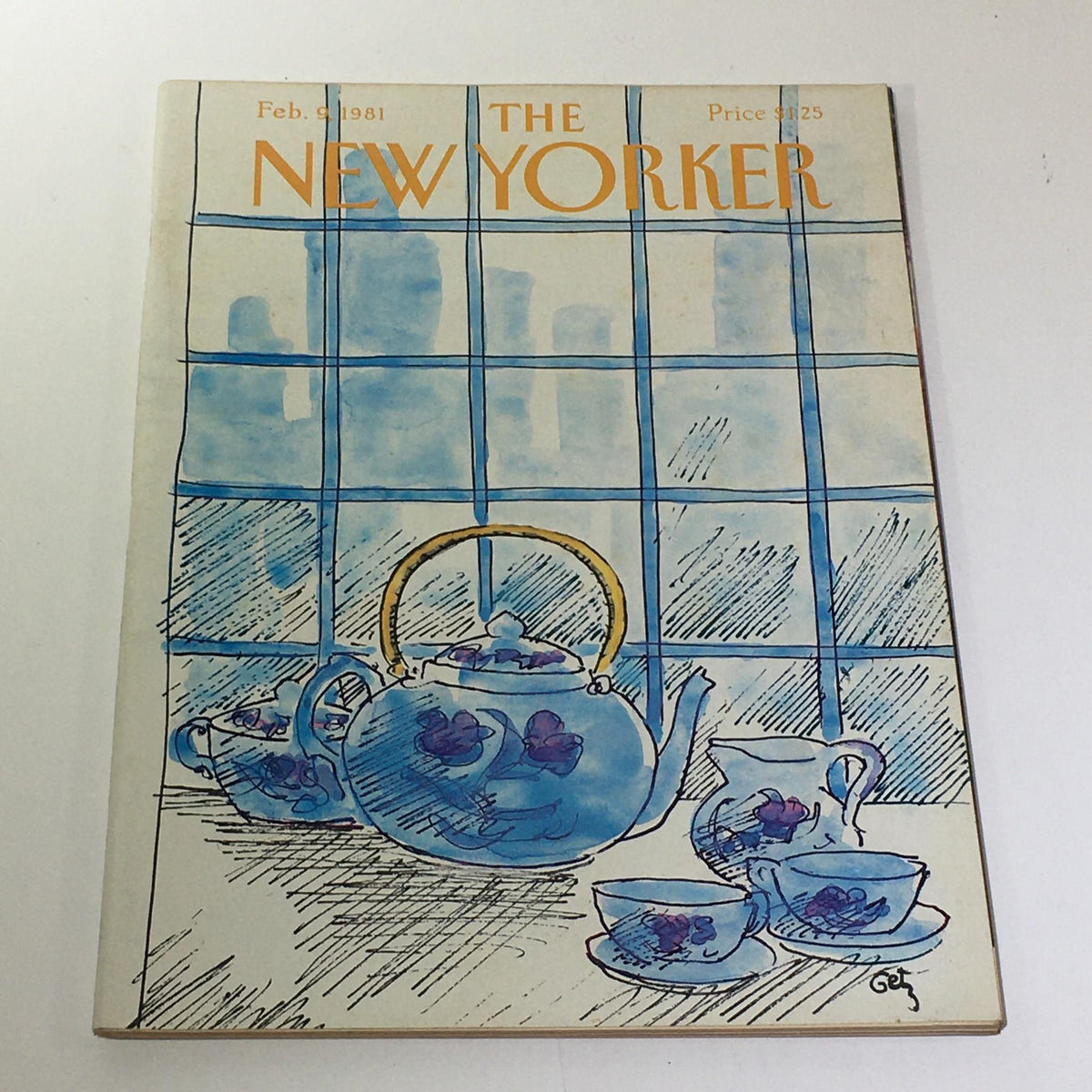
The New Yorker February 9, 1981 belongs to a period when the magazine remained one of the most influential weekly records of American literary culture, criticism, humor, and visual commentary. By the early 1980s, The New Yorker had already developed a long-standing identity built around polished prose, urbane cartoons, fiction, cultural reporting, and cover illustrations that often captured a moment with quiet wit rather than spectacle. This issue is especially connected to that visual tradition through its theme cover by Arthur Getz, one of the magazine’s most prolific and recognizable cover artists. For collectors, Getz covers are important because they represent a long continuity in the magazine’s visual language, linking mid-century illustration traditions with the editorial style of the early 1980s.
Arthur Getz’s association with The New Yorker is important for collectors because his covers helped define the magazine’s visual personality across decades. His work often emphasized atmosphere, place, season, and everyday urban observation, making his covers highly relevant to readers who collect The New Yorker not only for its articles, but also for its illustration history. For collectors studying vintage New Yorker magazine issues, the February 9, 1981 issue offers a clear example of how the publication used cover art as a cultural marker rather than a simple decorative wrapper. A clean, no-label cover is especially meaningful in this context because it allows the illustration to remain visually complete.
As part of the wider landscape of 1981 magazine issues, this edition reflects the early-1980s print world, when weekly magazines still played a central role in shaping cultural conversation. The listing notes the presence of editorial content and articles typical of The New Yorker, though specific article titles are not identified. For researchers and collectors, the value of a complete issue lies in the full object: the cover, page sequence, cartoons, advertisements, and editorial tone all preserve the magazine as it originally appeared during that specific week. That completeness makes the issue useful not only for reading, but also for studying magazine design, illustration, and cultural rhythm at the start of the decade.
About the Publication
The New Yorker is a weekly American magazine founded in 1925 and widely associated with literary journalism, essays, criticism, fiction, poetry, cartoons, and distinctive cover illustration. Its audience has traditionally included readers interested in culture, politics, literature, the arts, city life, and intelligent humor. The magazine’s editorial structure combines long-form writing with shorter commentary, fiction, cartoons, criticism, and cover art, giving each issue a layered identity as both a reading object and a visual artifact. For collectors, The New Yorker is especially significant because its weekly format creates a detailed chronological archive of American cultural life, while its covers often serve as the most immediate and memorable reference point for individual issues. The publication’s consistency also makes it valuable for comparison across decades, since changes in illustration, typography, humor, and editorial emphasis can be traced issue by issue.
Key Highlights Inside
- February 9, 1981 issue of The New Yorker, representing the magazine’s early-1980s editorial and visual identity.
- Features a theme cover by Arthur Getz, as stated in the listing title and description.
- Connects to The New Yorker’s long tradition of illustrated covers that function as cultural observation and visual storytelling.
- Represents early-1980s The New Yorker publishing, including the magazine’s established tradition of journalism, illustration, commentary, and literary culture.
- No address label noted, preserving the cover presentation without mailing-label obstruction.
- Condition described as good collectible condition, with light wear, minor edge wear, and slight bends to the front cover and pages.
- No protective cover is noted in the listing, an important storage and preservation detail for collectors.
- Specific interior article titles are not confirmed from the provided listing.
Condition & Rarity
Surviving examples of this February 9, 1981 issue should be evaluated by cover brightness, edge condition, spine stability, page completeness, and whether the Arthur Getz cover remains free from address-label obstruction. The provided listing describes the magazine as being in good collectible condition, with light wear, minor edge wear, and slight bends to the front cover and pages. These traits are common among weekly magazines that were read, shelved, and handled rather than preserved immediately in archival storage. The absence of an address label is an important collector attribute for The New Yorker, where cover art is often a primary reason for seeking a particular issue. The listing also notes that no protective cover is included, so collectors evaluating surviving examples should pay close attention to surface wear, page corners, and the overall stability of the binding. For artist-focused collectors, the cover’s visual integrity can be just as important as the interior contents, especially when the issue is associated with a major recurring cover artist such as Arthur Getz.
Looking for More Issues Like This?
The February 9, 1981 Arthur Getz cover issue is a meaningful reference point for collectors interested in The New Yorker cover art, early-1980s literary magazines, and the publication’s long tradition of illustrated cultural observation. Readers looking for related material can browse more vintage New Yorker magazine issues to compare cover artists, weekly themes, and editorial presentation across different years. Exploring multiple issues can also show how the magazine’s cover art shifted with season, city life, humor, and changing cultural mood.
For collectors building by year, the 1981 magazines collection is also useful for placing this issue alongside other publications from the same cultural period. Viewed in that broader context, this issue becomes part of the larger print record of how the early 1980s looked, read, and expressed itself through weekly magazine culture. That wider comparison can help collectors understand The New Yorker not only as a single title, but as part of the broader literary, artistic, and journalistic environment of 1981.