



Description
Collector's Note – Why This Issue Matters
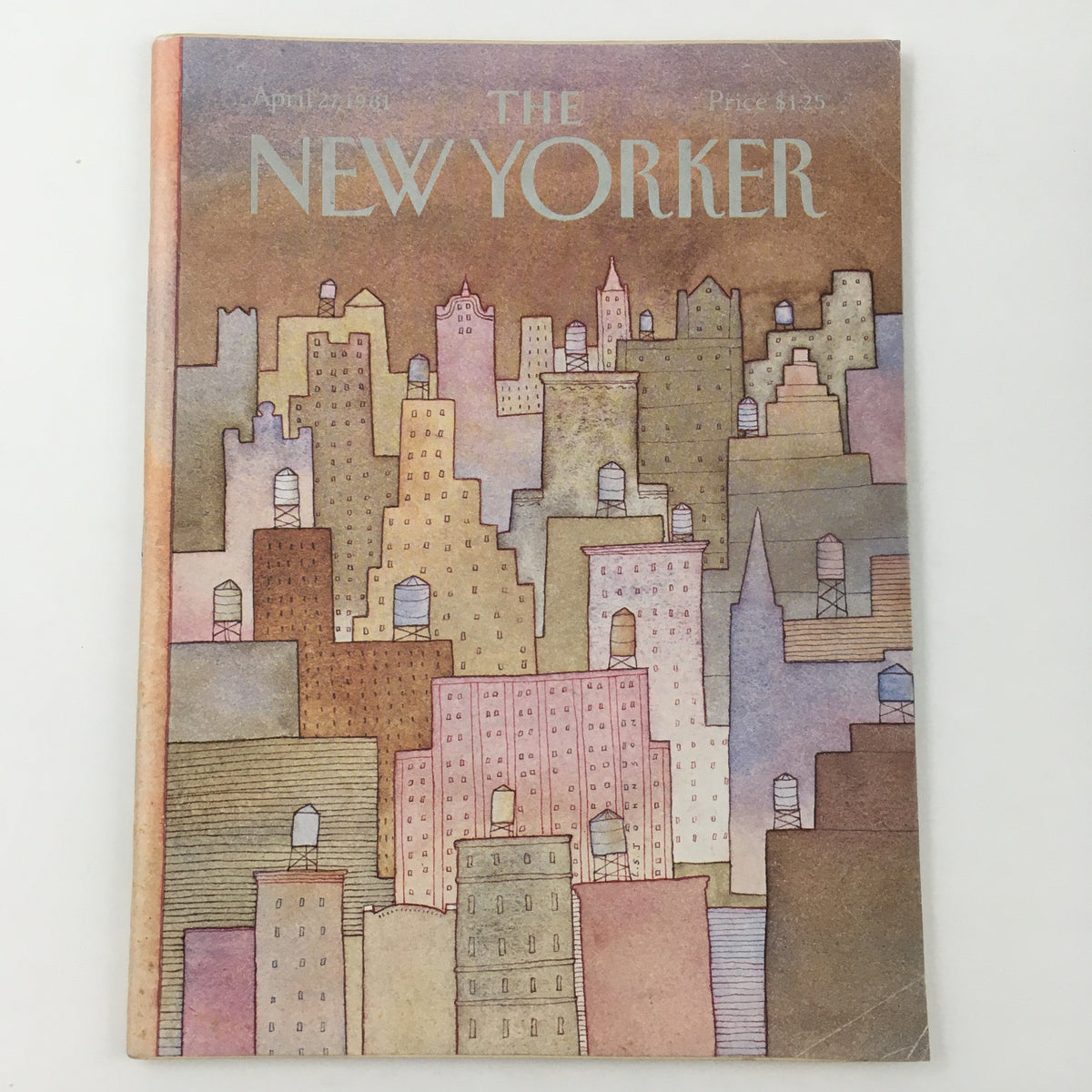
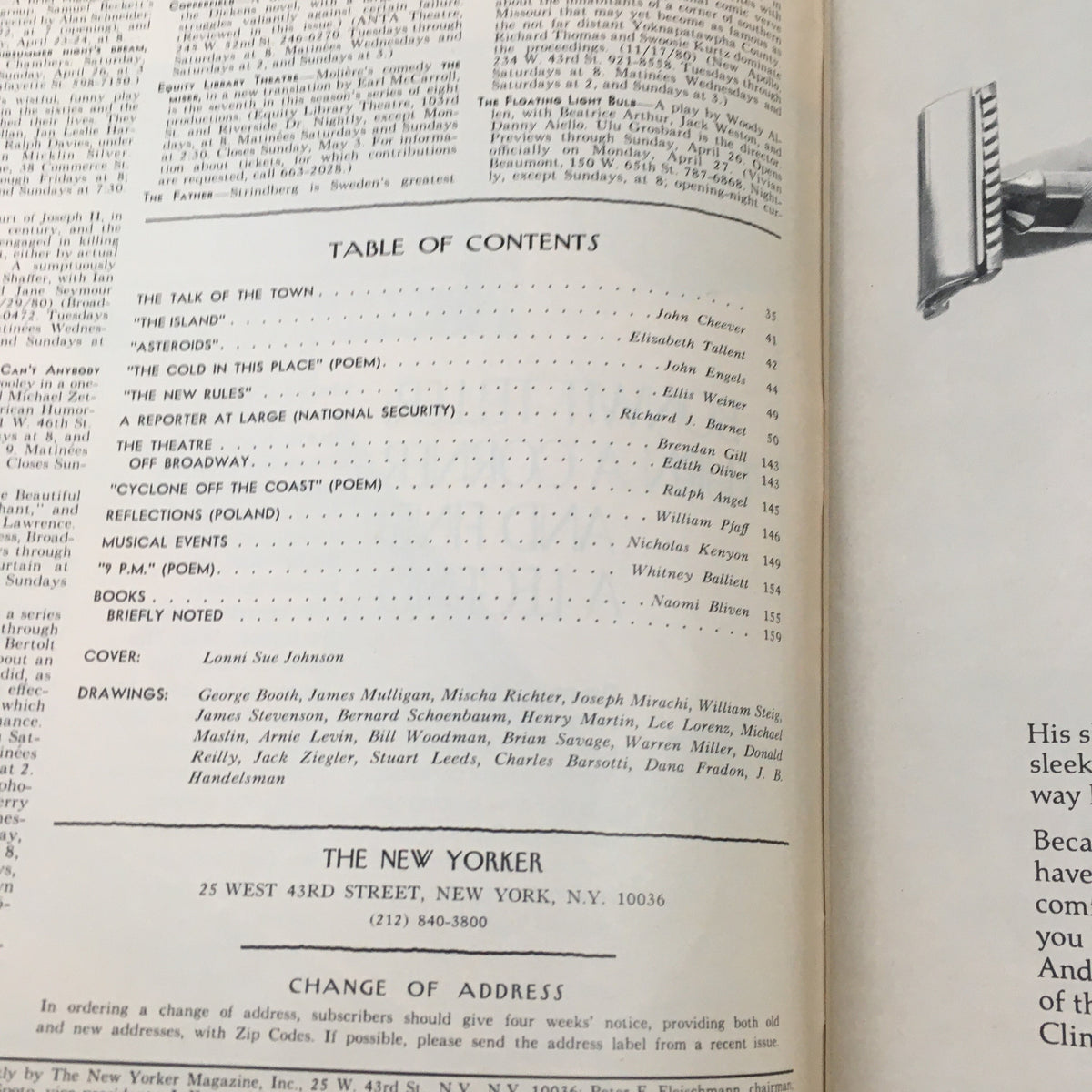
The April 27, 1981 issue of The New Yorker is identified in the listing as a full magazine with a theme art cover by Lonni Sue Johnson. That cover attribution is important because The New Yorker has long treated cover art as an essential part of its editorial identity, often allowing a single image to carry wit, atmosphere, seasonal observation, or cultural commentary without relying on a headline. For collectors of vintage The New Yorker magazines, a named cover artist provides a useful point of identification beyond the issue date alone. It also gives the issue added relevance for collectors who organize magazines by illustrator, cover style, or visual theme. In a publication where the cover often functions as a self-contained work of art, the artist attribution is part of the issue’s historical identity.
Lonni Sue Johnson’s cover places this issue within the magazine’s early-1980s visual tradition, when illustrated covers continued to distinguish The New Yorker from more news-driven and celebrity-centered publications. The listing describes the cover as theme art, but does not confirm the exact subject of the theme, so the issue should be understood through its verified details: April 27, 1981 date, full-magazine format, Lonni Sue Johnson cover attribution, newsstand/no-label presentation, and good condition. Within the broader field of 1981 vintage magazines, this issue represents the quieter, highly collectible side of magazine history, where cover illustration, cartoons, criticism, essays, fiction, and editorial tone all contribute to the object’s value. It reflects a moment when weekly literary magazines still relied on illustration to establish mood before a reader even reached the first article.
The issue also reflects The New Yorker’s role as a cultural record at the beginning of the 1980s. Individual issues preserve more than their major articles; they retain the cartoons, advertisements, departments, typography, and editorial pacing of a specific week. Even when the listing does not confirm interior article titles, a complete issue with a named cover artist remains useful to collectors studying American magazine illustration, literary journalism, and late-20th-century print culture. The April 27, 1981 issue is therefore best understood as both a cover-art collectible and a complete editorial artifact from the magazine’s long-running weekly tradition. Its value comes from that completeness: the cover, the printed pages, and the physical format together preserve how the magazine presented culture to its readers in spring 1981.
About the Publication
The New Yorker is one of the most influential American magazines, known for long-form journalism, fiction, essays, criticism, poetry, cartoons, and distinctive illustrated covers. Its audience has traditionally included readers interested in literature, politics, culture, humor, urban life, and serious magazine writing. By 1981, the magazine had already built a decades-long reputation for editorial refinement, visual wit, and a recognizable tone of cultural observation. For collectors, complete issues are valuable because they preserve the full weekly experience of the publication: the cover, cartoons, departments, advertisements, prose style, and the larger editorial atmosphere of a particular moment. Artist-attributed issues are especially useful because they connect the magazine’s literary identity with the history of American illustration and cover design. A complete issue also allows collectors to study how the cover related to the magazine’s broader visual rhythm, rather than viewing the artwork in isolation.
Key Highlights Inside
- April 27, 1981 full issue of The New Yorker.
- Features a theme art cover by Lonni Sue Johnson, according to the listing.
- Represents the magazine’s tradition of using illustrated covers as visual commentary and artistic identity.
- Reflects early-1980s American literary and cultural magazine publishing through a complete weekly issue.
- Identified as a newsstand copy without a label, preserving a cleaner cover presentation.
- Condition details include good overall shape, minor wear throughout, and a few creases on the front cover.
- Useful for collectors interested in The New Yorker cover artists, magazine illustration, and early-1980s print design.
- The listing references cultural, social, and political context, but specific interior article titles are not confirmed.
Condition & Rarity
Collector evaluation for this issue should focus on cover clarity, front-cover creasing, spine stability, page completeness, corner wear, surface marks, and the absence of a mailing label. The listing describes the magazine as being in good condition, with minor wear throughout and a few creases on the front cover. Its newsstand/no-label status is meaningful because labels can interrupt the clean visual presentation of a New Yorker cover, especially when the issue is collected for its artwork. The plastic protective covering noted in the listing is consistent with standard preservation practice for collectible magazines, helping reduce dust exposure, surface rubbing, and additional handling wear. For an issue identified by a Lonni Sue Johnson cover, the front cover’s visual condition is especially important, but complete interior pages also matter because The New Yorker is often valued as a whole editorial object rather than as cover art alone. The noted front-cover creases should be considered as part of the issue’s visible condition profile, particularly for display-oriented collectors. A sound example should retain readable pages, a stable spine, and enough cover strength to preserve the visual character of the artwork.
Looking for More Issues Like This?
The April 27, 1981 The New Yorker issue with a Lonni Sue Johnson theme art cover is the kind of literary and illustration-focused magazine that can be difficult to match by exact date, artist, and no-label presentation. Collectors interested in similar cover art, cartoons, essays, fiction, and cultural commentary may want to browse other The New Yorker back issues for more examples of the magazine’s distinctive visual and literary tradition. Following issues from nearby dates can help show how the magazine used illustration, humor, and cultural observation to define each week’s identity.
For broader context around the same year, OriginalMagazines.com’s 1981 magazine collection offers a useful way to compare literary magazines, entertainment titles, news publications, and specialty periodicals from the early 1980s. Looking across the year can help collectors understand how The New Yorker maintained its editorial voice within the wider magazine culture of the period. It also gives researchers a clearer sense of how different publications used covers, typography, illustration, and editorial tone to speak to their audiences at the start of the decade.