


Description
Collector's Note – Why This Issue Matters
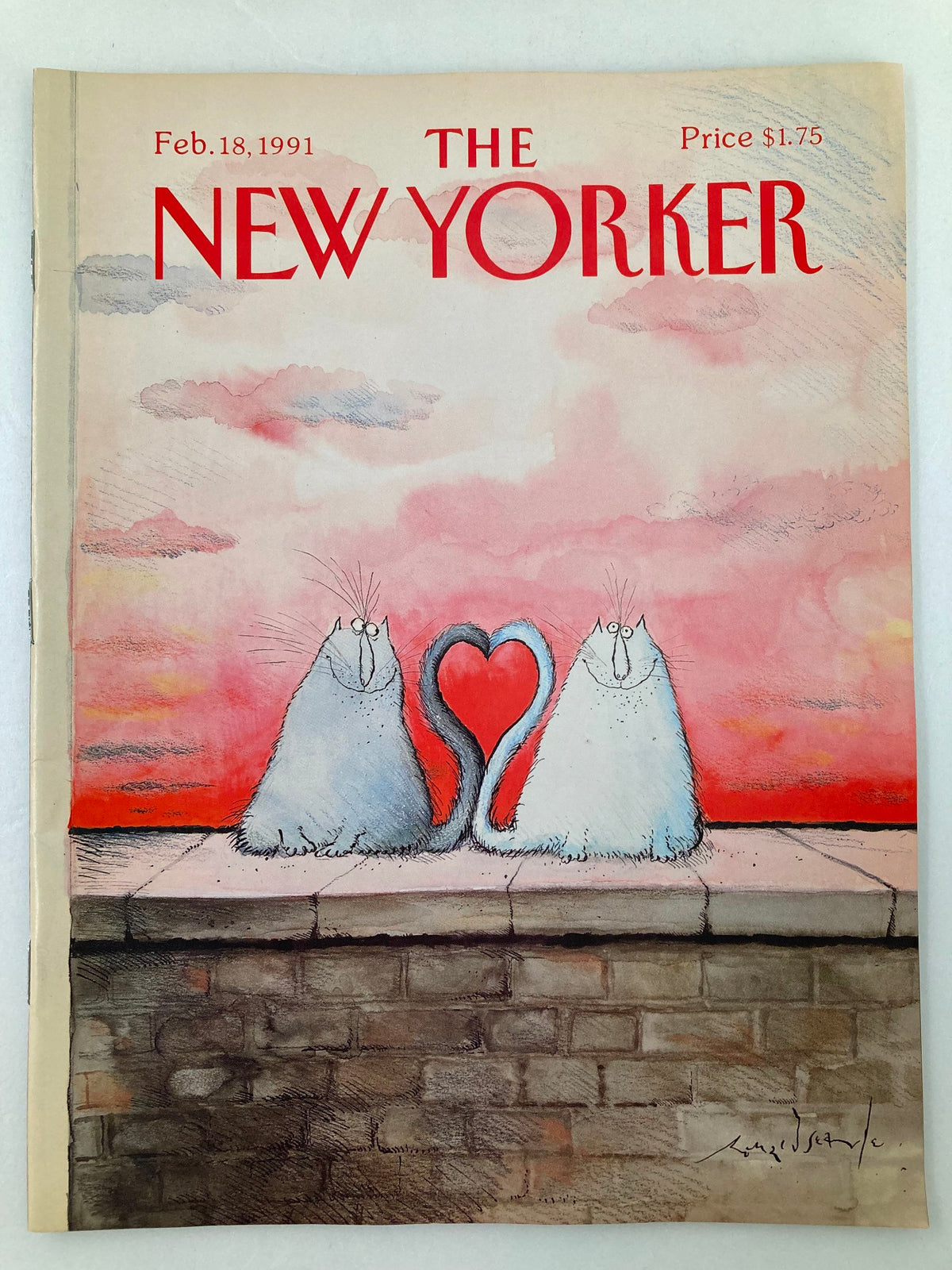
February 18, 1991 is a publication date of specific historical weight, and this New Yorker issue — with Ronald Searle's "Cat Love" cover — documents the magazine at a moment of genuine geopolitical tension. The Gulf War had begun on January 17, 1991, just one month before this issue's publication date, and the ground offensive that would conclude the conflict in a hundred hours was still three days away from its February 24 launch. A New Yorker published on February 18, 1991 was produced and read in the specific atmosphere of an active American war — the air campaign had been running for a month, the ground campaign was imminent, and the specific anxieties and moral questions that the New Yorker's tradition of serious political and foreign affairs journalism engaged were at their most acute. Against this backdrop, Ronald Searle's warmly whimsical "Cat Love" cover carries a specific and characteristic New Yorker editorial intelligence: the deliberate choice of intimate domestic warmth as the visual register for an issue produced in wartime is itself a primary document of the magazine's editorial identity and its specific relationship to its readership's emotional needs. For collectors building an archive of New Yorker issues from the Gulf War period, this February 18, 1991 edition is a precisely dated primary document of the publication navigating the specific emotional and political landscape of the war's most anxious weeks.
Ronald Searle's "Cat Love" cover deserves specific collector attention as a primary visual document of one of the most significant British illustrators of the twentieth century working for The New Yorker. Searle — best known as the creator of the St. Trinian's schoolgirls and as one of the defining visual satirists of the postwar British tradition — had developed a significant relationship with the New Yorker through the 1970s and 1980s, and his covers for the publication represented the specific adaptation of his characteristically sharp-edged satirical sensibility to the magazine's gentler, more whimsical cover tradition. "Cat Love" as a subject reflects the warmth that Searle brought to his New Yorker work alongside the wit — and the result is a cover that is simultaneously characteristic of his specific illustrative intelligence and characteristic of the New Yorker's winter cover tradition. The newsstand provenance confirmed by the absence of a mailing label preserves the Searle cover in its complete, unobstructed form, which for a cover artist of his historical significance and collector following is the condition attribute most directly relevant to both display and documentary value. Collectors researching New Yorker issues from 1991 will find this February 18 edition a precisely dated primary document of the publication and the cultural moment it inhabited.
February 18, 1991 also places this issue at a specific moment in The New Yorker's institutional history. Robert Gottlieb had been editor since 1987, having succeeded William Shawn after Shawn's long tenure, and Gottlieb's editorial identity was still being established and assessed. Tina Brown's transformative editorship — which would arrive in July 1992, sixteen months after this issue — was still in the future, meaning this February 1991 issue is a late-Gottlieb-era primary document of the publication in its last pre-Brown editorial phase. The specific character of Gottlieb's New Yorker — more accessible than Shawn's but not yet reshaped by Brown's celebrity orientation — is preserved in the editorial content of individual issues from this period, and the February 18, 1991 edition represents that specific transitional editorial identity in the context of Gulf War America.
About the Publication
The New Yorker was founded in 1925 by Harold Ross and has been published continuously ever since, establishing itself as the most consistently distinguished general-interest literary and cultural magazine in American publishing history. By February 1991 it was in its sixty-sixth year of publication, operating under the editorship of Robert Gottlieb, who had succeeded the legendary William Shawn in 1987 and whose tenure would continue until Tina Brown's arrival in 1992. The February 18, 1991 issue represents the publication at a specific transitional editorial moment — Gottlieb's New Yorker navigating the Gulf War's opening weeks with the combination of serious political journalism, literary fiction, poetry, and cultural criticism that had always defined the magazine's identity, framed by Ronald Searle's specifically characteristic cover art.
Key Highlights Inside
- Ronald Searle "Cat Love" cover — a primary visual document of one of the most significant British illustrators of the twentieth century working in his New Yorker cover mode, combining the warmth of his specifically adapted American magazine work with the characteristic wit that made him one of the defining visual satirists of the postwar British tradition, preserved in newsstand form without label obstruction.
- Gulf War context — editorial content produced during the active air campaign of the Gulf War, three days before the February 24 ground offensive launch, in the specific atmosphere of an American public navigating the anxieties, moral questions, and breaking news of the conflict that the New Yorker's tradition of serious political and foreign affairs journalism engaged with characteristic depth and intelligence.
- Fiction, poetry, and criticism consistent with The New Yorker's late-Gottlieb-era editorial format — the magazine's literary pages in this period were producing significant work in the specific transitional phase between Shawn's more austere intellectual tradition and Brown's forthcoming celebrity reorientation, and a February 18, 1991 issue carries the specific editorial character of that transitional moment.
- Cultural criticism and reviews consistent with the New Yorker's February 1991 editorial scope — theater, film, books, music, and the arts as engaged by the magazine's critics in the specific cultural season of mid-February, when the New York performing arts season was in its winter phase and the year's most significant cultural productions were generating the critical response that the New Yorker's departments were designed to provide.
- Note: Specific article titles, fiction bylines, and confirmed interior content details have not been individually verified for this issue. The highlights above reflect the New Yorker's well-documented editorial format, the verified cover artist and subject, and the historical context of February 18, 1991.
Condition & Rarity
New Yorker issues from February 1991 are approaching their thirty-fifth year of existence — recent enough that surviving copies remain relatively available, but old enough that condition variation is meaningful, particularly for issues with confirmed cover artist attribution and newsstand provenance. Very Good to Excellent condition is an honest and strong grade for a thirty-four-year-old weekly literary magazine, indicating a copy that retains full structural integrity, displays cleanly, and preserves the Searle cover illustration with the full visual quality that makes his New Yorker work specifically collected. The absence of a mailing label is a significant condition positive that preserves the cover in its complete, unobstructed form, identifying this as a newsstand copy in a publication whose substantial subscription base makes label-free examples a meaningful minority of surviving copies. The plastic protective sleeve provides ongoing archival protection for a publication whose coated cover stock benefits from protection against scuffing and oxidation. Collectors evaluating surviving examples should prioritize the Searle cover image integrity, the completeness of all interior content, and overall structural soundness as primary condition criteria.
Looking for More Issues Like This?
A Very Good to Excellent newsstand copy of The New Yorker from February 18, 1991 with the Ronald Searle "Cat Love" cover — produced during the active Gulf War air campaign three days before the ground offensive — is a specifically dated early-nineties literary magazine find for collectors of both Searle illustration and the New Yorker's late-Gottlieb-era issues. If this issue is no longer available, the full New Yorker collection at OriginalMagazines.com is the most comprehensive place to browse surviving issues from across the publication's history and locate other Searle covers, Gulf War-era issues, or significant dates from the magazine's transitional early-nineties run. The 1991 magazine collection brings together issues from across that year's major publications for collectors interested in the full range of American literary and cultural print journalism during the Gulf War year.