
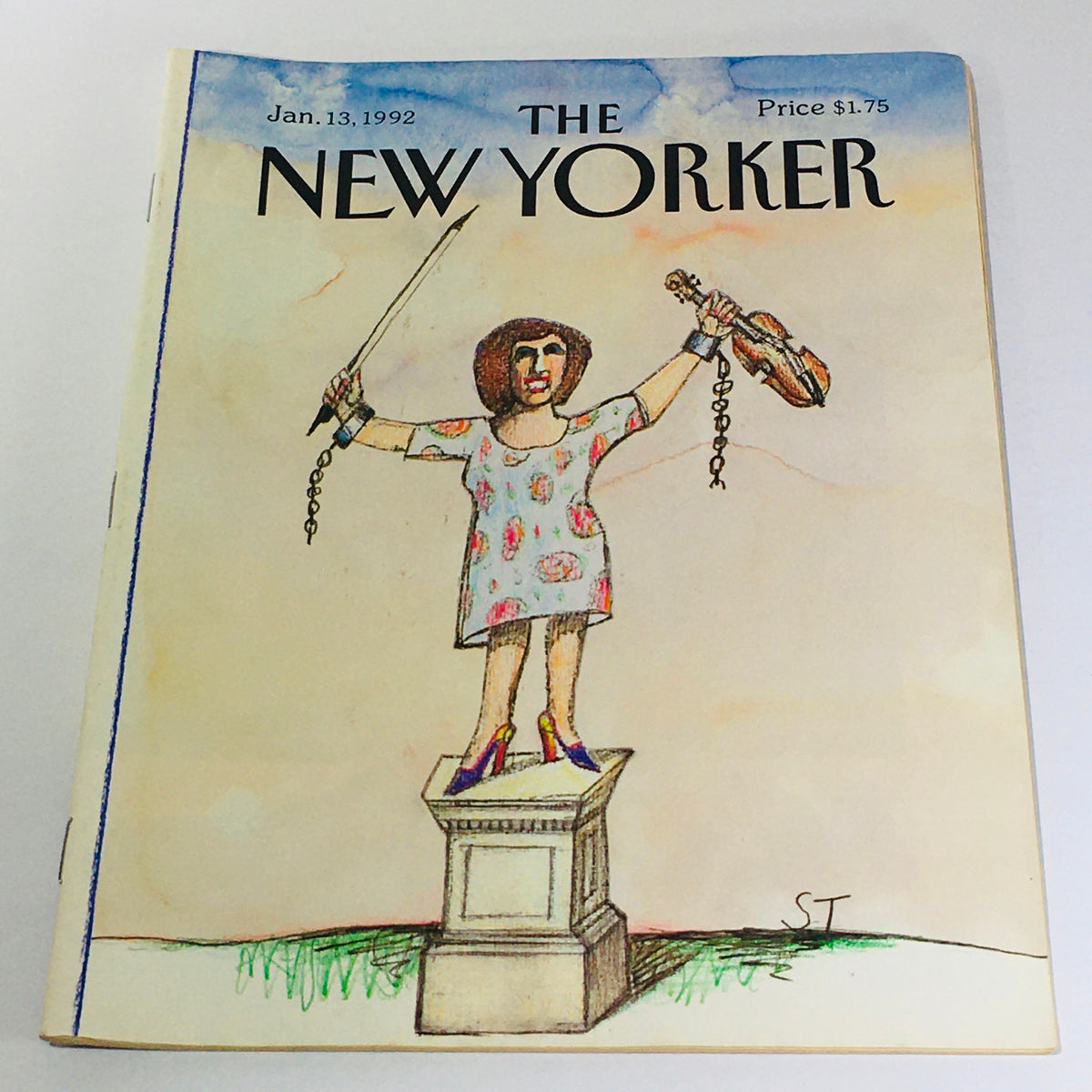

Description
Collector's Note – Why This Issue Matters
The January 13, 1992 issue of The New Yorker is notable for its theme cover by Saul Steinberg, one of the magazine’s most closely associated and visually distinctive artists. Steinberg’s work helped define the intellectual wit and graphic personality of The New Yorker across much of the twentieth century, blending cartooning, modern art, social observation, and visual wordplay into images that often functioned like essays. For collectors of vintage The New Yorker magazines, a Steinberg cover is never merely decorative; it is part of the publication’s larger visual identity. His covers often reward close looking, making them especially appealing to readers who value magazine art as both illustration and cultural commentary.
By January 1992, The New Yorker occupied a particular place in American literary and cultural life, standing between its long postwar tradition and the changing media landscape of the early 1990s. A full issue from this period preserves not only the cover art, but also the magazine’s editorial rhythm: fiction, criticism, reportage, cartoons, cultural commentary, and the unmistakable urban sensibility associated with the title. The listing identifies this as a full magazine, which is an important distinction for collectors who value complete issues rather than isolated covers or clipped artwork. Complete issues retain the original relationship between cover, articles, cartoons, advertisements, and design, allowing the magazine to be studied as a whole cultural object.
Saul Steinberg’s name gives the issue added significance because his covers are studied as part of both magazine history and modern graphic art. His best-known work for The New Yorker often turned maps, cityscapes, language, symbols, and everyday objects into sharp visual commentary. Within the wider landscape of original magazines from 1992, this issue stands as a useful reference point for how a long-running literary magazine continued to carry forward one of its most important artistic traditions into the final decade of the twentieth century. It also reflects a moment when print magazines still held a strong place in American cultural conversation, especially for readers who followed literature, art, criticism, and urban life through weekly publication.
About the Publication
The New Yorker is a weekly American magazine known for literary journalism, fiction, criticism, essays, poetry, cartoons, and distinctive cover art. Founded in 1925, it developed a reputation for urbane writing, sharp humor, cultural reporting, and carefully edited long-form prose aimed at readers interested in literature, politics, art, theater, film, and city life. Its covers have long been central to its identity, often presenting a visual essay rather than a literal news headline. By the early 1990s, the magazine remained a major venue for serious writing and illustration, and complete issues from this period preserve the balance of journalism, criticism, fiction, cartoons, advertising, and design that defined its weekly format. The magazine’s audience valued both literary substance and visual intelligence, which is why cover artists such as Saul Steinberg became inseparable from the title’s reputation. For collectors, an intact issue offers a fuller record of the magazine’s editorial world than a single cover image can provide on its own.
Key Highlights Inside
- January 13, 1992 issue of The New Yorker, representing the magazine’s early 1990s editorial and visual style.
- Identified in the listing as a full magazine rather than a detached cover or partial issue, which matters for collectors who value complete periodical artifacts.
- Features a theme cover by Saul Steinberg, one of the magazine’s most important and recognizable cover artists.
- Relevant to collectors interested in The New Yorker cover art, literary magazines, American illustration, graphic wit, and early 1990s cultural publishing.
- The listing describes the issue as including thought-provoking articles connected to the culture of the early 1990s, though no specific article titles or authors are confirmed.
- The absence of an address label is noted in the listing, giving the cover a cleaner visual presentation for those focused on the Steinberg artwork.
- Interior contents beyond the stated Steinberg cover and general magazine format are not verified from the listing, so no additional specific features are attributed here.
Condition & Rarity
Surviving examples of the January 13, 1992 The New Yorker should be evaluated by cover cleanliness, edge condition, spine integrity, page completeness, and the presence or absence of a mailing label. The listing describes the magazine as used and in good condition, with no address label, which is a desirable presentation detail because the cover art remains visually unobstructed. It also notes that the edges may show wear and/or rips, which are common concerns for handled weekly magazines, especially examples that were read, stacked, stored, or displayed over time. The absence of a plastic protective covering means condition should be judged directly from the paper, cover surface, and edges rather than from any storage sleeve. For a Steinberg cover issue, collectors typically pay close attention to how cleanly the cover image presents, since the artwork is a central reason the issue is studied and collected. Edge wear and small tears do not necessarily diminish the research value of a complete issue, but they should be documented carefully because cover condition plays an important role in how illustrated magazines are evaluated.
Looking for More Issues Like This?
Saul Steinberg cover issues remain especially appealing to collectors who appreciate the intersection of illustration, literature, and magazine history. Readers looking for related examples can browse more collectible issues of The New Yorker to compare cover art, editorial tone, and cultural coverage across different decades. Looking at multiple issues together can also show how the magazine’s visual language evolved while still preserving its unmistakable sense of wit and restraint.
For broader context around the same year, the collection of 1992 magazines offers a useful way to study how American publications documented the early 1990s through journalism, design, commentary, advertising, and popular culture. It is a helpful path for collectors who want to understand this issue not only as a Steinberg cover, but as part of the larger print culture of its year.