




Description
Collector's Note – Why This Issue Matters
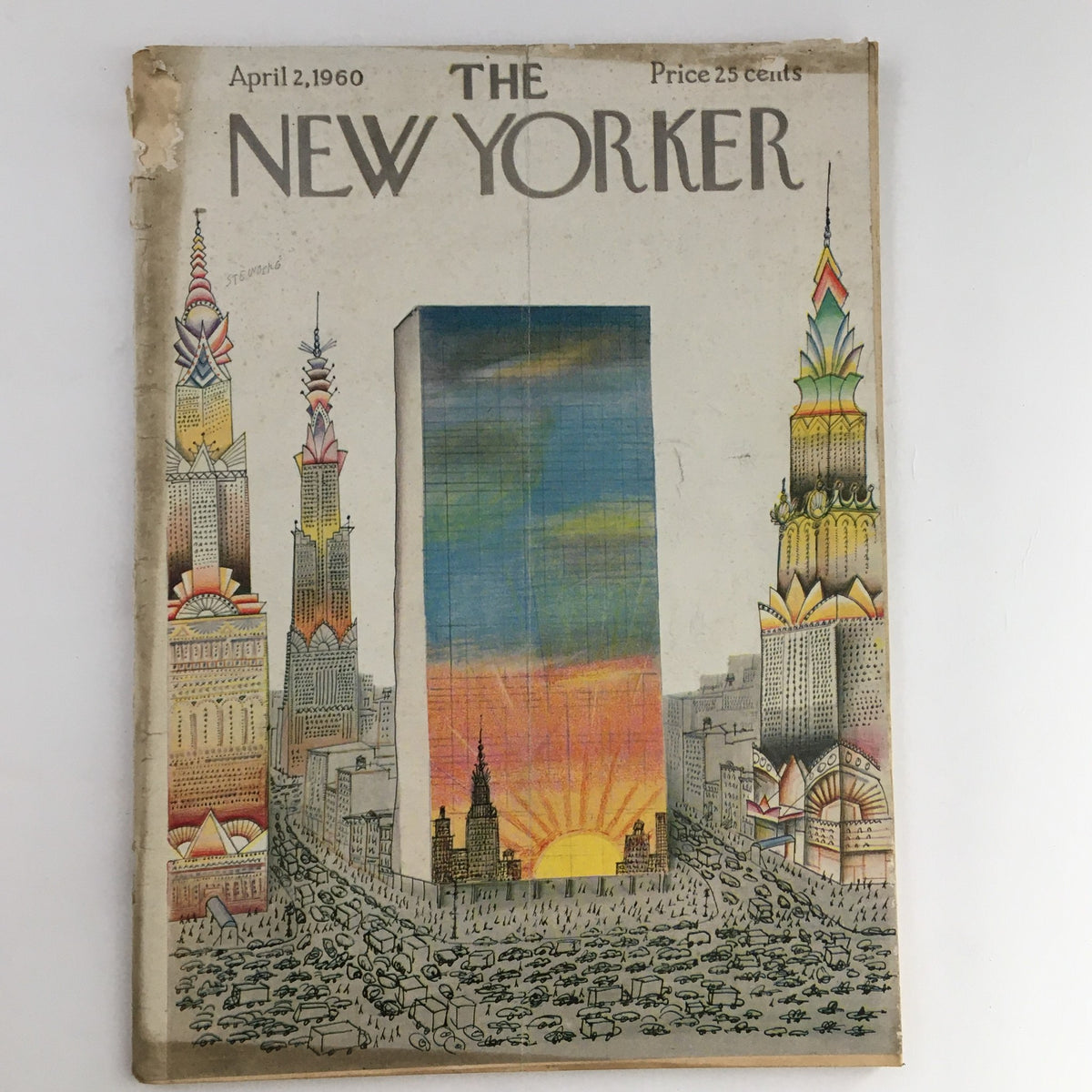
The April 2, 1960 issue of The New Yorker with a full theme cover by Saul Steinberg is a primary document of one of the most significant artist-magazine relationships in the history of American visual culture — and Steinberg covers in particular occupy a special category within the already distinguished tradition of New Yorker cover art. Steinberg contributed covers to The New Yorker from 1945 until his death in 1999, a fifty-four-year engagement that produced some of the most celebrated and reproduced images in American magazine publishing history. His visual language — the combining of architectural notation, cartographic conventions, calligraphic invention, and philosophical wit into images that operated simultaneously as drawings, jokes, and meditations — was unlike anything else in the magazine's roster and gave his covers a specific intellectual weight that the best of them carry into any serious discussion of postwar American graphic art. An April 2, 1960 full theme cover — meaning the entire cover composition is devoted to a single Steinberg concept rather than a partial or shared design — represents his approach at its most fully realized, with the complete cover surface available for the kind of visual argument that Steinberg made most powerfully when given the most space. The full scope of The New Yorker's cover art history and its long relationship with Steinberg is traceable through the New Yorker magazine collection.
April 2, 1960 places this issue at a specific and culturally interesting moment in both American intellectual life and in Steinberg's own career. By 1960, Steinberg had completed his 1956 collection The Passport and was working toward The Labyrinth, published in 1960 — making this issue a document of one of his most creatively productive periods. The specific thematic content of an April 1960 Steinberg cover would reflect the visual and conceptual concerns he was developing across this period: the nature of representation, the relationship between drawing and reality, the comedy and pathos of bureaucratic and social forms, the specific geography of American cultural identity. April 1960 was itself a moment of specific cultural and political significance in American life — the civil rights movement was intensifying, the 1960 presidential campaign was beginning in earnest, and the specific combination of postwar prosperity and social tension that characterized the Eisenhower-to-Kennedy transition was producing a cultural mood that the best New Yorker covers of the period responded to with unusual sensitivity. The broader context of this pivotal year in American cultural history is documented across the 1960 magazine collection.
The specific condition attributes of this issue require careful collector evaluation. The folded crease in the middle of the front cover is the most significant condition note for a cover-art-focused collecting purpose — its placement relative to the Steinberg composition will determine how significantly it affects the visual integrity of the image, and the photographs are the essential reference for assessing this. The no-label condition is a genuine positive: the cover survives without subscriber label obscuration, and whatever the Steinberg composition's subject, it remains fully intact as printed. Rips and marks throughout alongside binding wear are the honest condition attributes of an original periodical from sixty-five years ago without institutional preservation. The listing characterizes the overall condition as "acceptable," which is an honest assessment that collectors should evaluate against the specific visual evidence in the provided photographs.
About the Publication
The New Yorker was founded by Harold Ross in 1925 and established itself over the following decades as the most prestigious weekly literary and cultural magazine in the American tradition — its short fiction, reportage, criticism, poetry, and cartoon art collectively defining a standard of quality and a tone of urbane, intelligent engagement with the world that influenced American letters and journalism for a century. By April 1960 it was operating under the editorship of William Shawn, who had succeeded Ross in 1952 and who presided over what many regard as the magazine's greatest era of literary and journalistic achievement. Its cover art tradition — weekly original illustrations responsive to the season, the cultural calendar, or a single artist's specific visual argument — was one of the most sustained programs of commissioned visual art in American publishing history, and Steinberg's long association with it produced some of its most celebrated individual works.
Key Highlights Inside
- Full theme cover by Saul Steinberg — a complete cover composition by one of the most significant artist-magazine relationships in American visual culture, representing Steinberg's approach at its most fully realized with the complete cover surface devoted to a single visual concept, published during one of his most creatively productive periods.
- Editorial content consistent with The New Yorker's April 2, 1960 format — the Talk of the Town section, short fiction, poetry, criticism, cartoons, and cultural commentary that constituted the magazine's weekly offering at a moment when its literary and journalistic authority was at a peak under William Shawn's editorship.
- Period cartoons and illustrations from the broader contributing roster alongside the Steinberg cover — providing a cross-section of The New Yorker's visual art tradition at a specific and historically interesting moment in both the magazine's and Steinberg's respective creative histories.
- Note: Specific article titles, fiction contributors, bylines, and additional named interior features have not been confirmed from available sources. The highlights above reflect what is documented in the listing and The New Yorker's well-established editorial format for this period.
Condition & Rarity
The April 2, 1960 New Yorker with Steinberg cover carries a condition profile that the listing characterizes honestly as acceptable, with specific attributes that collectors of cover-art-focused issues should evaluate carefully through the provided photographs. The folded crease in the middle of the front cover is the most significant single condition note — its placement relative to the Steinberg composition determines how significantly it affects the visual integrity of the primary collecting reason for this issue, and the photographs are the essential reference for that assessment. Rips, marks throughout, and binding wear are the expected attributes of an original, unrestored periodical from sixty-five years ago without archival preservation. The no-label condition is a meaningful positive: the Steinberg cover image survives without subscriber label obscuration. Acceptable condition is an honest grade that collectors should calibrate against the specific evidence in the photographs rather than treating as a categorical statement about research or display utility. The plastic protective sleeve is the appropriate conservation measure.
Looking for More Issues Like This?
A Saul Steinberg full theme cover issue of The New Yorker from April 1960 is a primary document of one of the most significant artist-magazine relationships in American visual culture, and any surviving example in any condition rewards serious collector attention from those working on Steinberg's career, New Yorker cover art history, or early-sixties American visual culture. If this particular issue is no longer available, the full New Yorker magazine collection at OriginalMagazines.com is the most comprehensive source for exploring other issues across the publication's extraordinary run. For collectors building a broader archive of the early-sixties cultural moment, the complete 1960 magazine collection brings together publications from a year of significant American cultural and political transition.