



Description
Collector's Note – Why This Issue Matters
August 28, 1965 is a publication date of specific and historically weighted significance, and this New Yorker issue — with an Abe Birnbaum summer sun cover — documents the magazine at one of the most consequential moments of the mid-sixties decade. The Voting Rights Act had been signed by President Johnson on August 6, 1965 — just twenty-two days before this issue's publication — and the Watts uprising in Los Angeles had occurred from August 11 through August 17, ending just eleven days before this New Yorker appeared. The specific atmosphere of the week of August 28, 1965 in American public life was one of simultaneous legislative triumph and social catastrophe: the most significant voting rights legislation since Reconstruction had been enacted, and the most destructive urban uprising in American history to that point had just concluded with thirty-four deaths, more than a thousand injured, and the specific political shock of violence in a northern California city that complicated every available narrative about the civil rights movement's progress. A New Yorker from this specific week carries the documentary weight of that simultaneity in whatever its pages contain, produced by a publication that was engaging the civil rights movement and its contradictions with more sustained analytical seriousness than any other mainstream American magazine. For collectors building an archive of New Yorker issues from the pivotal mid-sixties period, this August 28, 1965 edition is a primary document of the publication navigating one of the most morally complex single weeks of the decade.
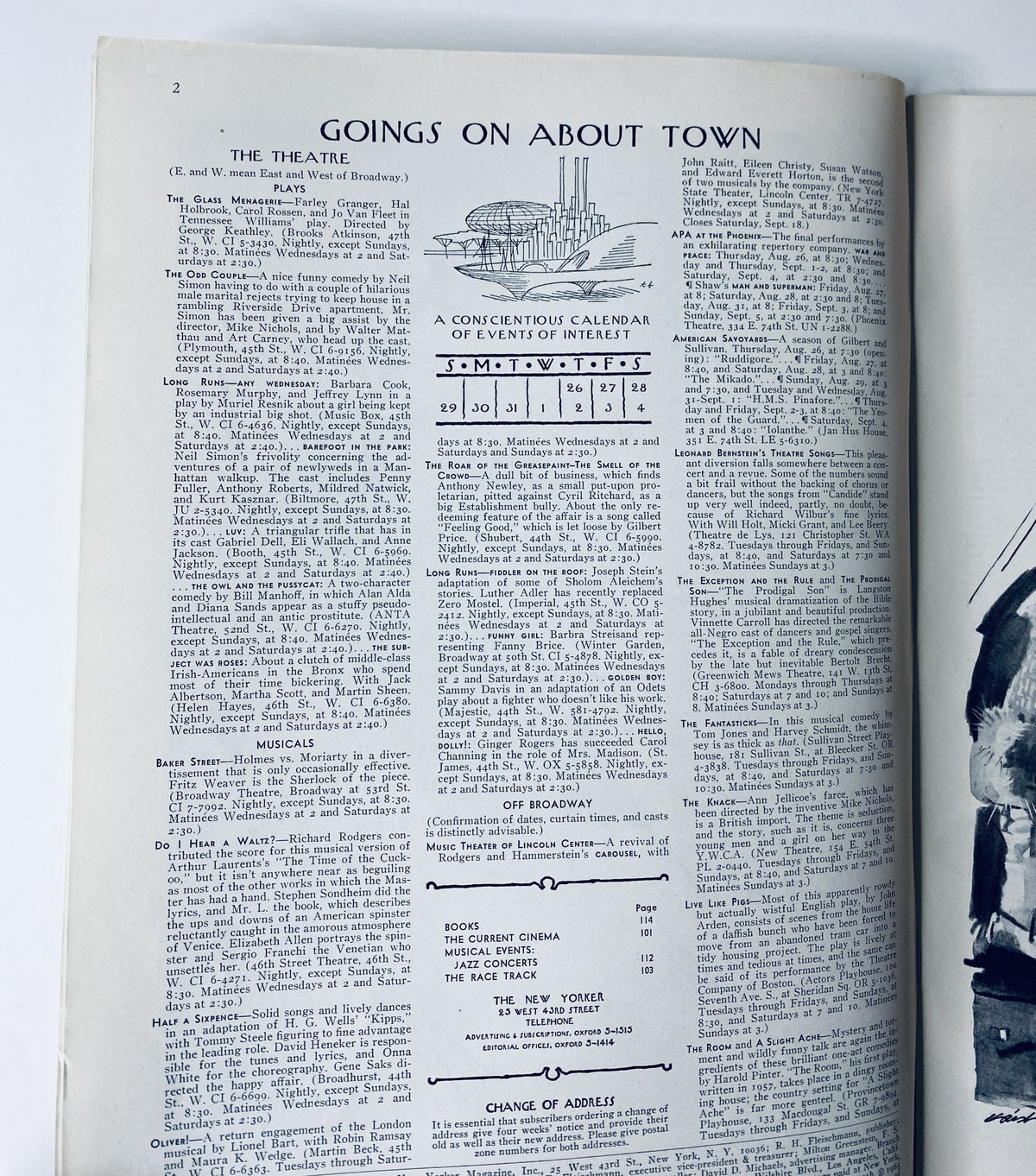
Abe Birnbaum's summer sun cover is a primary visual document of one of the New Yorker's accomplished mid-century cover artists producing his characteristic summer observation at the specific historical moment described above. Birnbaum had been contributing to the New Yorker since the 1940s and had developed a specific visual sensibility for the pleasures and textures of American seasonal life — the particular quality of late August light, the specific visual language of summer at its end — that gave his covers a documentary character alongside their charm. A late-August Birnbaum summer scene from 1965 carries the specific resonance of the New Yorker's characteristic editorial intelligence in its most historically tested moments: the pleasures of late summer as a visual register placed precisely in the week when American public life was absorbing the Watts uprising's full implications alongside the Voting Rights Act's historic promise. The "Musical Events: Jazz Concerts" department on page 112 is a historically interesting editorial entry — late August 1965 was a specific and rich moment in American jazz, with John Coltrane's most experimental period under way and the Newport Jazz Festival having occurred in July 1965, and a New Yorker jazz concert review from this week is a primary document of the publication's engagement with jazz at one of its most creatively significant and culturally resonant historical moments. Collectors researching New Yorker issues from 1965 will find this August 28 edition a precisely dated primary source of the publication at a historically specific and consequential late-summer moment.
The Current Cinema on page 101 would have engaged the specific film landscape of late August 1965, a period of active transition in American and international cinema — the mid-sixties were producing the creative ferment that would generate the American New Wave of the late decade, and the New Yorker's film criticism from this specific summer was documenting that transition in real time. The Books department on page 114 constitutes a primary source record of the literary critical engagement of a publication navigating the fall 1965 publishing season in the specific historical atmosphere of the Watts aftermath. The Race Track on page 103 adds the characteristic New Yorker quality of maintaining the full breadth of New York life — including summer racing — alongside its most serious engagement with the political and social crises of the moment, reflecting the editorial tradition that gave each Shawn-era issue its distinctive texture of complete cultural engagement even in the most historically weighted weeks.
About the Publication
The New Yorker was founded in 1925 by Harold Ross and by August 1965 had been publishing for forty years under the editorships of Ross and William Shawn, who had led the magazine since 1952 and whose tenure had deepened its commitment to long-form journalism, literary fiction, poetry, and cultural criticism while maintaining the visual humor and illustration tradition that had defined it from the beginning. The late-August 1965 New Yorker represents the Shawn-era publication at a specific and historically charged moment — eleven days after the Watts uprising and twenty-two days after the Voting Rights Act — when its characteristic combination of cultural breadth and moral seriousness was most directly tested by the specific demands of the historical week it was documenting.
Key Highlights Inside
- Abe Birnbaum summer sun cover — a primary visual document of one of the New Yorker's accomplished mid-century cover artists producing his characteristic late-August seasonal observation in the specific week following the Watts uprising and three weeks after the Voting Rights Act, the visual pleasures of summer placed in direct proximity to the most historically concentrated single week of mid-sixties American public life.
- "Musical Events: Jazz Concerts" on page 112 — a documented New Yorker jazz criticism entry from late August 1965, one of the most creatively significant periods in American jazz history, with Coltrane's most experimental phase under way and the Newport Jazz Festival's July 1965 edition recently concluded, constituting a primary source record of the publication's engagement with jazz at a historically and artistically specific moment.
- The Current Cinema on page 101 — a documented New Yorker film criticism entry from late August 1965, a period of active transition in American and international cinema, produced in the specific atmosphere of the Watts aftermath and the Voting Rights Act's passage and engaging the mid-sixties film landscape that was generating the creative ferment of the American New Wave.
- Books on page 114 — a documented New Yorker literary criticism entry from the opening of the fall 1965 publishing season, the publication's most considered critical tradition engaging new literary work in the specific historical atmosphere of the most consequential single week of the mid-sixties civil rights era.
- Note: Specific article titles within the departments, individual bylines, and confirmed secondary content details have not been individually verified for this issue beyond the documented table of contents entries. The highlights above reflect the New Yorker's well-established editorial format, the verified cover artist and subject, and the historical context of August 28, 1965.
Condition & Rarity
New Yorker issues from August 1965 are approaching their sixty-first year of existence, and the condition landscape for surviving copies from this mid-Shawn-era period reflects both the general attrition of that age and the specific collector significance of an Abe Birnbaum summer cover from the publication's most historically engaged decade. Very Good condition with only light edge wear is an honest and strong grade for a sixty-year-old weekly literary magazine, indicating a copy that retains full structural integrity, displays cleanly, and shows no significant cover damage or interior page loss beyond the minimal evidence of its age. The Birnbaum summer sun cover image — the primary visual asset for display-focused collectors — is preserved in this grade with the full visual integrity that conveys both the seasonal subject matter and the specific quality of his illustrative intelligence. The plastic protective sleeve provides ongoing archival protection for a publication of this age and paper chemistry. Collectors evaluating surviving examples of this issue should prioritize the Birnbaum cover image integrity, the completeness of the jazz criticism and cinema critical departments, and overall structural soundness as primary condition criteria for a mid-sixties New Yorker of this historically specific publication date.
Looking for More Issues Like This?
A Very Good copy of The New Yorker from August 28, 1965 with the Abe Birnbaum summer sun cover — published eleven days after the Watts uprising and twenty-two days after the Voting Rights Act, with jazz concert criticism and cinema reviews from one of the most historically concentrated single weeks of the mid-sixties decade — is a specifically dated Shawn-era literary magazine find whose historical context gives it a primary source weight extending well beyond the standard New Yorker back-catalog entry. If this issue is no longer available, the full New Yorker collection at OriginalMagazines.com is the most comprehensive place to browse surviving issues from across the publication's history and locate other Birnbaum covers, mid-sixties civil rights-era issues, or significant dates from the Shawn era's most consequential decade. The 1965 magazine collection brings together surviving issues from across that year's major publications for collectors working to document the full breadth of American print culture during one of the decade's most historically significant years.