

Description
Collector's Note – Why This Issue Matters
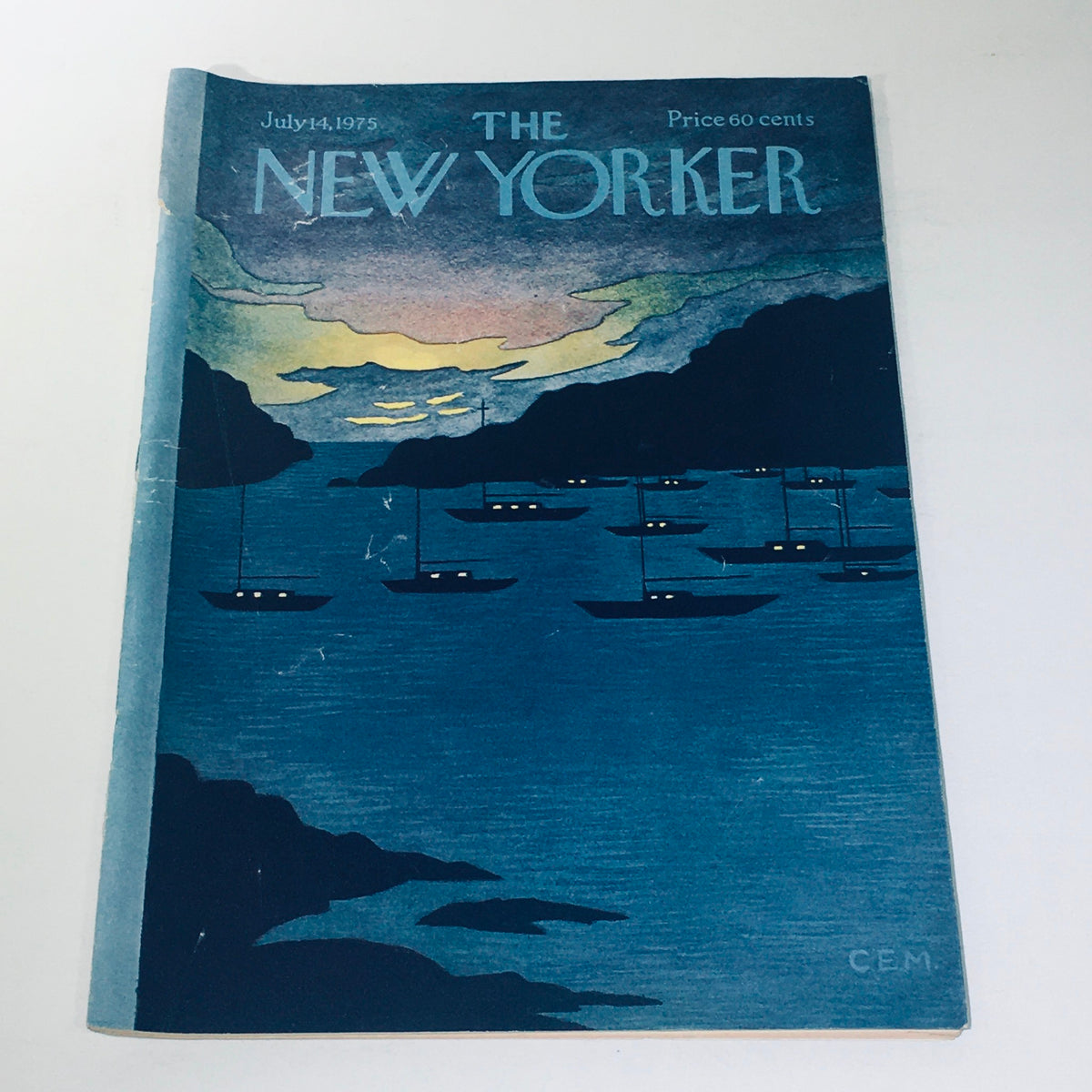
The New Yorker Magazine July 14, 1975 is notable for its cover, “Boats Docked at Night,” by Charles E. Martin. The listing describes a tranquil nighttime waterfront scene with boats, placing the issue within The New Yorker’s long tradition of cover art that observes mood, place, season, and urban life without needing a literal headline. For collectors of vintage The New Yorker magazines, artist-attributed covers are especially meaningful because they connect a specific issue date to the magazine’s visual history. Martin’s cover subject also reflects one of the magazine’s enduring strengths: the ability to turn an ordinary scene into a quiet cultural image. Rather than relying on celebrity or spectacle, the cover’s appeal comes from atmosphere, composition, and the recognizable calm of a nighttime harbor.
The July 14, 1975 date places this issue in the mid-1970s, a period when The New Yorker remained a major American literary and cultural weekly. Its covers often worked as quiet visual essays, using everyday scenes to suggest atmosphere, memory, humor, or social observation. A cover centered on boats docked at night fits that tradition well, offering a calm image of waterfront life rather than a celebrity or news-driven subject. As part of the wider archive of original 1975 magazines, this issue helps preserve the look and tone of American magazine illustration during that decade. It also reflects the continued importance of weekly print culture at a time when magazines were still central to how readers encountered fiction, criticism, cartoons, essays, and visual art.
The listing does not confirm the full table of contents, article titles, fiction, cartoons, or reviews, so the documented collector focus rests on the date, publication, cover title, cover artist, no-label newsstand format, and stated condition details. That is still enough to give the issue a clear research identity. New Yorker issues are often collected as much for their cover art as for their written contents, and this July 1975 example belongs to the quieter, atmospheric side of the magazine’s cover tradition. For illustration-focused collectors, the cover title and artist attribution give the issue a defined place within The New Yorker’s long visual archive. For period collectors, the issue also serves as a compact record of how mid-1970s cultural magazines presented refinement, observation, and visual restraint.
About the Publication
The New Yorker is a long-running American magazine known for literary journalism, fiction, essays, criticism, cartoons, poetry, cultural commentary, and distinctive cover illustration. Its audience has historically included readers interested in literature, art, politics, humor, urban life, and intellectual culture. By 1975, the magazine had already established a strong identity built around carefully edited prose, visual wit, and covers that often functioned as cultural observations in miniature. For collectors, The New Yorker is important not only because of its writing, but also because its weekly covers preserve changing styles of illustration, design, and social atmosphere across decades. The magazine’s format makes each issue useful as a dated artifact: a combination of editorial voice, illustration, humor, criticism, and period design. That layered quality is why individual issues can matter to literary collectors, art collectors, social historians, and readers studying American magazine culture.
Key Highlights Inside
- July 14, 1975 issue of The New Yorker Magazine, representing the magazine’s mid-1970s literary and illustrated weekly format.
- Features the cover “Boats Docked at Night” by Charles E. Martin, as stated in the listing.
- The cover is described as a tranquil nighttime waterfront scene featuring boats.
- Represents mid-1970s New Yorker publishing, when the magazine continued to combine literary writing, cartoons, criticism, and distinctive cover art.
- The listing notes intact pages and the magazine’s characteristic journalism and illustrations, though specific interior article titles are not confirmed.
- Identified as a no-label newsstand example, supporting cleaner cover presentation for collectors and allowing the Charles E. Martin artwork to remain visually uninterrupted.
Condition & Rarity
The listing describes this July 14, 1975 issue of The New Yorker as being in good condition, with minor wear typical of age, intact pages, no label, and a plastic protective covering. In collector terms, good condition indicates a complete and presentable vintage magazine with visible handling or age evidence rather than a high-grade pristine example. The no-label newsstand format is significant because it leaves the Charles E. Martin cover art uninterrupted, which matters when the cover image is the primary documented feature. For New Yorker collectors, condition assessment usually focuses on cover surface quality, spine wear, corner condition, page completeness, edge wear, and whether the cover is affected by a mailing label. The plastic covering helps protect against dust and handling, but the underlying wear remains part of the magazine’s collector-grade profile. Because weekly magazines were commonly read, stacked, mailed, and stored casually, minor wear is expected in surviving examples from the 1970s. A complete no-label example with intact pages remains useful for reference, display, and cover-art study even when light age wear is present.
Looking for More Issues Like This?
Specific New Yorker issues from the 1970s can be challenging to locate by exact date and cover artist, especially when the appeal centers on a quiet illustrated scene such as Charles E. Martin’s “Boats Docked at Night.” Collectors researching related literary and illustrated magazine history may want to browse The New Yorker back issues for other examples of the magazine’s cover art, cartoons, fiction, criticism, and cultural commentary. Looking across multiple issues can also show how the magazine used cover illustration to capture seasons, city life, leisure, weather, and subtle social moments.
For broader historical context, the archive of vintage 1975 magazines helps place this issue alongside other publications from the same year. That wider view is useful for understanding how mid-1970s magazines balanced writing, illustration, design, and cultural memory. It also helps collectors see this New Yorker issue as part of a larger print landscape rather than as a single isolated weekly publication.