


Description
Collector's Note – Why This Issue Matters
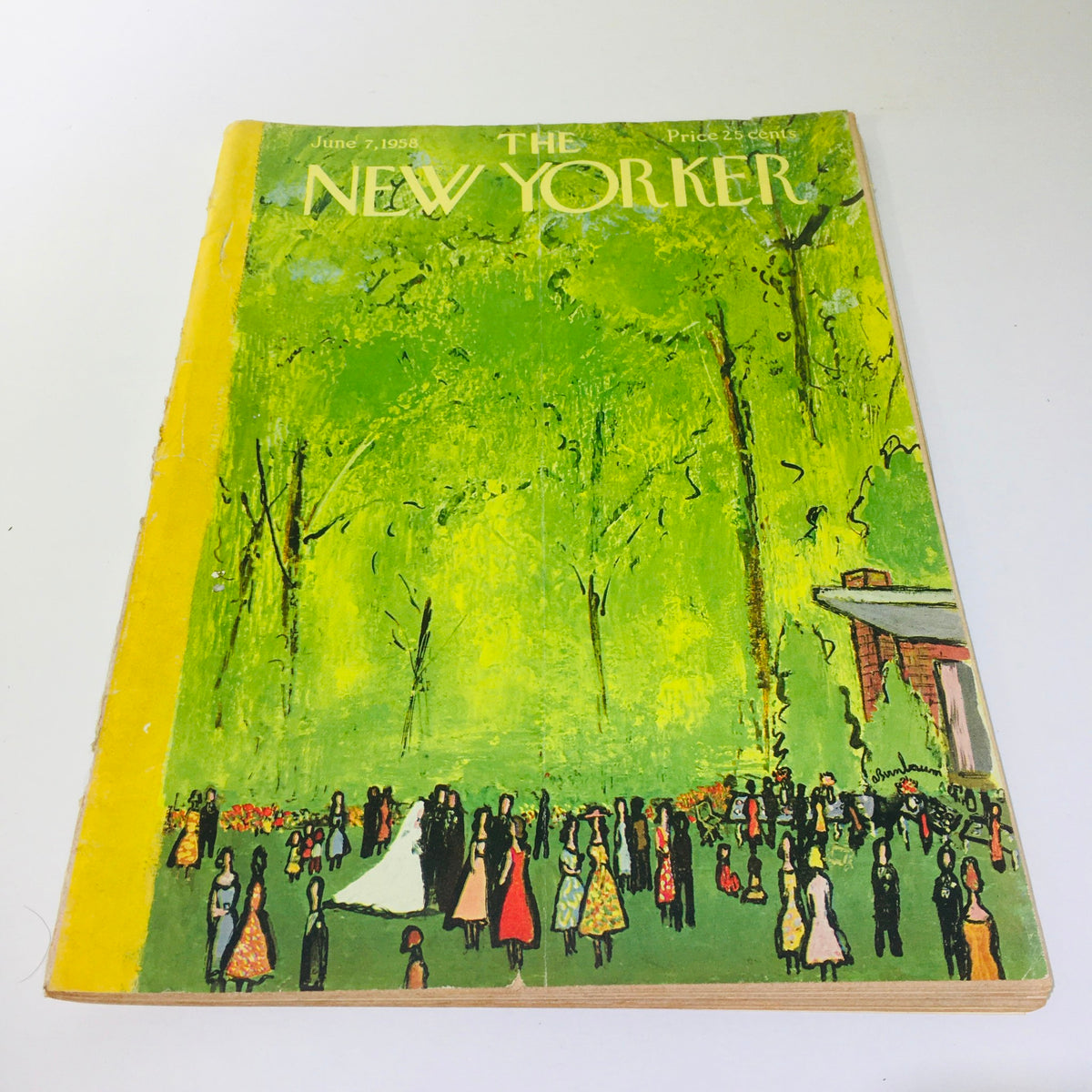
The June 7, 1958 issue of The New Yorker featuring a full theme cover by Abe Birnbaum is a document of mid-century American magazine art at one of its most accomplished and atmospherically precise points, produced by an artist whose decades-long association with the publication had given him an unparalleled command of how to render New York life in the specific visual language the magazine had developed over three decades. Birnbaum had been contributing covers to The New Yorker since the late 1930s, and by 1958 he was at the height of his creative powers — a mature artist in full command of the graphic sensibility he had refined through nearly twenty years of seasonal cover assignments. A June cover by Birnbaum was a particular kind of editorial and artistic event: early summer in New York, with all the visual richness of the season — the particular quality of June light on city streets, the shift in outdoor life that warmer weather produces, the specific pleasures of a city emerging from the long indoor months — was exactly the kind of subject his atmospherically attentive visual approach was designed to capture. His covers are among the most painterly in the magazine's history, bringing to their subjects a tonal sensitivity and an attention to light and shade that relates them to the tradition of American Impressionism rather than to the graphic commercial illustration that characterized much magazine art of the period. Collectors building a focused archive of Birnbaum's cover work — one of the most coherent and rewarding bodies of seasonal urban illustration in the history of American periodical art — will find the The New Yorker collection at OriginalMagazines.com the essential resource for tracking down individual issues.
June 1958 places this issue at a specific and interesting moment in the cultural and political life of postwar America. The late 1950s were a period of extraordinary material prosperity and equally extraordinary cultural anxiety — the Sputnik launch of October 1957 had shaken American confidence in its technological superiority and triggered a national reassessment of education, science policy, and the country's competitive position in the Cold War, and the reverberations of that shock were still reshaping the national conversation eight months later when this issue appeared. The baby boom generation was coming of age in an America that was simultaneously the most affluent society in history and a society acutely uncertain about its future security. The New Yorker's editorial voice in this atmosphere was characteristically double: sophisticated, cosmopolitan, and deeply engaged with the pleasures of urban intellectual life, while maintaining a clear-eyed awareness of the larger anxieties that prosperity could not entirely resolve. A Birnbaum June cover arriving in that cultural moment — almost certainly depicting some aspect of New York urban life rendered with warmth and precision — participated in the magazine's consistent insistence that the pleasures of city life and the life of the mind were worth celebrating even in anxious times. The 1958 magazines collection at OriginalMagazines.com gathers publications from across a year whose cultural and political significance continues to reward close examination.
It is also worth situating the June 7, 1958 issue within the specific editorial calendar of the magazine under William Shawn, who had succeeded Harold Ross as editor in 1951 and had by 1958 fully established the editorial vision that would define the publication for the next three decades. Early June issues in the Shawn era had a distinctive quality: the cultural season in New York — theater, opera, gallery openings — was winding down as summer approached, and the editorial content shifted toward the longer, more reflective features that summer's slower pace permitted, alongside the fiction and poetry that had always been central to the magazine's identity. A Birnbaum cover for this moment in the magazine's calendar was an editorially precise choice — his atmospheric urban scenes were particularly well suited to the contemplative, seasonal quality of early summer issues, and his cover for June 7, 1958 would have set a specific visual and tonal register for the issue it fronted. For collectors who engage with individual New Yorker issues as coherent editorial objects rather than simply as containers for specific articles or bylines, this relationship between cover art and editorial content is one of the publication's most rewarding dimensions.
About the Publication
The New Yorker was founded in 1925 by Harold Ross as a weekly magazine for a cosmopolitan, intellectually engaged readership that valued precision, depth, and wit over the sensationalism dominating American popular publishing at the time. By June 1958, under the editorship of William Shawn, it had established itself as the most serious and consequential general-interest weekly in the English-speaking world, simultaneously the premier venue for long-form narrative journalism, literary fiction and poetry, cultural criticism, and some of the most visually accomplished illustration and cartooning in the history of American periodical art. Its format was consistent and deeply familiar: a cover illustration, followed by "The Talk of the Town," then features, fiction, poetry, and criticism, with single-panel cartoons distributed throughout. The magazine carried no photography in its editorial pages, a deliberate choice that made its commissioned cover art the sole vehicle for its visual identity and that placed extraordinary editorial weight on the cover as a primary aesthetic statement — making a Birnbaum cover assignment a significant editorial decision as well as an artistic commission, and giving the resulting image a status as a standalone art object that the magazine's covers have always carried.
Key Highlights Inside
- Full theme cover by Abe Birnbaum — a seasonal cover illustration by one of the magazine's longest-serving and most atmospherically accomplished cover artists, produced in the mature phase of a career that had spanned nearly two decades at the publication and that brought to its June subject the full resources of a visual approach noted for its painterly tonal sensitivity and its precise attention to the specific quality of urban light across seasons.
- Early summer 1958 editorial content in the Shawn tradition — as with all issues from this period, the June 7 number would have included "The Talk of the Town," long-form features, fiction, poetry, and criticism produced to the exacting standards that defined Shawn's editorship, with the reflective, seasonally inflected quality that characterized early summer issues as New York's cultural calendar wound toward its summer pause.
- Post-Sputnik late 1950s cultural atmosphere — published eight months after the Soviet Sputnik launch had triggered a national reassessment of American technological and educational priorities, this issue arrives in a cultural moment of prosperity shadowed by anxiety, a combination that gave The New Yorker's consistent celebration of urban intellectual life a particular resonance and purpose.
- Birnbaum's mature cover work from his peak period — the June 1958 cover belongs to the most accomplished phase of Birnbaum's career at the magazine, when his visual language was fully developed and his command of seasonal urban atmosphere was at its most precise and most painterly, making issues from this period the most rewarding for collectors of his work specifically.
- Full magazine, no address label — the confirmed complete issue and absence of newsstand address label place this number in the more desirable subset of surviving copies from a publication whose subscriber distribution model means labeled copies represent the substantial majority of what survives from any given issue.
- Note on interior specifics: Precise article titles, fiction bylines, and feature content for this individual issue are unconfirmed from available sourcing. The highlights above reflect what is verifiable from the cover artist, the publication date and its cultural context, and The New Yorker's thoroughly documented editorial format and seasonal content patterns under William Shawn.
Condition & Rarity
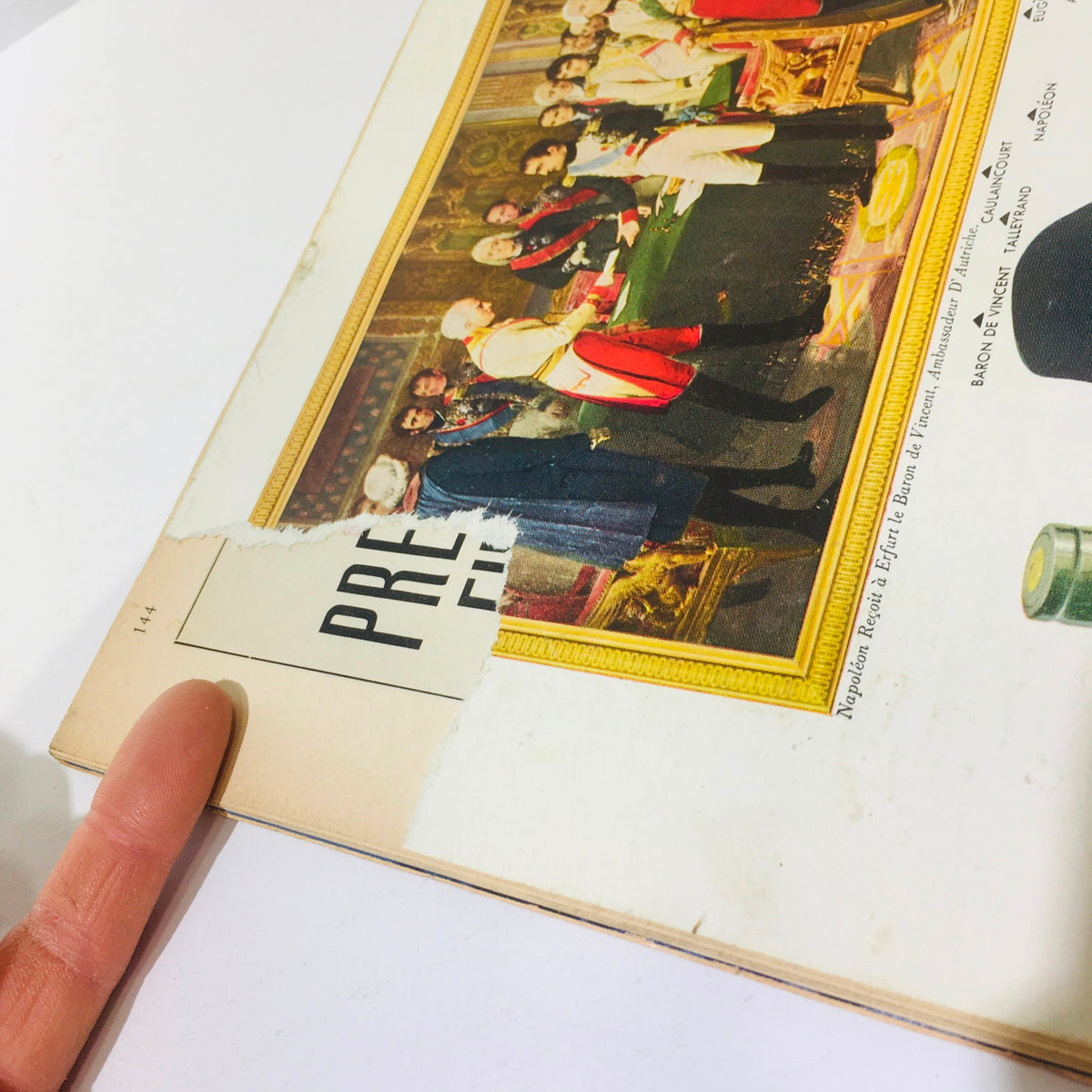
Surviving copies of this issue in good condition with minor wear represent honest and typical examples of a sixty-seven-year-old weekly magazine that has been read, handled, and stored over the course of its long existence. Minor wear throughout — light toning of the paper stock, gentle softening at the edges, small handling marks — is entirely expected at this age and does not materially diminish collector or display value when the structural integrity of the issue remains sound. The minor rip on the back cover is a condition attribute that should be assessed for its precise location and extent: a small rip confined to the back cover's margin affects display value considerably less than one intersecting the back cover's primary area, and since the front cover carries the primary collector and display value of a Birnbaum issue, back cover damage of modest scale is typically regarded as a secondary condition factor. The listing notes the absence of a plastic protective covering, which means any surviving copy not already in archival storage should be placed in a protective sleeve to stabilize existing condition and prevent further paper deterioration — particularly important for a magazine of this age where unprotected storage accelerates the toning and edge fragility that time alone is already producing. The absence of a newsstand address label is the most significant positive condition attribute, placing any surviving copy in the cleaner and less common subset of the surviving pool and preserving Birnbaum's cover illustration in its undisturbed state — a priority for any display-oriented collector of his work.
Looking for More Issues Like This?
Abe Birnbaum cover issues of The New Yorker are consistently sought by collectors who appreciate his atmospheric approach to urban seasonal illustration, and a June 1958 number from the height of his creative powers — with its post-Sputnik cultural context and its precise early summer editorial register — is a particularly rewarding example for anyone serious about either the artist or the magazine's mid-century visual history. If you're building a collection of his cover work or want to explore the publication across the Shawn era's most accomplished years, the The New Yorker collection at OriginalMagazines.com is the most comprehensive place to browse what's currently available. For collectors drawn to the rich and often underappreciated cultural landscape of late 1950s America — prosperity and anxiety in productive tension, the space age beginning and the social upheavals of the 1960s still gathering — the 1958 magazines collection offers a wide range of titles from a year that rewards close attention from any angle.