

Description
Collector's Note – Why This Issue Matters
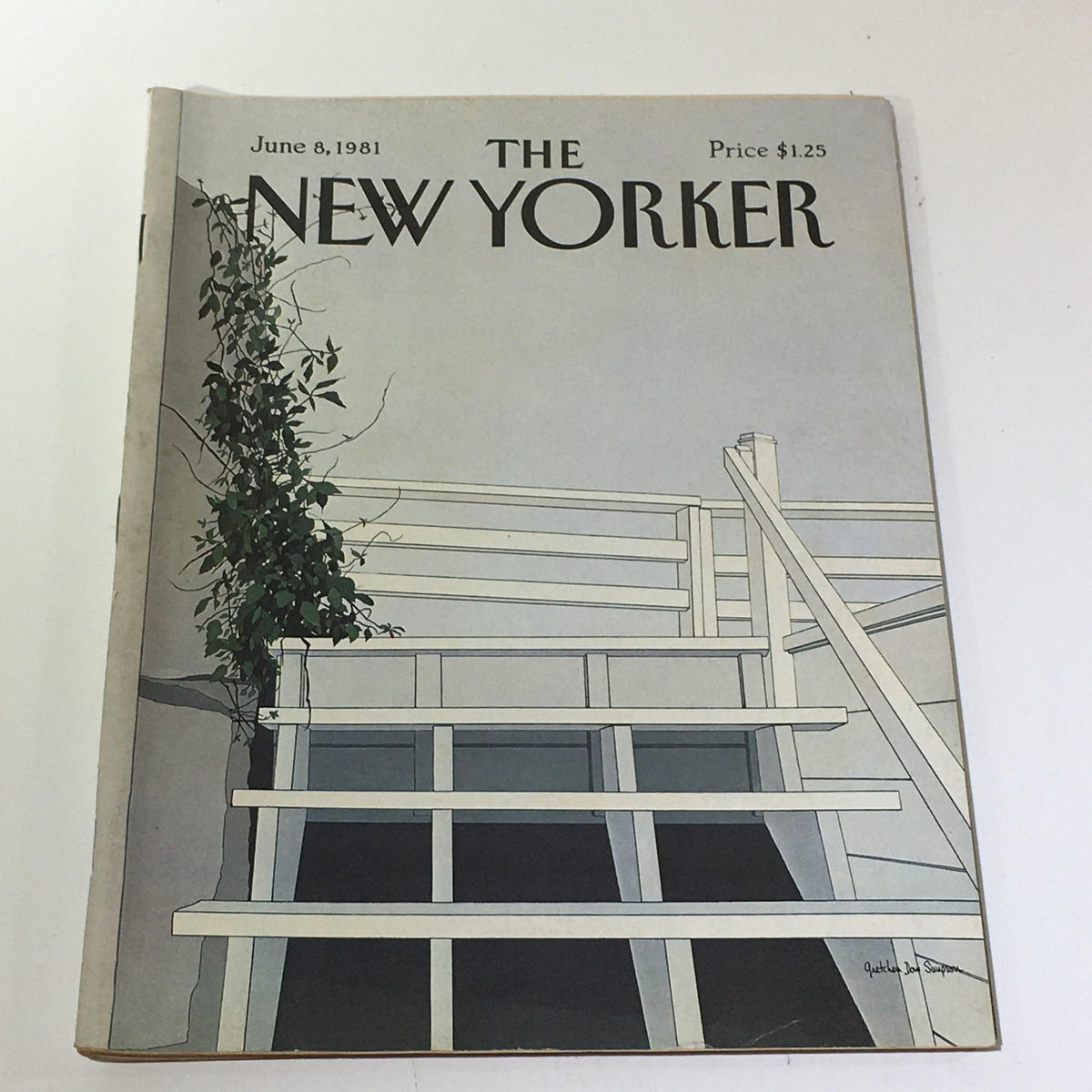
The June 8, 1981 issue of The New Yorker is identified in the listing as a full magazine with a theme cover by Gretchen Dow Simpson. Simpson is known for carefully observed architectural, domestic, and landscape subjects, often rendered with a quiet precision that fits naturally within The New Yorker’s long cover-art tradition. For collectors, a dated issue connected to Simpson is valuable because it represents the magazine’s continued commitment to illustration as a form of cultural observation, not merely decoration. Her work is especially well suited to the magazine’s visual language because it often asks the viewer to pause over place, proportion, surface, and mood.
The date places the issue in the early 1980s, a period of transition in American politics, design, publishing, and urban culture. A complete magazine from June 1981 preserves not only the cover image, but also the surrounding editorial environment of that week: the articles, cartoons, advertisements, typography, and pacing that shaped the reader’s experience. For collectors researching magazines published in 1981, this issue offers a useful example of how a major literary and cultural weekly presented itself at the beginning of the decade. It also helps document a time when print magazines remained central to cultural conversation, before digital media changed how readers encountered criticism, humor, fiction, and illustration.
The no-address-label detail is particularly important for The New Yorker collectors because the cover is often one of the main reasons an issue is preserved. A clean cover presentation allows the Gretchen Dow Simpson artwork to remain visually uninterrupted, even when age-related wear is present. While the listing does not confirm specific article titles, authors, or a complete table of contents, the verified publication date, full-magazine format, artist attribution, and condition notes make this issue a meaningful reference object for collectors of New Yorker cover art and early-1980s print culture. As a complete issue, it also retains the relationship between cover, editorial tone, cartoons, and period advertising, which is difficult to appreciate from a detached cover alone.
About the Publication
The New Yorker is an American magazine known for literary journalism, fiction, essays, criticism, cartoons, reporting, and distinctive cover illustration. Its readership has traditionally included people interested in literature, politics, humor, the arts, urban life, and cultural commentary. By 1981, the magazine had already established a durable editorial identity built around long-form writing, understated humor, cultural criticism, and covers that often captured a mood, place, season, or social detail without needing a headline. Complete vintage issues are especially useful because they preserve the full magazine experience rather than isolating the cover from its original editorial setting. In a publication where visual tone and written voice are so closely linked, the full issue format helps collectors understand how the magazine functioned as a weekly cultural object. It also preserves the advertisements, layout choices, paper quality, and editorial pacing that give a dated issue its historical texture.
Key Highlights Inside
- June 8, 1981 issue of The New Yorker, representing the magazine during the early 1980s and preserving its weekly cultural format.
- Identified in the listing as a full magazine with a theme cover by Gretchen Dow Simpson, making the cover attribution the primary verified collector reference point.
- No address label, preserving the cover presentation without subscription-label interruption and supporting a cleaner display appearance.
- The listing describes the issue as containing insightful articles reflecting the cultural and social dynamics of the period, though specific article titles are not confirmed.
- Condition notes mention good overall condition, age-consistent wear, possible minor edge rips, and bends on the cover and front pages.
- Specific article titles, contributors, cartoons, fiction pieces, page numbers, and complete interior contents are not confirmed from the provided listing, so those details should not be assumed without direct inspection of the issue.
Condition & Rarity
Surviving examples of this June 8, 1981 issue should be evaluated for cover cleanliness, spine stability, edge wear, page completeness, and the visual condition of the Gretchen Dow Simpson cover. The listing describes the magazine as used and in good overall condition, with possible signs of wear, minor edge rips, no address label, and bends on the cover and front pages. The absence of an address label is a meaningful presentation detail because mailing labels can interrupt the artwork on The New Yorker covers. Minor wear and bends are common in weekly magazines from this period, especially when they were read, stacked, stored casually, or handled over many years. Collector-grade assessment should focus on whether the issue remains complete, structurally intact, readable, and visually presentable despite age-related handling signs. Since the front pages are noted as possibly bent, collectors should pay particular attention to whether those bends affect the cover image, the first interior pages, or the magazine’s ability to lie flat. Edge rips should also be assessed by size and location, since small peripheral tears are less significant than damage that reaches text, artwork, or the spine.
Looking for More Issues Like This?
The June 8, 1981 Gretchen Dow Simpson theme-cover issue is the kind of dated The New Yorker magazine that appeals to collectors of illustration, literary magazines, and early-1980s print culture. Related examples can be explored through the broader The New Yorker magazine collection, especially for readers interested in complete issues, cover artists, cartoons, and the magazine’s visual history. Looking across multiple issues can help collectors trace how the magazine used illustration to capture seasons, spaces, city life, domestic scenes, and cultural moods over time.
For a wider view of the same publishing year, the 1981 magazine collection is useful for comparing how different publications documented art, literature, politics, advertising, and everyday life at the beginning of the 1980s. That broader context helps place this issue within the larger magazine culture of its time. It can also help collectors understand how a literary weekly like The New Yorker differed from news, fashion, entertainment, and specialty magazines published during the same year.