

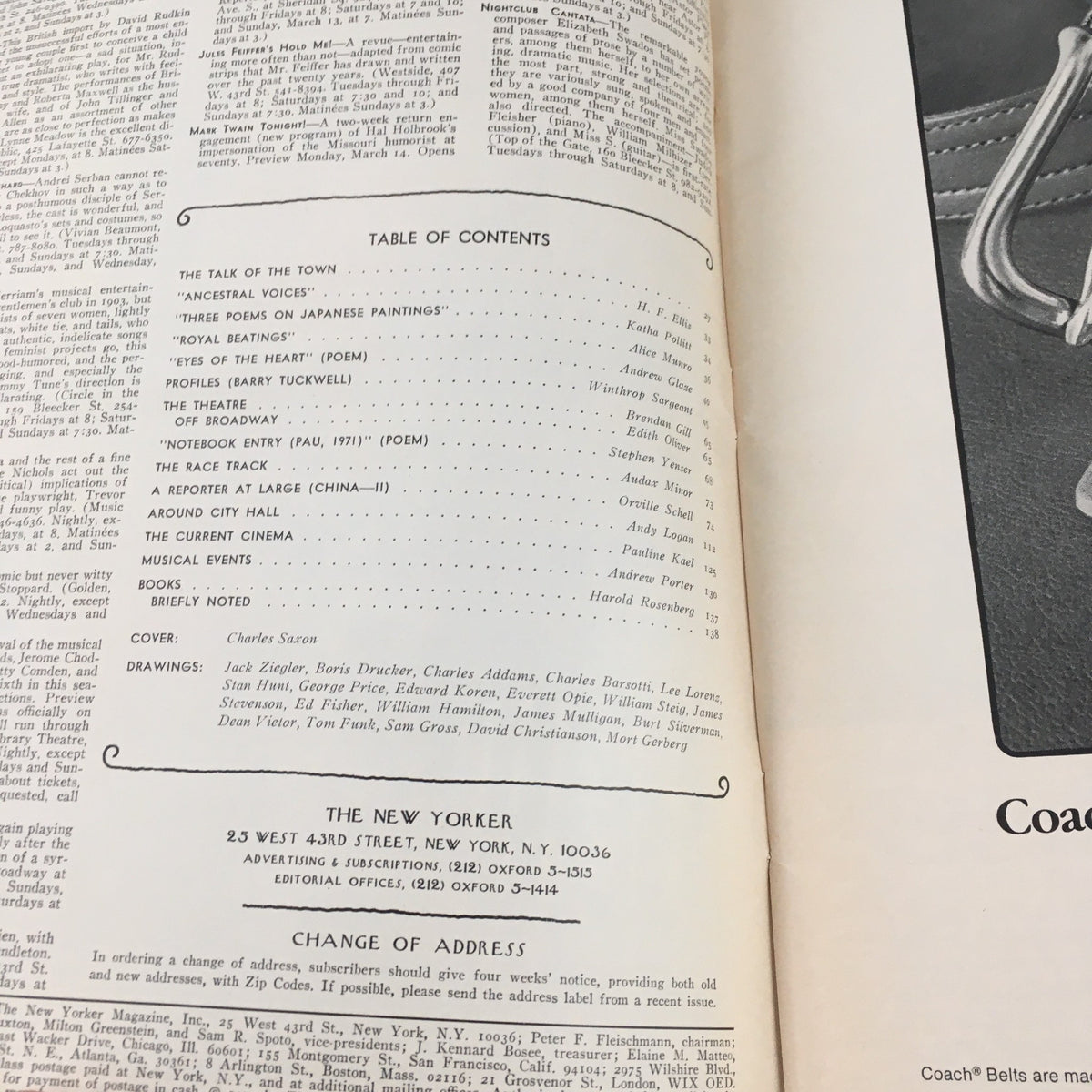


Description
Collector's Note – Why This Issue Matters
The New Yorker Magazine dated March 14, 1977, is identified in the listing as featuring a theme art cover by Charles Saxon, one of the artists closely associated with the magazine’s sophisticated visual humor and social observation. For collectors, that cover attribution is the central confirmed point of interest. Saxon’s work fits naturally within The New Yorker tradition: carefully observed, urbane, understated, and often built around a quiet moment rather than a dramatic headline. A dated issue with a named cover artist gives collectors a precise reference point for studying the magazine’s visual history. The issue also reflects the importance of the magazine cover as an editorial statement, not merely a decorative wrapper. In the world of The New Yorker collecting, artist attribution, publication date, and cover presentation often become the key identifiers that make one issue distinct from another.
The March 14, 1977 issue belongs to a period when weekly print magazines still played a major role in American literary and cultural life. The New Yorker was not simply a magazine of current events; it was a weekly record of criticism, fiction, cartoons, reporting, commentary, and illustrated cover art. For those researching vintage The New Yorker magazines, a no-label issue with a Charles Saxon cover is especially relevant because the front cover remains central to how the magazine is collected, displayed, and studied. The absence of a label allows the artwork to be viewed closer to its original newsstand presentation, which matters for collectors who focus on design and display quality. The issue therefore sits at the intersection of literary publishing, illustration history, and late-1970s American magazine culture.
The 1977 date also gives the issue a clear historical setting. It sits in the late-1970s magazine landscape, before digital publishing, when a weekly issue carried the texture of its exact cultural moment: the design choices, advertising language, humor, editorial tone, and reading habits of its time. Within the larger world of original 1977 magazines, this issue represents the continuing importance of illustrated literary periodicals in American print culture. Even when specific interior article titles are not confirmed, the issue’s date, title, artist attribution, and no-label condition make it a useful archival object. It can be studied as part of a broader pattern in which The New Yorker used its weekly covers to capture mood, season, social behavior, and visual wit without relying on cover lines. For collectors, that restraint is part of the magazine’s enduring identity.
About the Publication
The New Yorker is one of the most significant American weekly magazines of the 20th century, known for literary journalism, fiction, essays, criticism, cartoons, poetry, humor, and distinctive illustrated covers. Founded in 1925, it developed an audience interested in urban life, literature, politics, the arts, and refined social commentary. By 1977, the magazine had a deeply established editorial identity: intelligent, observant, visually restrained, and closely tied to New York as both a real city and a cultural symbol. Its weekly format made each issue a blend of serious writing, wit, criticism, cartoons, and cover illustration, which is why collectors often treat individual issues as both reading material and design artifacts. The publication’s structure also made room for both topical commentary and slower, more literary forms of observation, giving each issue a layered character. For archivists, The New Yorker is especially valuable because each dated issue preserves a precise snapshot of American cultural conversation. Its covers, cartoons, and editorial voice together create a record of how taste, humor, and intellectual life were framed for a sophisticated readership.
Key Highlights Inside
- March 14, 1977 issue of The New Yorker, a weekly publication known for literary journalism, fiction, criticism, cartoons, humor, and illustrated cover art. The exact date helps collectors place the issue within the magazine’s chronological run and within the broader cultural setting of the late 1970s.
- Features a theme art cover by Charles Saxon, as stated in the listing title and description. The named artist attribution gives the issue added importance for collectors of The New Yorker cover illustration and for readers who follow the magazine’s long tradition of visual commentary.
- Described as a newsstand edition without a label. For collectors of illustrated magazines, a no-label cover is important because it preserves the visual presentation of the cover art and avoids the interruption that a mailing label can create.
- The listing notes that the pages remain intact, an important condition point for any vintage weekly magazine that may have been read, stored, or handled over many decades. Page completeness matters because The New Yorker issues are valued not only for their covers but also for their interior editorial and cartoon content.
- The issue is associated with the magazine’s typical mix of enriching articles, witty humor, and thought-provoking commentary, though specific interior article titles and contributors are not confirmed in the provided listing. Those interior details should be verified through direct inspection before being cited as part of the issue’s contents.
- The confirmed appeal rests on the dated 1977 publication identity, Charles Saxon cover art, no-label presentation, intact pages, and its place within late-1970s American periodical culture. These are the strongest reliable details available from the listing and provide a responsible foundation for collector research.
Condition & Rarity
Collector-grade evaluation of this March 14, 1977 issue should focus on the preservation of the Charles Saxon cover, the absence of a mailing label, page completeness, spine integrity, surface wear, edge wear, creasing, and any signs of handling across the magazine. The listing describes the magazine as being in good condition with minor wear throughout, while also noting that each page remains intact. That combination suggests a readable and presentable vintage issue rather than a flawless archival example. The newsstand, no-label attribute is especially important for The New Yorker collectors because address labels can interrupt the cover art and reduce display appeal. The plastic protective covering mentioned in the listing is a useful storage measure, but it should be understood as later protection rather than an original publication feature. For vintage weekly magazines from the 1970s, ordinary age wear is common; what matters most is whether the cover image remains attractive, the binding is stable, and the interior is complete. Minor wear does not erase collector interest when the issue retains its visual integrity and readable pages. In evaluating surviving examples, collectors should look for tears, stains, loose pages, writing, clipped material, or heavy spine damage, since those factors can affect both archival usefulness and display quality.
Looking for More Issues Like This?
Specific dated issues of The New Yorker with named cover artists can be challenging to locate, especially when collectors are searching for a particular publication week, artist, or no-label presentation. Readers interested in related issues can browse collectible The New Yorker magazines to compare other examples of the magazine’s cover art, cartoons, fiction, criticism, and cultural commentary. The broader title collection is especially useful for seeing how the magazine’s visual language changed from week to week and decade to decade.
Collectors who study magazines by year may also find the broader archive of vintage 1977 magazines helpful for placing this March issue within the wider print culture of the late 1970s. Looking across the year can show how magazine design, advertising, humor, literary publishing, and American cultural interests were being presented in periodicals of the same moment. For researchers who collect by date, year-based browsing can also reveal unexpected connections between magazines published during the same cultural season.