

Description
Collector's Note – Why This Issue Matters
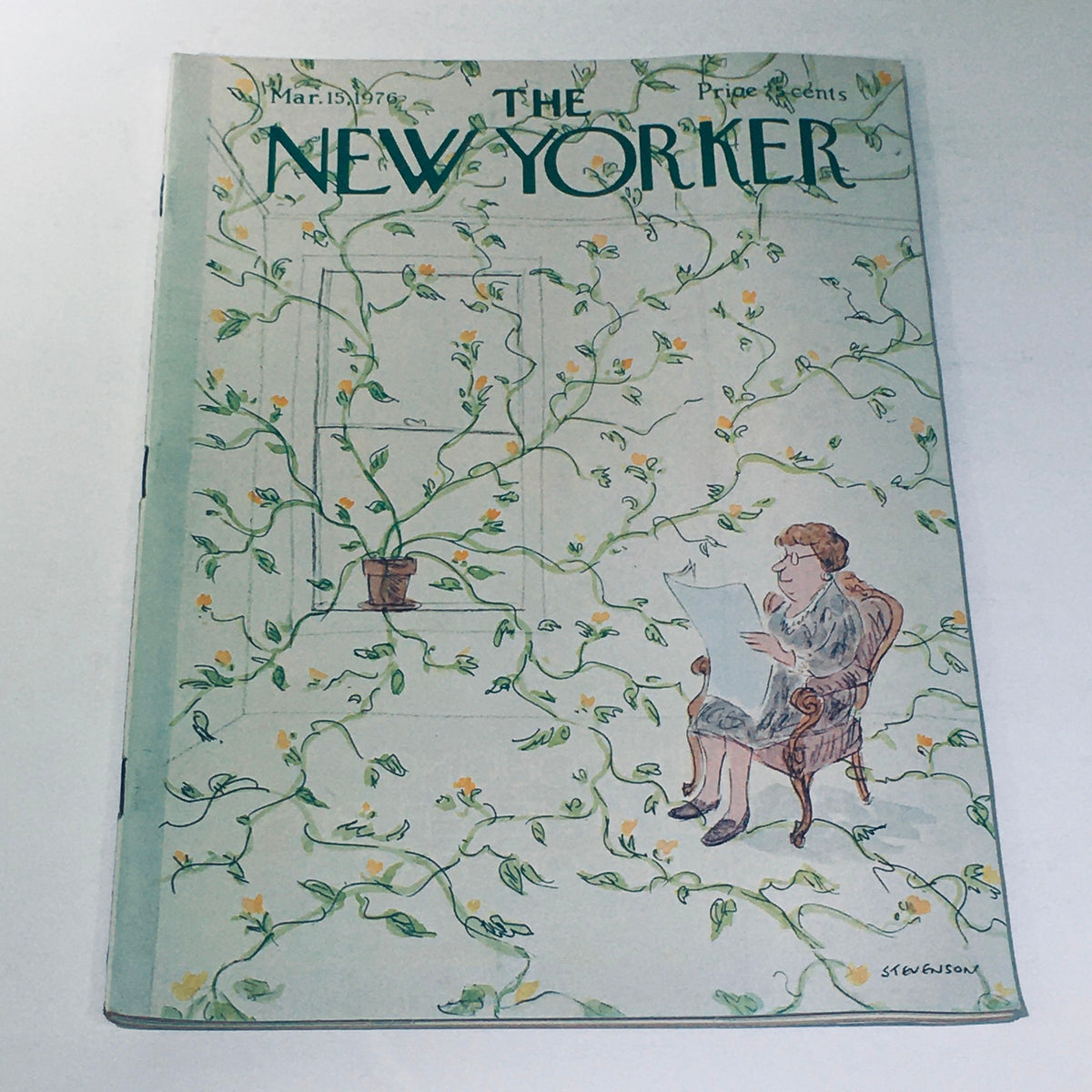
The March 15, 1976 issue of The New Yorker belongs to a period when the magazine’s illustrated covers remained one of its most distinctive forms of cultural expression. The listing identifies the cover artist as James Stevenson, a longtime New Yorker contributor known for his elegant line, understated humor, and ability to turn ordinary city life into a sharp visual observation. A full-theme cover by Stevenson gives the issue significance beyond its publication date, because The New Yorker has long been collected not only for its essays, fiction, and criticism, but also for the artists who shaped its visual personality. His covers often rewarded close looking, making small social details feel quietly comic, melancholy, or revealing. For collectors, that makes a Stevenson issue part of the magazine’s broader visual language rather than a stand-alone illustration.
March 1976 places the issue in the middle of a complicated American decade. The country was emerging from Watergate, approaching the Bicentennial, and experiencing shifts in politics, cities, publishing, humor, and cultural identity. A weekly issue of The New Yorker from this moment offers a compact record of how the magazine’s editorial and artistic voice operated during the mid-1970s. For collectors of vintage New Yorker magazines, a James Stevenson cover is part of a larger visual archive that tracks changes in metropolitan life, social manners, and literary magazine design across decades. The issue also reflects the continued importance of print weeklies as cultural markers, arriving at a time when magazines still shaped how readers encountered fiction, criticism, cartoons, and urban observation.
The issue also fits naturally among magazines published in 1976, a year that carried unusual symbolic weight in American culture because of the United States Bicentennial. The listing does not confirm specific interior article titles or contributors, so the issue is best understood through its verified publication date, full-magazine format, newsstand/no-label status, and Stevenson cover attribution. As a collector object, it preserves the feel of a pre-digital weekly magazine: cover art, cartoons, criticism, fiction, advertising, and editorial pacing all bound into a single dated artifact. That completeness matters because The New Yorker is often most revealing when studied as a whole issue, not merely as a detached cover image or isolated article.
About the Publication
The New Yorker is one of the most influential American magazines of the twentieth and twenty-first centuries, known for literary journalism, fiction, essays, criticism, cartoons, poetry, reporting, and distinctive illustrated covers. Its readership has traditionally included culturally engaged readers interested in politics, literature, humor, art, urban life, and social observation. Unlike a standard newsweekly, The New Yorker built its identity through polished prose, long-form writing, dry wit, editorial selectivity, and a strong cartoon and cover-art tradition. By the mid-1970s, it remained a major reference point for American literary culture, especially for readers who valued a magazine as both a reading experience and a designed object. Back issues are collected for many reasons: specific writers, cover artists, cartoons, advertisements, typography, and the way each issue preserves the atmosphere of a particular week in American cultural life. The magazine’s weekly rhythm also makes individual dates meaningful, since each issue reflects a precise editorial moment rather than a broad seasonal summary. For collectors of illustrated magazines, The New Yorker is especially important because its covers often function as independent works of visual commentary while still belonging to the larger identity of the publication.
Key Highlights Inside
- March 15, 1976 full issue of The New Yorker, a major American magazine known for literary journalism, fiction, criticism, cartoons, and illustrated covers.
- Features a full-theme cover by James Stevenson, a notable New Yorker artist whose work is strongly associated with the magazine’s visual tradition.
- Newsstand format with no label, giving the cover an unobstructed presentation for collectors who value clean cover art.
- The listing notes thought-provoking content and captivating illustrations, though specific article titles, writers, cartoons, and interior features are not confirmed.
- Represents the mid-1970s cultural landscape, when weekly magazines still played a central role in literary, artistic, and social commentary.
- Useful as a reference issue for collectors studying The New Yorker, James Stevenson cover art, 1970s magazine design, and pre-digital literary magazine culture.
- Relevant to collectors who prioritize complete issues, since the surrounding pages preserve the advertisements, cartoons, editorial layout, and cultural context of the week.
- Best evaluated through the confirmed publication date, full-magazine format, Stevenson cover attribution, no-label newsstand status, and stated condition details rather than unverified interior contents.
Condition & Rarity
Collector evaluation for this issue should note the described good condition, newsstand format, no address label, and minor wear throughout. The no-label newsstand presentation is especially relevant for a cover-focused publication like The New Yorker, because the artwork remains free from subscriber-address interruption. The plastic protective covering is useful for storage and handling, though condition grading should still focus on the magazine itself: cover surface, spine integrity, page completeness, paper toning, edge wear, corner bends, tears, creases, markings, and whether any cartoons, advertisements, or editorial pages have been clipped or removed. For a James Stevenson cover issue, the clarity and completeness of the cover image are central to display and research value. A complete issue with stable binding and readable interiors remains useful to collectors even when light age-related wear is present, because the surrounding pages preserve the issue’s full editorial and visual context. Collectors should also examine whether the magazine has been folded, since weekly issues were often carried, mailed, stacked, or stored casually. A clean no-label example has stronger visual appeal, particularly when the cover artist is a major reason the issue is being collected.
Looking for More Issues Like This?
James Stevenson cover issues of The New Yorker are rewarding to study because they connect the magazine’s literary identity with one of its important visual voices. Related material can be explored through the broader New Yorker magazine collection or by comparing this issue with other titles from the 1976 magazine collection. Those related archives help place a single illustrated weekly issue within the wider landscape of 1970s print culture, cover art, cartoons, fiction, criticism, and American magazine design. They are also useful for comparing how The New Yorker visually and editorially marked everyday life during the Bicentennial year.