

Description
Collector's Note – Why This Issue Matters
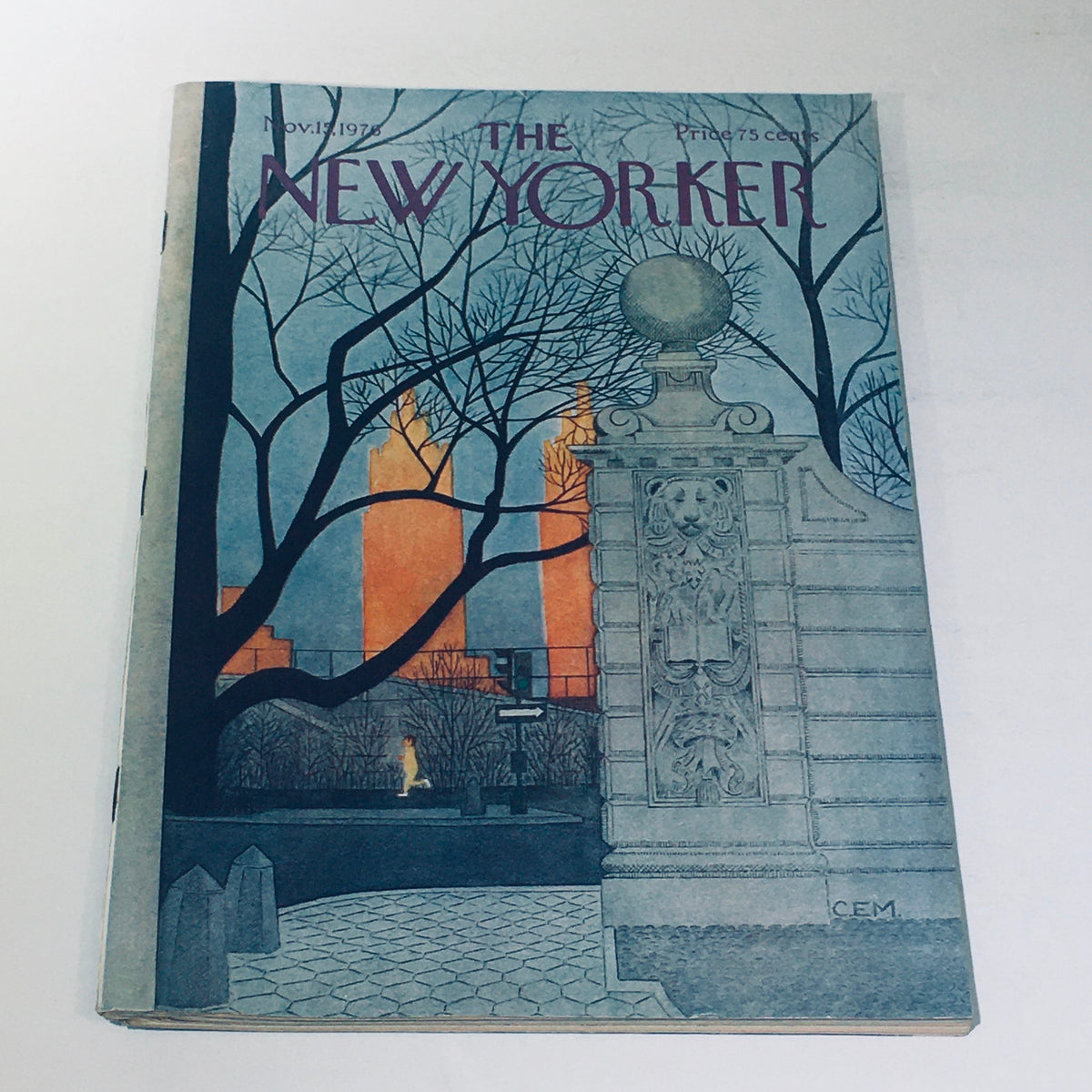
The November 15, 1976 issue of The New Yorker is centered on a cover image identified in the listing as “Central Park Sunset” by Charles E. Martin. That subject gives the issue a clear place within the magazine’s long tradition of New York-centered cover art: observant, atmospheric, and closely tied to the rhythms of city life. Central Park at dusk is not simply a scenic image; in the context of The New Yorker, it becomes a compact visual statement about urban beauty, public space, and the city’s changing mood at the end of the day. The cover’s appeal lies in that quiet specificity, which is often what makes vintage The New Yorker issues so rewarding to study as cultural objects.
The date is also important. Published in 1976, this issue belongs to a decade when New York City was experiencing financial strain, cultural intensity, and a complicated public image, while still remaining one of the world’s defining centers of art, publishing, music, and literature. A cover focused on Central Park sunset carries added resonance in that setting, presenting a quieter and more lyrical view of the city during a difficult but creatively rich period. For collectors researching magazines published in 1976, this issue offers a dated example of how a major American weekly represented New York not only through essays and reporting, but through illustration and visual memory. It also places the magazine within the larger American Bicentennial year, when ideas of place, identity, and national culture were especially visible across print media.
Charles E. Martin was closely associated with The New Yorker as an illustrator and cartoonist, and his cover work is part of the magazine’s broader visual identity. The listing does not confirm the complete table of contents, so the most reliable collector focus is the dated issue itself, the named cover artist, the Central Park subject, and the newsstand format. As a complete magazine, it preserves the cover, the editorial frame, and the physical format through which readers encountered The New Yorker in the mid-1970s. For collectors of New York imagery, illustrated periodicals, or magazine cover art, the combination of Martin, Central Park, and a precise November 1976 publication date gives this issue a strong documentary value.
About the Publication
The New Yorker is an American magazine known for literary journalism, criticism, fiction, essays, cartoons, reporting, and distinctive cover illustration. Its readership has traditionally included people interested in literature, culture, politics, humor, the arts, and New York life. By 1976, the magazine had already built a strong identity around long-form writing, urbane cartoons, cultural commentary, and covers that often expressed a scene, season, mood, or social observation without needing a headline. Complete vintage issues are especially valuable as reference objects because they preserve not only the cover artwork, but also the advertising, typography, editorial pacing, and weekly magazine format of the period. The magazine’s weekly rhythm also makes each issue unusually precise as a historical marker, tied to a specific date rather than a broad monthly publishing window. That precision is one reason dated issues of The New Yorker are frequently studied by collectors, researchers, artists, and readers interested in the relationship between illustration and cultural memory.
Key Highlights Inside
- November 15, 1976 issue of The New Yorker, representing the magazine during the mid-1970s and preserving the publication’s weekly format from that period.
- Features the cover artwork “Central Park Sunset,” credited in the listing to Charles E. Martin.
- Central Park subject matter connects the issue directly to New York City culture and the magazine’s long-standing visual relationship with the city.
- The sunset setting gives the cover a seasonal and atmospheric quality, which is consistent with the magazine’s tradition of using illustration to capture mood, place, and urban observation.
- Newsstand edition with no label, preserving the cover presentation without subscription label interruption.
- Specific article titles, authors, cartoons, fiction pieces, and complete interior contents are not confirmed from the provided listing, so those details should not be assumed without direct inspection of the issue.
Condition & Rarity
Surviving examples of this November 15, 1976 issue should be evaluated by examining cover brightness, corner and edge wear, spine integrity, page completeness, and whether the Central Park cover image remains clean and visually strong. The listing describes the magazine as being in good overall condition, with minor wear present throughout, and notes that it is protected by a plastic covering. The newsstand/no-label attribute is significant for collectors of The New Yorker because a mailing label can interrupt the design of a cover, especially when the artwork itself is the primary point of interest. For an illustrated weekly from the 1970s, moderate handling signs may be expected, but intact structure, complete pages, and an unobstructed cover remain important collector-grade considerations. Since weekly magazines were usually read, stacked, clipped, or discarded after use, condition becomes especially important when evaluating older examples. A protective plastic covering can help reduce additional handling wear, but collectors should still assess the magazine itself for original paper quality, page security, and any marks that affect the cover image or interior readability.
Looking for More Issues Like This?
The November 15, 1976 Charles E. Martin “Central Park Sunset” issue is the kind of dated The New Yorker cover that appeals to both magazine collectors and admirers of New York illustration. Related examples can often be explored through the broader The New Yorker magazine collection, especially for collectors interested in cover artists, city scenes, and complete vintage issues. Browsing across issues can also reveal how the magazine returned to New York streets, parks, seasons, and social rituals as recurring visual subjects.
For a wider view of the same period, the 1976 magazine collection is useful for comparing how different publications documented American culture, art, politics, and everyday life during the mid-1970s. That broader context helps place a quiet Central Park cover alongside the wider print culture of the Bicentennial era.