

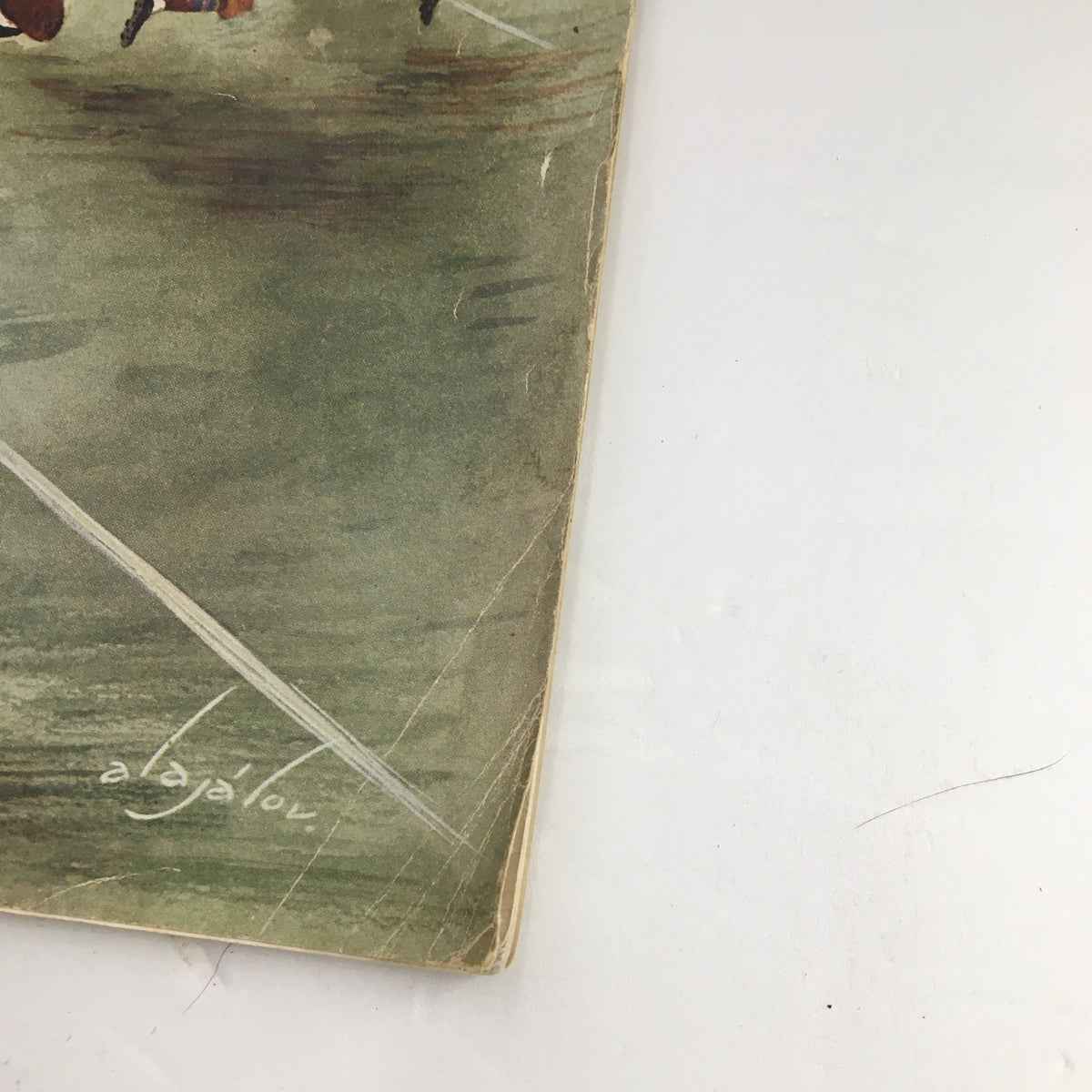


Description
Collector's Note – Why This Issue Matters
The October 28, 1939 issue of The New Yorker with a confirmed cover by Constantin Alajalov is a primary document of the publication at one of the most historically concentrated moments in the twentieth century — and one of the most consequential periods in the magazine's own editorial history. World War II had begun on September 1, 1939, just eight weeks before this issue's cover date, with Germany's invasion of Poland and the subsequent declarations of war by Britain and France. The United States was officially neutral but the debate over intervention versus isolationism was already reshaping American political and cultural life with an intensity that would only increase over the following two years. The New Yorker under Harold Ross was navigating that debate with particular urgency: the magazine had been actively engaging with the European political situation since the mid-1930s, and its correspondents in Europe — most notably A.J. Liebling, who would become one of the defining voices of wartime journalism — were beginning the work that would make the publication's wartime coverage among the most significant in American journalism. An October 1939 issue documents the publication at the precise opening weeks of a war that would transform both the magazine and the world it covered. For collectors building archives of vintage New Yorker magazines, issues from the autumn of 1939 occupy a historically specific position as primary documents of the publication at the moment it entered its most consequential editorial decade.
Constantin Alajalov's identity as the cover artist adds a specific and well-documented art history dimension to this issue. Alajalov was one of The New Yorker's most prolific and distinctive cover contributors from the late 1920s through the 1950s, a Russian-born illustrator whose covers were characterized by their sophisticated social observation, their crowd scenes rendered with precise comic detail, and their particular gift for capturing the specific texture of urban American social life across its many strata. His covers were among the publication's most immediately recognizable of the pre-war era, and a confirmed Alajalov cover on an October 28, 1939 issue — Halloween week, a date that would have prompted the kind of seasonal urban observation at which he excelled — is primary documentation of his artistic relationship with the publication at the specific moment the world was changing around it. The October 28 date places this issue in Halloween week, and Alajalov's characteristic approach to seasonal urban scenes would have given this cover a visual quality that simultaneously addressed the holiday moment and, consciously or not, reflected the specific psychological atmosphere of an American city processing the news of a war that had begun two months earlier. Collectors focused on 1939 magazines as documents of American cultural life at the opening of World War II will find this issue situated at one of the most historically freighted weeks of the entire decade.
The late October 1939 date carries a further layer of historical specificity beyond the war's opening weeks. The Soviet Union had invaded Finland on November 30, 1939 — just five weeks after this issue's cover date — and the specific geopolitical configuration of the war's first autumn, with the Nazi-Soviet Pact of August 1939 still fresh and the full shape of the conflict not yet clear, gave the American political and editorial conversation of this specific week a character distinct from both the pre-war months and the later, more defined wartime period. A New Yorker cover dated October 28, 1939 captures that specific and unrepeatable moment of historical suspension — the war had begun but its ultimate configuration was still undetermined — and the editorial choices visible in its pages are primary documentation of how the publication addressed its readership at exactly that threshold.
About the Publication
The New Yorker was founded in February 1925 by Harold Ross, who remained its editor through his death in December 1951, and by October 1939 had been publishing for nearly fifteen years, having established itself as the defining voice of American literary and cultural sophistication. The pre-war years under Ross represented the publication in its founding era — the period in which its editorial identity, its stable of writers and artists, and its distinctive approach to fiction, journalism, and visual humor were fully formed but still being actively developed in response to a rapidly changing world. Its covers during this period were commissioned from a stable of artists that included Alajalov, Peter Arno, Helen Hokinson, and others whose individual styles defined the visual identity of the publication as completely as its writers defined its literary one. The October 1939 issue represents The New Yorker in the specific transition from its pre-war identity to the wartime publication it would become — a transition that the autumn of 1939 initiated and that would be completed over the following two years.
Key Highlights Inside
- Constantin Alajalov cover — October 28, 1939 — A confirmed original cover by one of The New Yorker's most prolific and socially observant pre-war cover artists, produced eight weeks after the outbreak of World War II and in Halloween week of the most historically concentrated year of the decade.
- October 28, 1939 — eight weeks after World War II began — Published in the specific editorial atmosphere of the war's first autumn, when American neutrality was official but the debate over intervention was already reshaping public life and The New Yorker's European correspondents were beginning the wartime journalism that would define the publication's most consequential decade.
- Harold Ross founding era — fifteenth year of publication — Published in the publication's fifteenth year under its founding editor, representing The New Yorker at the transition between its established pre-war identity and the wartime publication it would become — a transition that the events of September 1939 had just initiated.
- Halloween week 1939 — seasonal and historical convergence — The October 28 date places this issue in Halloween week of the year World War II began, giving Alajalov's characteristically urban, socially observant seasonal cover art a specific historical resonance that Halloween week covers from any other year in the publication's run do not carry.
- No subscription label — confirmed newsstand status — Full unobstructed cover art preserved without address label obstruction, a meaningful positive attribute for a publication whose Alajalov cover imagery is the primary visual reason for collecting interest.
Note: Specific interior fiction, journalism, poetry, and cartoon content confirmed for this issue have not been provided in the available listing. Given the publication date — eight weeks into World War II — interior content of significant journalistic and literary interest is plausible but should be verified from available photographs of the table of contents rather than assumed.
Condition & Rarity
Good condition with minor wear throughout, a few front cover creases, no subscription label, and plastic protective covering represents a solid mid-grade assessment for an 86-year-old weekly magazine — an age at which any surviving copy in readable, displayable condition represents genuine preservation across nearly nine decades. The confirmed no-label newsstand status is the primary positive visual attribute, preserving the full Alajalov cover art without address obstruction — meaningful for display-oriented collectors and for those specifically seeking his covers within the publication's pre-war archive. The front cover creases should be assessed from available photographs for their location and extent relative to the cover imagery, as crease placement relative to the central visual elements is the most consequential factor for display-oriented collectors. Minor wear throughout on a saddle-stitched newsprint weekly of this age is an expected characteristic rather than an exceptional condition factor — the relevant question for any surviving 1939 issue is whether the cover art is intact, the pages are present and legible, and the structural integrity allows handling without further deterioration. The plastic protective covering indicates deliberate preservation at some point in the issue's history, a meaningful positive factor for a publication of this age. Good condition in an 86-year-old weekly newsprint magazine means the issue has survived with its primary content accessible and its cover art visually coherent — attributes that represent genuine collecting value at this age regardless of the surface wear characteristics noted.
Looking for More Issues Like This?
Pre-war New Yorker issues from the autumn of 1939 — the specific weeks immediately following the outbreak of World War II — are among the most historically situated in the publication's entire pre-war archive, and confirmed Alajalov covers from any point in his long association with the publication are specifically sought by collectors of New Yorker cover art from the founding Harold Ross era. The complete New Yorker magazine archive at OriginalMagazines.com is the most productive resource for collectors researching other pre-war issues and other Alajalov covers from the publication's classic period. For collectors building a broader picture of American cultural and political life in the specific year World War II began, the full 1939 magazine collection covers the range of American publications from the year whose autumn transformed the world — and the publications that were trying to make sense of it week by week as it happened.