


Description
Collector's Note – Why This Issue Matters
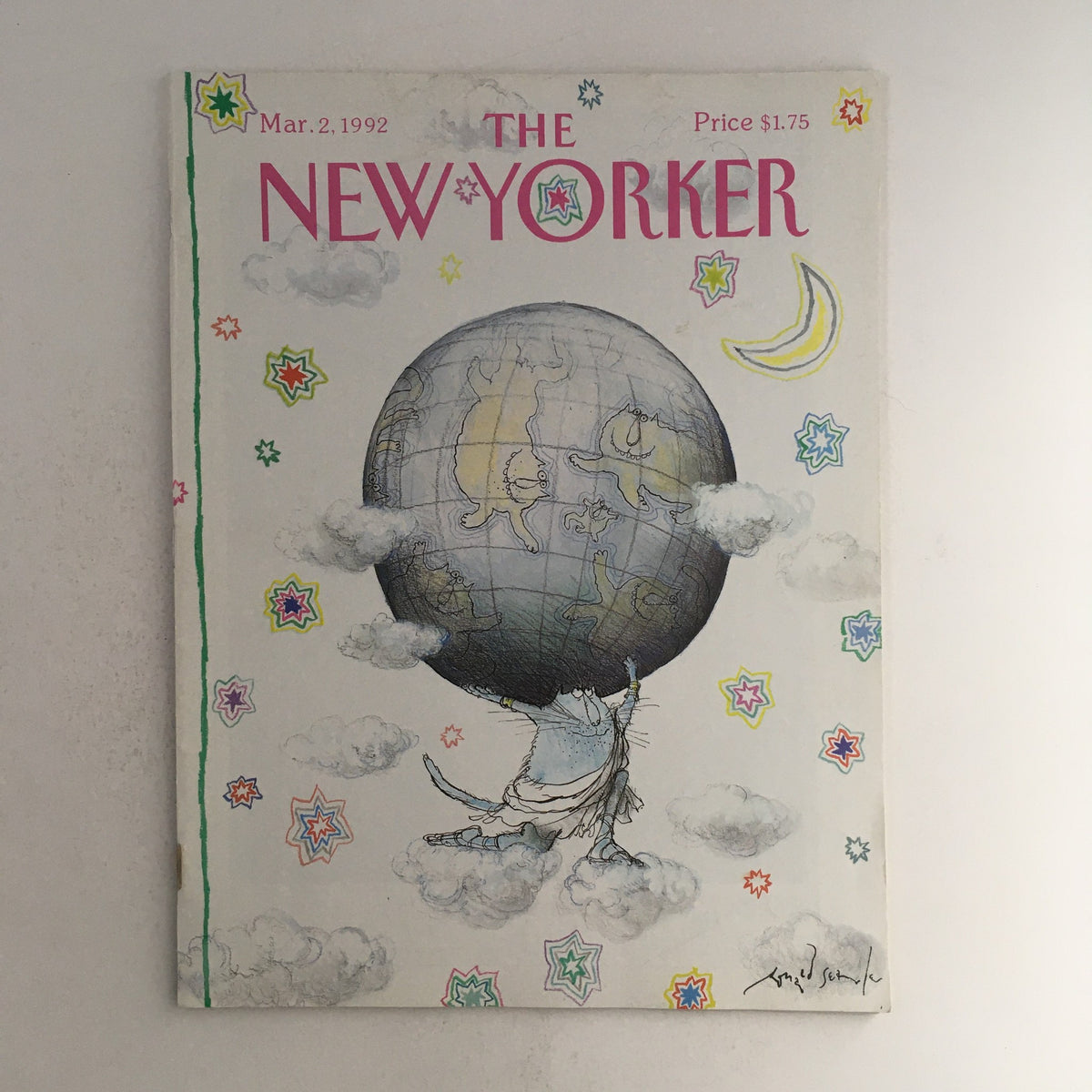
The March 2, 1992 issue of The New Yorker is identified in the listing as a full magazine with a theme cover by Ronald Searle. Searle was widely known for his energetic line work, satirical eye, and distinctive illustration style, making his association with a dated The New Yorker issue especially meaningful for collectors of magazine art. His work fits naturally within the publication’s tradition of covers that communicate mood, wit, and cultural observation without relying on headline-driven design. For collectors, the artist attribution is the strongest verified point of interest and gives this issue clear visual significance. A Searle cover also adds an international illustration connection to a publication already famous for its strong roster of cover artists.
The date places the issue in the early 1990s, a period when American magazines still held a strong role in literary culture, political commentary, humor, and illustration. A complete issue from March 1992 preserves more than the cover alone; it retains the editorial environment of that week, including cartoons, essays, fiction, advertisements, typography, and layout. For collectors researching magazines published in 1992, this issue offers a dated example of how a major cultural weekly presented itself during the early post-Cold War period. It also reflects the continued importance of print magazines as curated cultural objects before online reading changed how audiences encountered journalism and illustration. That complete weekly format is part of its historical value, because it shows how readers originally experienced the magazine as a unified cultural package.
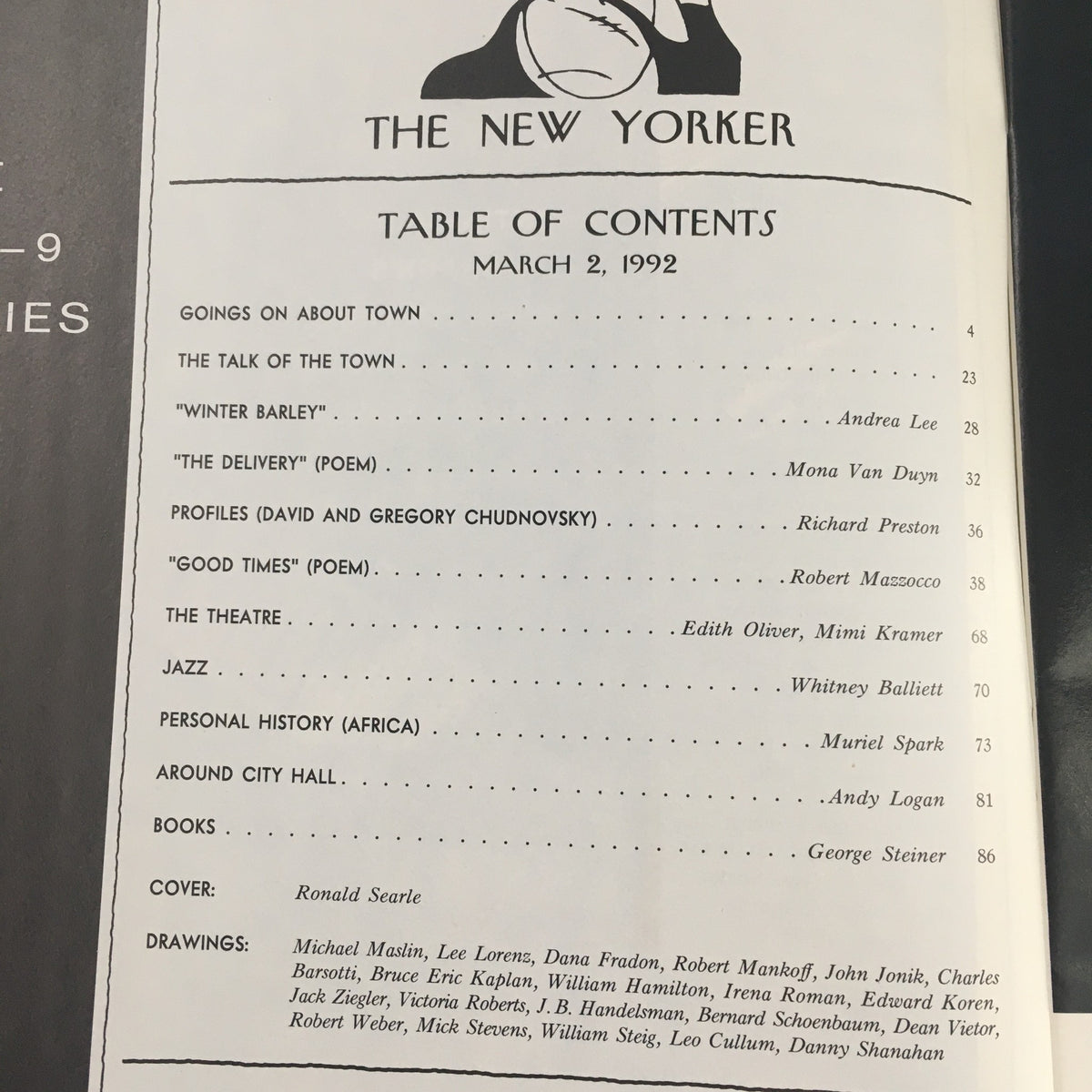
The newsstand/no-label format is especially relevant because The New Yorker covers are often collected as artworks in their own right. A no-label cover allows the Ronald Searle artwork to remain visually uninterrupted, which matters when the cover artist is the main collector focus. The listing does not confirm specific article titles, contributors, fiction pieces, or complete interior contents, so the most reliable reference points remain the verified publication date, full-magazine format, Searle cover credit, no-label presentation, and Very Good/Excellent condition. As a complete issue, it also preserves the relationship between the cover and the magazine’s larger editorial voice. For collectors of illustrated periodicals, that relationship is essential because the cover gains meaning from the literary, comic, and cultural setting in which it first appeared.
About the Publication
The New Yorker is an American magazine known for literary journalism, essays, fiction, criticism, cartoons, reporting, humor, and distinctive cover illustration. Its readership has traditionally included people interested in literature, politics, culture, the arts, urban life, and social observation. By 1992, the magazine had already developed a long visual and literary tradition, with covers often functioning as subtle standalone works of art. Complete vintage issues are especially useful to collectors because they preserve the full magazine experience: cover art, cartoons, articles, advertisements, typography, layout, and the weekly editorial rhythm of the period. In the case of a named artist issue, the complete format helps place the cover within the broader context in which readers originally encountered it. It also allows collectors to study how the publication balanced illustration, prose, humor, and commentary in a single dated issue.
Key Highlights Inside
- March 2, 1992 issue of The New Yorker, representing the magazine during the early 1990s and preserving its weekly cultural format.
- Identified in the listing as a full magazine with a theme cover by Ronald Searle, making the artist attribution the primary verified collector detail.
- Newsstand/no-label format, preserving the cover presentation without subscription-label interruption and allowing the artwork to remain visually cleaner.
- The listing describes the issue as containing articles and illustrations reflecting the cultural perspective of the early 1990s, though specific article titles are not confirmed.
- Condition is listed as Very Good/Excellent, with minimal wear, great overall condition, and a plastic protective covering.
- Specific article titles, contributors, fiction pieces, cartoons, captions, page numbers, and complete interior contents are not confirmed from the provided listing, so those details should not be assumed without direct inspection of the issue.
Condition & Rarity
Surviving examples of this March 2, 1992 issue should be evaluated for cover cleanliness, edge condition, spine stability, page completeness, corner sharpness, and whether the Ronald Searle cover remains visually strong. The listing describes the magazine as Very Good/Excellent, with minimal wear, no label, great overall condition, and a plastic protective covering. The no-label attribute is meaningful because mailing labels can interrupt The New Yorker cover art, especially when the issue is collected for a named illustrator. Strong condition is especially desirable for cover-focused issues, since even small bends, surface marks, or spine stress can affect display quality. Collector-grade assessment should focus on completeness, secure binding, clean pages, and an unobstructed cover presentation. A protective covering can help reduce additional handling wear, but the underlying magazine should still be checked for page security, edge marks, and any surface wear that affects the cover image. Because Searle’s illustration style often depends on line quality, gesture, and visual detail, clean cover preservation is particularly important when evaluating this issue.
Looking for More Issues Like This?
The March 2, 1992 Ronald Searle theme-cover issue is the kind of dated The New Yorker magazine that appeals to collectors of illustration, literary magazines, cartoons, and early-1990s print culture. Related examples can be explored through the broader The New Yorker magazine collection, especially for readers interested in complete issues, cover artists, and the magazine’s distinctive visual tradition. Looking across multiple issues can help collectors trace how different artists shaped the magazine’s tone, humor, and sense of place across decades.
For a wider view of the same year, the 1992 magazine collection is useful for comparing how different publications documented art, politics, literature, humor, advertising, and everyday life in the early 1990s. That broader context helps place this issue within the larger print record of its moment. It also gives collectors a way to understand how a literary weekly like The New Yorker fit alongside news, entertainment, fashion, music, and specialty magazines published during the same year.