
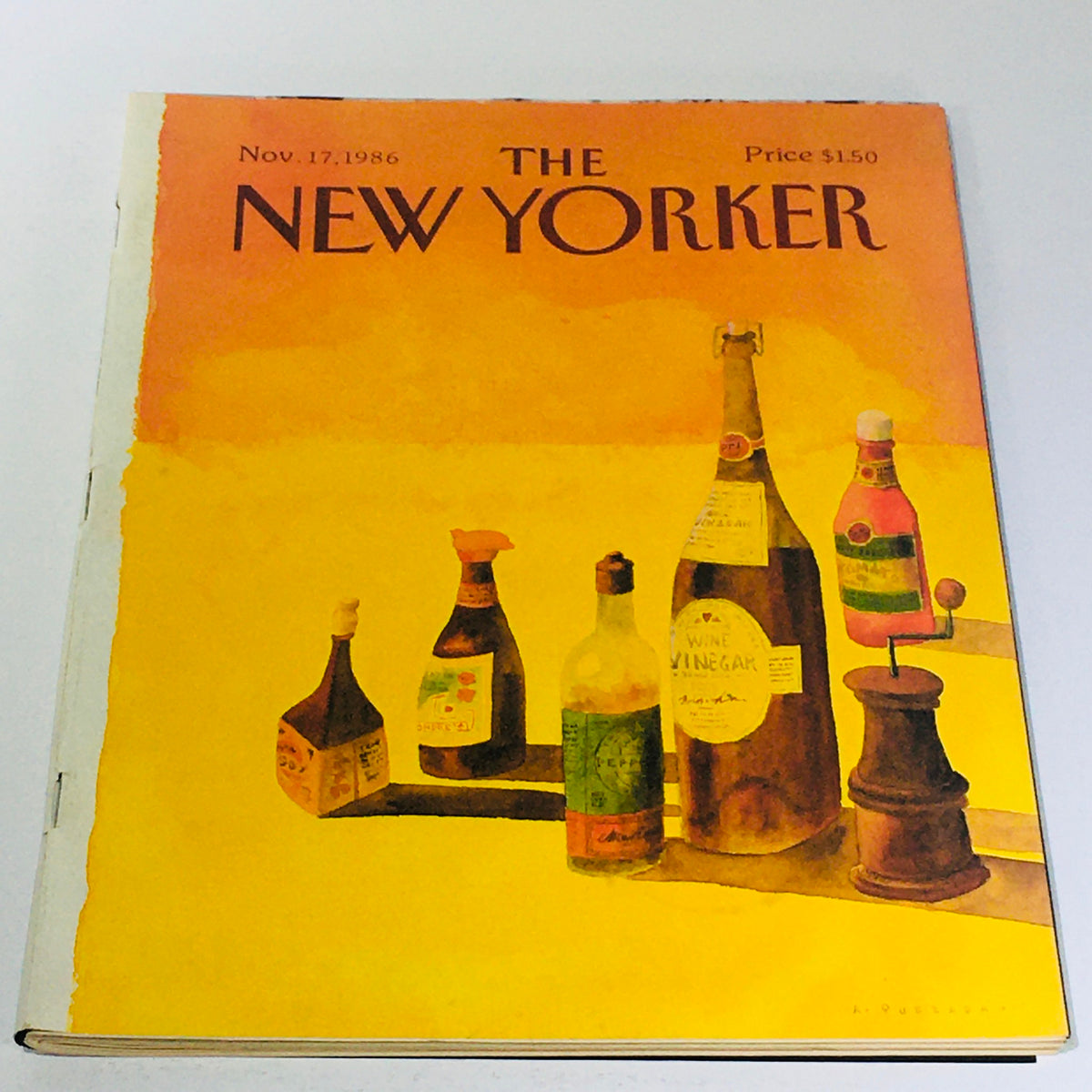


Description
Collector's Note – Why This Issue Matters
The New Yorker November 17, 1986 belongs to a period when the magazine remained one of America’s most recognizable weekly records of culture, politics, fiction, criticism, humor, and urban observation. By the mid-1980s, The New Yorker had already established its identity as both a literary institution and a visual archive, with each issue carrying not only editorial commentary but also a cover image that could stand on its own as a cultural artifact. This issue is particularly tied to that tradition through its theme cover by Abel Quezada, a Mexican cartoonist, painter, and writer whose work is often associated with sharp visual wit and social observation. His presence on a The New Yorker cover connects the magazine’s established American editorial voice with a broader international tradition of illustrated commentary.
The November 17, 1986 date places the issue within the late Cold War decade, when American magazine publishing was still central to how readers encountered long-form commentary, literary work, cartoons, and cultural criticism. The listing notes the presence of thought-provoking articles and illustrations, but does not identify specific interior pieces, so the issue is best understood through its confirmed date, publication, and cover artist. For collectors of vintage New Yorker magazine issues, cover artists are often as important as article subjects, because the magazine’s illustrated covers form a long-running visual record of changing taste, humor, and social mood. A complete weekly issue also preserves the pacing of the magazine as it originally appeared, from the cover image to the cartoons, columns, criticism, and advertising environment.
As part of the broader archive of 1986 magazine issues, this edition preserves a weekly slice of late-1980s print culture. A complete issue from this period can reveal the magazine’s editorial rhythm, design habits, advertising context, and cartoon style in a way that isolated article clippings cannot. For researchers and collectors, that completeness matters because The New Yorker was never just a container for writing; it was a carefully assembled cultural object, shaped by art, typography, humor, and editorial sequence. The issue also reflects the continuing strength of weekly print culture before digital archives changed how readers encountered magazine history.
About the Publication
The New Yorker is a weekly American magazine founded in 1925 and widely associated with literary journalism, essays, criticism, fiction, poetry, cartoons, and distinctive cover illustration. Its audience has traditionally included readers interested in culture, politics, literature, the arts, city life, and intelligent humor. The magazine’s editorial format combines long-form reporting and criticism with shorter commentary, fiction, cartoons, and illustrated covers, creating a recognizable blend of intellectual seriousness and visual wit. For collectors, The New Yorker is especially important because its weekly issues provide a detailed chronological archive of American cultural conversation, with cover art often serving as the most immediate visual marker of each issue’s identity. The publication’s consistent format also makes it valuable for comparison across decades, allowing collectors to study changes in illustration, humor, typography, editorial priorities, and cultural tone.
Key Highlights Inside
- November 17, 1986 issue of The New Yorker, representing the magazine’s late-1980s editorial and visual identity.
- Features a theme cover by Abel Quezada, as stated in the listing title and description.
- Connects to The New Yorker’s long tradition of illustrated covers that function as visual commentary and cultural observation.
- Represents late-1980s The New Yorker publishing, including the magazine’s established tradition of articles, commentary, cartoons, and illustrations.
- No address label noted, preserving the cover artwork without mailing-label obstruction.
- Condition described as good used condition, with typical age-related wear including slight edge rips and minor binding tears.
- Specific interior article titles are not confirmed from the provided listing.
Condition & Rarity
Surviving examples of this November 17, 1986 issue should be evaluated by cover brightness, edge condition, spine and binding integrity, page completeness, and whether the front cover remains free from subscription-label interruption. The provided listing describes the magazine as good used condition, with typical wear and tear, slight rips along the edges, and a few minor tears to the binding. These flaws are common among weekly magazines that were read, stacked, mailed, or stored casually rather than preserved archivally from the date of publication. The absence of an address label is a meaningful collector attribute for The New Yorker, where cover art is often central to the issue’s appeal. For artist-focused collectors, a clean, unobstructed Abel Quezada cover can be the most important visual feature, while complete pages and stable binding remain essential for long-term reference value. Because weekly magazines were produced for immediate reading rather than long-term preservation, intact examples with presentable covers are useful for both display and archival comparison.
Looking for More Issues Like This?
The November 17, 1986 Abel Quezada cover issue is a thoughtful reference point for collectors interested in The New Yorker cover art, late-1980s magazine design, and literary periodicals with strong visual identities. Readers looking for related material can browse more vintage New Yorker magazine issues to compare cover artists, weekly themes, and editorial presentation across different years. Exploring multiple issues can also show how the magazine’s covers shifted in tone from seasonal observation to satire, city scenes, and broader cultural commentary.
For collectors building by year, the 1986 magazines collection is also useful for placing this issue alongside other publications from the same cultural moment. Looking across the year helps show how The New Yorker fit within the broader magazine landscape of 1986, from literary journalism and cartoons to design, criticism, and American cultural commentary. That wider context makes the issue more than a single weekly number; it becomes part of a larger print record of how the late 1980s looked, read, and thought on the page.