

Description
Collector's Note – Why This Issue Matters
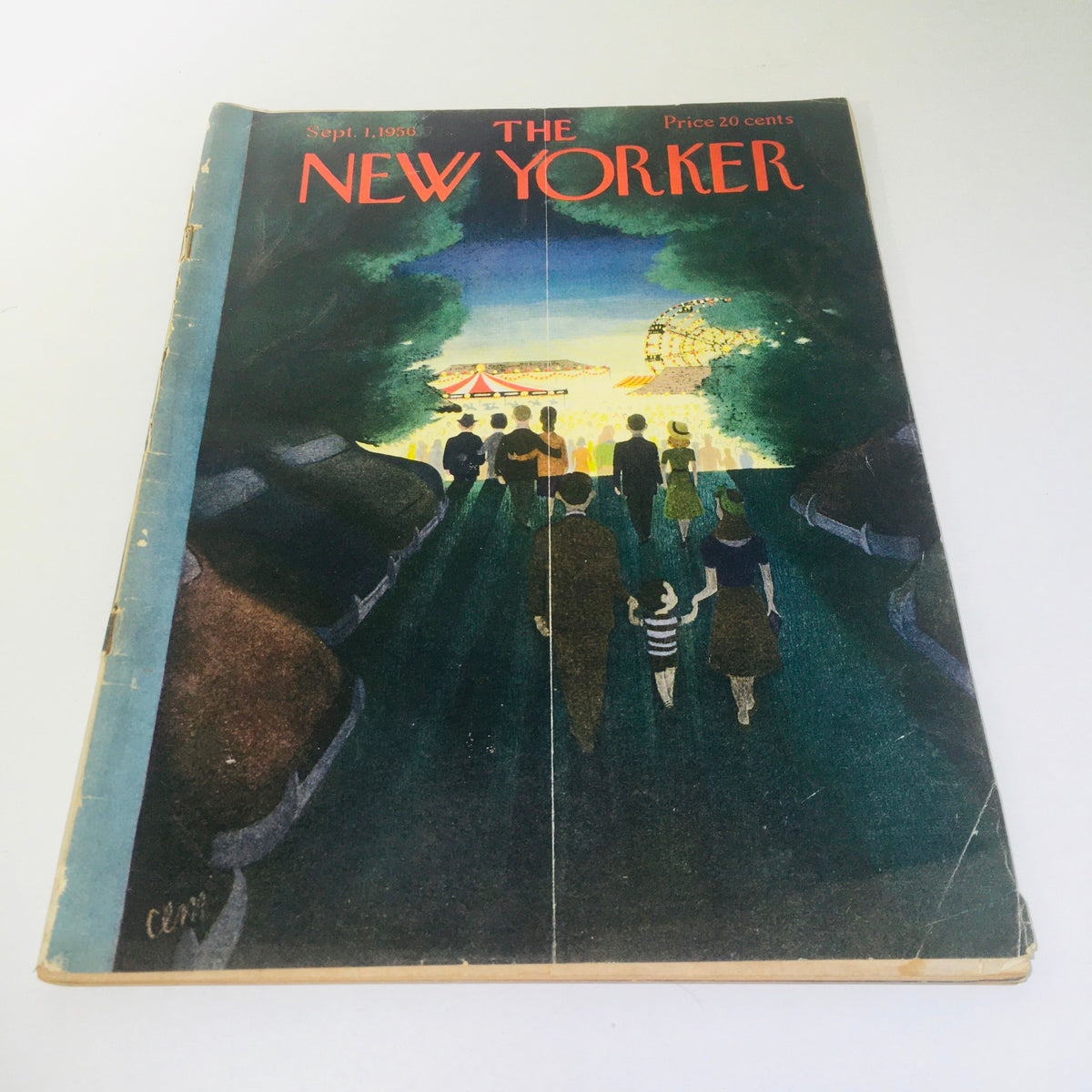
The New Yorker issue dated September 1, 1956 belongs to the magazine’s mid-century illustrated-cover tradition, a period when its visual identity was already firmly established as one of the most recognizable in American publishing. The listing identifies this as a full magazine with a theme cover by Charles E. Martin, an artist associated with the magazine’s refined humor, graphic elegance, and observational approach to everyday life. For collectors of vintage New Yorker magazine issues, a Charles E. Martin cover from the 1950s has strong appeal because it reflects the publication’s ability to turn a single image into a subtle cultural statement. The cover is not described here in specific visual detail beyond the artist attribution, so its importance should be understood through the confirmed artist, date, and magazine tradition rather than any unverified scene description. That restraint is important for collector reference writing, because the value of the issue does not depend on embellishing the cover; it rests on the real intersection of artist, date, publication, and preserved format.
The September 1, 1956 date places the issue in postwar America, when the country was experiencing suburban growth, expanding consumer culture, Cold War tension, and a flourishing literary and arts scene. The New Yorker occupied a distinctive role in that environment, offering fiction, essays, criticism, cartoons, and cultural commentary to readers who valued wit, style, and intellectual engagement. The listing notes original articles and stories reflecting the cultural landscape of the time, though specific interior article titles are not confirmed. That makes the issue valuable as a complete period artifact: it preserves the magazine’s editorial rhythm, design, advertisements, and literary tone as they appeared at the close of summer 1956. Complete issues from this period are especially useful because they show how the magazine balanced literary seriousness with social comedy, visual polish, and the everyday details of mid-century life.
As part of the broader world of original magazines from 1956, this issue helps document American print culture during a defining mid-century moment. Its confirmed significance rests on its date, full-magazine format, Charles E. Martin theme cover, no-label presentation, and connection to the arts and cultural discussions of the 1950s. Complete issues from this era are especially useful to collectors because they preserve more than a cover image; they retain the surrounding cartoons, article pacing, typography, and advertisements that shaped the reader’s experience. For anyone studying The New Yorker by artist, decade, or publication date, this September 1, 1956 issue offers a meaningful reference point in the magazine’s visual and literary history. It also reflects how mid-century magazines served as weekly records of taste, language, consumer culture, and artistic presentation, all contained in a single physical object.
About the Publication
The New Yorker is one of the most influential American magazines, known for fiction, essays, criticism, literary journalism, poetry, cartoons, humor, and illustrated covers. Since its founding in 1925, it has appealed to readers interested in literature, art, politics, city life, manners, and sophisticated social observation. By 1956, the magazine had already become a major cultural institution, with covers that often functioned as independent works of illustration and cartoons that helped define its voice. Its editorial format combined serious writing with visual wit, giving each weekly issue value as both a reading object and a cultural artifact. For collectors, mid-century issues are especially important because they preserve the magazine during a period when its literary authority, cartoon tradition, and illustrated-cover identity were all deeply established. They also show how the publication maintained a recognizable tone across many kinds of material, from fiction and criticism to advertisements and cartoons. That consistency is part of what makes dated mid-century issues so useful for studying American magazine history.
Key Highlights Inside
- Full issue of The New Yorker dated September 1, 1956, representing the magazine during its established mid-century period.
- Features a theme cover by Charles E. Martin, as identified in the listing.
- Represents The New Yorker during the postwar 1950s, a period of major cultural, literary, artistic, and social development in American life.
- The listing notes original articles and stories reflecting the cultural landscape of the time, though specific interior article titles are not confirmed here.
- No address labels are noted, preserving a cleaner front-cover presentation for collectors who value uninterrupted cover art.
- Condition details include used but good condition, light wear, possible minor edge rips or wear, and no plastic protective covering.
- Relevant to collectors who organize The New Yorker issues by cover artist, publication date, decade, theme cover, or mid-century magazine design.
- Useful as a complete period artifact because it preserves the surrounding editorial, cartoon, advertising, and design context of a weekly magazine from 1956.
Condition & Rarity
Collector evaluation for the September 1, 1956 issue should focus on its stated used but good condition, light wear typical for age, absence of address labels, possible minor edge rips or wear, and lack of a plastic protective covering. A no-label example is especially meaningful for The New Yorker collectors because the cover illustration is often one of the primary reasons an issue is collected, studied, or displayed. Light wear and small edge flaws are expected for a weekly magazine from 1956, particularly along the spine, corners, cover edges, and page margins. The absence of a protective covering means careful handling and storage are especially important for long-term preservation. For a Charles E. Martin cover issue, the most important condition factors are cover clarity, page completeness, spine stability, and whether the artwork remains visually strong despite normal vintage wear. Even when minor edge wear is present, a complete no-label issue from the mid-1950s can retain strong collector interest because it preserves the original magazine context intact. Since weekly magazines were often read, stacked, mailed, clipped, or discarded, surviving examples with clean cover presentation and complete contents remain valuable as research and display objects.
Looking for More Issues Like This?
This September 1, 1956 Charles E. Martin cover issue is the kind of mid-century The New Yorker magazine that appeals to collectors interested in artist-specific covers, complete vintage issues, and clean no-label presentation. Related examples can be explored through the broader New Yorker magazine collection, where collectors can compare cover artists, publication dates, illustrated themes, and editorial eras across decades. Looking at neighboring issues can also help show how the magazine’s weekly covers created a continuous visual record of social observation, humor, and mid-century design.
For readers focused on the year itself, the 1956 magazine collection offers a useful way to place this issue within the wider print record of postwar American culture. Looking across original magazines from 1956 helps show how literature, illustration, advertising, humor, and social commentary were preserved in the magazines readers encountered week by week. That broader context makes a single Charles E. Martin cover issue more meaningful as part of the larger history of mid-century American publishing. It also helps collectors understand how different magazine genres recorded the same year through distinct editorial voices and visual styles.