

Description
Collector's Note – Why This Issue Matters
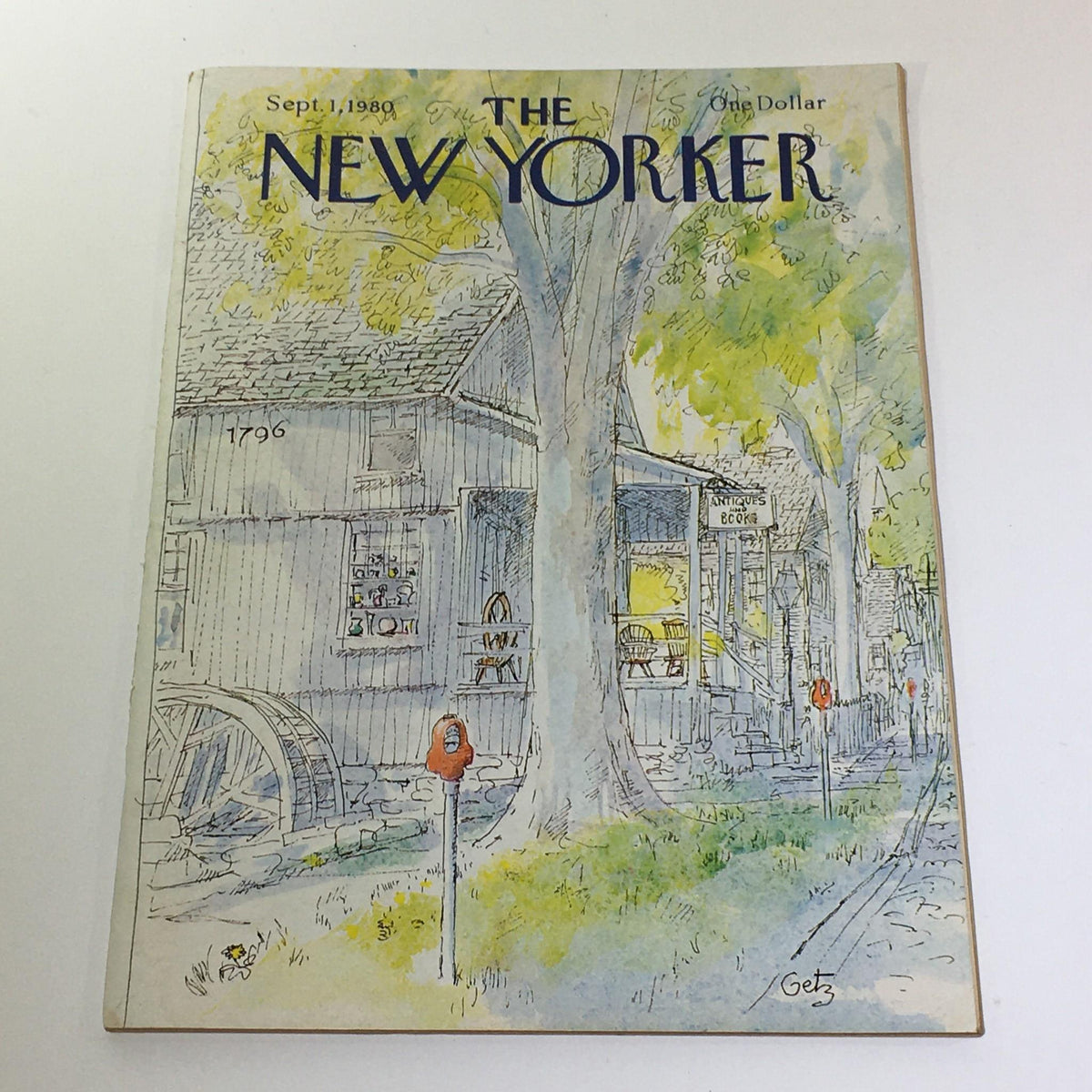
The September 1, 1980 issue of The New Yorker is anchored by cover art attributed in the listing to Arthur Getz, one of the magazine’s most recognizable and prolific cover artists. Getz’s association with The New Yorker is especially important to collectors because his work helped define the magazine’s visual personality across decades: urbane, observant, atmospheric, and often quietly witty. A full magazine issue with a Getz theme cover offers more than a single illustration; it preserves the complete editorial object as readers encountered it at the opening of the 1980s. That matters because The New Yorker was never simply a container for articles; its covers, cartoons, fiction, criticism, and advertising all worked together to create a carefully dated portrait of cultural life.
The date matters. September 1, 1980 places the issue in a transitional cultural moment, with the United States moving from the late-1970s atmosphere of economic unease and social change into the sharper political, commercial, and stylistic currents of the Reagan-era decade. The New Yorker’s role in that landscape was distinctive: it filtered culture, literature, humor, criticism, and urban observation through a voice that was sophisticated but never entirely detached. As part of the wider archive of 1980 magazines, this issue belongs to the printed record of how American readers absorbed art, commentary, fiction, and cultural signals before the digital age. A weekly issue from this period also preserves the tempo of magazine reading itself, when cultural conversation moved through mailboxes, newsstands, apartments, offices, waiting rooms, and coffee tables.
For collectors, the Arthur Getz cover is the central identifying feature. New Yorker collecting often begins with the cover image because each issue’s illustration functions almost like a dated cultural miniature: a visual entry point into a specific week, season, mood, or social setting. When preserved as a complete magazine rather than a removed cover or loose page, the issue retains its full bibliographic and historical context, which is essential for serious archival collecting. The complete-object quality is especially important with The New Yorker, where the cover art, table-of-contents structure, cartoons, advertisements, and editorial pacing all help establish the issue’s place in the magazine’s long publishing history.
About the Publication
The New Yorker, founded in 1925, is an American magazine known for literary fiction, essays, reporting, criticism, cartoons, poetry, humor, and distinctive cover art. Its audience has traditionally included readers interested in literature, city life, politics, culture, the arts, and sophisticated comic observation. By 1980, the magazine had already established itself as one of the most influential periodicals in American publishing, with an editorial format built around long-form writing, cultural criticism, short fiction, cartoons, and illustrated covers that often stood apart from ordinary newsstand design. The magazine’s identity depended not only on its articles but also on its visual language, making cover artists such as Arthur Getz especially important to its collectible history. As a weekly publication, The New Yorker also developed a distinctive rhythm: each issue was both timely and self-contained, tied to a date yet designed to be read and revisited. That blend of literary seriousness, humor, visual restraint, and urban sensibility is a major reason vintage issues continue to be studied, collected, and displayed.
Key Highlights Inside
- September 1, 1980 full issue of The New Yorker.
- Theme cover art attributed in the listing to Arthur Getz.
- Complete magazine format, rather than only a cover or clipping.
- No address label, preserving a cleaner front-cover presentation.
- Listed as having well-preserved pages with age-typical signs of handling.
- Condition notes mention light edge wear and bends, consistent with a handled weekly magazine from this period.
- Relevant to collectors of New Yorker cover art, Arthur Getz illustrations, and late-20th-century American magazine design.
- Additional interior article titles and page-by-page contents are not confirmed in the provided listing.
Condition & Rarity
Collector-grade evaluation for surviving examples of this issue should note the reported used but good condition, absence of an address label, well-preserved pages, lack of protective plastic covering, and light edge wear or bends. For New Yorker issues, the front cover is often the primary collecting focus, so a label-free cover is a meaningful attribute because it preserves the original artwork without a subscription block interrupting the design. Light edge wear and bends are common in magazines of this age, particularly on thinner weekly periodicals that were read, stacked, mailed, or stored without rigid support. Because no plastic covering is noted, evaluation should give special attention to cover surface condition, corner softness, spine integrity, page completeness, paper toning, and whether the Arthur Getz cover remains visually clean and intact. The absence of a label does not by itself determine grade, but it can improve display quality and collector appeal when paired with a complete, stable issue. For archival purposes, the most desirable surviving examples are those that keep the cover image clear, the pages secure, and the magazine’s original weekly format intact.
Looking for More Issues Like This?
This September 1, 1980 New Yorker issue is a strong reference piece for collectors interested in Arthur Getz cover art, weekly magazine design, and American literary culture at the start of the 1980s. Related examples can be explored through the broader archive of The New Yorker magazine issues or by browsing other historically rich magazines from 1980. Comparing issues by year and publication is often the best way to understand how cover art, editorial tone, and cultural commentary worked together in the magazine world of the period. For collectors focused on visual history, New Yorker issues from the same decade can also show how cover artists translated everyday scenes, seasonal moods, and cultural shifts into images that still feel immediately recognizable.