

Description
Collector's Note – Why This Issue Matters
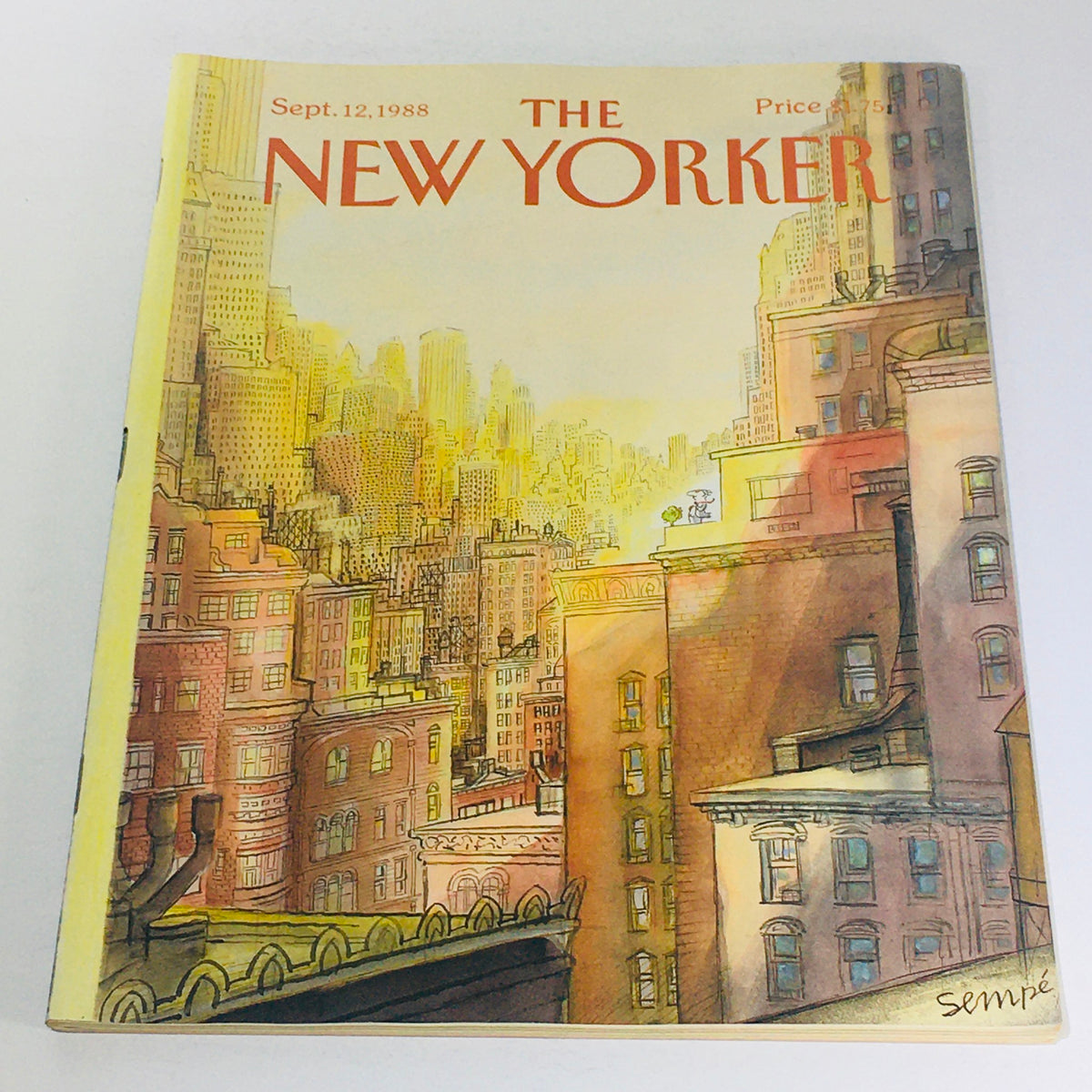
The September 12, 1988 issue of The New Yorker is identified in the listing as a full magazine with a theme cover by Jean-Jacques Sempé. Sempé is closely associated with elegant, observant illustration, and his work for The New Yorker is valued for its lightness of touch, architectural sensitivity, and quiet humor. For collectors, a dated Sempé cover issue is important because it represents the meeting of a major European illustrator with one of America’s most recognizable literary and cultural magazines. His covers often reward close looking, using understatement rather than spectacle to capture a scene, mood, or social rhythm.
The year 1988 places this issue in the final years of the Cold War and the closing stretch of a decade marked by changing media habits, urban cultural confidence, and a strong market for sophisticated magazine illustration. A complete issue from this period preserves more than the cover image alone; it also retains the editorial pacing, cartoons, advertising, typography, and literary atmosphere that readers encountered in that specific week. For collectors researching magazines published in 1988, this issue offers a useful example of how illustrated weekly magazines continued to carry cultural authority before the internet reshaped magazine reading. It also reflects the late-1980s importance of print as a curated cultural object, where essays, fiction, cartoons, criticism, and visual art were experienced together in a single weekly package.
The no-address-label detail matters because The New Yorker covers have long been collected as visual artifacts in their own right. A clean cover presentation allows Sempé’s illustration to be viewed without subscription-label interruption, which is especially significant for a magazine known for subtle composition and understated visual storytelling. While the listing does not confirm specific article titles or contributors, the verified date, publication, full-magazine format, and Sempé cover association make this issue a strong reference point for collectors of late-1980s magazine art and literary culture. As a complete issue, it also helps preserve the surrounding context that gives the cover its historical setting: the advertisements, cartoons, editorial tone, and design choices of one week in September 1988.
About the Publication
The New Yorker is an American magazine known for literary journalism, fiction, essays, criticism, cartoons, reporting, and distinctive cover illustration. Its readership has traditionally included people interested in literature, culture, politics, humor, the arts, and urban life. By 1988, the magazine had already built a deeply recognizable editorial identity around long-form writing, urbane humor, cultural observation, and covers that often captured a mood or social scene without relying on overt headlines. Complete vintage issues are especially valuable to collectors because they preserve the full magazine experience: the cover, cartoons, articles, advertisements, layout, and publishing rhythm of the period. In the case of The New Yorker, the relationship between image and editorial tone is central, making a full issue more informative than a detached cover alone. The magazine’s weekly format also gives each issue a precise historical timestamp, allowing collectors to study how cultural commentary, humor, and illustration appeared in real time.
Key Highlights Inside
- September 12, 1988 issue of The New Yorker, representing the magazine during the late 1980s and preserving its weekly editorial format from that period.
- Identified in the listing as a full magazine with a theme cover by Jean-Jacques Sempé, one of the most recognizable illustrators associated with the magazine’s visual tradition.
- No address label, preserving the cover presentation without subscription-label interruption and allowing the artwork to remain visually clean.
- The listing describes the issue as containing the magazine’s characteristic blend of articles, humor, commentary, and illustrations.
- Used example described as being in excellent condition with smooth edges and good overall shape, details that matter for cover-focused collectors.
- Specific article titles, fiction pieces, contributors, cartoons, and complete interior contents are not confirmed from the provided listing, so those details should not be assumed without direct inspection of the issue.
Condition & Rarity
Surviving examples of this September 12, 1988 issue should be evaluated for cover cleanliness, edge smoothness, corner sharpness, spine integrity, page completeness, and whether the Sempé cover remains visually unobstructed. The listing describes the magazine as used but in excellent condition, with smooth edges, no address label, and good overall shape. For collectors of The New Yorker, the absence of an address label is a meaningful presentation detail because mailing labels can interrupt the artwork and reduce display appeal. Smooth edges and strong structural condition are also important because weekly magazines were commonly read, stacked, stored casually, or discarded after use. A well-preserved full issue offers stronger reference value when it retains its complete contents, clean cover art, and stable binding. Collectors should also pay attention to page toning, corner bends, spine stress, and any surface marks that may affect the subtle visual quality of a Sempé cover. Because The New Yorker covers often depend on fine detail and open space, even small marks can be more noticeable than they might be on a busier magazine cover.
Looking for More Issues Like This?
The September 12, 1988 Jean-Jacques Sempé cover issue is the kind of dated The New Yorker magazine that appeals to collectors of illustration, literary magazines, and late-twentieth-century print culture. Related examples can be explored through the broader The New Yorker magazine collection, especially for readers interested in cover artists, cartoons, complete issues, and the magazine’s distinctive visual tradition. Browsing across multiple issues can also help collectors trace how the magazine’s cover language shifted across artists, seasons, and cultural moments.
For collectors building a year-based archive, the 1988 magazine collection provides a broader view of the same cultural moment. Comparing issues from that year can help show how different publications documented art, politics, humor, advertising, and everyday life at the close of the 1980s. That wider context makes a single dated The New Yorker issue more meaningful, placing it within the larger print record of its year.