

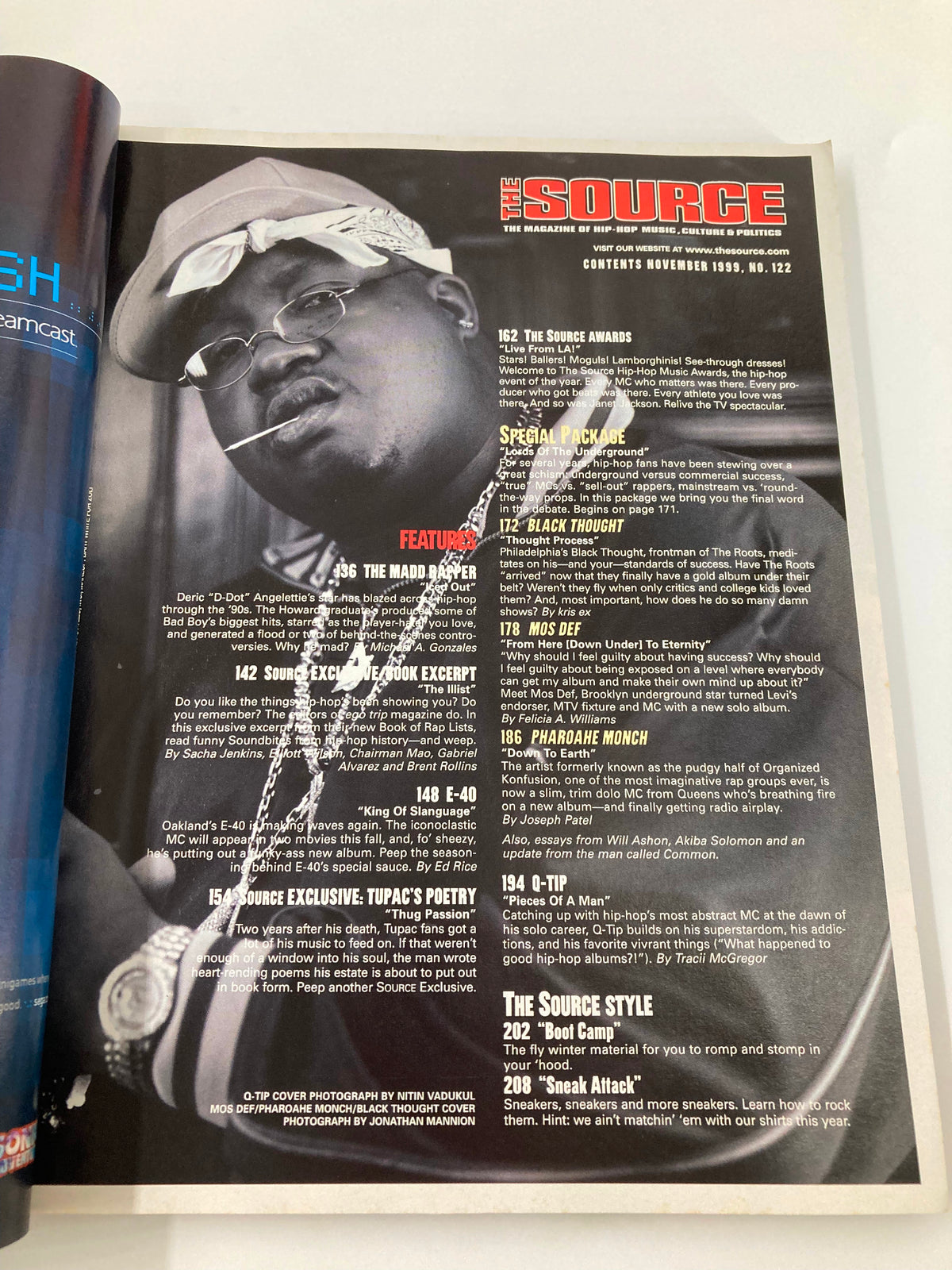
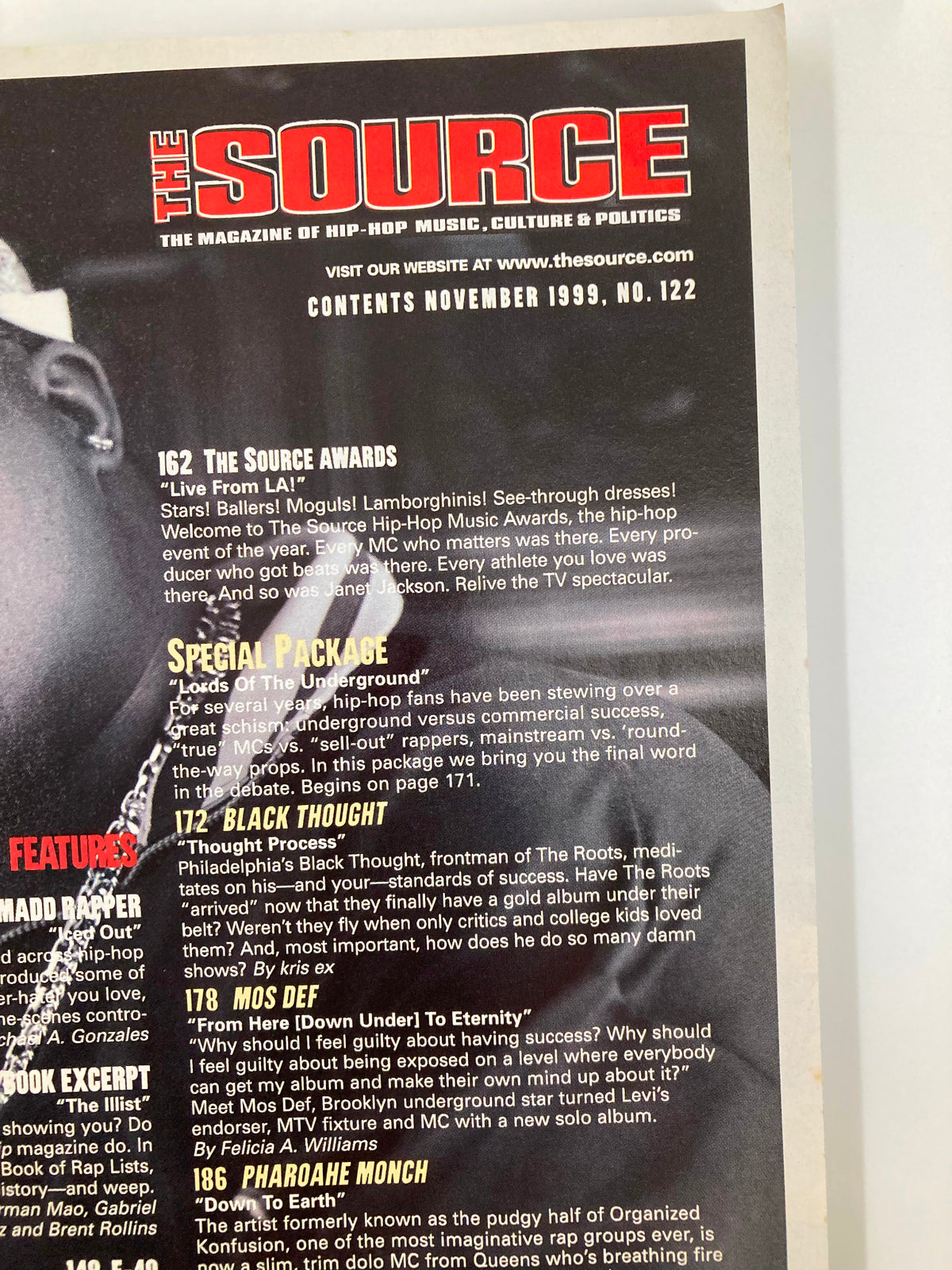


Description
Collector's Note – Why This Issue Matters
The November 1999 issue of The Source featuring Q-Tip — exploring his struggles with addiction, his artistic rebirth, and the release of his solo album — arrives at one of the most personally and professionally significant moments in the career of one of hip-hop's most intellectually distinctive artists. Q-Tip had spent the 1990s as the creative and philosophical center of A Tribe Called Quest, the Queens-based group that had fundamentally redefined what hip-hop could sound like and what it could be about — producing five studio albums between 1990 and 1998 that are still regarded as among the most artistically consequential in the genre's history. But the group had disbanded in 1998, and Q-Tip's November 1999 solo debut Amplified represented both his first attempt to establish an independent artistic identity and a public reckoning with the personal difficulties he had navigated through the group's final years. A Source cover feature engaging with addiction, rebirth, and new work is therefore not simply a promotional piece — it is a document of genuine artistic and personal transparency from a figure who had, until that point, been known primarily through the collective identity of one of the most beloved groups in hip-hop history. For collectors who focus on vintage Source Magazine issues documenting the late-1990s hip-hop era, this cover represents a primary document of a significant creative and personal transition.
The specific framing of this cover — addiction, rebirth, album — captures something important about the cultural moment in late 1999 hip-hop that extends beyond Q-Tip's individual story. The late 1990s had been a period of extraordinary commercial expansion for hip-hop but also of significant personal cost for many of its central figures, as the pressures of fame, the violence that had claimed Tupac Shakur and the Notorious B.I.G., and the internal tensions within groups and labels took a visible toll. Q-Tip's willingness to discuss addiction and personal struggle in a major hip-hop publication was itself a culturally meaningful act in 1999 — a year when the genre was still navigating the tension between the invulnerability that street credibility demanded and the human costs that the decade's intensity had produced. The Source, as the self-described "bible of hip-hop culture," was uniquely positioned to hold that conversation with the seriousness and the cultural authority that it required. Collectors building archives around the hip-hop and culture magazines of 1999 will find this issue a document of that conversation at one of its most honest and most historically specific moments.
The album context for this cover — Amplified, released in November 1999 — adds a further dimension that makes this issue particularly valuable as a primary source document. Amplified was a departure from the jazz-influenced, sample-heavy aesthetic of Tribe Called Quest, incorporating more polished, radio-friendly production that generated genuine critical debate about whether Q-Tip was expanding his artistic range or compromising the qualities that had made his earlier work so influential. A Source feature engaging with that question in the month of the album's release captures the exact moment when that debate was most alive — before the record's reception had been fully processed by the critical community and the fan base, when the questions it raised about artistic evolution and commercial ambition were genuinely open. That timeliness gives this issue a value as a primary historical document that retrospective accounts cannot replicate.
About the Publication
The Source: The Magazine of Hip-Hop Music, Culture & Politics was founded in 1988 by David Mays and Jonathan Schecter as a newsletter at Harvard University and grew through the 1990s into the most widely read and culturally authoritative hip-hop magazine in the United States — a publication that had earned the self-designation "the bible of hip-hop culture" through a decade of serious, engaged, and deeply knowledgeable coverage of a genre that mainstream media consistently underestimated and misrepresented. By November 1999, The Source had a circulation in the hundreds of thousands and a cultural authority within hip-hop that made its cover appearances meaningful markers of an artist's standing within the community. Its coverage combined artist profiles, industry news, reviews, and cultural commentary in a format that treated hip-hop as a fully serious artistic and social phenomenon deserving sustained critical attention.
Key Highlights Inside
- A cover feature on Q-Tip examining his personal struggles with addiction, his artistic and personal rebirth, and the release of his solo debut album Amplified — a rare instance of one of hip-hop's most celebrated artists engaging publicly and honestly with the personal difficulties that had accompanied his transition from the collective identity of A Tribe Called Quest to an independent creative career.
- Coverage situating Q-Tip's solo debut within the context of A Tribe Called Quest's 1998 dissolution — examining what the end of one of hip-hop's most consistently acclaimed and artistically consequential groups meant for its central creative figure and for the broader landscape of alternative and jazz-influenced hip-hop that the group had helped establish.
- Editorial engagement with the artistic questions raised by Amplified's more commercially oriented production approach — a genuine critical conversation about artistic evolution, commercial ambition, and the relationship between artistic integrity and mainstream accessibility that was particularly charged for a figure of Q-Tip's critical reputation and fan base expectations.
- Content reflecting The Source's late-1990s editorial approach to major hip-hop figures — a combination of personal profile, cultural analysis, and industry context that gave the magazine's major cover features a depth and seriousness that distinguished them from the more surface-level celebrity coverage in competing publications.
Note: Specific interior article titles, bylines, additional featured artists, and further editorial details beyond the cover story are unconfirmed for this issue from available sources. The highlights above reflect verifiable historical context drawn from the cover subject, the listed themes, publication date, and the well-documented editorial character of The Source during this period.
Condition & Rarity
This copy is identified as a no-label newsstand edition in good condition with minor wear consistent with its age — a solid condition profile for a twenty-five-year-old hip-hop magazine that indicates careful storage rather than active handling. The absence of a mailing label preserves the Q-Tip cover surface as originally printed, without the subscription label adhesive damage that affects the cover presentation of mailed copies — a meaningful distinction for a cover whose visual presentation is central to its collectible appeal. The minor wear is consistent with a copy of this vintage in good condition and does not compromise the structural integrity or readability of the issue. The plastic protective sleeve provides ongoing conservation value and indicates deliberate preservation-conscious storage. The Source issues from the late 1990s in no-label newsstand condition are somewhat less commonly encountered than their importance would suggest, as the magazine's readership tended toward active engagement with the issues rather than archival preservation — making a clean no-label copy in good condition a more specific and purposeful find than the decade's relative recency might imply.
Looking for More Issues Like This?
A no-label Q-Tip cover Source from November 1999 — with its unusually candid engagement with addiction, artistic rebirth, and the debut of one of hip-hop's most anticipated solo careers — is a historically specific and editorially rich find within the late-1990s hip-hop magazine collector market. If this issue has already found a home, the broader vintage Source Magazine collection at OriginalMagazines.com is an excellent resource for other significant covers and landmark issues from the publication's remarkable run as hip-hop's most authoritative print voice. Collectors focused on the artists, culture, and critical conversations that defined the late-1990s hip-hop moment will find it well worth exploring the full 1999 magazine archive, which brings together music, culture, and general interest publications from one of the most creatively rich and historically significant years in the genre's modern history.