





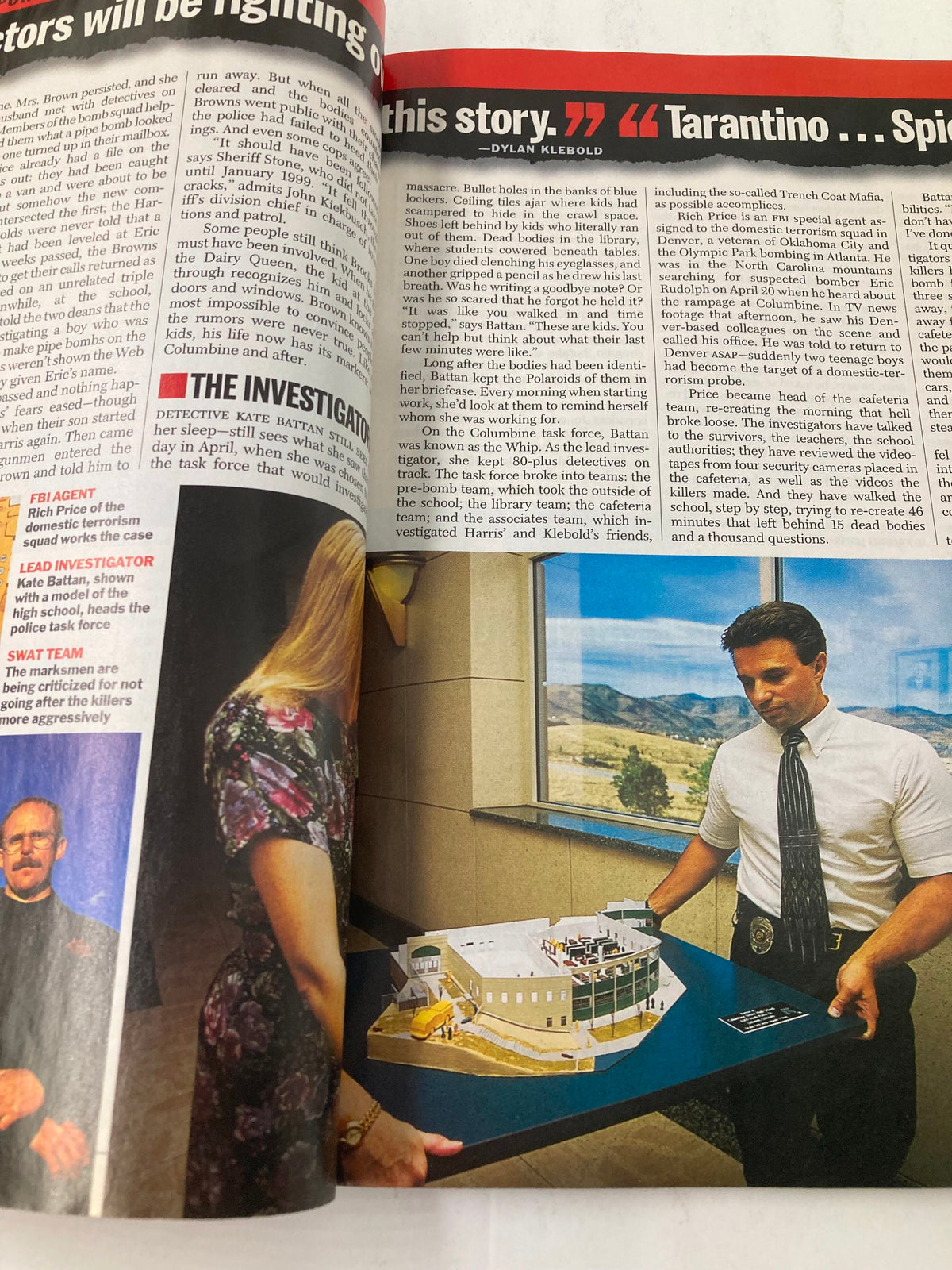


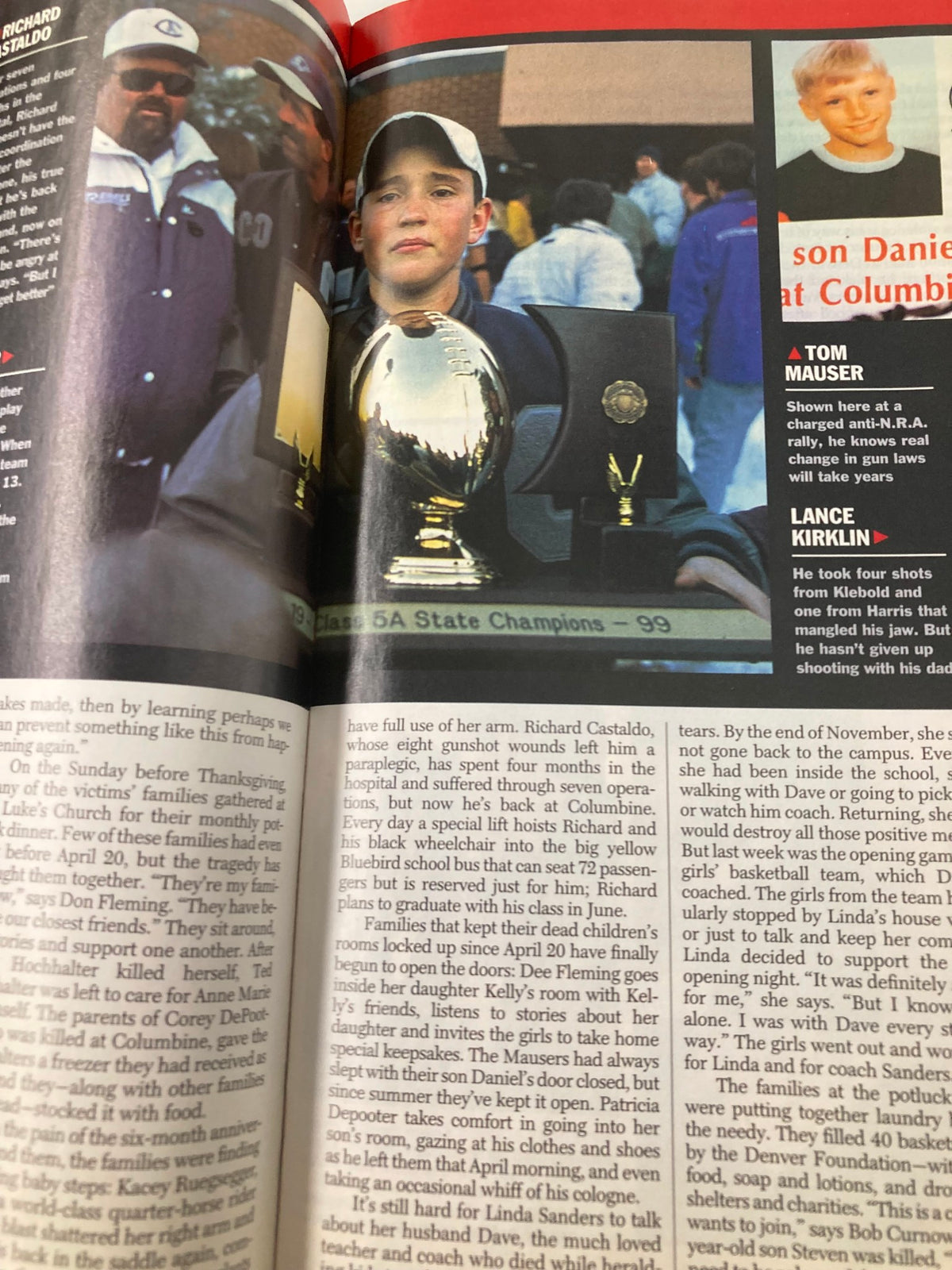
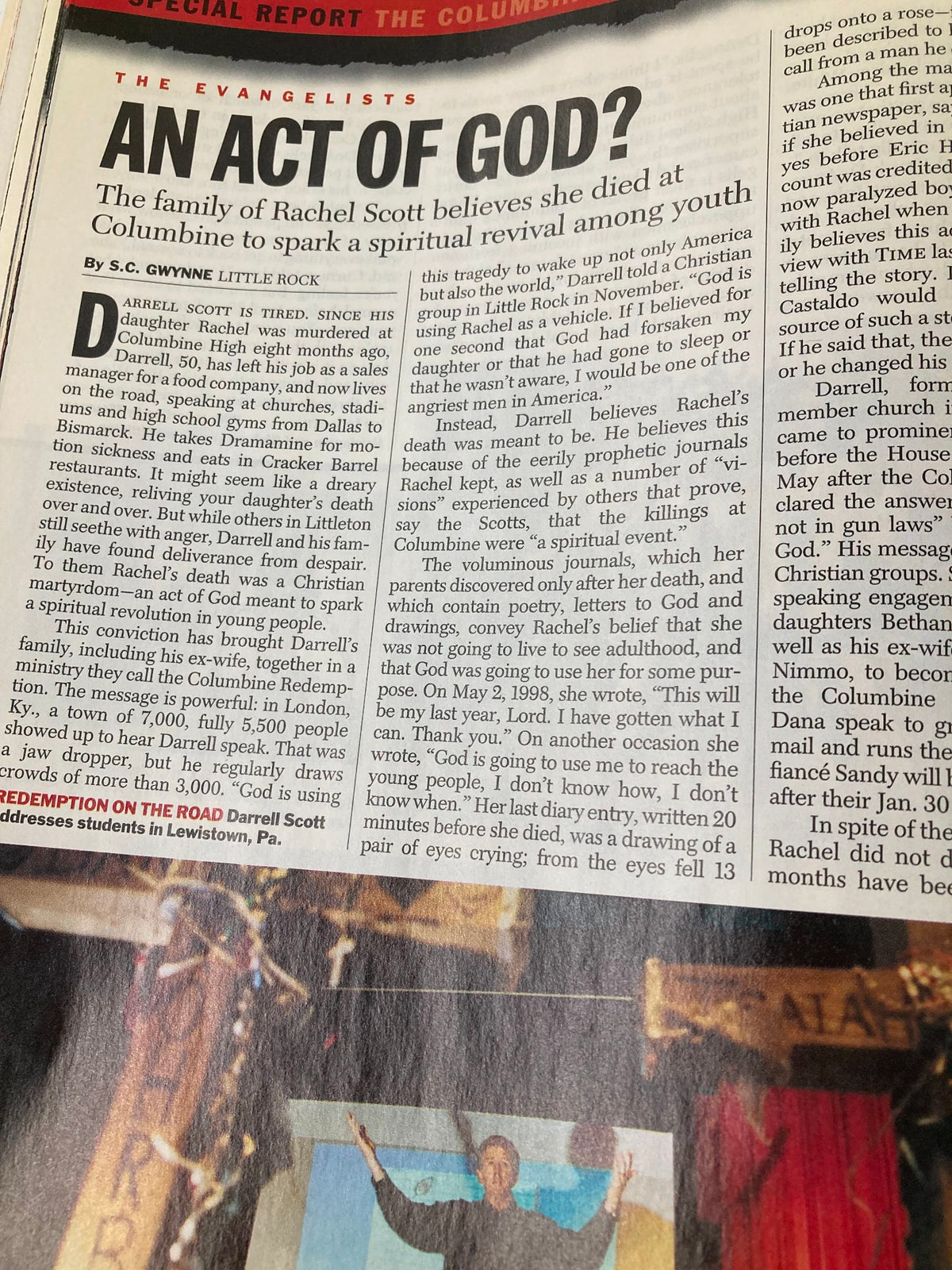


Description
Collector's Note – Why This Issue Matters
December 20, 1999 carries two distinct layers of historical significance. The Columbine High School massacre had taken place on April 20 — eight months before this issue — and by December, the national conversation had moved from the immediate shock of the event into a more sustained, investigative phase. The specific focus on the home videos made by Eric Harris and Dylan Klebold in the months before the shooting represents a later and more deeply unsettling dimension of the Columbine story than the May 1999 Time cover "The Monster's Next Door" had addressed: while that earlier cover focused on who the perpetrators were, this December cover engaged with what they had recorded and said in their own words, material that law enforcement had been slow to release and whose existence had been generating sustained public debate. The home videos — which came to be known as the "Basement Tapes" — were among the most discussed and most contested pieces of evidence in the Columbine investigation, and Time's decision to make them the focus of a year-end cover story reflects the editorial judgment that this dimension of the case was among the most significant unresolved public questions of the year. For collectors exploring original magazines from 1999, this December 20 issue is a primary document of a specific and important phase of the Columbine story — distinct from the event's immediate coverage and from the December 20 issue's additional context as a millennium-eve number.
The December 20, 1999 date adds a second and independent layer of historical weight. This issue was published eleven days before January 1, 2000 — the millennium transition whose approach had generated the Y2K anxiety that was itself one of the defining cultural phenomena of the year's final months. A year-end Time cover story on the Columbine tapes, appearing in the last full issue before Christmas and with the millennium two weeks away, sits at a specific cultural threshold: the country was simultaneously processing one of the decade's defining traumas and anticipating a calendar event that had been generating its own peculiar mixture of celebration and dread. The combination of Columbine retrospection and millennial imminence in a single late-December issue gives this specific number a cultural density that separates it from both the immediate post-shooting coverage and from a hypothetical purely millennium-focused number. For collectors building a serious archive through original Time magazine issues, this December 20 number occupies a specific and historically layered position — the Columbine story in its investigative phase, at the millennium's threshold.
It is worth noting that this issue is distinct from the May 3, 1999 Time cover "The Monster's Next Door" — which addressed the perpetrators' identities in the immediate aftermath of the shooting — and represents a later, more forensically focused engagement with the material Harris and Klebold produced before the attack. Both issues are primary documents of the Columbine story; they document different phases of the media's engagement with it, and together they constitute a more complete record than either provides alone.
About the Publication
Time magazine was founded in 1923 by Henry Luce and Briton Hadden and established itself as the most widely read American weekly news magazine of the twentieth century, addressing a broad, nationally representative readership with news summary, political analysis, cultural coverage, and the distinctive cover story format that made a Time cover one of the most significant editorial designations in American media. By December 1999, Time was concluding not only a year but a century and a millennium, and its year-end cover choices carried the particular weight of retrospective significance that final-December numbers always produce in heightened form.
Key Highlights Inside
- Columbine home videos — "The Five Home Videos" cover story: A primary document of the investigative phase of the Columbine story, focusing on the recordings Harris and Klebold made before the April 20 shooting — material whose existence and content had been generating sustained public and legal debate throughout 1999 and whose release and discussion represented a later and more forensically specific dimension of the case than the immediate post-shooting coverage.
- Year-end issue, eleven days before the millennium: Published on December 20, 1999 — eleven days before January 1, 2000 — this issue appeared at the specific convergence of Columbine retrospection and millennial imminence that gave the late-1999 cultural atmosphere its particular character.
- Distinct from May 3, 1999 Columbine coverage: This issue represents a later investigative phase of the Columbine story, focused on the perpetrators' own recorded material rather than their biographies — a different primary document than the May 1999 cover, addressing a different dimension of the same event.
- Address label present: The listing confirms an address label on the front cover — a condition factor that affects display value and is worth noting for collectors prioritizing cover surface integrity, as label adhesive causes irreversible surface damage.
- Plastic protective covering: The listing confirms an applied protective covering, indicating custodial awareness and often correlating with better overall preservation of the cover and interior content.
Note: Specific article titles, bylines, and additional interior content beyond the Columbine home videos cover story have not been independently confirmed beyond what appears in the listing. The highlights above reflect only what is verifiable from the cover subject, publication title, date, and condition notes provided.
Condition & Rarity
The listing describes this issue as in good condition with minor wear throughout, an address label on the front cover, some marks present (with photographs provided for detailed assessment), and a plastic protective covering applied. In collector-grade terms, good condition with minor wear throughout is an honest baseline for a publication from 1999 now over twenty-five years old. The address label is the most significant condition note for display purposes — label adhesive causes irreversible surface damage to the cover that meaningfully reduces display value and is the condition factor most likely to affect a collector's assessment. The minor marks noted in the listing should be assessed through the photographs to determine their location and extent relative to the cover's primary visual elements. The applied protective covering indicates custodial awareness. At the grade described, with the label and marks accounted for, this is an appropriate copy for reading, research, and general collection purposes.
Looking for More Issues Like This?
A Time cover story on the Columbine home videos from eleven days before the millennium — in the investigative phase of the most discussed American school violence case of the century — is a specific and historically significant primary document that is distinct from other Columbine coverage and that surfaces with limited frequency in the collector market. If it is no longer available, the extensive original Time magazine collection at OriginalMagazines.com is one of the most comprehensive archives of the publication accessible to collectors, spanning many decades of its history. For those drawn to the cultural and social landscape of the year's extraordinary final weeks, the 1999 magazine collection rewards careful exploration.