
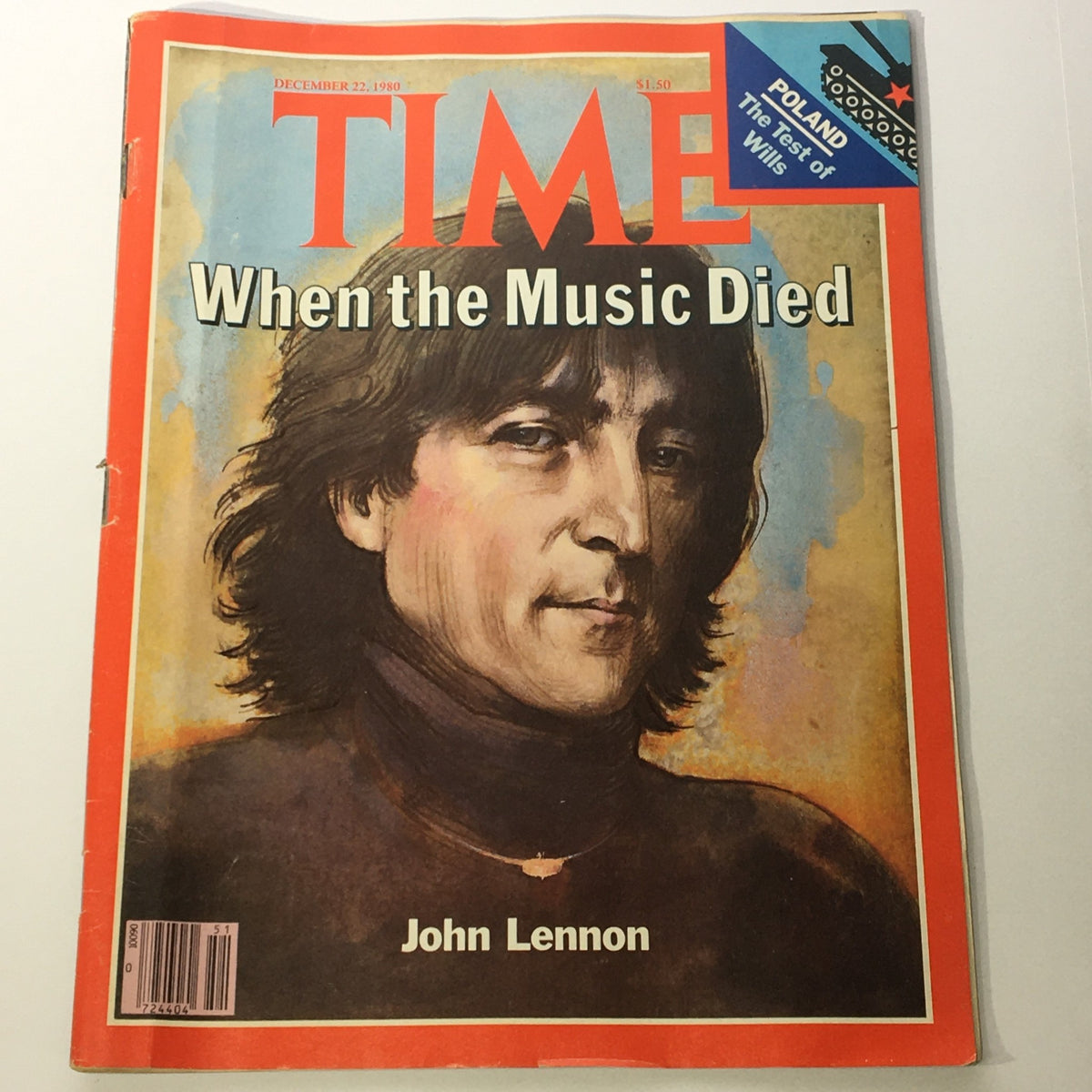

Description
Collector's Note – Why This Issue Matters
The December 22, 1980 issue of Time Magazine is one of the most emotionally significant and historically important pieces of music journalism produced during the entire decade, documenting the immediate aftermath of one of the most shocking assassinations of the twentieth century. The cover header reads "When the Music Died," and the cover story itself carried the title "The Last Day in the Life," a deliberate echo of the Beatles' own "A Day in the Life" that signaled the depth of cultural mourning Time was attempting to capture. John Lennon had been shot and killed outside his home at the Dakota in New York City on December 8, 1980, just two weeks before this issue reached newsstands, and Time's editorial response was to devote its full cover treatment to processing both the brutal specifics of his death and the enormous cultural weight of what had been lost. The opening of the cover story itself is worth noting for its stark, literary precision: "Just a voice out of the American night. 'Mr. Lennon.' He started to turn around. There is no knowing whether John Lennon saw, for what would have been the second time that day, the young man in the black raincoat stepping out of the shadows. The first shot hit him that fast, through the chest. There were at least three others." For collectors building a serious archive of Beatles and Lennon memorabilia, the John Lennon vintage magazine collection represents one of the most consistently meaningful categories within music journalism history, and this issue sits near the very center of that category.
What makes this Time cover story particularly affecting, even decades later, is its attention to the human aftermath rather than only the public mythology surrounding Lennon's death. The piece reports that sometime after the immediate terror had ebbed and the grief could be managed, Lennon's wife Yoko Ono took their five-year-old son Sean to the spot in the apartment courtyard where he had witnessed his father's murder, having already shown the boy a newspaper bearing his father's picture on the front page. That detail, reported within two weeks of the murder itself, captures the raw and unresolved nature of the grief Time was documenting in real time, long before Lennon's death had settled into the more distanced cultural memory it occupies today. The issue is identified bibliographically as Volume 116, Number 25, placing it precisely within Time's 1980 publishing run, just weeks before the year's end and arriving in the midst of an unusually intense season of mourning across American and international media alike. Collectors interested in the broader cultural landscape of this period will find the 1980 magazine archive useful for situating this issue alongside the wider sweep of American print journalism from that year, while the Time Magazine vintage collection offers the fullest available record of how the publication covered other defining political and cultural moments of the era for comparison.
The broader context of December 1980 adds further weight to this issue's significance. Lennon's death arrived less than two months after the release of "Double Fantasy," his comeback album with Yoko Ono following a five-year hiatus from public recording, meaning the murder cut short what many critics and fans had received as a genuine artistic and personal renewal. Time's decision to frame its cover story explicitly around the idea of a life's narrative ending mid-sentence — "The Last Day in the Life" — reflects an editorial sensitivity to that tragic timing, treating Lennon's death not merely as the loss of a beloved musician but as the abrupt foreclosure of a story that had, weeks earlier, seemed to be entering a hopeful new chapter.
About the Publication
Founded in 1923, Time Magazine had by December 1980 long established itself as one of the most widely read and editorially influential newsweeklies in the United States, regularly using its cover to mark the events its editors judged most consequential to American and world affairs in a given week. Its decision to devote a full cover story to Lennon's death reflects the magazine's recognition of the Beatles' broader importance as a defining cultural and generational phenomenon rather than treating the story as merely entertainment news, placing Lennon's assassination in the same category of cover-worthy gravity the magazine reserved for major political and historical events. The depth and literary seriousness of the resulting piece, "The Last Day in the Life," demonstrates the magazine's willingness to bring its full reportorial and narrative resources to bear on a story that resonated across generations of American readers who had grown up with the Beatles' music, and the issue remains one of the most frequently cited examples of Time's music journalism from the entire decade.
Key Highlights Inside
- The cover story "The Last Day in the Life," paired with the cover header "When the Music Died," documenting the circumstances of John Lennon's murder on December 8, 1980, and its immediate aftermath in unusually literary and detailed prose.
- Close reporting on the moments surrounding Lennon's shooting outside the Dakota in New York City, including a detailed account of his killer's approach in the moments before the attack.
- Coverage of the personal aftermath for Lennon's family, including reporting on Yoko Ono and their young son Sean in the immediate weeks following the murder, offering a rare glimpse of private grief amid a wave of public mourning.
- Identified bibliographically as Volume 116, Number 25 of Time Magazine's 1980 publishing year, situating it precisely within the magazine's editorial calendar for that year.
- Note: Specific additional article titles and interior content beyond the confirmed cover story have not been fully detailed in available sources for this issue.
Condition & Rarity
Surviving copies of this December 22, 1980 Time Magazine are now forty-five years old, and given how widely and consistently this particular issue has been sought after by Beatles and Lennon collectors over the decades, condition varies considerably across the surviving population, ranging from heavily read and worn copies to examples that have been carefully archived by collectors who recognized its significance early on. The condition profile described for this issue — newsstand condition with no address label, good overall condition, minor edge wear with possible slight rips or marks, and plastic protective covering included — places it solidly in the Good range by standard periodical grading criteria for a mass-market newsweekly of this age. The absence of an address label is a meaningful positive attribute, since it preserves the full visual integrity of the cover exactly as it appeared on newsstands in December 1980, without the obstruction that a subscriber's mailing label would have caused to an image that has become one of the most recognizable magazine covers connected to Lennon's death. The plastic protective covering indicates this copy has been deliberately preserved, which is a meaningful positive given how heavily circulated and handled many surviving copies of this particular issue have become over forty-five years of collector interest. Minor edge wear and slight rips or marks are common and expected characteristics of a newsstand magazine this age, and they should be weighed against the completeness of the interior pages, particularly the full cover story itself, which carries the bulk of this issue's enduring research and collector value.
Looking for More Issues Like This?
Time Magazine's December 22, 1980 Lennon issue is among the most consistently sought items in the entire Beatles and solo Lennon memorabilia market, and its combination of literary depth and historical immediacy has made it a touchstone reference for music journalists and historians writing about Lennon's death in the decades since. If this issue has already found a home, the John Lennon vintage magazine collection is the most natural place to continue building a collection focused specifically on his life, career, and legacy across other publications and eras. The full Time Magazine vintage collection offers a broader view of how the publication covered other major cultural and political moments of the period, and collectors interested in situating this issue within its full historical moment will also find the 1980 magazine archive a valuable companion resource.