



Description
Collector's Note – Why This Issue Matters
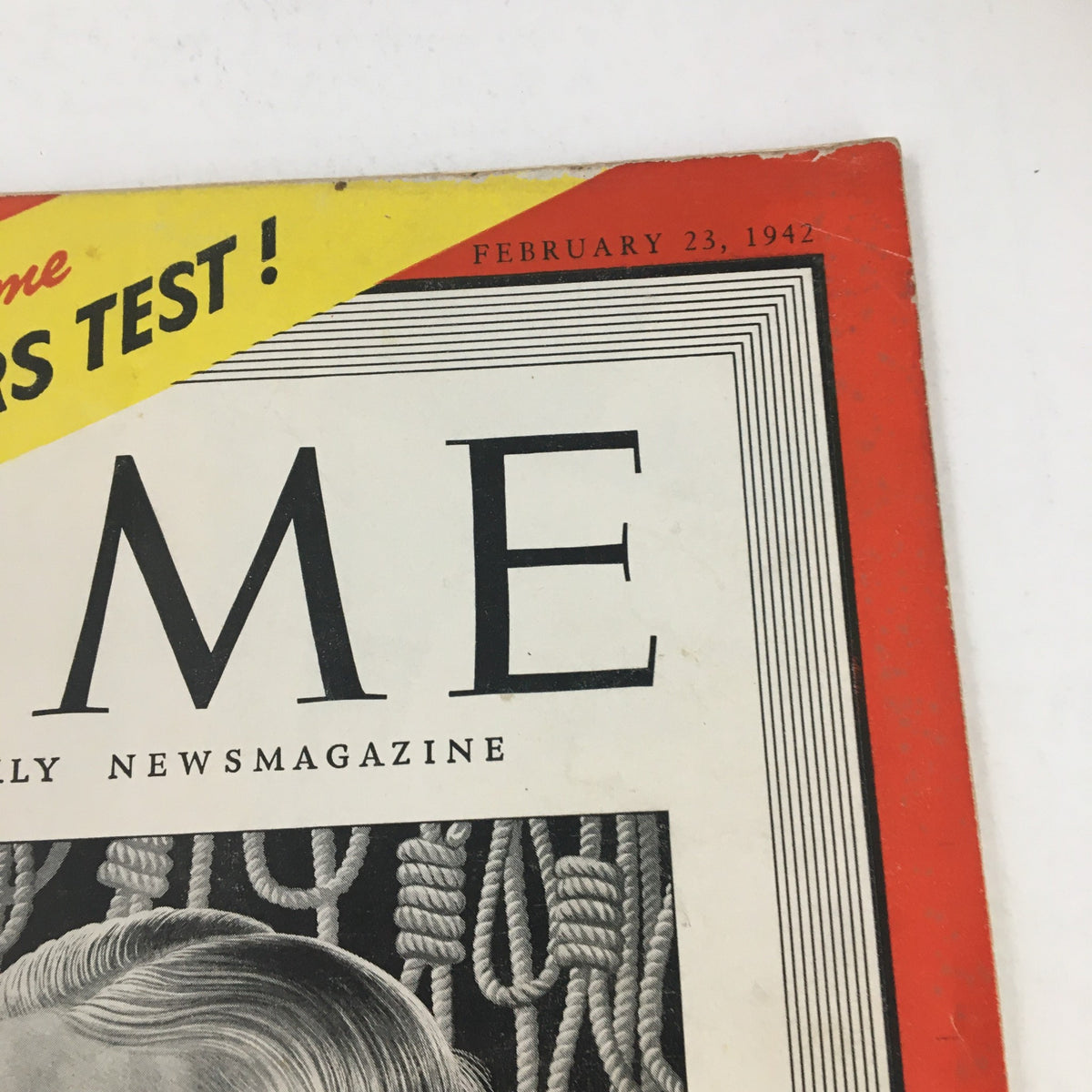
The February 23, 1942 issue of Time Magazine featuring Reinhard Heydrich on the cover is one of the most historically significant and genuinely disturbing primary documents in the magazine's wartime archive. Heydrich was, at the time of publication, the Reich Protector of Bohemia and Moravia and the head of the Reich Main Security Office — the organizational umbrella that controlled the Gestapo, the SD (Sicherheitsdienst), and the apparatus of Nazi terror across occupied Europe. He had chaired the Wannsee Conference just five weeks before this issue's cover date, on January 20, 1942, where senior Nazi officials coordinated the administrative implementation of what they called the "Final Solution to the Jewish Question." The mass murder of European Jews was, at the moment this magazine went to press, being systematized and industrialized. Time placing Heydrich on its cover in February 1942 — under the designation "Gestapo Executioner" — reflects the American press's awareness of his role as an instrument of terror, even if the full scale of the genocide being organized was not yet comprehensively understood by the outside world. Collectors building serious archives of Time Magazine's wartime covers will find this issue occupies a category entirely apart from the magazine's other World War II subjects — it is a document of history's perpetrators, not its heroes.
The February 1942 date carries additional historical weight beyond Heydrich specifically. The United States had entered the war just eleven weeks earlier, following the attack on Pearl Harbor in December 1941. American readers encountering this cover were still in the earliest weeks of their country's direct participation in the conflict, and the face of Reinhard Heydrich — labeled explicitly as an executioner — would have served as a concentrated symbol of what the Allied cause was fighting against. Heydrich was assassinated by Czech and Slovak paratroopers in Prague on May 27, 1942, just three months after this issue appeared, making this cover one of the last major American magazine portraits of him published while he was alive. The Nazi reprisals that followed his death — the complete destruction of the village of Lidice and the murder of its male population — became one of the most documented atrocities of the war. This Time cover therefore precedes one of the Holocaust's most internationally publicized episodes, giving the issue a before-and-after historical position that no subsequent documentation can replicate. For anyone assembling a documentary record of 1942 through its print culture, this issue is an essential and irreplaceable primary source.
About the Publication
Time Magazine, co-founded by Henry Luce and Briton Hadden in 1923, was the dominant American weekly newsmagazine throughout the mid-twentieth century, reaching millions of readers with its departmentalized synthesis of national and international news. During World War II, the magazine's covers served as a weekly visual index of the conflict's central figures — Allied commanders, heads of state, and, with regularity, the enemy leadership whose faces American readers needed to recognize and understand. The decision to place Axis figures on the cover was an explicit editorial choice: Time used its cover as a tool of public education about the nature of the threat, not as an endorsement. The wartime issues are among the most historically significant in the magazine's ninety-plus-year archive, combining the magazine's authoritative editorial voice with contemporaneous documentation of events whose full dimensions were still becoming known even as they were being reported.
Key Highlights Inside
- Reinhard Heydrich cover — "Gestapo Executioner": The cover designates Heydrich by his function in the Nazi terror apparatus, published five weeks after the Wannsee Conference and three months before his assassination — making this one of the last major American magazine cover portraits of him produced during his lifetime.
- February 1942 wartime context: The issue arrives in the eleventh week of American participation in World War II, at a moment when the American reading public was still orienting itself to the full nature of the conflict and the figures at its center.
- Documentation of Nazi leadership for American readers: Time's wartime practice of profiling Axis figures on its cover served an explicit public-information function — and a February 1942 feature on Heydrich would have been among the most comprehensive portraits of him available to the American general public at the time.
- Broader February 1942 war coverage: As with all Time issues of the period, additional departmental content would have covered the full global scope of the war as it stood in late February 1942 — including the ongoing Pacific theater following Pearl Harbor and the escalating European campaign. Specific additional interior content beyond the Heydrich cover story is unconfirmed in the listing.
Condition & Rarity
The no-label status of this issue is its most significant condition attribute. A clean newsstand copy of a wartime Time — without the subscriber label that the majority of surviving copies carry — presents the cover without disruption, which matters considerably for an issue whose cover portrait is its primary historical and visual significance. Minor wear throughout is consistent with honest age on an eighty-plus-year-old newsstand publication. The protective plastic covering indicates deliberate subsequent preservation. Wartime Time issues in no-label newsstand condition are proportionally less common than subscriber copies precisely because the magazine's enormous wartime circulation was dominated by subscription distribution. When evaluating any surviving copy of this issue, cover integrity around the Heydrich portrait is the paramount grading consideration, followed by spine stability and interior page condition — paper stock from early 1940s publications is prone to significant tanning and brittleness under average long-term storage conditions, making well-preserved examples meaningfully distinct from typical worn survivors.
Looking for More Issues Like This?
Wartime Time covers featuring Axis leadership figures are among the most historically charged issues in the magazine's archive, and a clean no-label newsstand copy of this particular issue — published in the narrow window between the Wannsee Conference and Heydrich's assassination — represents a primary historical document that serious collectors of World War II print ephemera actively seek. If this issue has already found a home, the full archive of Time Magazine issues is the place to browse for other landmark wartime and historically significant covers. The 1942 magazine collection is also worth exploring for anyone building a comprehensive documentary record of that pivotal year in World War II history.