
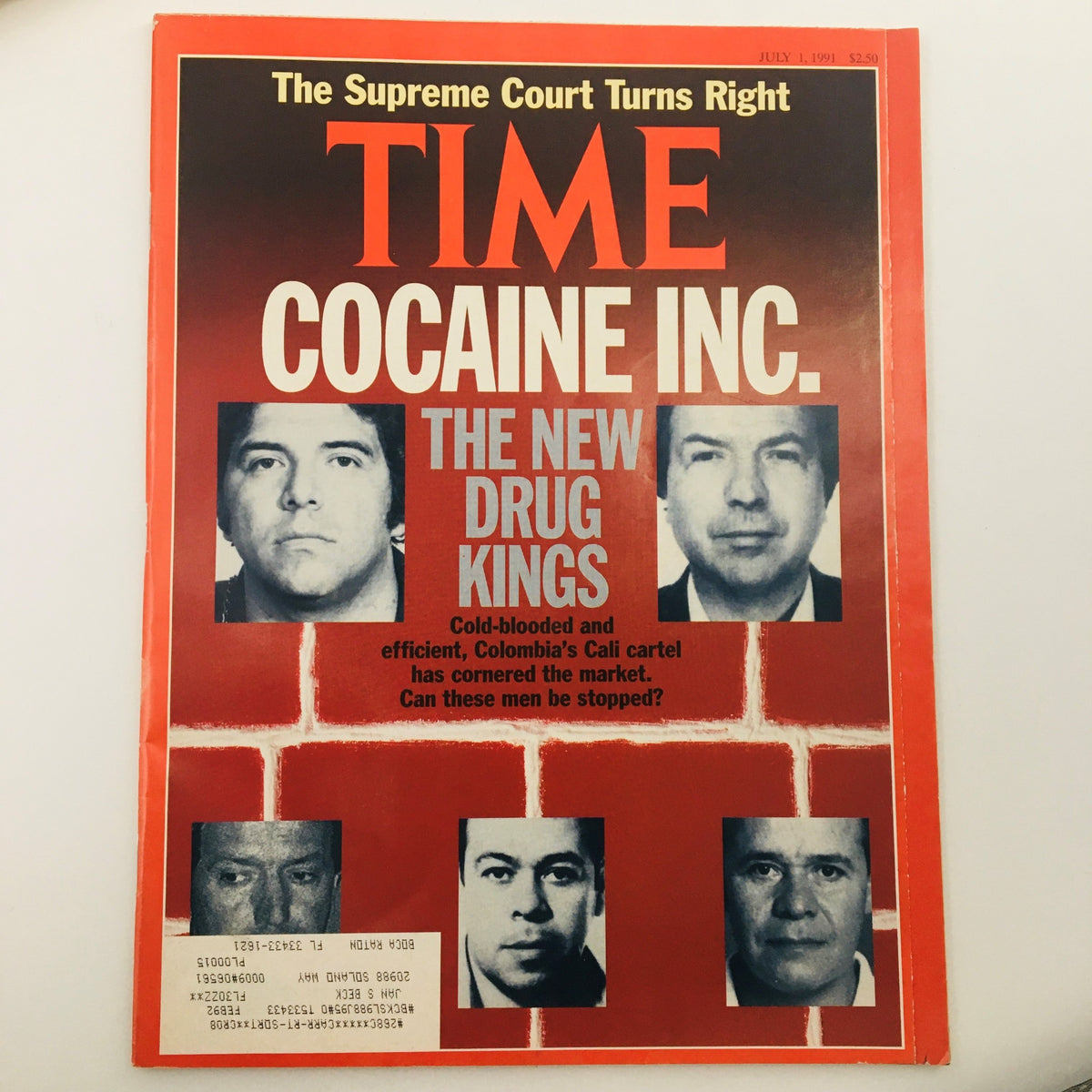

Description
Collector's Note – Why This Issue Matters
The July 1, 1991 issue of Time — Vol. 137, No. 26 — arrived on newsstands at a moment when the American war on drugs was at the center of national political life. The cover story on "Cocaine Inc." and the rise of a new generation of drug trafficking organizations reflects a specific and consequential phase in that story. By mid-1991, the Medellín Cartel under Pablo Escobar was in its final, most violent chapter — Colombian authorities and the United States government were closing in, and the cartel's brutal campaign of narcoterrorism had made the cocaine trade one of the most discussed geopolitical issues of the era. At the same time, new trafficking networks were already emerging to fill the space the old cartels would leave behind. A Time cover story examining the power structures of the cocaine trade in this precise moment is a primary document of that transition.
The early 1990s represented a turning point in how American media and policy establishment framed the drug issue. The crack cocaine crisis of the late 1980s had driven mandatory minimum sentencing legislation and a dramatic expansion of the American prison population. By 1991, the human costs of both the drug trade and the policies designed to combat it were becoming impossible to ignore, and serious journalism was beginning to examine the economics and organizational structures of trafficking networks with the same analytical seriousness previously reserved for corporate or geopolitical reporting. A Time cover framing cocaine trafficking as "Inc." — as a business, with kings and hierarchies and market dynamics — reflects exactly that editorial shift. Collectors focused on the 1991 magazine archive at OriginalMagazines.com will recognize this issue as a precise marker of where American public discourse on drugs stood at the decade's opening.
For collectors of Time magazine's most significant cover stories, issues that document the drug war era occupy a distinct and historically rich category. The magazine's decisions about which stories warranted cover treatment — and how to frame them visually and editorially — are now studied as indicators of how mainstream American media was processing some of the most complex social crises of the late twentieth century. This issue is a clear and well-preserved example of that editorial tradition at work.
About the Publication
Time was founded in 1923 and by the early 1990s remained the dominant American weekly news magazine, with a circulation in the millions and a global readership. Its format organized the week's news by department — National Affairs, World, Business, Science, Culture, and others — written in the magazine's distinctive authoritative house style and anchored by a cover story chosen to reflect the most significant issue of the moment. The cover itself functioned as an editorial statement, and Time's cover choices across the late Cold War and early post-Cold War period are now treated by media historians as a reliable index of what issues the American establishment press considered central to public life.
Key Highlights Inside
- Cover story on "Cocaine Inc.: The New Drug Kings" — an in-depth examination of the organizational structures and power dynamics of the cocaine trade at a pivotal moment in the early 1990s.
- Reporting on the socio-political landscape surrounding drug trafficking, reflecting the American policy debate over the drug war at the peak of its intensity.
- Analysis of the shifting landscape of trafficking networks as the era of the major Colombian cartels approached its end and new organizations began to emerge.
- Broader national and international news reporting typical of a mid-summer 1991 Time issue, spanning the full editorial range of the magazine's departmental format.
- Period advertising and editorial illustration providing visual documentation of American commercial and media culture at the turn of the decade.
Note: Specific interior articles beyond the cover story are unconfirmed for this issue. The above reflects what is verifiable from the cover subject matter, publication format, and historical context of the date.
Condition & Rarity
Graded Very Good, this issue presents well for a publication now more than thirty years old. The noted address label on the front cover identifies it as a subscriber copy rather than a newsstand edition — a distinction that matters to strict grading collectors, as label-free newsstand copies are generally preferred for display and command a modest premium in the collector market. That said, the label is part of the issue's provenance and does not affect the interior content or reading experience in any way. Smooth edges with minimal wear indicate careful handling over the decades, and clear, undamaged visuals throughout suggest the issue was stored away from the light and humidity exposure that most commonly degrades newsprint-era periodicals. A protective plastic sleeve is the appropriate ongoing storage solution for an issue of this paper stock and age. Drug war era Time covers attract collectors across several fields — journalism history, criminal justice history, and 1990s American political culture — which sustains broad interest in well-preserved copies.
Looking for More Issues Like This?
Drug war and organized crime cover stories from Time's early 1990s run are a focused and historically compelling collecting category, and specific issues like this one don't surface in consistent supply. The full Time magazine collection at OriginalMagazines.com is worth exploring for other landmark covers from the magazine's long and distinguished run. For collectors building a broader documentary archive of the period, the complete 1991 magazine archive spans a wide range of titles from a year that marked the end of the Cold War order and the beginning of a new and complicated American moment.