

Description
Collector's Note – Why This Issue Matters
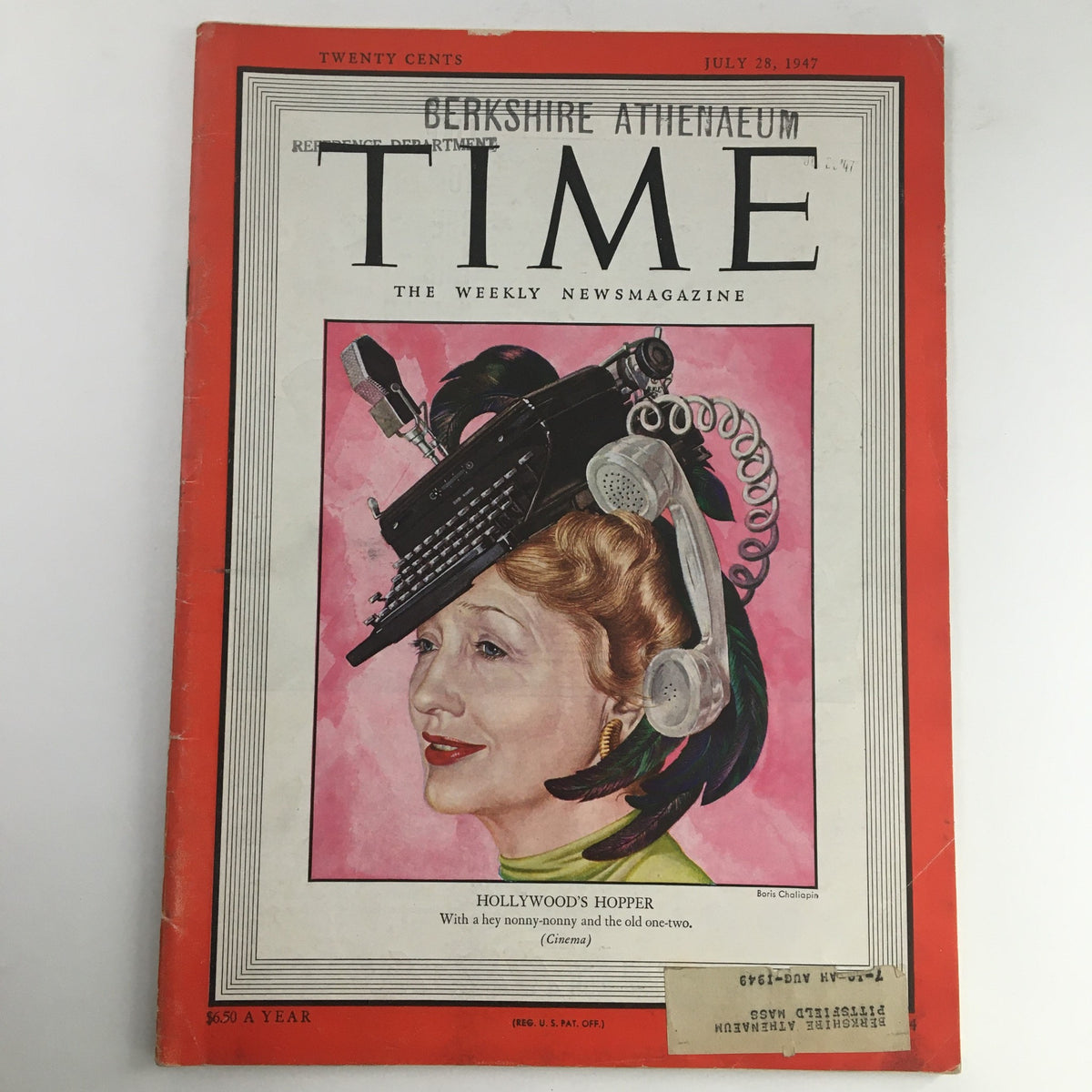
The July 28, 1947 issue of Time magazine, identified in the listing as Volume 50, Number 4, is centered on Hedda Hopper and Hollywood film culture. Hopper was one of the most recognizable Hollywood gossip columnists of the studio era, known for her influence over celebrity publicity, film-industry reputations, and the public image of movie stars. Her presence in a 1947 issue of Time places the magazine directly within the world of postwar Hollywood, when the film industry remained one of America’s most powerful cultural exports. For collectors, the issue is significant because it connects a national newsweekly with the machinery of fame, publicity, and studio-era celebrity culture.
The date is significant because 1947 was a transitional year for American film and media. The major studios were still dominant, but the industry was also facing changing audience habits, labor tensions, political scrutiny, and the early pressures that would reshape Hollywood in the years ahead. For collectors researching magazines published in 1947, this issue offers a dated example of how a national newsweekly interpreted Hollywood not only as entertainment, but as a cultural and public-relations machine. A Hedda Hopper feature is especially relevant because gossip columnists helped mediate the relationship between stars, studios, and readers. Her role shows how entertainment journalism could influence public perception while also reflecting the glamour, conflicts, and carefully managed image-making of the film industry.
The listing describes the issue as including Hollywood commentary, photographs, and an insider-oriented view of the film industry, though specific article titles and page details are not confirmed. That makes the safest collector focus the verified date, volume and issue number, Time publication, Hedda Hopper subject, address-label presence, stamped mark, and general condition notes. As a complete issue, it also preserves the broader editorial environment in which Hollywood was presented to a national readership during the late 1940s. That surrounding context matters because a magazine like Time did not treat Hollywood only as glamour; it also framed the film world as a business, a cultural force, and a public institution worthy of national attention.
About the Publication
Time magazine was one of the most influential American weekly news magazines of the twentieth century, known for concise reporting, profiles, political coverage, business news, cultural commentary, and international affairs. Its readership included a broad public interested in current events, public figures, entertainment, and the major social questions of the week. By 1947, Time had already established itself as a leading interpretive newsweekly, presenting people and events through a distinctive editorial voice. Complete issues from this period are valuable to collectors because they preserve not only the featured subject, but also the surrounding advertisements, columns, typography, news priorities, and assumptions of postwar American journalism. The magazine’s weekly format also gives each issue a precise historical position, allowing collectors to connect individual features with the larger flow of politics, entertainment, business, and culture at that moment. For a Hollywood-related issue, that complete format helps show how film coverage appeared alongside the wider concerns of the postwar United States.
Key Highlights Inside
- July 28, 1947 issue of Time, listed as Volume 50, Number 4, giving the magazine a clear bibliographic reference point for collectors.
- Identified in the listing as featuring Hedda Hopper and a Hollywood film-related feature.
- Relevant to collectors interested in studio-era Hollywood, film journalism, celebrity culture, and postwar American media.
- The listing describes the issue as offering cultural commentary, photographs, and an insider view of Hollywood, though exact article titles are not confirmed.
- Condition notes include good overall condition, an address label on the front, a stamped mark on the front, minor wear, and a plastic protective covering.
- Specific article titles, author credits, image credits, page numbers, and the complete table of contents are not confirmed from the provided listing, so those details should not be assumed without direct inspection of the issue.
Condition & Rarity
Surviving examples of this July 28, 1947 issue should be evaluated for cover readability, page completeness, spine strength, paper quality, edge wear, and whether the Hedda Hopper/Hollywood presentation remains clear despite front-cover markings. The listing describes the magazine as being in good condition, with minor wear, an address label on the front, a stamped mark on the front, and a plastic protective covering. Address labels and stamped marks may affect display appeal, but they can also reflect original circulation history, which is common among mid-century weekly magazines. For a 1947 issue, some toning, handling wear, and edge vulnerability may be expected because these publications were made for immediate reading rather than archival preservation. Collector-grade assessment should focus on completeness, stable binding, readable pages, and whether the cover and interior remain historically useful and visually presentable. Since weekly newsmagazines were often read, mailed, stacked, clipped, or discarded, surviving condition can vary widely. A plastic covering can help reduce additional handling wear, but collectors should still inspect the underlying magazine for loose pages, spine splits, brittleness, stains, or markings that interfere with the issue’s primary Hollywood subject.
Looking for More Issues Like This?
The July 28, 1947 Time issue featuring Hedda Hopper is the kind of postwar Hollywood reference piece that appeals to collectors of film history, celebrity journalism, and mid-century newsmagazines. Related issues can be explored through the broader Time magazine collection, especially for readers interested in public figures, entertainment coverage, and complete vintage newsweeklies. Comparing nearby issues can help collectors see how Time balanced film-industry coverage with politics, business, international affairs, and postwar cultural change.
For a wider view of the same historical year, the 1947 magazine collection is useful for comparing how different publications documented Hollywood, politics, advertising, culture, and postwar American life. Looking across issues from that year helps place this Hedda Hopper feature within the larger print record of the late 1940s. It also gives collectors a clearer sense of how entertainment journalism functioned during a period when studios, columnists, and national magazines all helped shape the public image of Hollywood.