


Description
Collector's Note – Why This Issue Matters
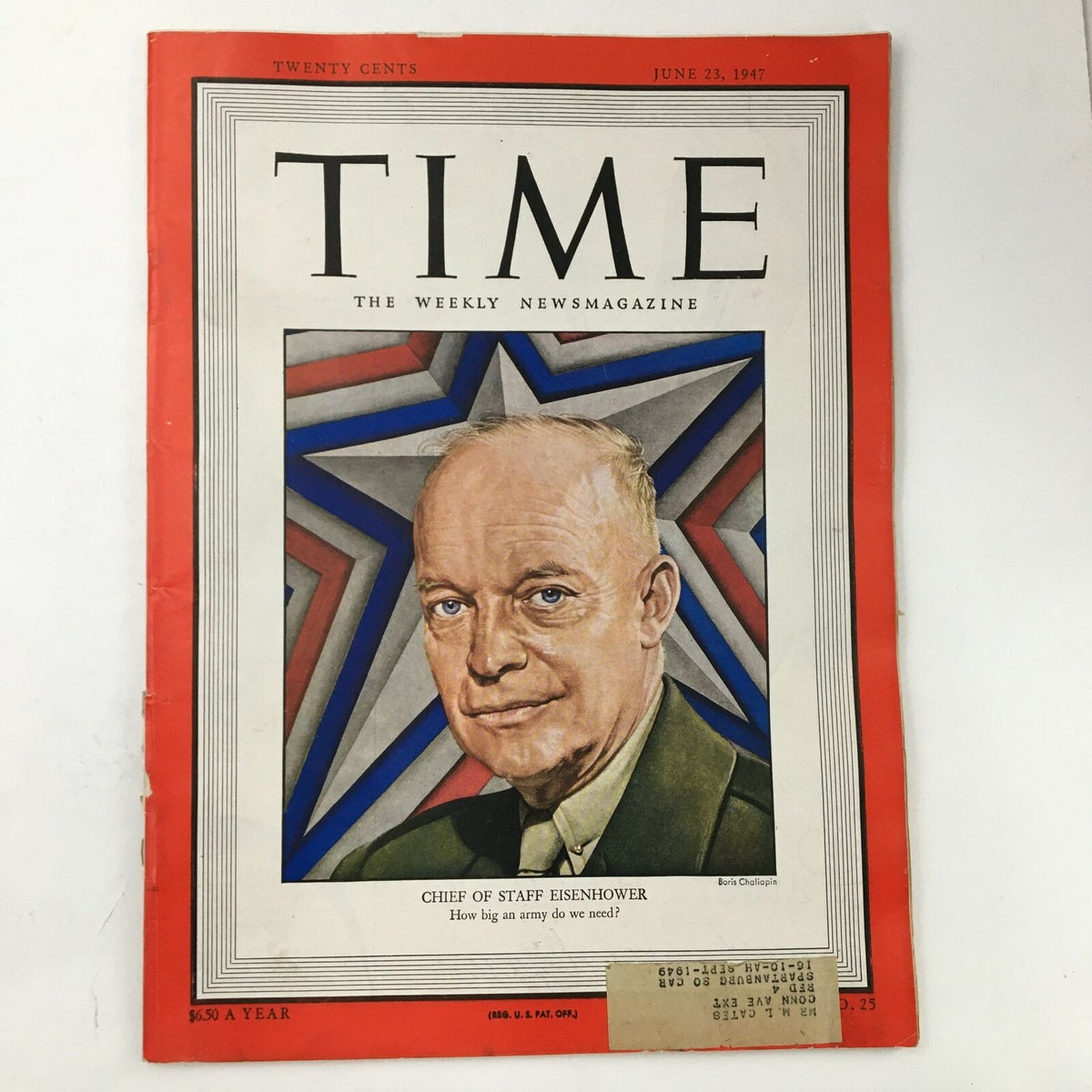
The June 23, 1947 issue of Time, officially identified in the magazine’s archive as Volume XLIX, Number 25, features General Dwight D. Eisenhower during his service as Chief of Staff of the United States Army. Eisenhower had already become internationally recognized as the Supreme Commander who directed Allied forces in Western Europe during World War II. By 1947, however, his responsibilities had shifted from coordinating a vast wartime alliance to guiding the American Army through demobilization, institutional change, and the uncertain beginnings of the Cold War. The cover therefore presents Eisenhower at an important transitional point between his celebrated wartime command and his later roles as Columbia University president, NATO commander, and president of the United States. For collectors of magazines featuring Dwight D. Eisenhower, the issue documents a distinct chapter of his public career that is sometimes overshadowed by his presidency.
The date also places the magazine within a decisive period in postwar international affairs. Europe was struggling with destroyed infrastructure, political instability, food shortages, and the growing division between the Western powers and the Soviet Union. Only weeks before this issue appeared, Secretary of State George C. Marshall had publicly proposed the economic recovery program that became known as the Marshall Plan. American leaders were simultaneously debating the future organization of the armed services, the nation’s international commitments, and the military requirements of an increasingly divided world. Eisenhower’s appearance on the cover connected his personal prestige as a victorious general with these broader debates over national defense and postwar leadership.
The portrait was created by Boris Chaliapin, one of the artists closely associated with Time cover imagery during the mid-20th century. As with many covers from the period, the image transformed a contemporary news figure into an immediately recognizable visual symbol of the week’s central subject. The result is both a portrait of Eisenhower and a document of how American news media framed military authority after World War II. The issue can be considered alongside other editions in the vintage Time magazine archive to trace the publication’s continuing coverage of political and military leadership. It also belongs within the broader record of magazines published in 1947, a year shaped by reconstruction, changing alliances, and the emerging Cold War.
About the Publication
Time was founded in 1923 by Henry R. Luce and Briton Hadden as a weekly newsmagazine intended to organize major events into a compact, accessible account of national and international affairs. Its editorial format divided news into recurring departments covering government, foreign relations, business, science, medicine, religion, sports, education, books, radio, cinema, and the arts. The magazine became particularly recognizable for its portrait covers, red border, concise reporting style, and practice of identifying an individual who represented an important story or public issue. By 1947, Time had become an influential interpreter of current events for a large American readership navigating the transition from world war to an uncertain peace. Its articles often combined factual reporting with a distinctive editorial voice that reflected the assumptions and language of its period. Surviving issues consequently serve not only as sources of information but also as evidence of how mid-century American journalism selected, arranged, and interpreted the news.
Key Highlights Inside
- The issue is officially dated June 23, 1947 and identified as Volume XLIX, Number 25. Its cover presents General Dwight D. Eisenhower, with artwork credited by Time to portrait artist Boris Chaliapin.
- The principal Army and Navy feature is titled “In the Balance,” connecting Eisenhower’s cover appearance with contemporary questions about the organization and future of the American military. The subject was particularly timely because the United States was adjusting its armed forces to peacetime conditions while confronting new international tensions.
- A foreign-relations article titled “To Save a Civilization” reflects the issue’s attention to Europe’s postwar recovery. Its appearance shortly after the announcement of the Marshall proposal places the magazine within the early public discussion of American economic assistance and the reconstruction of Europe.
- The international section includes reporting under headings devoted to the atomic age, Russia, Germany, India, France, Italy, Great Britain, Switzerland, and other nations. Together, these articles illustrate the global scope of Time at a moment when wartime alliances were changing and new political divisions were becoming increasingly visible.
- The issue also contains articles on science, medicine, religion, sports, business, education, art, music, radio, cinema, and books. These departments broaden the magazine beyond its Eisenhower cover story and preserve a cross-section of American news, intellectual life, and popular culture in June 1947.
- Additional national reporting addresses the presidency, Congress, political opinion, food controls, and a contemporary aviation disaster. The variety of subjects demonstrates the magazine’s weekly survey format, in which the cover feature appeared within a much wider summary of events rather than as a single-subject publication.
Condition & Rarity
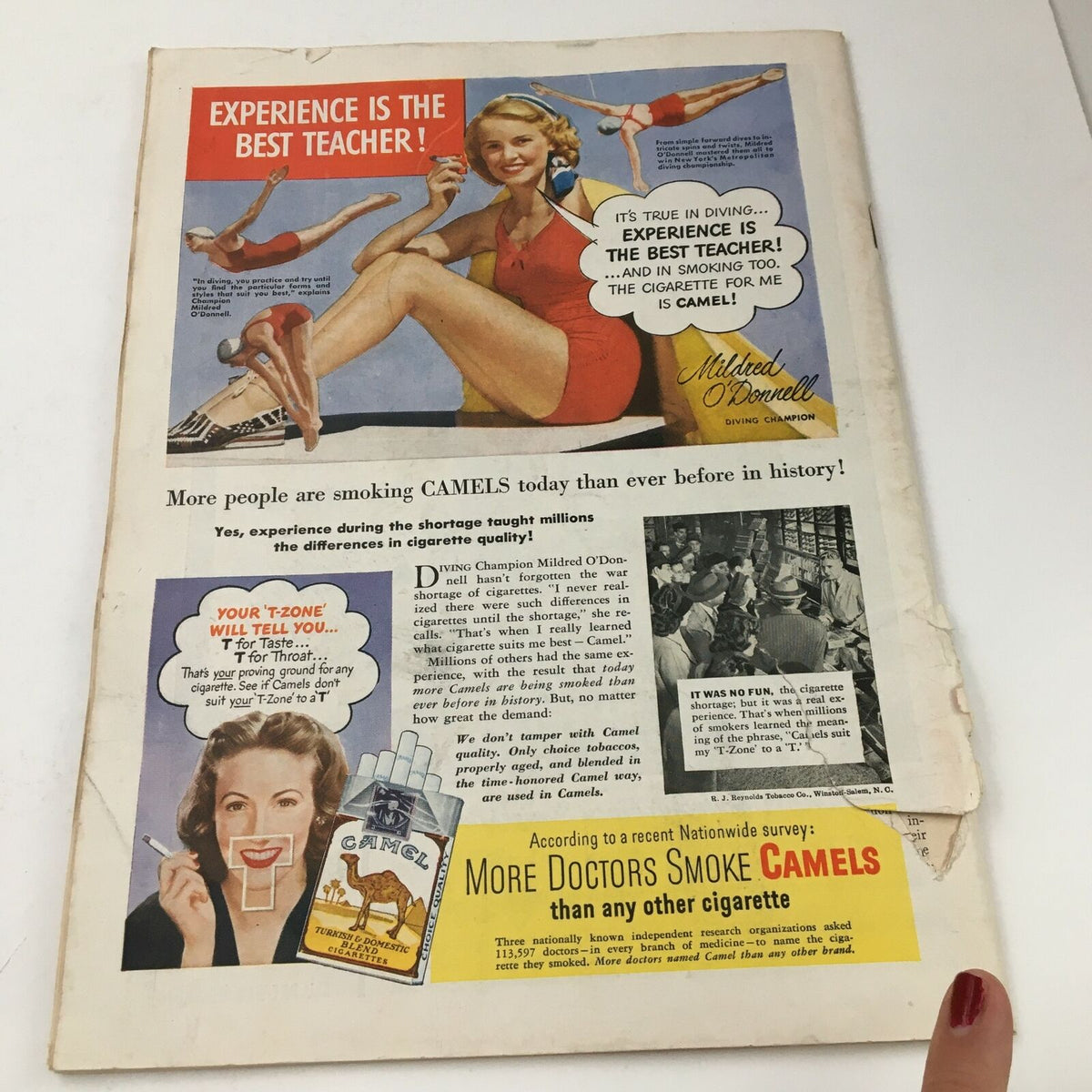
The reported condition is Good, with minor wear visible on the cover and pages consistent with the age and handling history of a weekly magazine published in 1947. An address label remains attached to the front cover, identifying the magazine as a subscription-delivered example rather than an unmarked newsstand issue. For collectors, such a label is an original part of the magazine’s distribution history, although it may affect visual presentation by covering a portion of the front design. A small rip is reported on the back cover, and its length, location, and proximity to the spine or edges should be considered when assigning a more precise grade. No missing pages, detached covers, writing, significant moisture damage, or major binding failures are identified in the available description, but those characteristics should be confirmed through direct inspection and photographs. The accompanying plastic protective covering is a later storage accessory rather than an original component of the issue. It can help limit dust, rubbing, and additional handling wear, but it does not alter the underlying condition of the paper, label, or existing tear.
Looking for More Issues Like This?
This exact June 23, 1947 issue can be a challenging dated reference to encounter, particularly in well-preserved condition with its cover and interior pages intact. Readers researching Eisenhower’s military and political career can explore other original magazines featuring Dwight D. Eisenhower, while the broader collection of vintage Time issues offers additional examples of the publication’s influential portrait covers and weekly news reporting. The 1947 magazine collection also provides a wider view of how American periodicals documented postwar reconstruction, politics, culture, and the early Cold War.