



Description
Collector's Note – Why This Issue Matters
June 29, 1942 is a date that sits at one of the most critical junctures of the Second World War. The German summer offensive on the Eastern Front — Operation Blue, which would eventually drive toward Stalingrad and the Caucasus oil fields — was in the final stages of preparation at this precise moment, and General Franz Halder, as Chief of the German Army General Staff, was one of its primary architects. Time's decision to profile Halder under the cover line "Hitler's Halder" was a sophisticated piece of wartime journalism that attempted to explain to American readers not merely who was fighting the war on the German side, but how the Wehrmacht's command structure worked and what the specific tensions within it meant for the course of the conflict. The relationship between Hitler and Halder was, by the summer of 1942, one of the most consequential and fractious in modern military history — Halder was a professional soldier of the Prussian tradition who had repeatedly clashed with Hitler over strategic decisions, and the cover story's framing as "Hitler's Halder" reflects the American press's awareness of that tension and its significance for understanding how Germany's war was being fought. For collectors building an archive of Time Magazine covers from the Second World War period, this June 1942 edition represents the magazine at its most serious wartime editorial engagement — using its cover to analyze the military leadership of the enemy rather than merely demonize it, treating the German command structure as something worth understanding rather than simply condemning.
The specific historical significance of Halder at this moment deserves careful attention. The summer of 1942 was the last period in which the German military situation appeared to most observers — including those in the American and British press — as potentially recoverable for Germany. The defeats of the first winter in the Soviet Union had demonstrated the limits of the Blitzkrieg approach, but the German military's resilience had been equally apparent, and the summer offensive was being watched with genuine anxiety by Allied planners who feared it might succeed in its objectives of securing the Caucasian oil fields and cutting Soviet supply lines along the Volga. Halder himself would be dismissed by Hitler in September 1942, just three months after this cover, as their strategic disagreements became irreconcilable — a fact that gives this June 1942 Time cover a specific biographical significance as a document of Halder at the last moment of his wartime authority. Time's editorial engagement with these internal German command dynamics reflected the magazine's wartime commitment to providing its readership with serious analytical journalism rather than merely patriotic content, and the result is a cover story whose historical value as a primary source document of how the American press understood the German high command in the summer of 1942 is considerable. Collectors researching magazines from 1942 will find this issue one of the more analytically ambitious wartime journalism artifacts of its year.
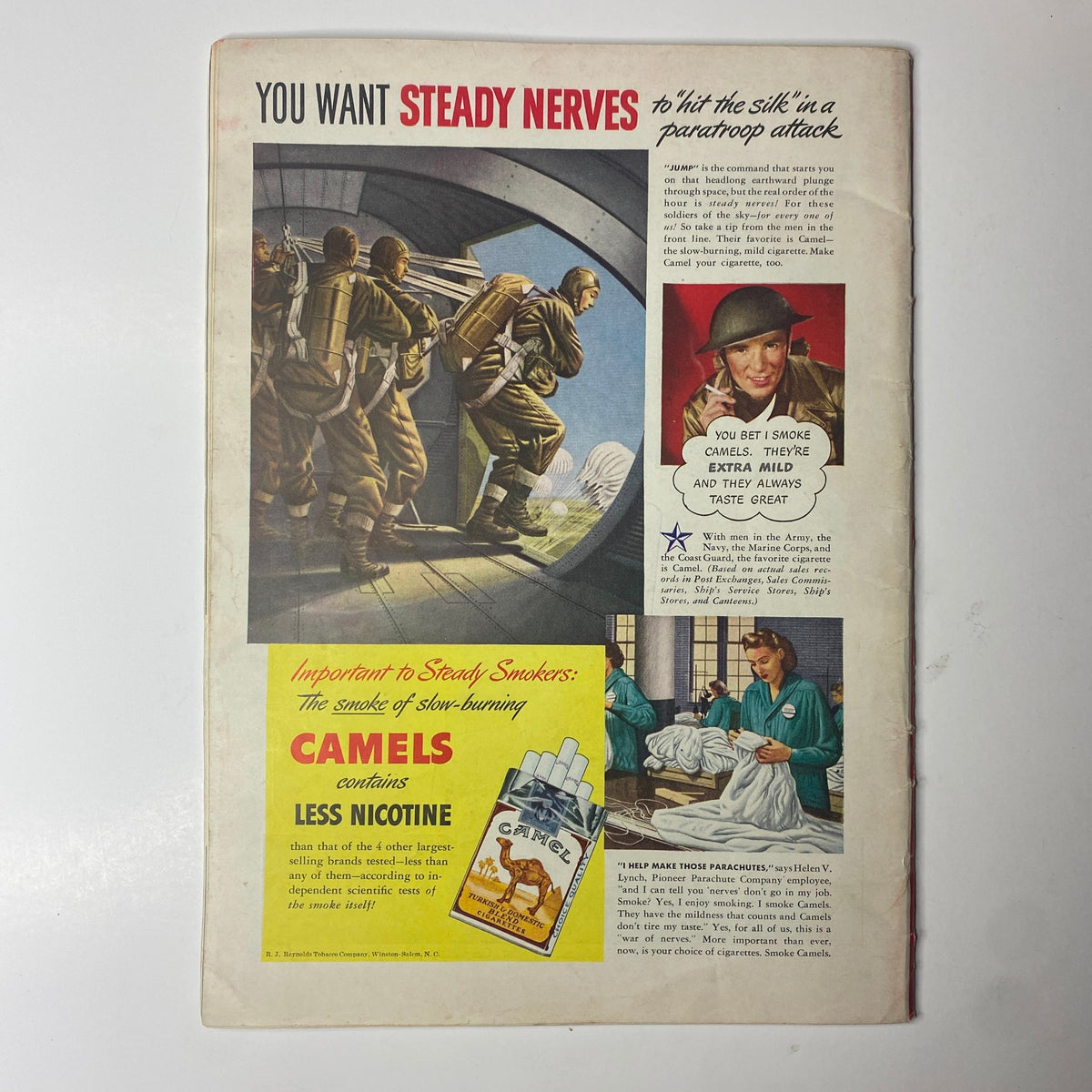
The broader editorial content of a June 29, 1942 Time Magazine adds multiple further layers of historical documentary value. The summer of 1942 was a period of acute anxiety on the American home front — the Battle of Midway had been fought and won just three weeks before this issue's publication, but the full implications of that victory were not yet visible, and the news from every theater of the war was generating genuine public uncertainty about the ultimate outcome. Time's weekly coverage of U.S. military efforts, international diplomacy, and home front economic and cultural realities in this specific window — the middle of the first full year of American involvement in the war — constitutes a primary source record of extraordinary historical richness. The period advertising alone, reflecting the commercial culture of a country that had been at war for six months and was in the middle of reorganizing its entire economic life around the demands of global conflict, is a documentary archive of the specific material and psychological experience of mid-1942 American life that cannot be found in any other format with the same combination of breadth and specificity.
About the Publication
Time Magazine was founded in 1923 by Henry Luce and Briton Hadden as the first weekly news magazine in the United States, and by June 1942 had sustained nearly two decades as one of the most widely read and institutionally authoritative publications in American journalism. Its wartime editorial approach was among the most ambitious in its history — the magazine committed its full editorial resources to covering the global conflict from every angle simultaneously, addressing military strategy, international diplomacy, home front economics, and the cultural life of a nation at war within a single weekly package. The cover story system, which designated a single figure or development as the week's most historically significant, gave Time's wartime covers a particular gravity: to appear on the cover was to be designated as consequential by the most authoritative news organization in American publishing, and the choice of Franz Halder for the June 29, 1942 cover reflects the editorial seriousness with which Time approached the analysis of German military leadership rather than merely its condemnation. At its wartime circulation peak, Time reached millions of American readers weekly, making its framing of the Halder story a primary document of how mainstream American journalism understood the German high command at a critical moment in the war's development.
Key Highlights Inside
- Cover story on General Franz Halder — a primary document of Time's analytical engagement with the Chief of the German Army General Staff at the moment of the Wehrmacht's last major offensive success on the Eastern Front, published three months before Halder's dismissal by Hitler and representing one of the most substantive American press profiles of German military leadership to appear during the war years.
- Eastern Front and German military strategy coverage — the summer 1942 context of Operation Blue and the German push toward Stalingrad and the Caucasus, reported from the perspective of a press still uncertain about the war's ultimate outcome and attempting to provide American readers with genuine analytical understanding of the conflict's military dynamics.
- U.S. military and home front coverage consistent with Time's June 1942 editorial scope — the first full summer of American involvement in the war, the reorganization of the American economy for war production, and the cultural and social realities of a country mobilizing on a scale it had never previously attempted, all documented through the specific lens of the week of June 29, 1942.
- International diplomacy and Allied war coordination coverage — the complex relationships among the Allied powers in mid-1942, including the ongoing debates about a second front, the implications of the Battle of Midway three weeks earlier, and the global diplomatic landscape of a war that was simultaneously being fought on multiple continents.
- Period advertising reflecting the commercial culture of mid-1942 American life — a primary documentary record of how American industry, consumer brands, and commercial culture were adapting to and communicating with a population at war, providing research material of considerable value for historians studying the home front experience of the Second World War.
- Note: Specific secondary article titles, confirmed departmental content details, and individual bylines beyond the cover story have not been individually verified for this issue. The highlights above reflect Time's well-documented wartime editorial format and the verified cover subject rather than inventoried interior content.
Condition & Rarity
Time Magazine issues from June 1942 are approaching their eighty-fourth year of existence, and the condition landscape for surviving copies reflects the full weight of that age alongside the specific challenges of wartime paper stock. The Second World War period saw significant reductions in paper quality across American publishing as wartime materials restrictions took effect, and Time issues from 1942 were produced on paper that was already of lower quality than prewar editions — a factor that accelerates the tanning and brittleness that affect all period periodicals over long storage periods. Good condition with all pages intact and legible, combined with the specific positive of no mailing label, is a meaningful and honest assessment for a wartime issue approaching its ninth decade: it describes a copy whose structural integrity has been maintained and whose cover and interior content are accessible and complete, while acknowledging the expected surface evidence of eighty-plus years of existence. The absence of a mailing label is a particularly significant condition attribute for a wartime Time — the magazine's subscription base was enormous during the war years, and label-free newsstand copies that preserve the full cover design in its uninterrupted form represent a meaningful minority of surviving examples. The plastic protective sleeve provides ongoing archival protection for a publication of this age and paper chemistry. Collectors evaluating surviving examples should prioritize cover legibility — the Halder image and Time masthead are the primary visual documents — alongside page integrity and the completeness of the wartime content as primary condition criteria.
Looking for More Issues Like This?
A Good-condition, label-free copy of the June 29, 1942 Time Magazine with the Franz Halder cover is a historically specific wartime journalism find that surfaces infrequently — early-forties Time issues in clean display condition are already scarcer than their later counterparts due to wartime paper quality, and issues with this level of documented historical significance attract consistent interest from collectors of both WWII history and the Time Magazine archive. If this issue is no longer available, the full Time Magazine collection at OriginalMagazines.com is the most comprehensive place to browse surviving issues from across the publication's history and locate other wartime covers, significant military profiles, or specific years from the magazine's WWII-era run. The 1942 magazine collection brings together surviving issues from across that year's major publications for collectors working to document the full breadth of American print journalism during one of the most consequential years of the twentieth century.