


Description
Collector's Note – Why This Issue Matters
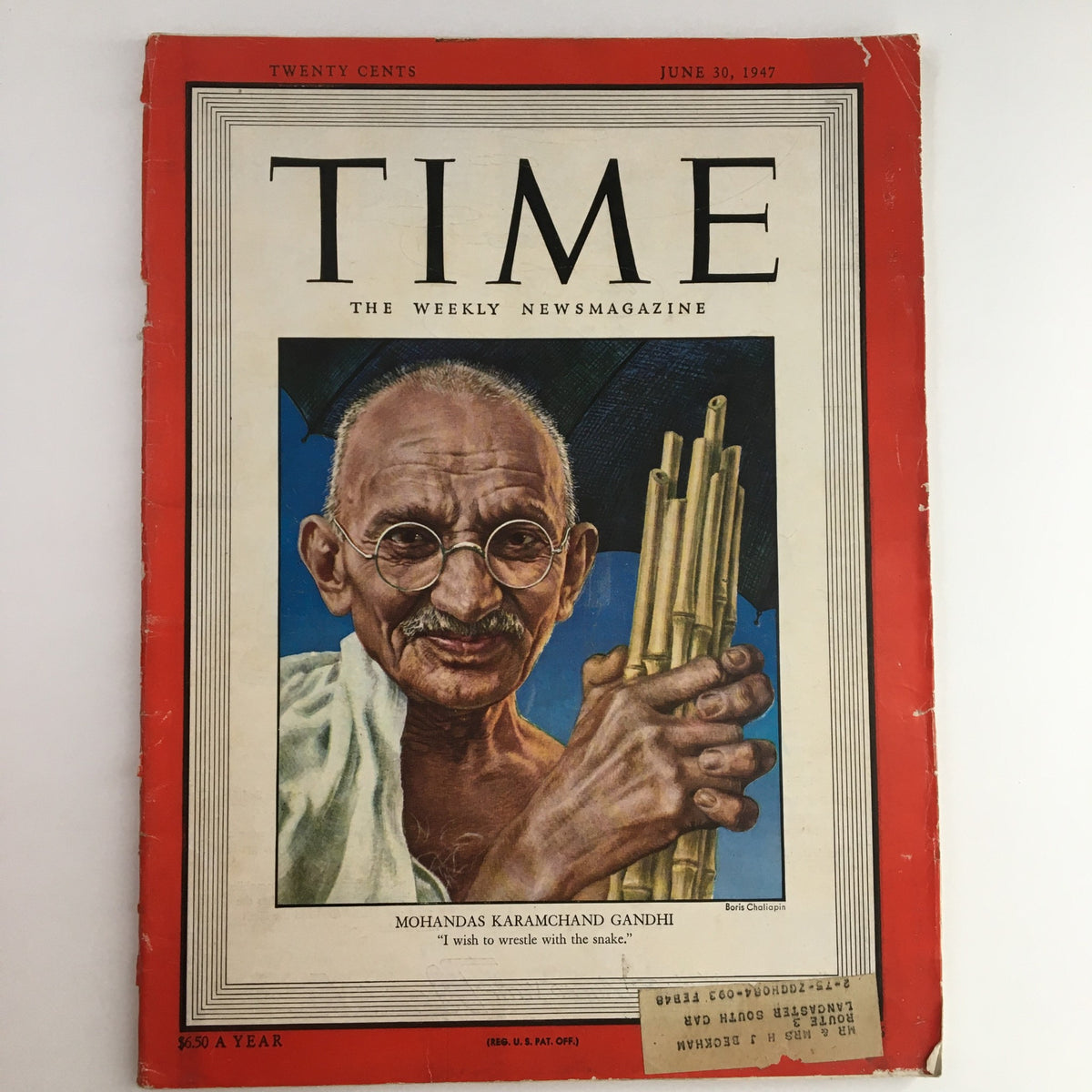
The June 30, 1947 issue of Time magazine arrived on newsstands at one of the most consequential moments of the twentieth century. Just weeks before the formal partition of British India on August 15, 1947, the world was watching the subcontinent with a mixture of awe, anxiety, and moral reckoning. Mohandas Karamchand Gandhi — the figure on this cover — was at the center of it all, not as a head of state, but as a moral force whose philosophy of nonviolent resistance had helped engineer the end of nearly two centuries of British colonial rule. To appear on the cover of Time in the summer of 1947 was to be recognized as one of the defining figures of the age, and Gandhi had earned that recognition many times over. For collectors of vintage Time magazine issues, this particular date represents a rare convergence of editorial timing and historical gravity.
Gandhi was no stranger to the international press by 1947, but this moment carried a different weight. The independence he had spent decades working toward was now imminent — and so was the violent communal fracturing he had fought desperately to prevent. The partition of India and Pakistan would come within weeks of this issue's publication, displacing millions and resulting in catastrophic loss of life. Gandhi's anguish over that division was well documented, making this cover not a triumphant portrait but something far more complex: a meditation on a man standing at the edge of victory and tragedy simultaneously. Issues from 1947 — a pivotal year in postwar world history — carry exceptional research and display value for this reason alone.
Gandhi was assassinated on January 30, 1948 — less than seven months after this issue went to print. That proximity to his death makes any major periodical featuring Gandhi from mid-1947 a document of particular historical sensitivity. This is one of the last years in which he appeared in the press as a living presence shaping world events, rather than as a figure of retrospective mourning. For serious collectors of South Asian history, postwar political history, or the broader arc of twentieth-century journalism, this issue occupies a meaningful place in the documentary record.
About the Publication
Time magazine was founded in 1923 by Henry Luce and Briton Hadden as the first weekly news magazine in the United States, designed to synthesize the week's events for a busy, educated readership. By 1947, it had become one of the most widely circulated and internationally influential periodicals in the world, with its cover selections functioning almost as official designations of global significance. The magazine's editorial voice in this era was confident, sweeping, and unapologetically opinionated — a product of Luce's belief that American journalism had a responsibility to engage with world affairs at the highest level. A Time cover in 1947 was not incidental recognition; it was a deliberate editorial statement about who and what mattered most in a rapidly reshaping postwar world.
Key Highlights Inside
- Cover subject Mohandas Karamchand Gandhi, featured in the context of India's approaching independence from British rule — one of the defining geopolitical stories of the postwar era.
- Reporting on the socio-political climate of mid-1947, a period bracketed by the end of World War II and the imminent redrawing of the map of South Asia through partition.
- Contemporary news coverage and analysis consistent with Time's editorial format of the period, which combined international affairs, national politics, business, and cultural commentary in tightly written weekly dispatches.
- Note: Specific interior article titles and additional feature content for this issue are unconfirmed beyond what is documented on the cover. The above reflects what is verifiable from the cover subject, publication date, and the magazine's well-documented editorial format of the era.
Condition & Rarity
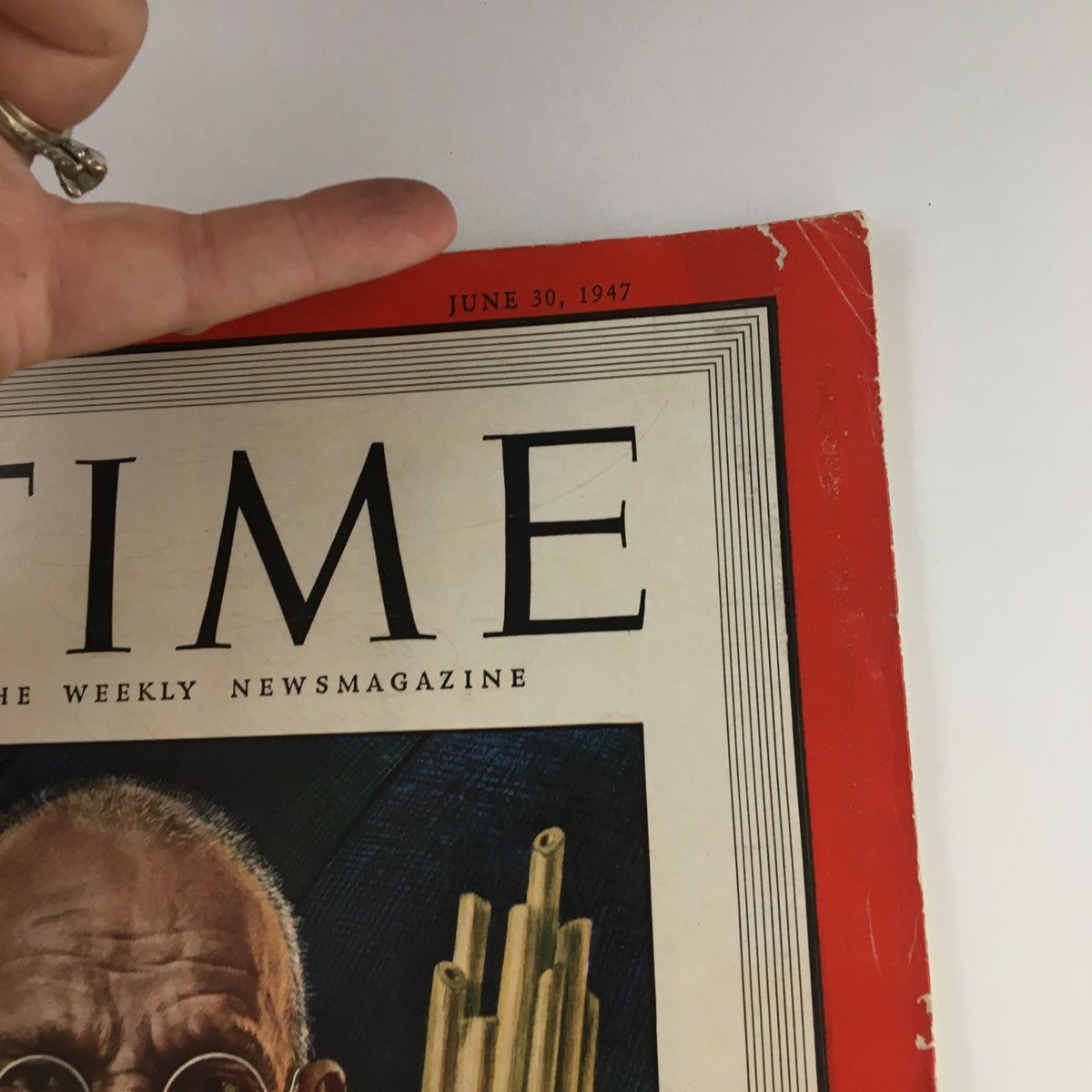
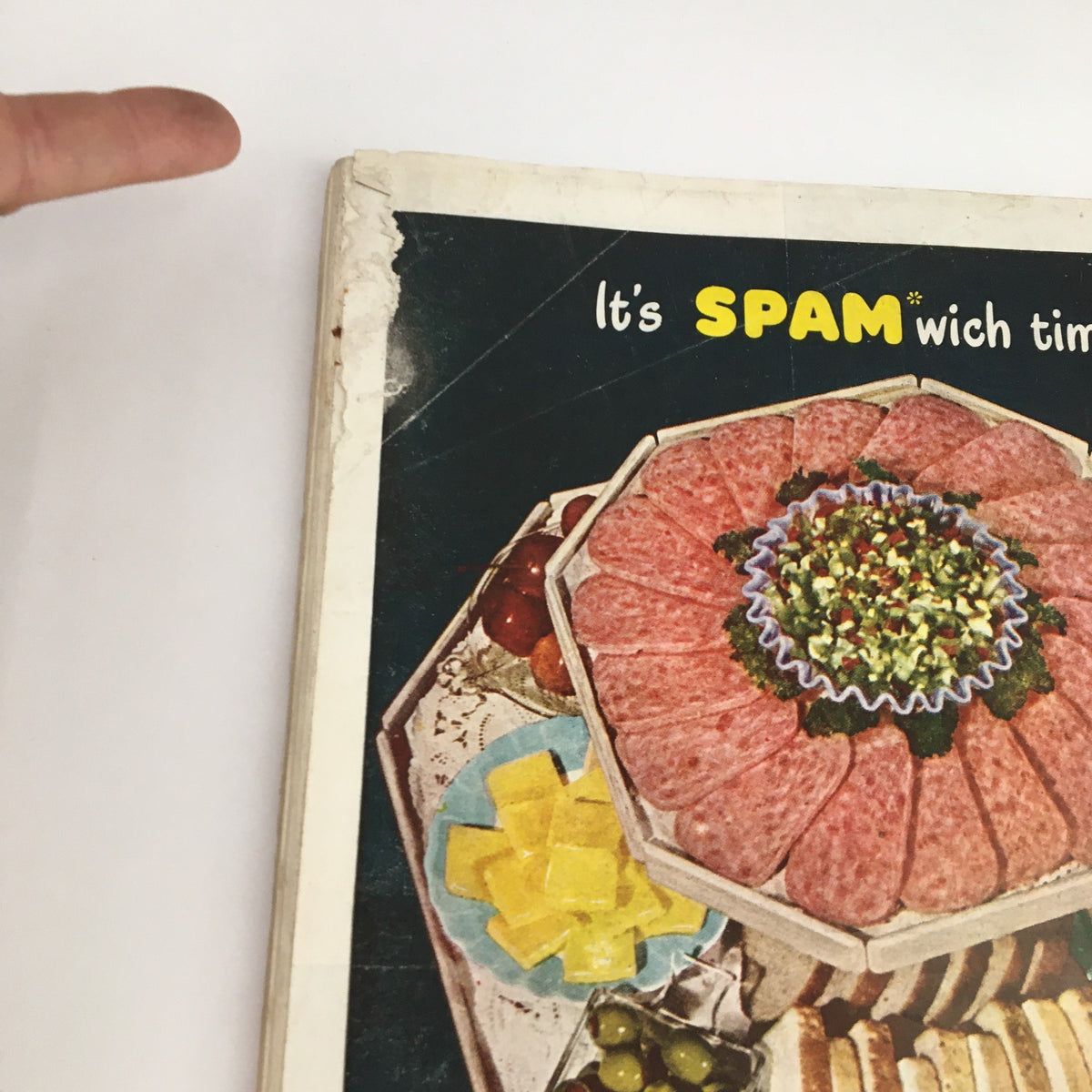
Surviving copies of this issue present with the typical wear profile of a newsstand or subscriber copy that has passed through decades of handling and storage. Points of honest evaluation include a small rip on the back cover and an address label on the front cover — the latter a characteristic mark of original subscription distribution, confirming the copy traveled through the postal system rather than sitting undisturbed on a shelf. Address labels are a reliable indicator of period authenticity, though they do reduce the grade under strict collector standards. Pages are described as intact, which is the critical factor for readability and research use. A protective plastic sleeve has been added at some point in the copy's life, a common preservation measure that, when applied carefully, helps stabilize further deterioration of the cover and spine. For a 75-plus-year-old weekly newsprint publication, the presence of structural integrity in the interior pages is more significant than cosmetic cover wear — newsprint from this era is notoriously fragile, and complete, readable copies of historically significant 1947 issues are genuinely uncommon in any condition.
Looking for More Issues Like This?
A Gandhi cover from the summer of 1947 is exactly the kind of issue that turns up rarely and disappears quickly when it does — this is not a title that surfaces in bulk. If this particular copy is no longer available, the broader Time magazine archive at OriginalMagazines.com is one of the deepest collections of vintage issues available to serious collectors, spanning decades of landmark covers and editorial history. For those interested in the wider sweep of this extraordinary year, the full 1947 magazine collection brings together publications from across the postwar moment — a remarkable cross-section of how the world was being documented and interpreted as a new era took shape.