


Description
Collector's Note – Why This Issue Matters
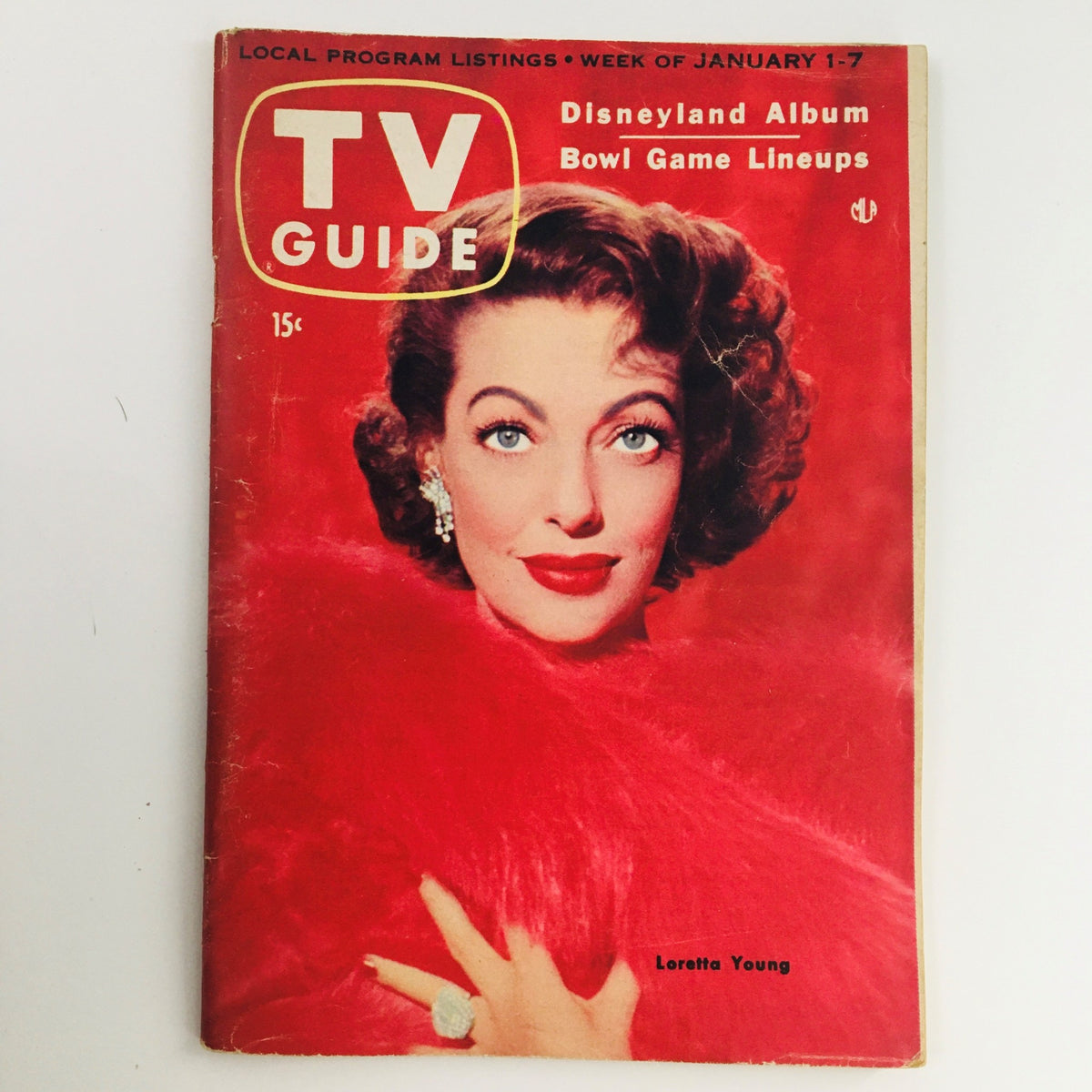
TV Guide magazine’s January 1, 1955 issue is an early and especially appealing artifact from the publication’s rise as a household television companion. The listing identifies it as Vol. 3 #1, which places it in the magazine’s early years, when television was still rapidly becoming central to American domestic life. The cover features Loretta Young, an American actress whose career bridged classic Hollywood film and early television. Young was already an established screen star before becoming closely associated with television through The Loretta Young Show. That makes her appearance on a 1955 TV Guide cover historically meaningful because it reflects the migration of Hollywood prestige into the television era. For collectors of vintage TV Guide magazine issues, this issue captures the magazine at a formative moment. It documents how television was beginning to build its own celebrity culture while still drawing authority from established film personalities.
The January 1 date gives the issue added significance as a New Year’s publication from the middle of the 1950s. By 1955, television had moved beyond novelty and was becoming a regular part of American household routines. Viewers needed weekly guidance to follow programs, stars, channels, and broadcast schedules, and TV Guide became one of the most recognizable printed tools for that purpose. A Loretta Young cover from this period reflects the kind of star-centered television culture that made the magazine attractive to readers. The listing refers generally to articles and highlights from the 1950s television landscape, but it does not confirm specific interior article titles or program listings. That means the issue should be understood through its verified date, volume number, publication, and cover subject rather than through invented contents. Even with those limits, it remains a strong reference point for collectors studying early television publishing.
As a 1955 magazine, this issue belongs to a decade when television reshaped entertainment, advertising, family schedules, and celebrity visibility. The home television set was becoming a focal point of evening leisure, and weekly listings helped organize that new cultural habit. Loretta Young’s cover presence connects the issue to the polished, respectable, star-driven side of early television. Her image would have been immediately recognizable to viewers who knew her from both film and television. Collectors researching original magazines from 1955 often look for issues that show how American culture was changing in ordinary homes. This TV Guide issue does that through the very practical medium of television scheduling and celebrity presentation. It is a compact record of how television entered the rhythm of mid-century American life.
About the Publication
TV Guide was one of the most influential American television magazines of the twentieth century. It combined weekly program listings with entertainment features, previews, commentary, and cover stories related to television broadcasting. Its core audience was the everyday viewer who wanted to know what was airing and which programs or performers were worth attention. The magazine’s small-format design made it practical as a household reference rather than only a leisure read. By the mid-1950s, TV Guide had become closely tied to the experience of watching television at home. Its regional listings helped readers navigate the broadcast week according to their local market, although the provided listing does not specify a regional edition for this issue. The publication also played a major role in presenting television performers as recurring public figures. Covers featuring stars like Loretta Young helped connect weekly viewing habits with celebrity recognition. For collectors, early TV Guide issues are valuable because they preserve the structure, pace, and personalities of early television culture. They show how television became not only something Americans watched, but something they planned around.
Key Highlights Inside
- The issue is dated January 1, 1955. That places it at the beginning of the year and within the early period of TV Guide as a major television publication. For collectors, the date helps anchor the issue within the rapid expansion of American television in the 1950s.
- The listing identifies the issue as Vol. 3 #1. That volume and number detail is important because it places the magazine in the early years of its publishing history. Early TV Guide issues often attract collector interest because they document the publication before later decades made it a fixture of American households.
- Loretta Young is identified as the cover subject. Young was a major American actress whose career extended from Hollywood film into television. Her appearance on the cover reflects the importance of established screen personalities in shaping early television celebrity culture.
- The listing describes the magazine as offering insight into the 1950s television landscape. That makes the issue relevant to collectors interested in programming, celebrity coverage, and the weekly rhythm of early television viewing. No specific program listings, article titles, or feature names are confirmed from the provided description.
- The issue is connected to the period when television was becoming a dominant force in American entertainment. By the mid-1950s, television had become increasingly central to family leisure and popular culture. A TV Guide issue from this moment helps document that shift through the printed format viewers used at home.
- The listing notes that the magazine includes articles and highlights from the era. Those broad contents fit the publication’s editorial purpose as a guide to television and entertainment. Specific interviews, columns, schedules, or Hollywood-related features should not be assumed without direct inspection of the issue.
- The magazine is classified as Good condition. The listing notes minor wear such as small rips, creases, and edge wear. These details are important because early weekly television magazines were often handled frequently and not always preserved carefully.
- The issue comes with a plastic protective covering according to the listing. That is relevant as a later preservation and storage detail. It does not independently confirm complete pages, tight binding, or the absence of interior defects.
Condition & Rarity
Condition for a January 1, 1955 TV Guide should be evaluated with the expectations appropriate to an early weekly television magazine. The listing classifies the magazine as Good. It notes minor wear indicative of age, including small rips, creases, and edge wear. Those flaws are common in periodicals that were originally used as practical household guides rather than preserved as collectibles. TV Guide issues were often kept near the television, consulted repeatedly, folded, marked, or discarded after the broadcast week ended. Because of that original use, early surviving examples can show handling even when they remain collectible. The listing does not mention an address label, so label status should not be assumed beyond the details provided. The plastic protective covering noted in the listing is useful for limiting additional handling wear during storage. However, a protective cover does not verify page completeness, staple integrity, or the condition of interior listings. Collectors should inspect any surviving example for cover attachment, spine wear, page toning, corner loss, small tears, creases, missing pages, and whether the Loretta Young cover remains visually strong.
Looking for More Issues Like This?
The January 1, 1955 TV Guide Vol. 3 #1 with Loretta Young on the cover is the kind of early television issue that appeals to collectors of classic TV, Hollywood crossover stars, and mid-century entertainment publishing. Its appeal comes from the combination of an early publication date, a recognizable cover subject, and the cultural moment when television was becoming a household habit. When the exact issue is difficult to locate, related issues from the same title can help build the surrounding context. Collectors may want to browse more TV Guide back issues to compare early covers, television personalities, program-guide formats, and the magazine’s developing editorial voice. That broader run is especially useful because TV Guide documented television week by week. For a wider historical frame, magazines published in 1955 can also help place this issue within its original cultural setting. Looking across the year shows how television, film, advertising, family life, and popular entertainment appeared together in print. A single Loretta Young cover becomes more meaningful when viewed beside other magazines from the same moment. For collectors interested in the golden age of television, this issue is a focused reference point from the early years of television’s print culture. It shows how a weekly guide helped turn broadcast schedules, performers, and home viewing into part of everyday American life.