




Description
Collector's Note – Why This Issue Matters
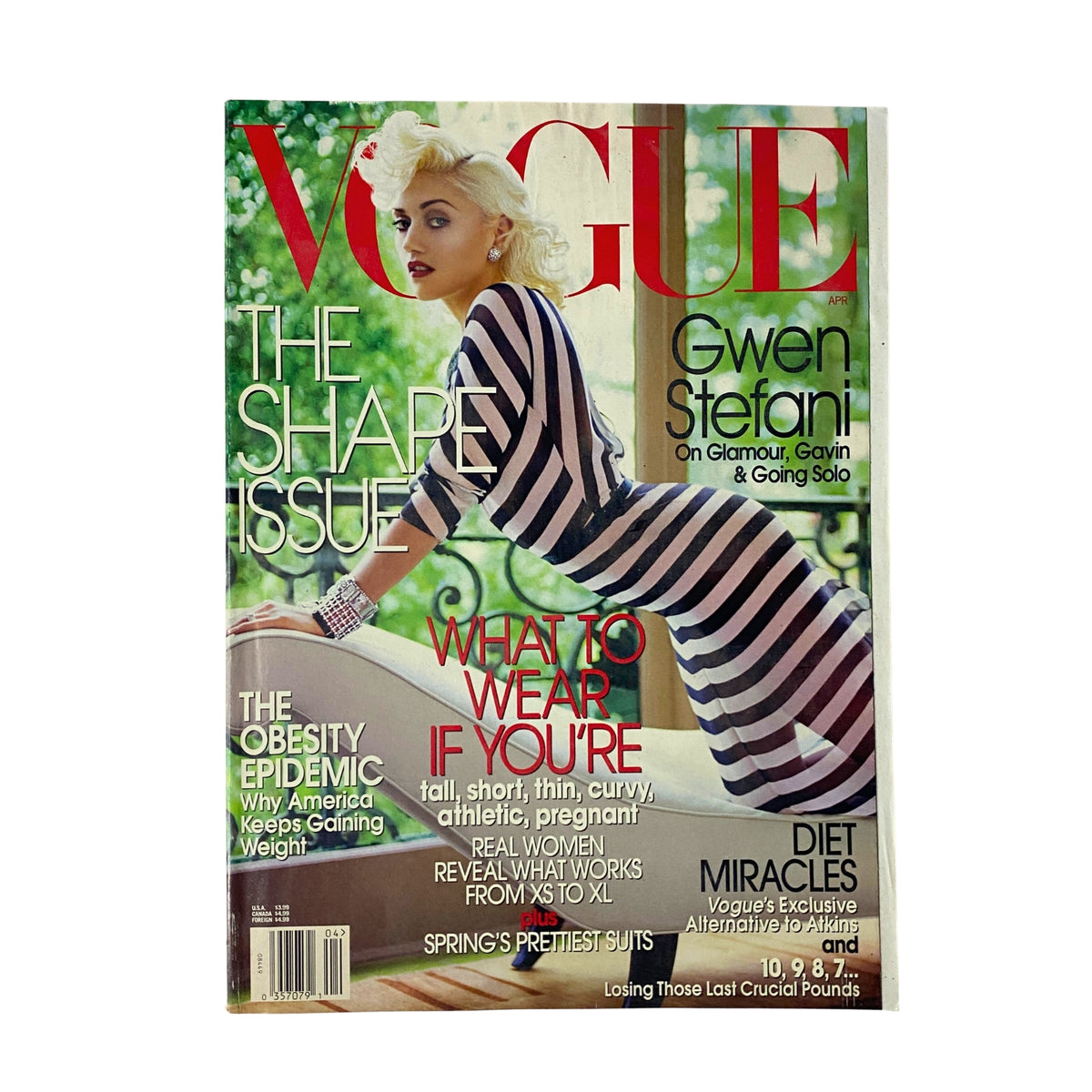
The April 2004 issue of Vogue featuring Gwen Stefani on the cover — photographed by Steven Meisel and styled by Tonne Goodman, in a Jean Yu silk chiffon gown with Alexander McQueen stilettos — is a primary document of one of the most stylistically distinctive musicians of the early 2000s at a specific and well-defined career transition moment. By April 2004, Stefani was in the active process of moving from her identity as No Doubt's frontwoman to the solo career that would produce Love. Angel. Music. Baby. (L.A.M.B.) in November 2004 — just seven months after this issue. Jonathan Van Meter's confirmed cover profile — "The First Lady of Rock: Gwen Stefani on glamour, Gavin, and going solo" — is a primary document of that transition as she articulated it herself, at the precise biographical moment before the solo debut had been released and its commercial reception was still unknown. The Meisel-Goodman-Stefani creative pairing is editorially significant: Meisel's ability to translate musical personality into fashion imagery and Goodman's styling authority made this cover a deliberate statement about Stefani's specific position at the intersection of music and fashion culture — a position that her L.A.M.B. fashion line would make even more commercially prominent in the following years. For collectors building archives of vintage Vogue magazines, this April 2004 cover is among the most precisely situated musician covers in the publication's early-2000s run.
The confirmed editorial content of this issue extends well beyond the Stefani cover story and provides an unusually complete picture of a specific early-2004 cultural moment. The Chris von Wangenheim nostalgia piece — by Dirk Wittenborn, recalling the "unforgettable impact" of the provocative photographer's work — is a primary document of von Wangenheim's posthumous critical recovery, as the German fashion photographer who died in 1981 had been experiencing renewed scholarly and collector attention. The Hamish Bowles confirmed feature on Chanel's collaboration with historic French adornment houses in a revival of decorative arts documents a specific and historically significant moment in the house's creative direction. The Kristin Chenoweth profile — on her reinvention of Glinda in Wicked — arrives in April 2004 during the show's first Broadway season, providing a contemporaneous primary document of a production that would become one of Broadway's most commercially successful and culturally enduring runs. The Selma Blair and Karl Lagerfeld "Pixie Chick" feature adds a named designer-actress pairing at a specific career moment for both. Collectors of 2004 magazines will find this issue among the most content-rich in Vogue's spring publishing calendar for the year.
The confirmed body image and size editorial complex — "Size Me Up, Size Me Down," "Celestial Bodies" with seven models of diverse body types, "Our Bodies, Our Closets," the Jane Hall breast reduction personal essay, and the Robert Sullivan obesity cultural investigation — constitutes one of the most sustained single-issue engagements with body diversity and body politics in Vogue's early-2000s publishing history. This cluster of confirmed features, assembled in a single April 2004 issue, documents the fashion press beginning to engage these subjects with genuine editorial ambition at a specific moment before that engagement became a mainstream expectation, providing a primary source of particular interest to researchers of fashion media's evolving relationship to body representation.
About the Publication
Vogue, published by Condé Nast and founded in 1892, was by April 2004 operating under Anna Wintour's editorship — which had run continuously since 1988 and had made the magazine the globally dominant fashion authority it remains. Its audience was fashion-literate, affluent, and culturally engaged, with expectations that each issue would deliver both the season's most important fashion editorial and substantive coverage of the cultural figures and forces defining the moment. The April issue was the magazine's primary spring fashion showcase — typically one of its most visually ambitious and editorially substantial numbers of the year.
Key Highlights Inside
- "The First Lady of Rock" — Gwen Stefani cover story by Jonathan Van Meter (page 334) — A confirmed pre-solo-debut profile of Stefani at the specific biographical moment before L.A.M.B.'s November 2004 release, with Meisel photography and Goodman styling in Jean Yu and Alexander McQueen, documenting her music-fashion crossover identity at its most deliberately constructed.
- Chris von Wangenheim nostalgia piece — by Dirk Wittenborn (page 108) — A confirmed tribute to the provocative German fashion photographer, documenting his posthumous critical recovery at a specific moment in the renewed scholarly and collector engagement with his work.
- Chanel decorative arts revival — Hamish Bowles (page 194) — A confirmed feature on Chanel's collaboration with historic French adornment houses, providing primary documentation of a specific creative direction in the house's early-2000s development.
- "Bewitched" — Kristin Chenoweth in Wicked (page 322) — A confirmed contemporaneous profile of Chenoweth's Glinda during Wicked's first Broadway season, providing a primary document of the production before its canonical status had been fully established.
- Body diversity editorial complex — "Size Me Up," "Celestial Bodies," "Our Bodies, Our Closets," Jane Hall personal essay — A confirmed suite of features constituting one of the most sustained single-issue engagements with body politics in the magazine's early-2000s run.
- Keri-Lynn Wilson conductor profile (page 314) — A confirmed feature on the Canadian conductor, reflecting Vogue's consistent practice of profiling women achieving prominence in fields beyond fashion and entertainment.
Condition & Rarity
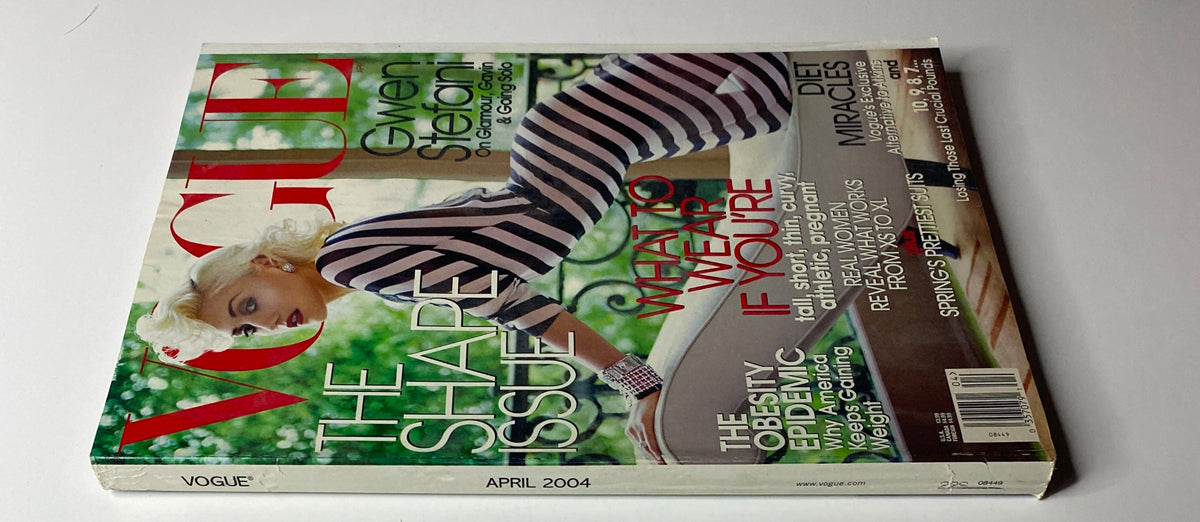
Very good condition with minor edge wear, no subscription label, and plastic protective covering represents a strong collector-grade example of a twenty-plus-year-old fashion magazine with the confirmed editorial density of this issue. Vogue is printed on high-quality coated stock designed to showcase fashion photography, and issues stored in protective coverings typically retain their cover surface and interior page quality well over time. The no-label newsstand status confirms the full Meisel-photographed Stefani cover image — in the confirmed Jean Yu gown with Alexander McQueen stilettos — is visible without address obstruction. Minor edge wear is standard at the very good grade. The confirmed full table of contents with page numbers indicates complete interior integrity across all editorial sections.
Looking for More Issues Like This?
Early-2000s Vogue musician covers photographed by Steven Meisel are specifically sought by collectors working at the intersection of music and fashion magazine archives, and an April 2004 Gwen Stefani issue with the confirmed Von Wangenheim tribute and the body diversity editorial complex makes this historically richer than most comparable spring numbers. The broader Vogue magazine archive at OriginalMagazines.com spans many decades of the publication's run and regularly surfaces notable Meisel-era covers and landmark editorial numbers. For collectors focused on the specific early-2000s fashion and music cultural moment this issue captures, the full 2004 collection covers a year of genuine consequence in both fashion and popular music.