
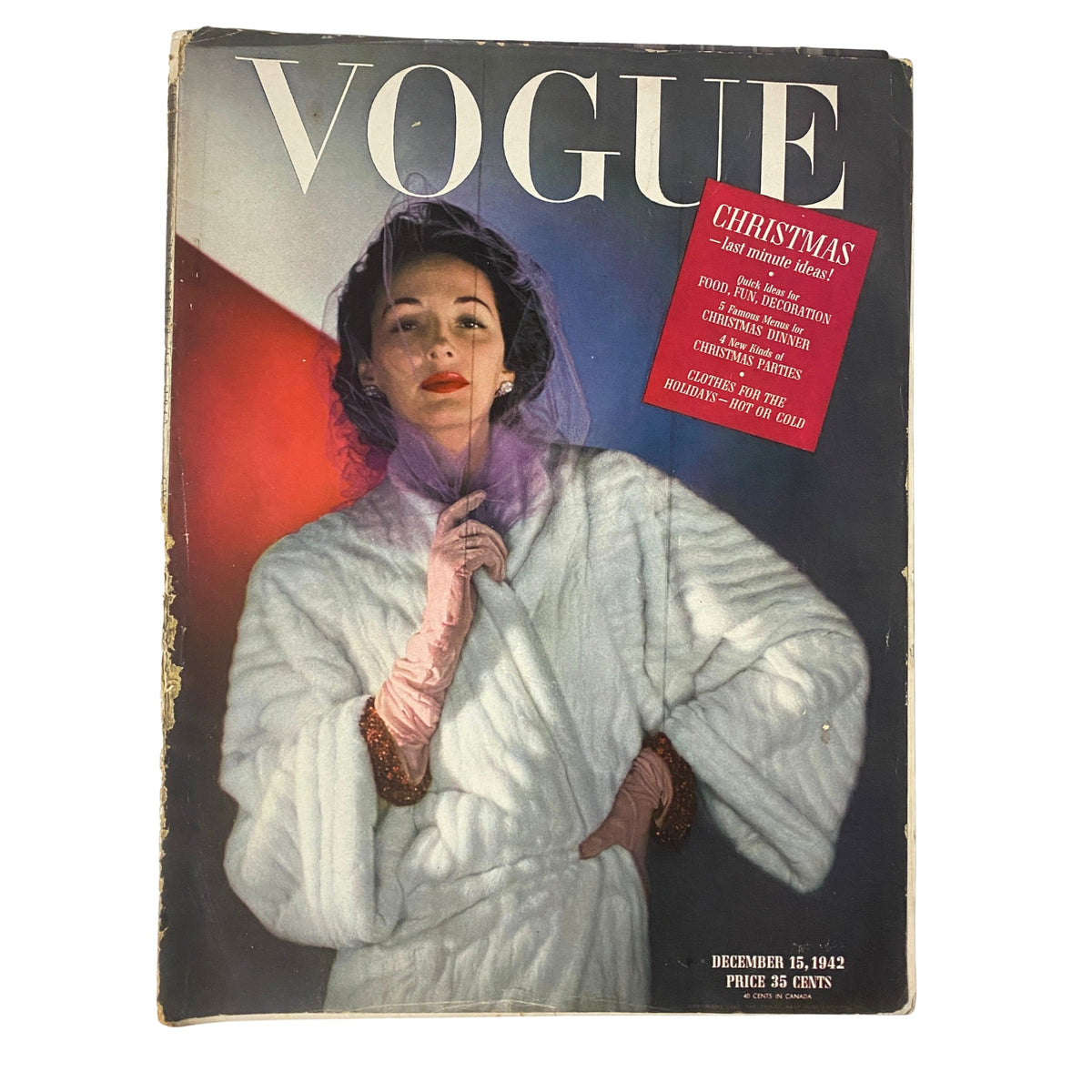


Description
Collector's Note – Why This Issue Matters
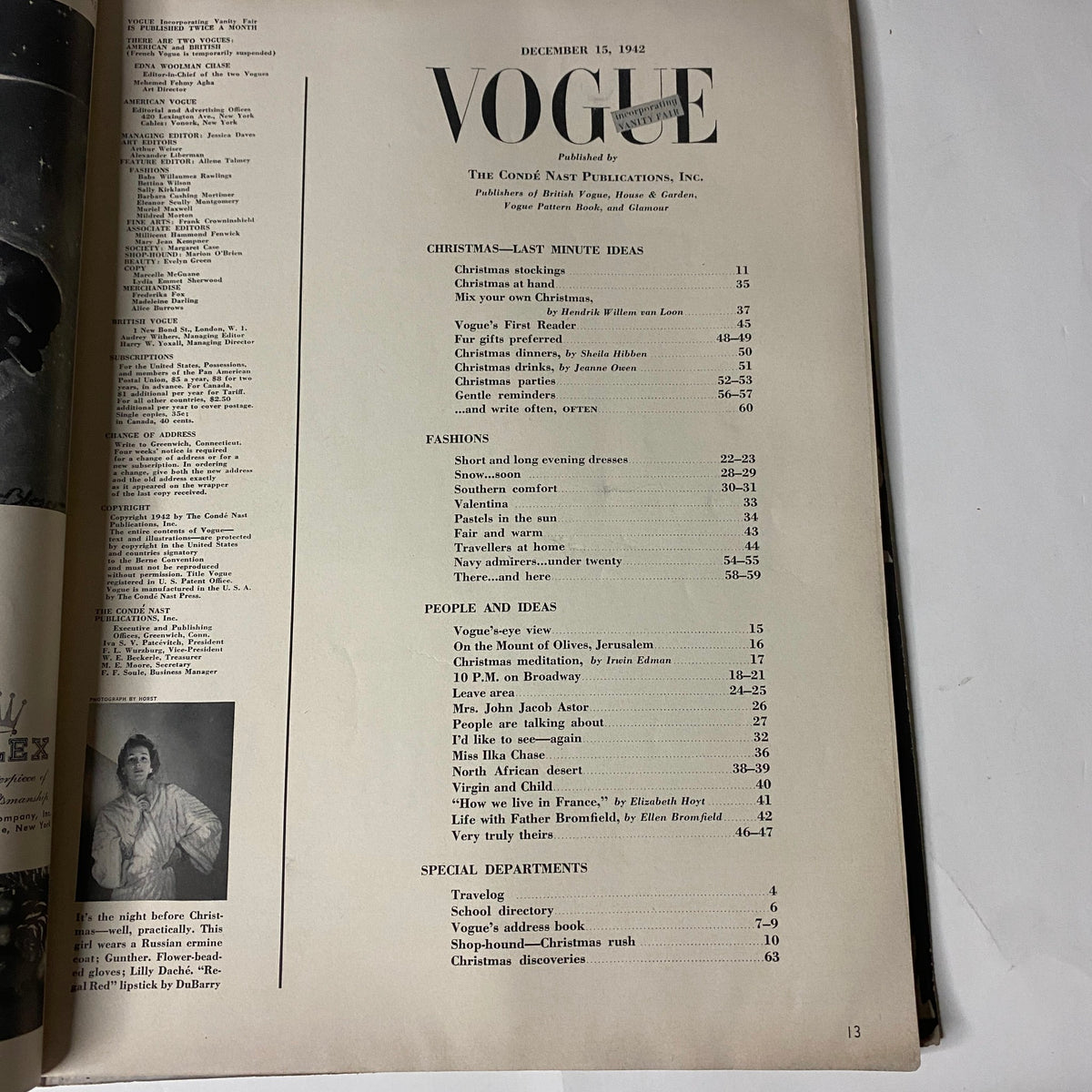
December 15, 1942 is one of the most historically freighted dates in Vogue's wartime publishing history. The United States had been at war for just over a year, the North African campaign was actively underway — documented in this very issue by the "North African desert" feature on pages 38 and 39 — and the specific character of the second wartime Christmas was fundamentally different from the first. By December 1942 the initial shock of Pearl Harbor had settled into the sustained, difficult reality of a global war with no clear end date, and the editorial challenge of producing a Christmas issue that was simultaneously hopeful and honest, festive and serious, was one that required exactly the kind of editorial intelligence that Edna Woolman Chase's Vogue had developed over three decades of publication. The "New Light on Old Questions" organizing theme is a primary document of that intelligence in operation: not the forced cheerfulness that characterized lesser wartime publications but a genuinely philosophical engagement with what Christmas meant when sons and husbands and brothers were in North Africa, when "leave area" was a magazine section rather than a vacation concept, when the "...and write often, OFTEN" feature carried a meaning that peacetime publishing could never have given it. For collectors building an archive of Vogue magazine issues from the wartime period, this December 15, 1942 edition is among the most thematically coherent and historically resonant holiday issues in the publication's entire wartime run.
The documented table of contents rewards careful reading as a primary source of wartime American culture at a specific and emotionally charged December moment. Irwin Edman's "Christmas meditation" on page 17 is a contribution by the Columbia University philosopher whose accessible engagement with humanist philosophy had made him one of the most widely read popular intellectuals in America — a Vogue Christmas meditation by Edman in December 1942 is a primary document of how American philosophical humanism addressed the specific moral and existential challenges of wartime at its second-Christmas moment. Hendrik Willem van Loon's "Mix your own Christmas" on page 37 brings another significant public intellectual voice to the holiday content — van Loon, the Dutch-American historian and journalist whose The Story of Mankind had won the first Newbery Medal in 1922, was by 1942 one of the most publicly engaged anti-fascist voices in American intellectual life, and his presence in a December 1942 Vogue carries a specific biographical resonance that peacetime publication would not have provided. Elizabeth Hoyt's "How We Live in France" on page 41 is a primary document of occupied France as understood by Americans in December 1942, and the "On the Mount of Olives, Jerusalem" feature on page 16 reflects the specific Middle Eastern geography of the North African campaign and the ancient religious sites that war had brought into the consciousness of American readers who might otherwise never have thought about them. Collectors researching American cultural magazines from 1942 will find this December Vogue a primary source document of unusual emotional depth and intellectual range.
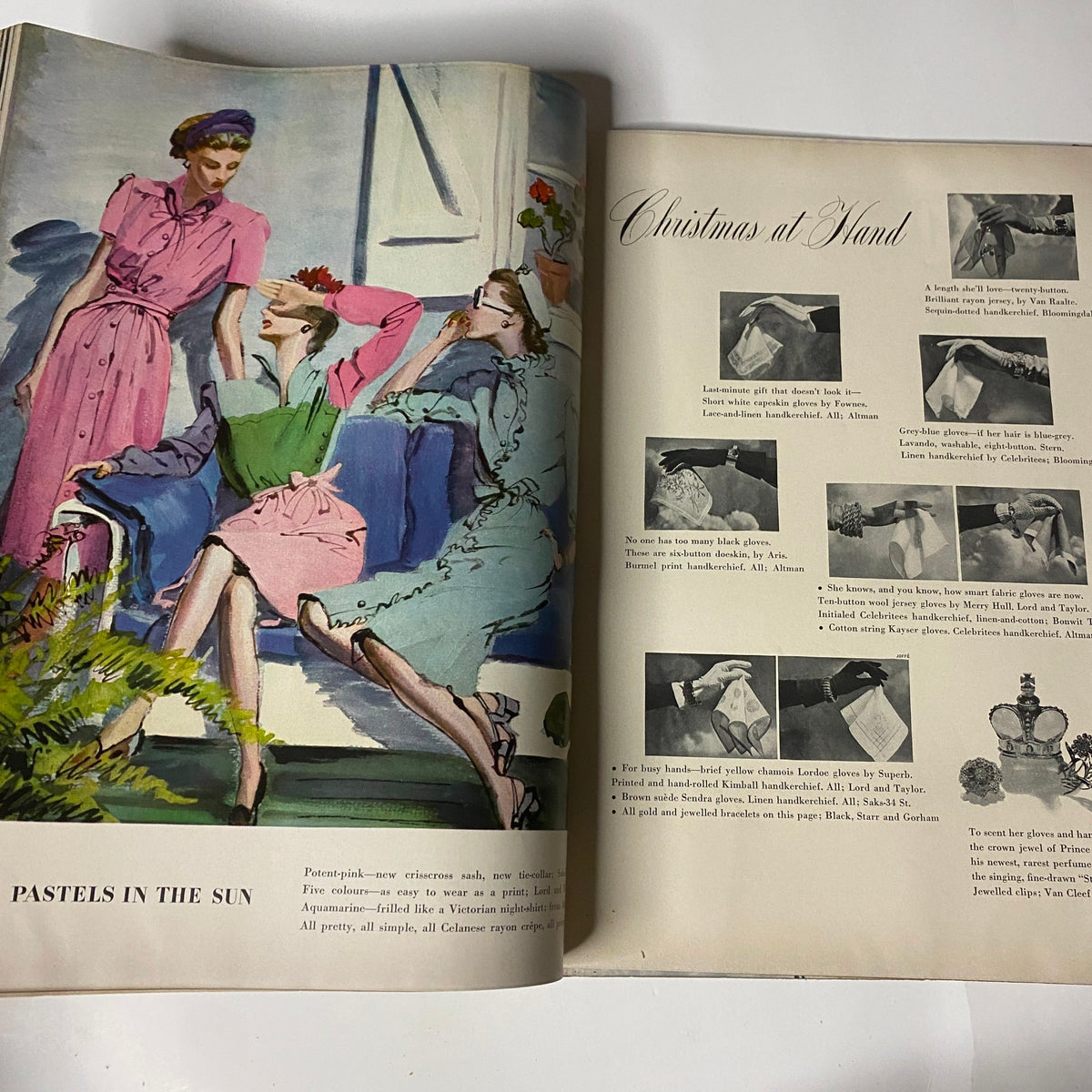
The fashion content documented in the table of contents is its own kind of primary source, reflecting the specific material and aesthetic conditions of wartime fashion in ways that distinguish December 1942 Vogue from both prewar and postwar equivalents. "Short and long evening dresses," "Snow...soon," "Southern comfort," and "Valentina" collectively document the specific fashion landscape of a second wartime Christmas — the silhouettes, the available fabrics, the evening occasions that were still being held even as the war continued, and the specific designer relationships that Vogue maintained through wartime conditions. The "Navy admirers...under twenty" feature reflects the direct integration of military service into the fashion editorial framework that characterized wartime Vogue's approach to its subject, and the "There...and here" feature documents the specific imaginative geography of a readership whose family members were distributed across global theaters of war. Miss Ilka Chase's feature — Chase was a novelist, actress, and radio personality whose dry social wit made her a regular Vogue contributor in the wartime years — adds a specifically American comic intelligence to a holiday issue that needed the full range of tonal resources to navigate its difficult emotional territory.
About the Publication
Vogue was founded in 1892 and has been published by Condé Nast since 1909, operating continuously as the most authoritative fashion magazine in the American market across more than a century of publication. The wartime Vogue under Edna Woolman Chase — who had led the publication since 1914 — represents one of the most historically distinctive editorial periods in the magazine's history. The December 15, 1942 issue's combination of philosophical essays, occupied France documentation, North African war coverage, and Christmas fashion editorial reflects the specific wartime editorial philosophy Chase had developed: acknowledging the full weight of the historical moment while insisting on the continued dignity and relevance of beauty, elegance, and the cultural life that beauty served. This issue comes from a privately held Vogue archive spanning the 1920s through the 1970s, and has undergone light dry surface cleaning before archival sleeving.
Key Highlights Inside
- Irwin Edman's "Christmas meditation" on page 17 — a contribution by the Columbia University philosopher and popular humanist intellectual, constituting a primary document of how American philosophical thought engaged the specific moral and spiritual challenges of a wartime Christmas at the second December of American involvement, representing exactly the kind of serious intellectual content that distinguished wartime Vogue's editorial ambition from publications that treated the holiday season as a purely commercial occasion.
- Hendrik Willem van Loon's "Mix your own Christmas" on page 37 — a contribution by the Dutch-American historian and Newbery Medal winner whose anti-fascist public voice gave his presence in a December 1942 Vogue a biographical resonance specific to the wartime moment, representing the intellectual range that Chase's editorial vision consistently brought to the magazine's holiday issues.
- "North African desert" feature on pages 38 and 39 — a documented engagement with the active theater of the North African campaign in a December 1942 Vogue Christmas issue, reflecting the magazine's direct integration of wartime geographic reality into its editorial framework and constituting a primary document of how the fashion press acknowledged the physical presence of American forces in the world's active war zones at the holiday season.
- Elizabeth Hoyt's "How We Live in France" on page 41 and "On the Mount of Olives, Jerusalem" on page 16 — primary documents of occupied France and Middle Eastern wartime geography as understood by Americans in December 1942, representing Vogue's consistent engagement with the international dimensions of a war whose geography was reshaping American awareness of the world beyond the continent's borders.
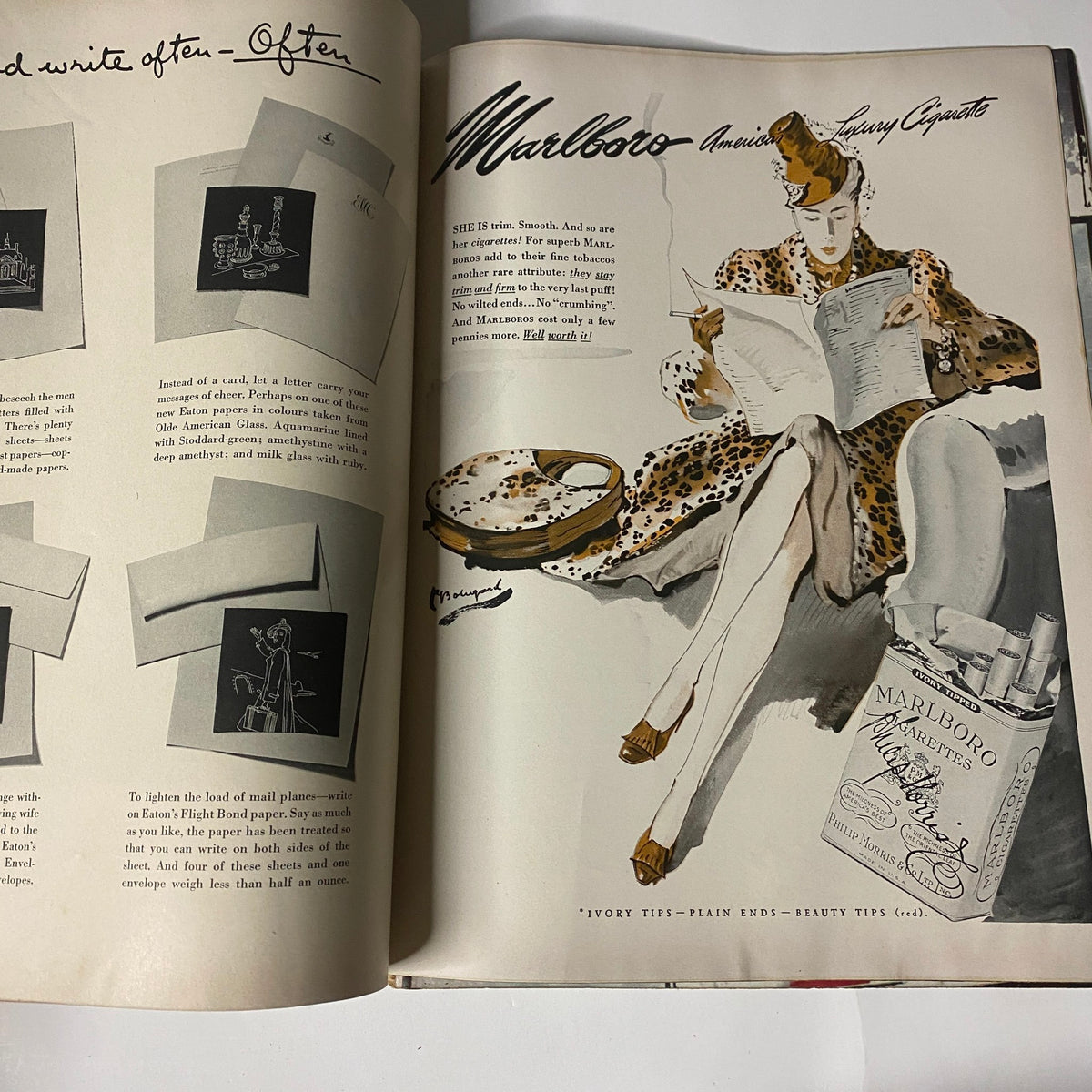
- "...and write often, OFTEN" feature on page 60, "Leave area" section on pages 24 and 25, and Christmas content by Sheila Hibben and Jeanne Owen — the editorial architecture of a wartime Christmas Vogue that integrated the specific emotional and social realities of a population with family members in military service directly into its holiday content, constituting a primary source record of how the fashion press navigated the intersection of festivity and wartime absence in December 1942.
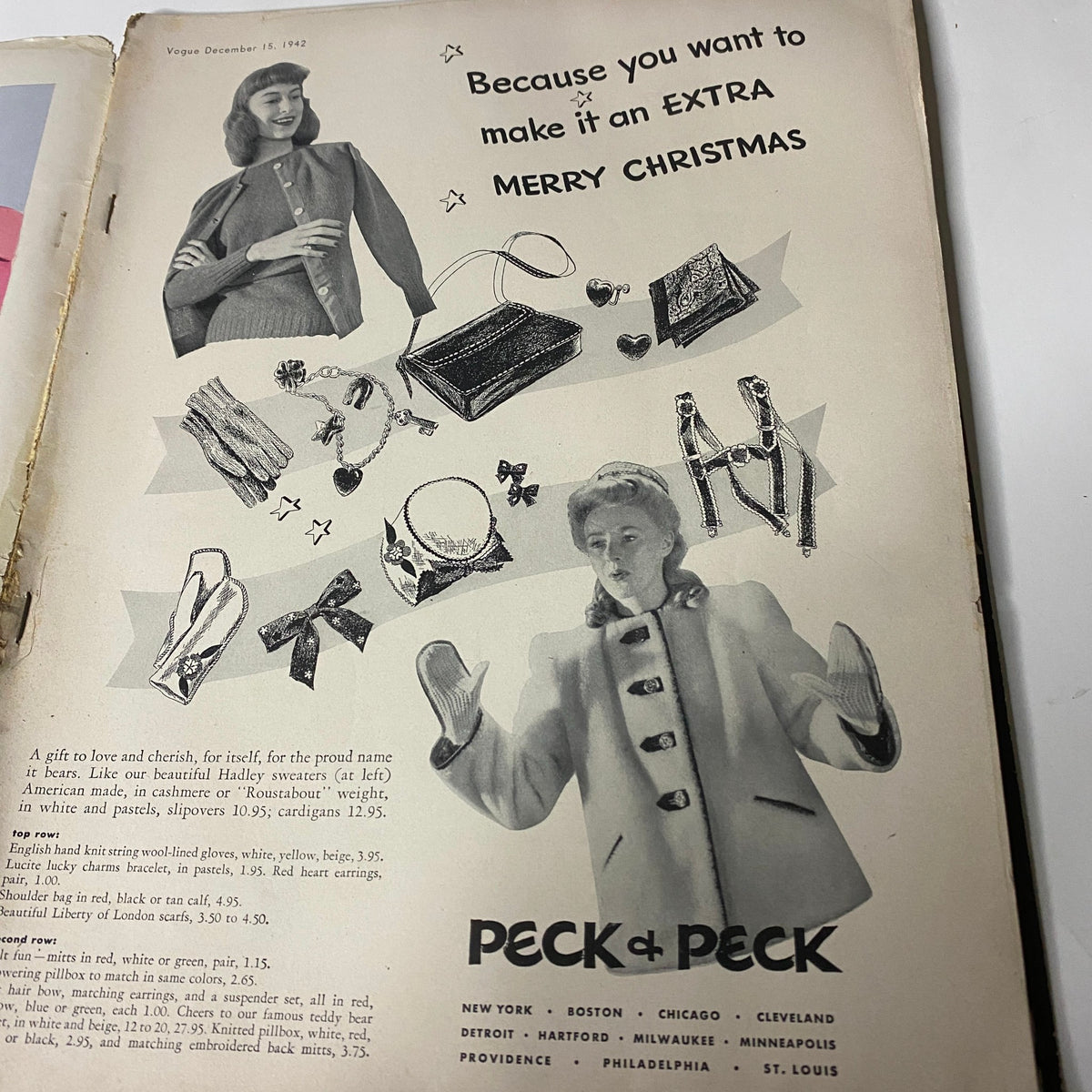
- Ilka Chase feature on page 36 and Mrs. John Jacob Astor profile on page 26 — the social journalism range of a December 1942 Vogue engaging both comic intelligence and the specific social world of its readership at a wartime holiday moment, with the fur gifts, Christmas parties, and "Gentle reminders" shopping content collectively documenting the specific consumer culture of a second-wartime-Christmas America that was simultaneously rationing and celebrating.
Condition & Rarity
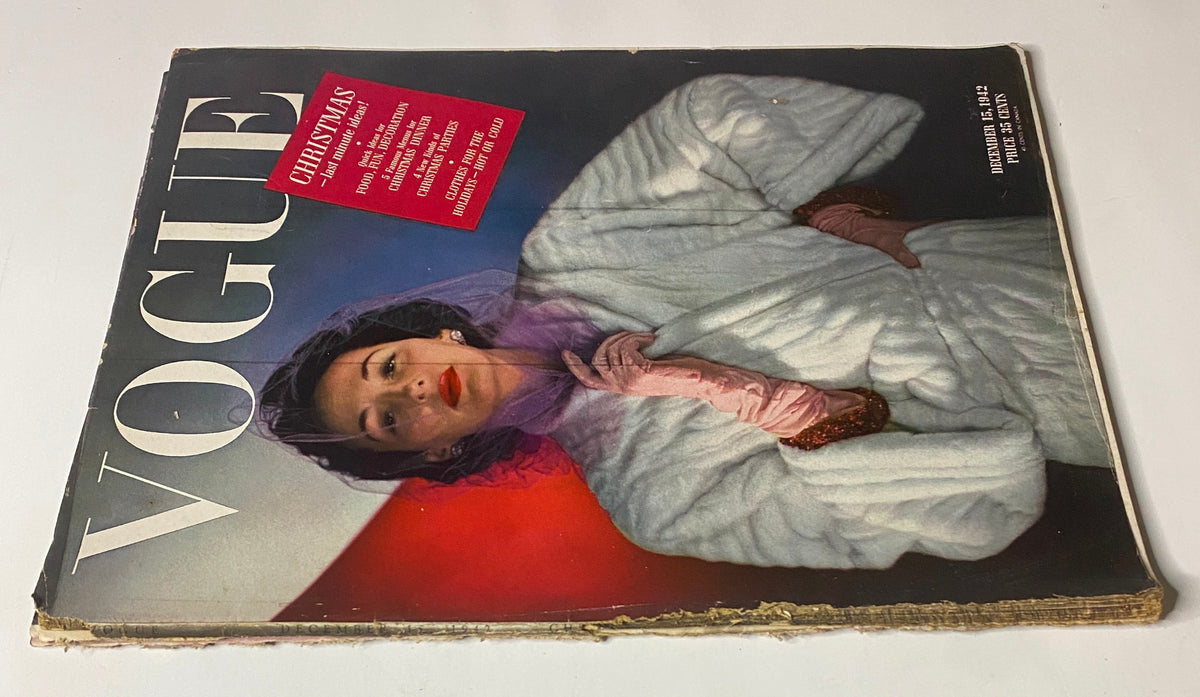
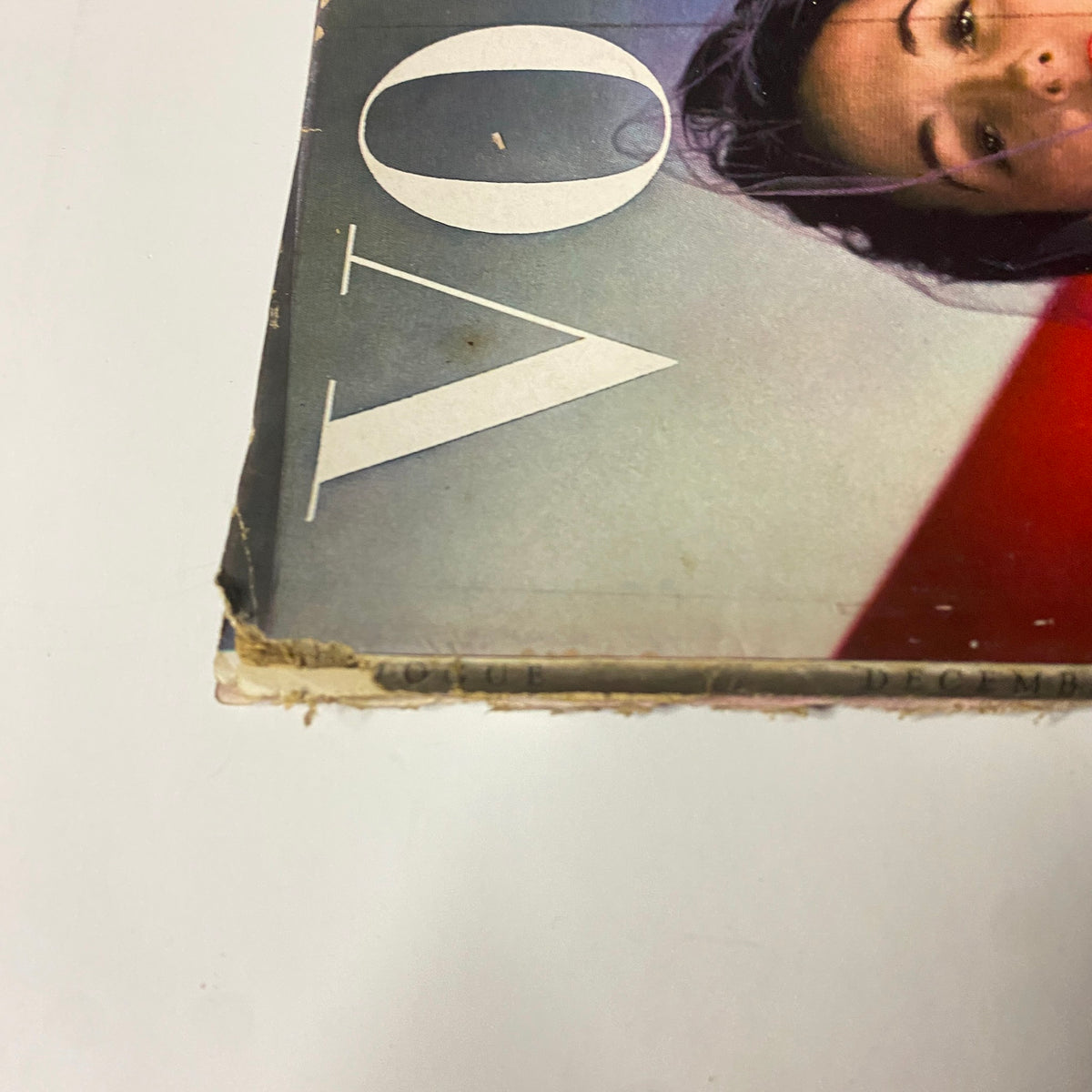
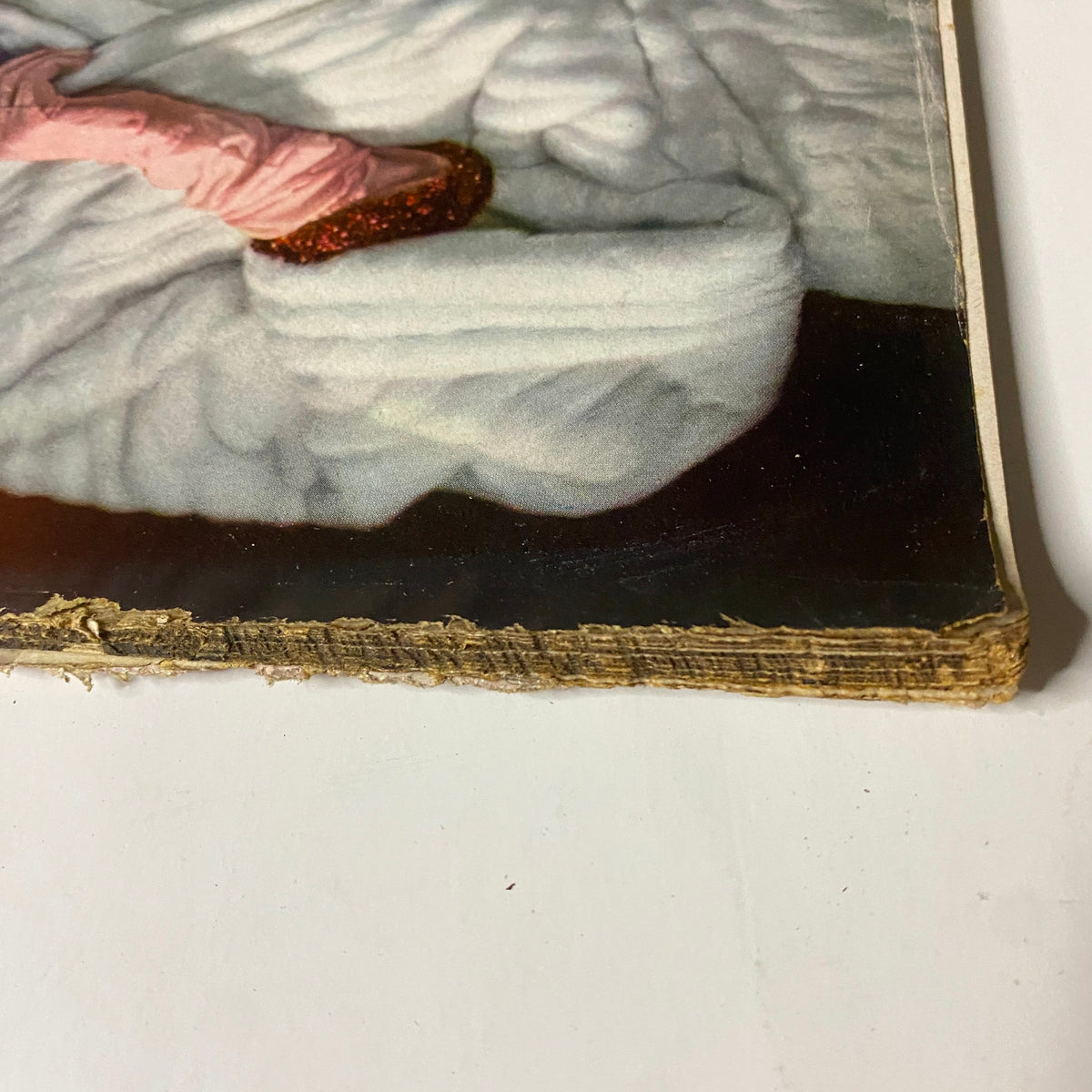
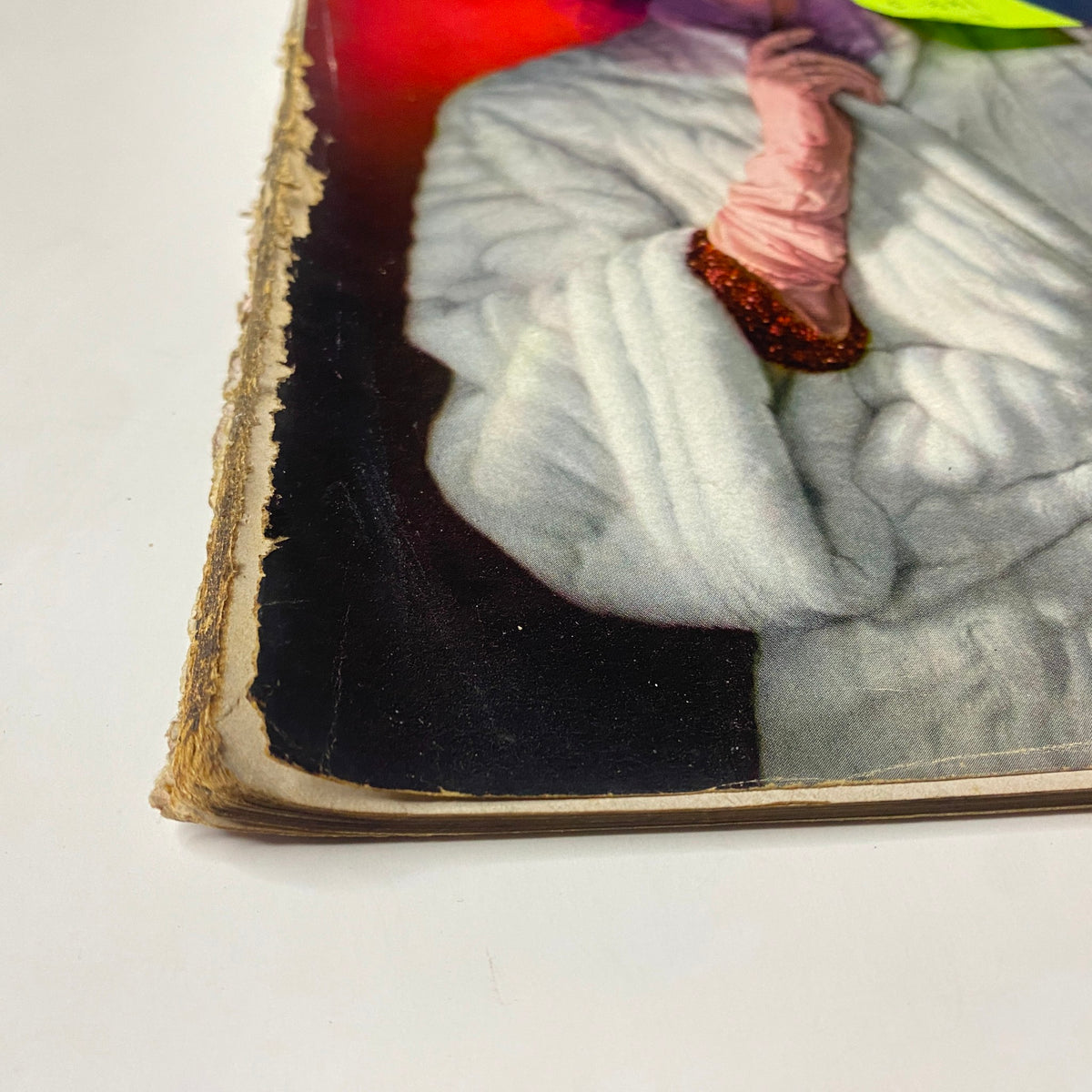
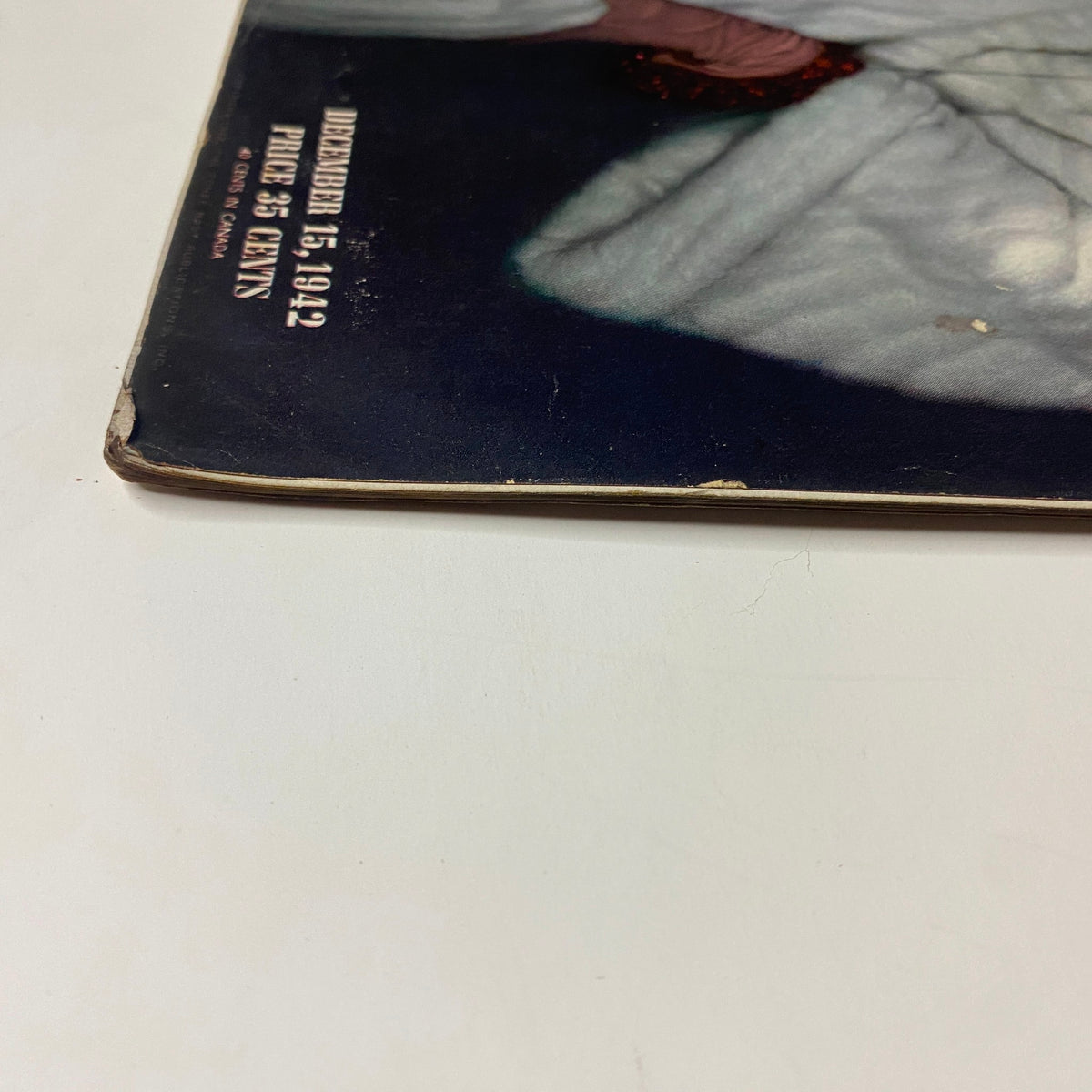
This issue comes from a privately held Vogue archive spanning the 1920s through the 1970s, stored away for decades before being brought back into circulation. The binding wear or small splits, staple-rust halos, edge toning, and period shelf dust noted in the collection description are honest and expected characteristics of an eighty-three-year-old bimonthly fashion magazine from archival long-term storage. The additional condition notes specific to this issue — creases and marks on the front cover and within, minor rips — describe a copy in acceptable condition with a good interior, indicating that the physical wear is concentrated in external characteristics while the editorial content documented in the table of contents remains legible and accessible. The acceptable exterior with good interior distinction is the most practically important condition attribute for researchers and collectors whose primary interest is the Edman meditation, the van Loon essay, the North African feature, and the Hoyt France piece — all of which remain fully readable in a good-interior copy regardless of cover condition. Wartime Vogue issues from 1942 were produced on paper stock subject to wartime materials restrictions, which makes eighty-three-year-old examples with legible interiors a meaningful survivor category. The plastic protective sleeve provides ongoing archival protection. Collectors evaluating surviving examples should prioritize the completeness and legibility of the philosophical and wartime editorial content as the primary condition criteria most directly relevant to this issue's research utility.
Looking for More Issues Like This?
A documented archive copy of the December 15, 1942 Vogue with the "New Light on Old Questions" framework, Irwin Edman's Christmas meditation, Hendrik Willem van Loon's holiday essay, North African desert coverage, and Elizabeth Hoyt's occupied France feature is among the most intellectually rich and specifically documented wartime holiday issues in the Vogue archive — the convergence of philosophical, literary, and wartime journalism in a single December issue gives this entry a research profile that extends across fashion history, intellectual history, and wartime cultural studies simultaneously. If this issue is no longer available, the full Vogue collection at OriginalMagazines.com is the most comprehensive place to browse surviving issues from the wartime period and locate other Chase-era editions, wartime holiday issues, or significant entries from Vogue's most historically distinctive publishing decade. The 1942 magazine collection brings together surviving issues from across that year's major publications for collectors working to document the full breadth of American print culture during the most consequential year of the United States' involvement in the Second World War.