


Description
Collector's Note – Why This Issue Matters
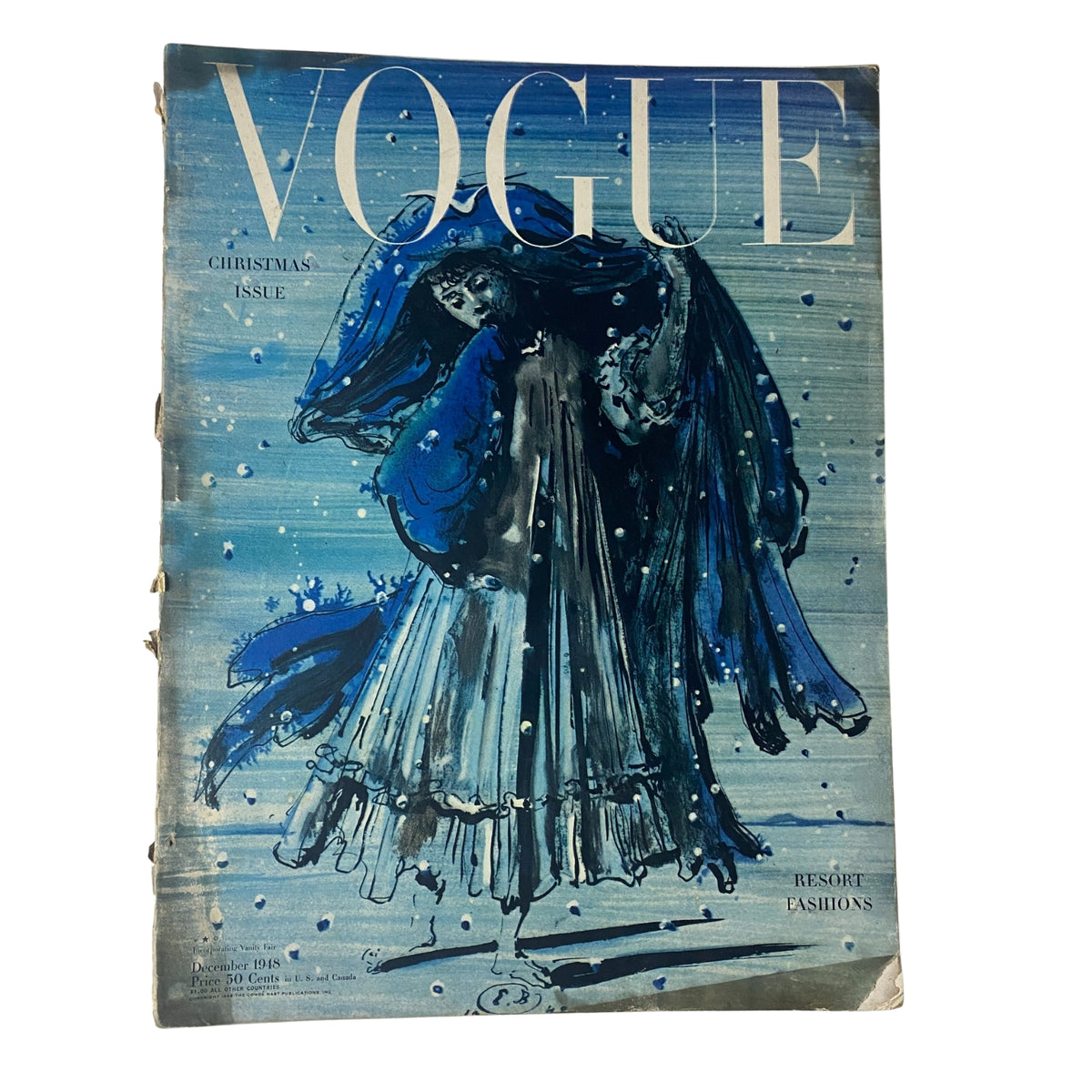
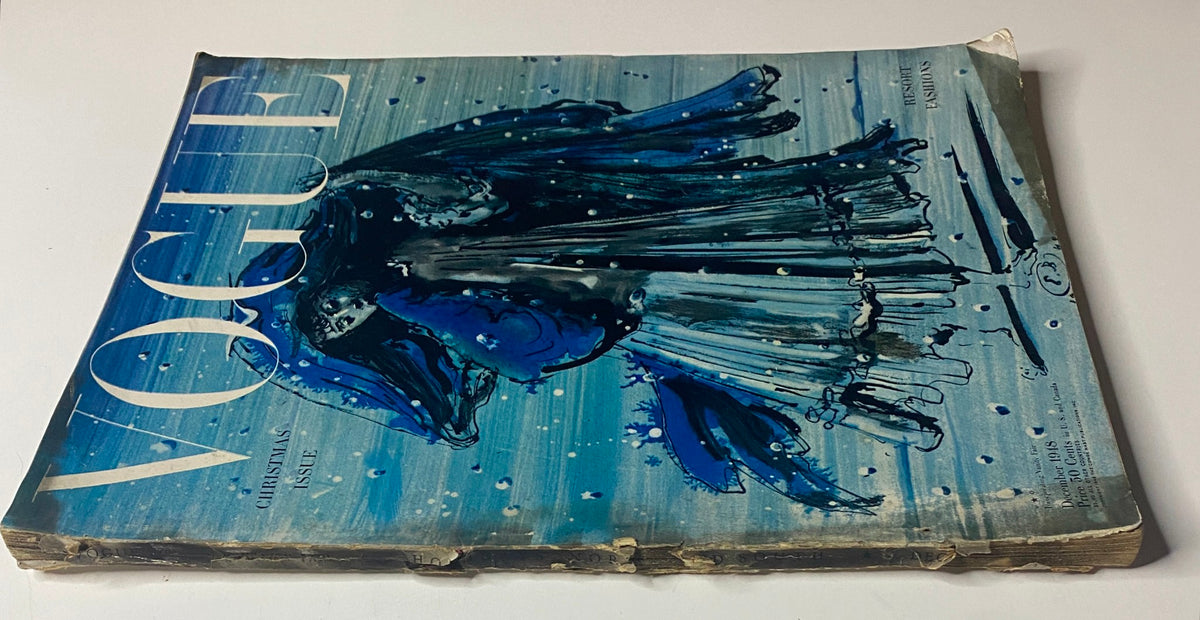
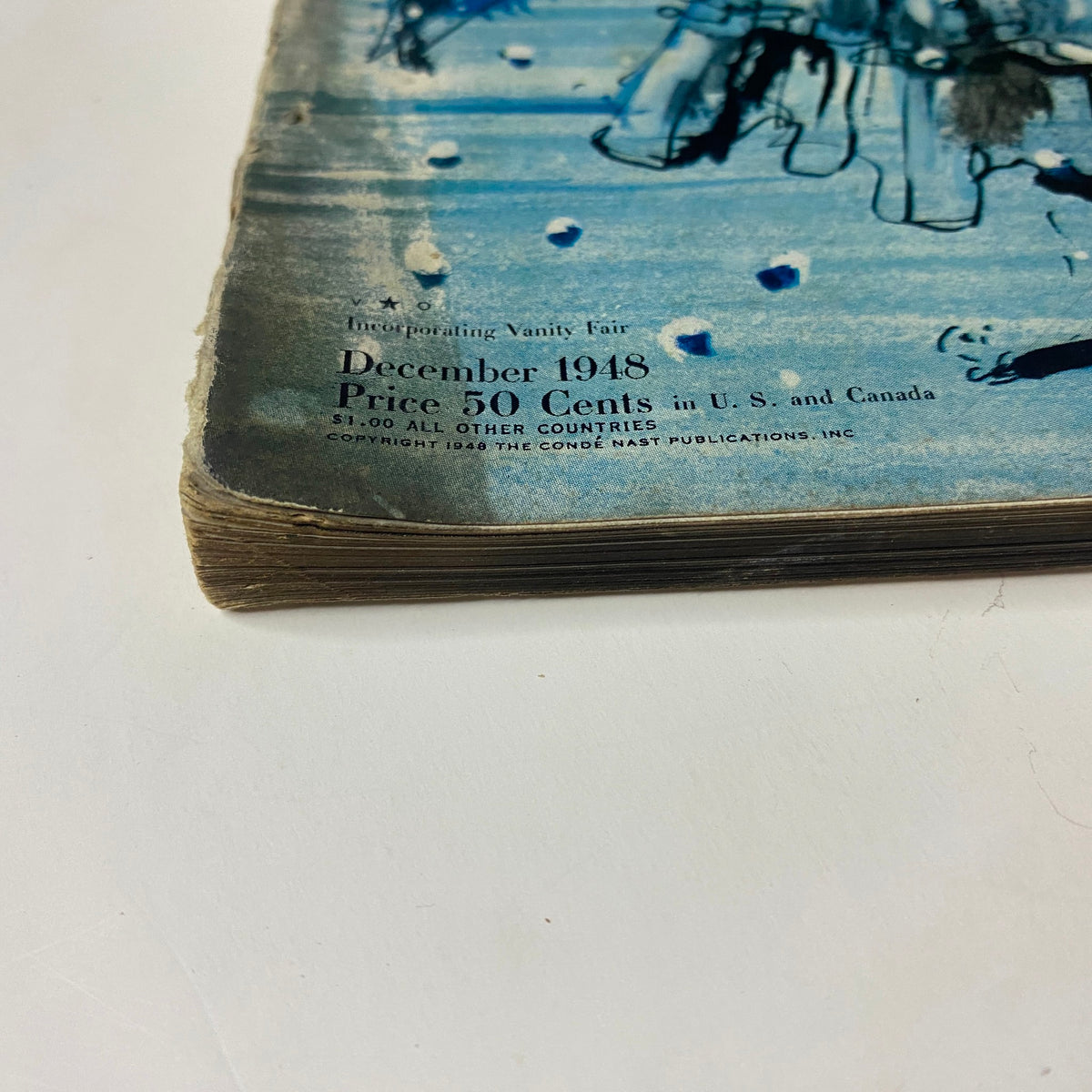
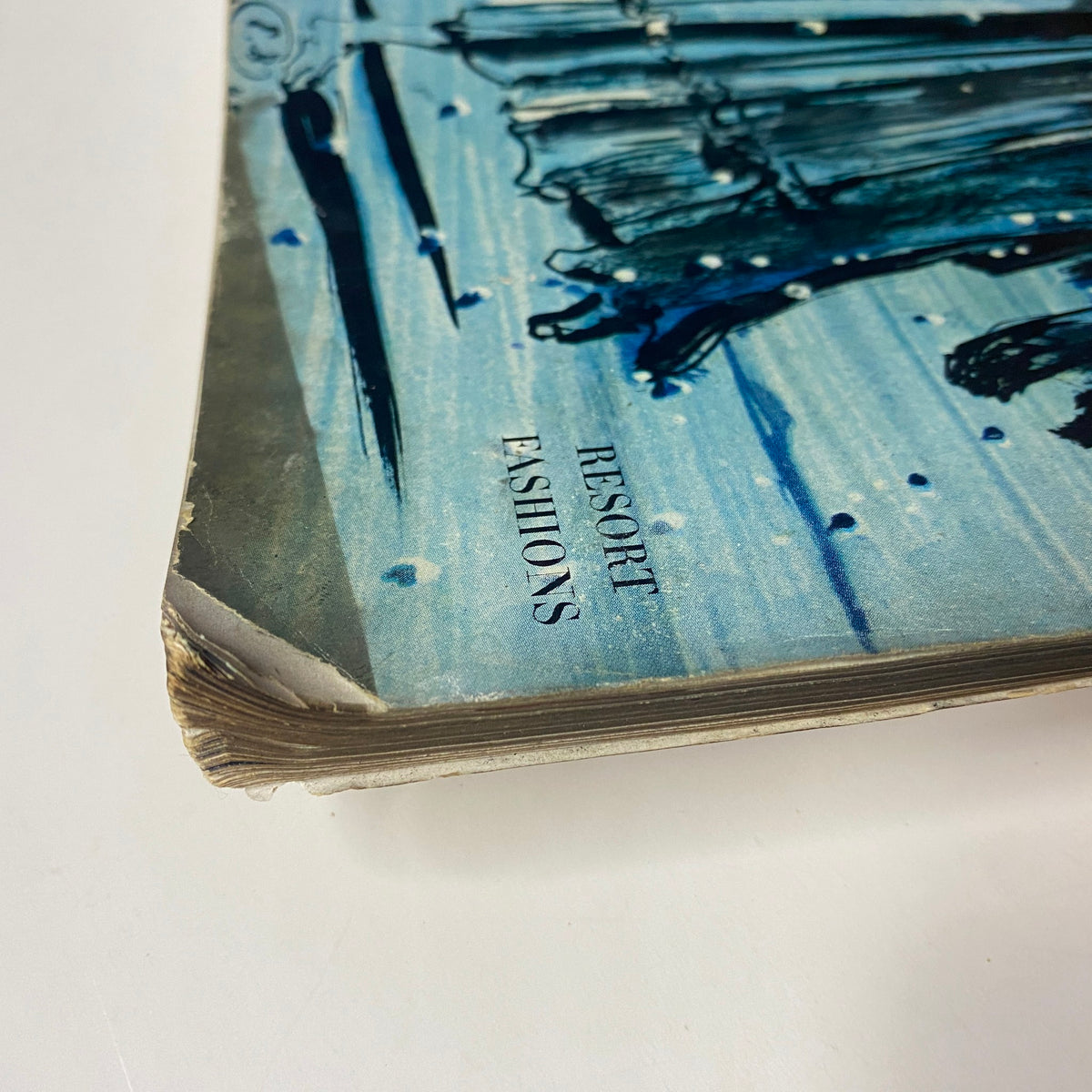
The December 1948 issue of Vogue — the Christmas and Resort Fashions Issue — is a primary document of American luxury publishing at one of its most visually distinctive moments. The cover illustration by Eugène Berman places this issue within a tradition of fine art collaboration that defined Vogue's visual identity in the pre-photography-dominant era. Berman, the Russian-born Neoromanticist painter who had emigrated to the United States during World War II and become a significant figure in American stage design and fine arts, was one of a constellation of European artists — alongside Dalí, Vertès, and Benito — whose contributions to Vogue's covers in the 1930s and 1940s gave the magazine a visual ambition that no subsequent publication has fully replicated. A December Christmas issue with a Berman cover represents that tradition at its most festive and most fully realized: the holiday issue was the year's prestige number, and commissioning serious artists for its cover was a deliberate statement of editorial values.
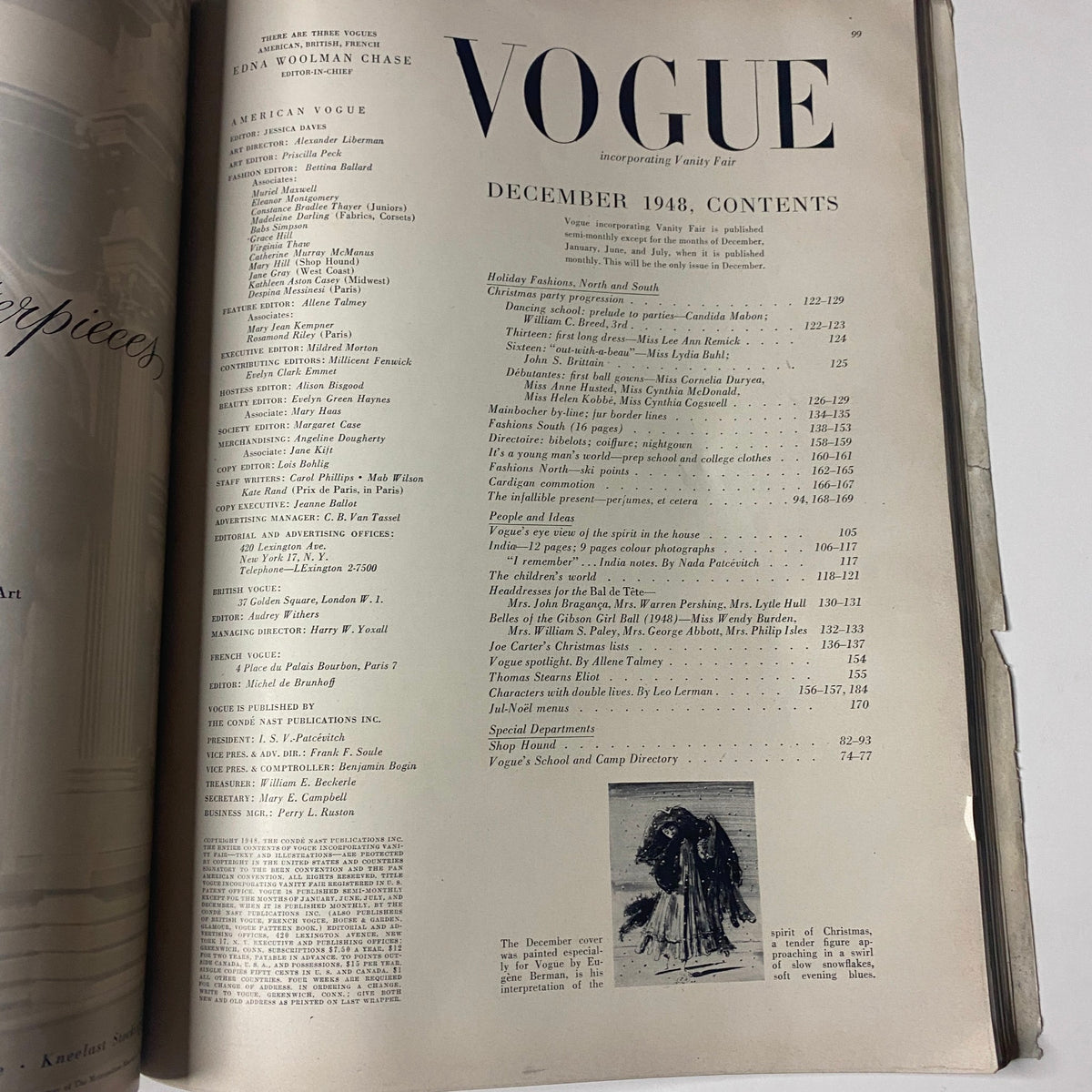
The confirmed table of contents reveals an issue of remarkable breadth and historical specificity. The debutante sequence — documenting first long dresses, first ball gowns, and first formal occasions for named young women from prominent American families — functions as an accidental social history of postwar East Coast establishment society, preserving with incidental precision the names and occasions that defined a specific stratum of American life in December 1948. The twelve-page India feature, with nine pages of color photographs, reflects the postwar moment when former British colonial territories were asserting new national identities — India had achieved independence just sixteen months before this issue — and American publications were beginning to engage with the subcontinent as a subject of genuine editorial interest rather than imperial backdrop. The note "I remember India" by Nada Patcevitch adds a personal dimension to that geopolitical moment. For collectors building a documentary record of American magazine culture from 1948, this issue's combination of fine art cover, social documentation, and international editorial ambition makes it a specimen of considerable depth.
The confirmed interior content includes a T.S. Eliot feature — published just three years after he received the Nobel Prize in Literature in 1948, placing this issue in the immediate glow of that recognition — and a piece by Leo Lerman, the celebrated Vogue contributing editor and cultural connector whose salon was one of the most important gathering points for New York's cultural elite in the postwar decades. The Mainbocher feature documents one of the most significant American couturiers of the era at work, and the resort fashion section reflects the specific postwar optimism that characterized luxury fashion publishing as American prosperity reasserted itself after years of wartime austerity. Collectors who follow the complete Vogue archive will recognize that illustrated-cover Christmas issues from the 1940s represent a distinct and historically irreplaceable category within the title's collecting hierarchy — issues that bridge the magazine's prewar artistic golden age and its postwar photographic modernization.
About the Publication
American Vogue was founded in 1892 and had, by December 1948, spent over five decades as the authoritative voice of American fashion, culture, and luxury living. In the late 1940s, the magazine was operating under editor-in-chief Edna Woolman Chase — who had led the publication since 1914 — and was navigating the transition between the illustrated cover tradition that had defined its visual identity for decades and the photography-forward approach that would become dominant in the 1950s. Its Christmas issue was the most elaborate production of the editorial calendar, combining holiday fashion, resort coverage, social documentation, arts features, and gift guidance into a single number that functioned as a luxury object as much as a publication. The confirmed provenance of this specific issue — from a privately held archive of 1920s through 1970s Vogue issues stored away for decades — represents the kind of institutional collection that produced the most carefully preserved surviving specimens of the title from this era.
Key Highlights Inside
- Eugène Berman cover illustration: The Neoromanticist painter's Christmas cover places this issue within Vogue's fine art collaboration tradition at its most prestigious — a holiday commission from a serious postwar American cultural figure whose stage and canvas work was being exhibited in major institutions.
- Debutante and coming-out fashion sequence: The confirmed documentation of named debutantes — first long dresses, first ball gowns, first formal occasions — preserves with incidental precision the social rituals of East Coast establishment life in December 1948, functioning as an accidental social history.
- Twelve-page India feature with nine color pages: Published sixteen months after Indian independence, the confirmed India feature with color photography represents Vogue's postwar international editorial ambition engaging directly with the most significant geopolitical transformation of the era.
- T.S. Eliot feature: A confirmed piece on the poet published in December 1948 — the same year he received the Nobel Prize in Literature — makes this issue a primary document of his mainstream American cultural recognition at its peak moment.
- Mainbocher fashion feature: Confirmed coverage of one of the most significant American couturiers of the postwar era, documenting his work at a specific moment in the reconstruction of luxury fashion after wartime austerity.
- Leo Lerman contribution — "Characters with Double Lives": A confirmed piece by the celebrated Vogue cultural editor whose personal and professional networks made him one of the most significant connectors in postwar American arts and letters.
Condition & Rarity
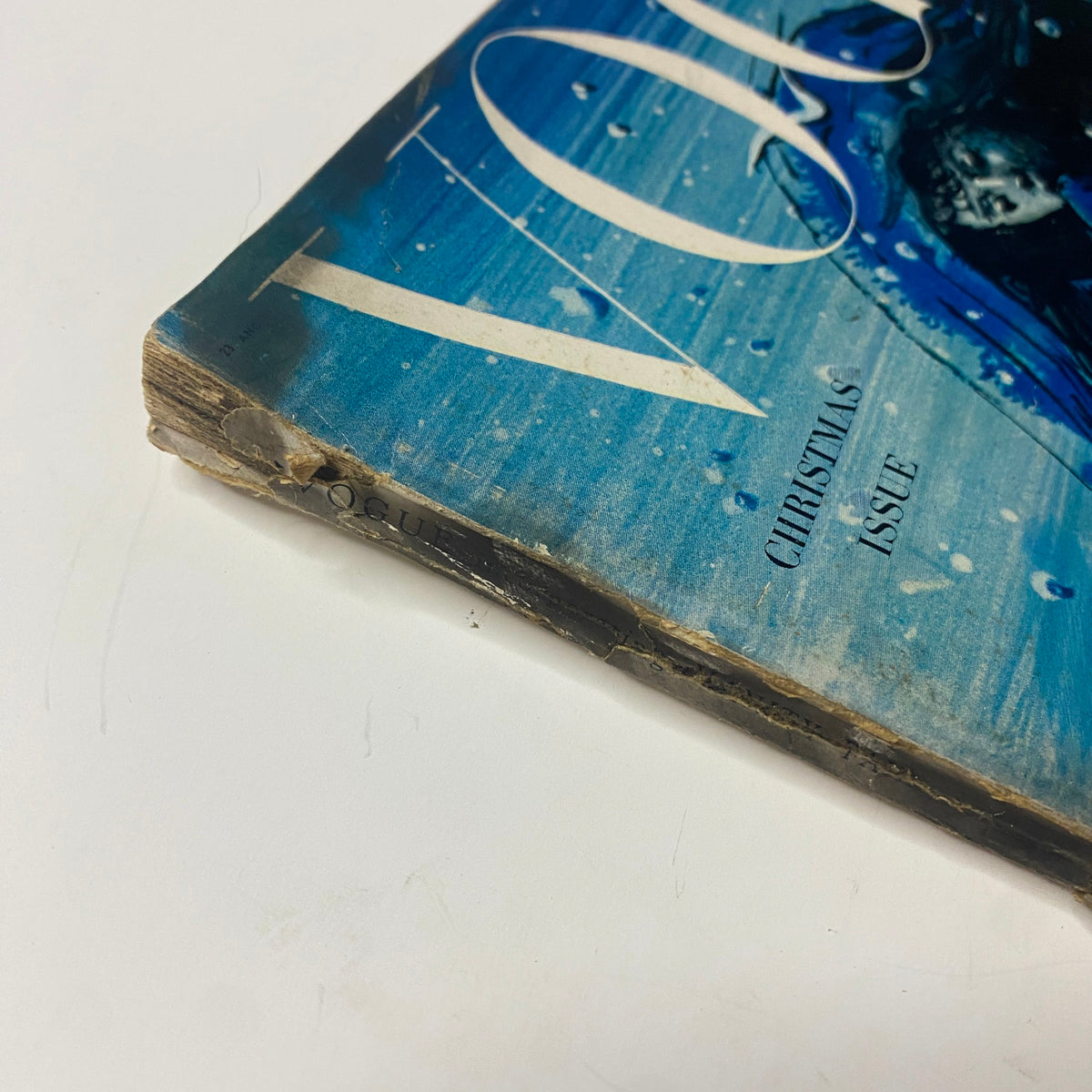
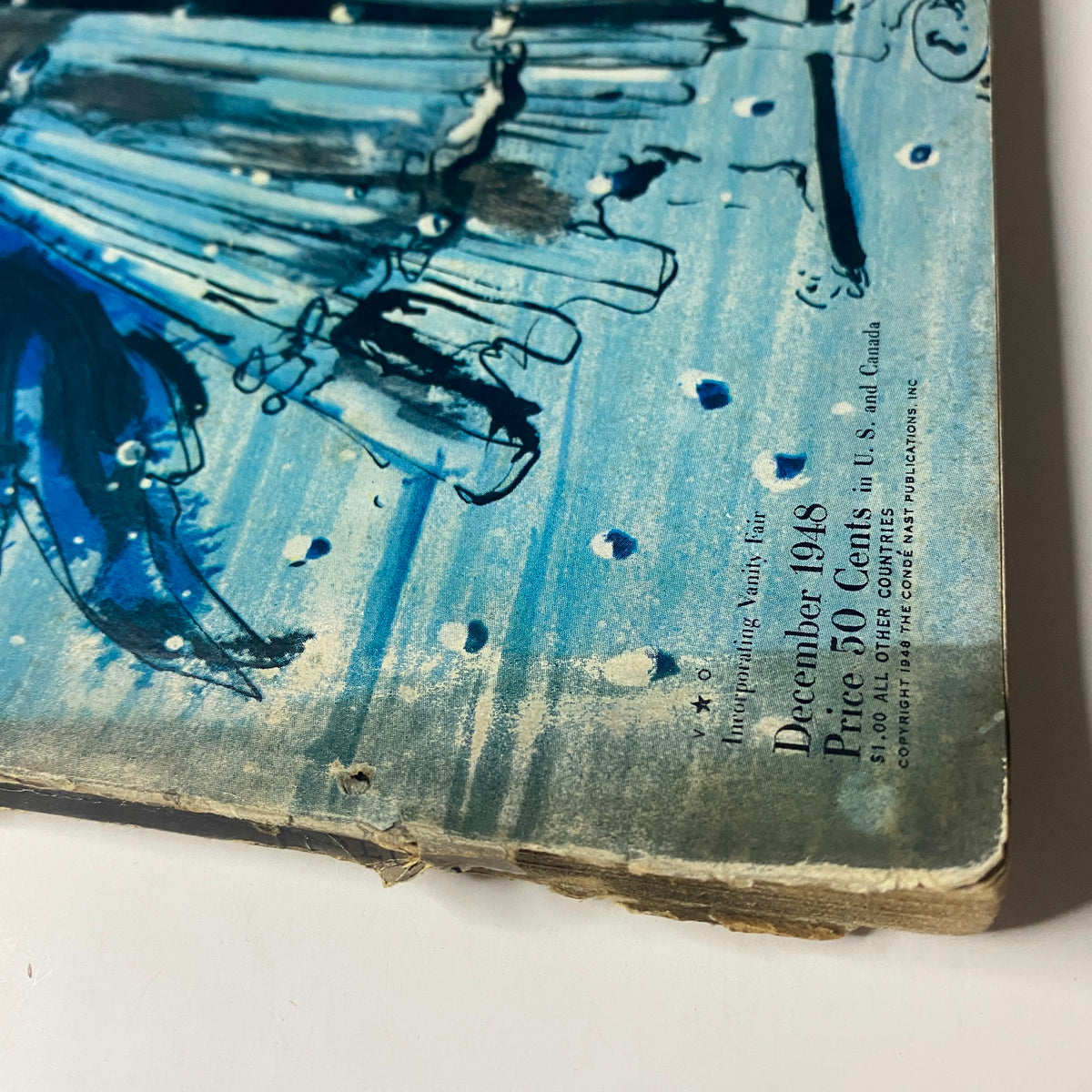
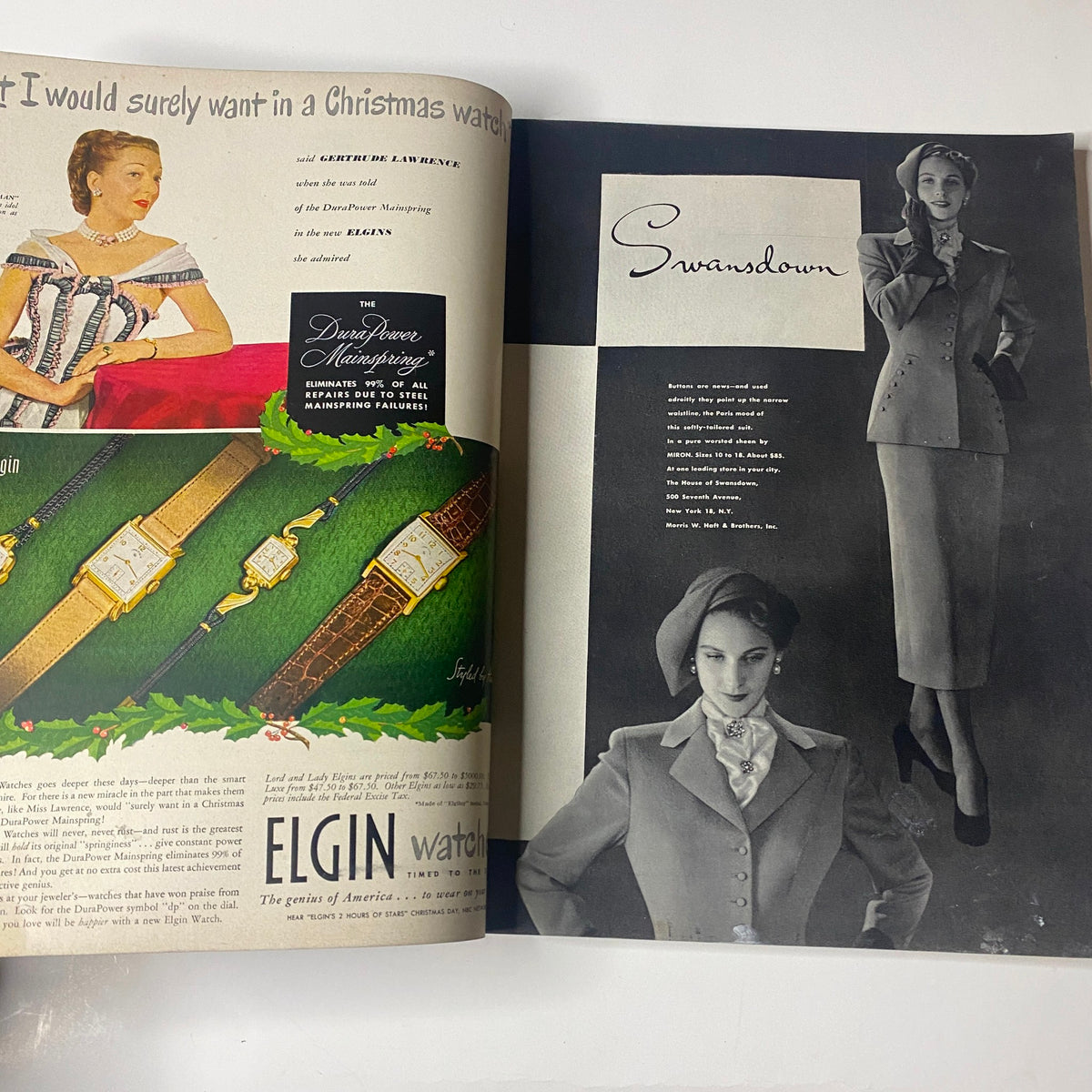
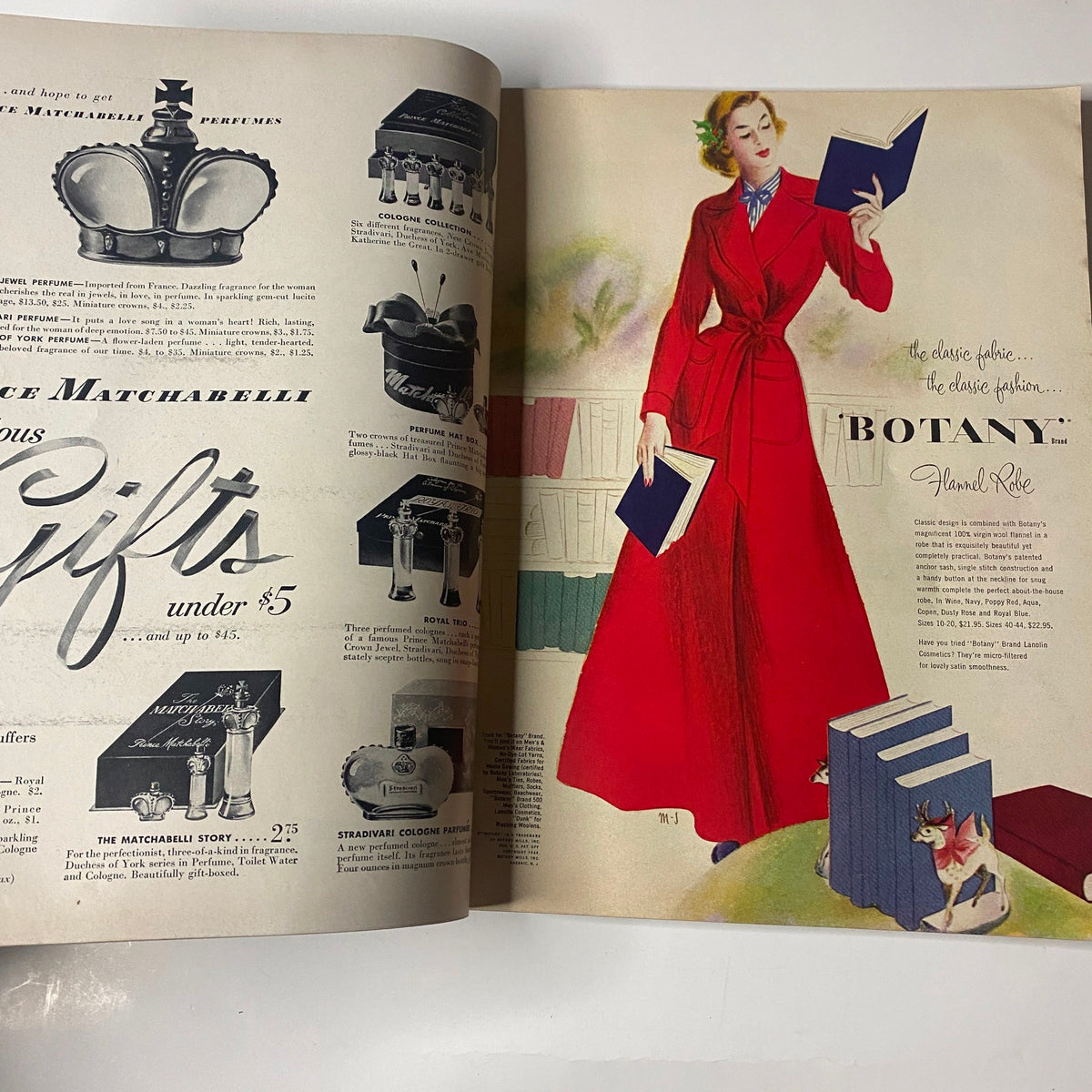
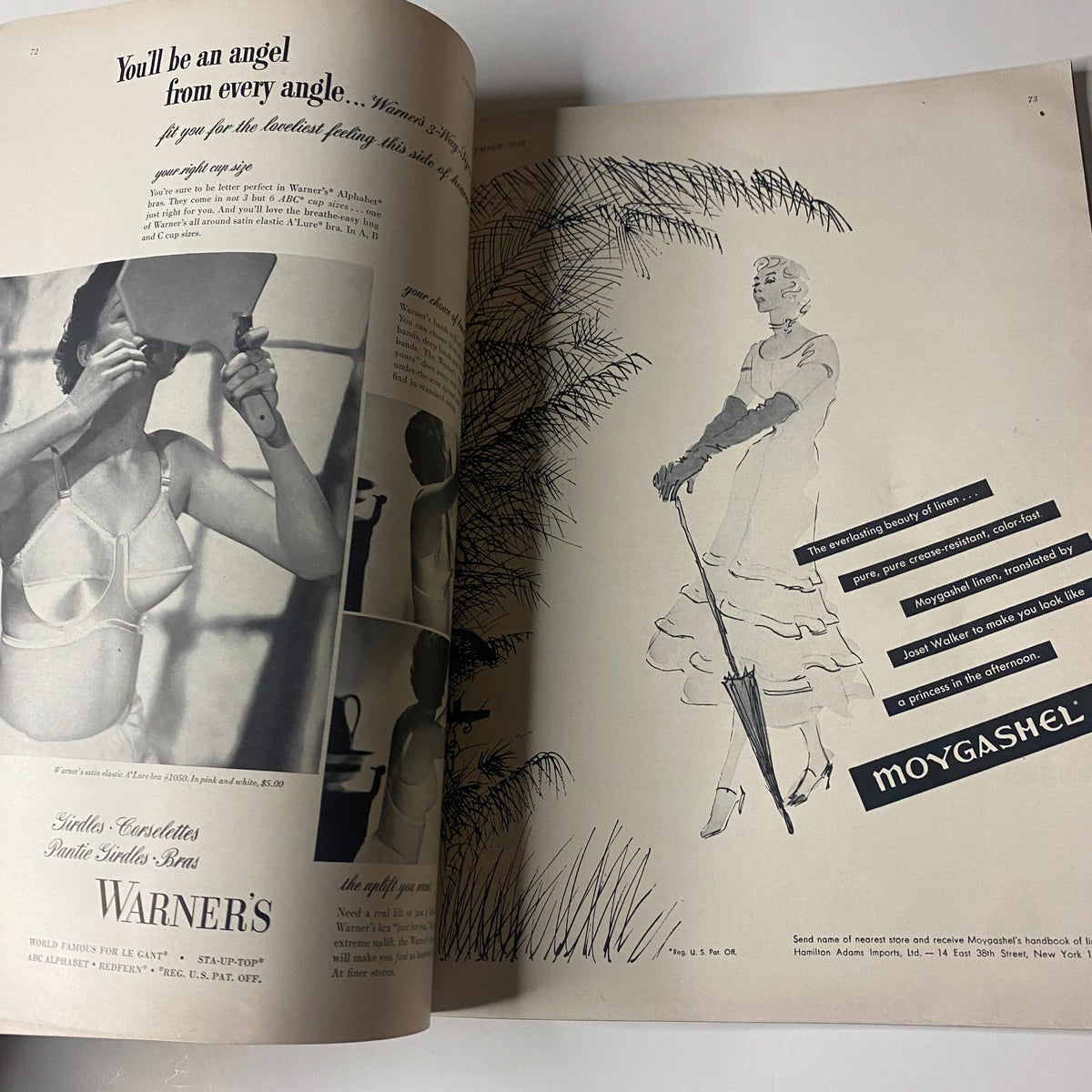
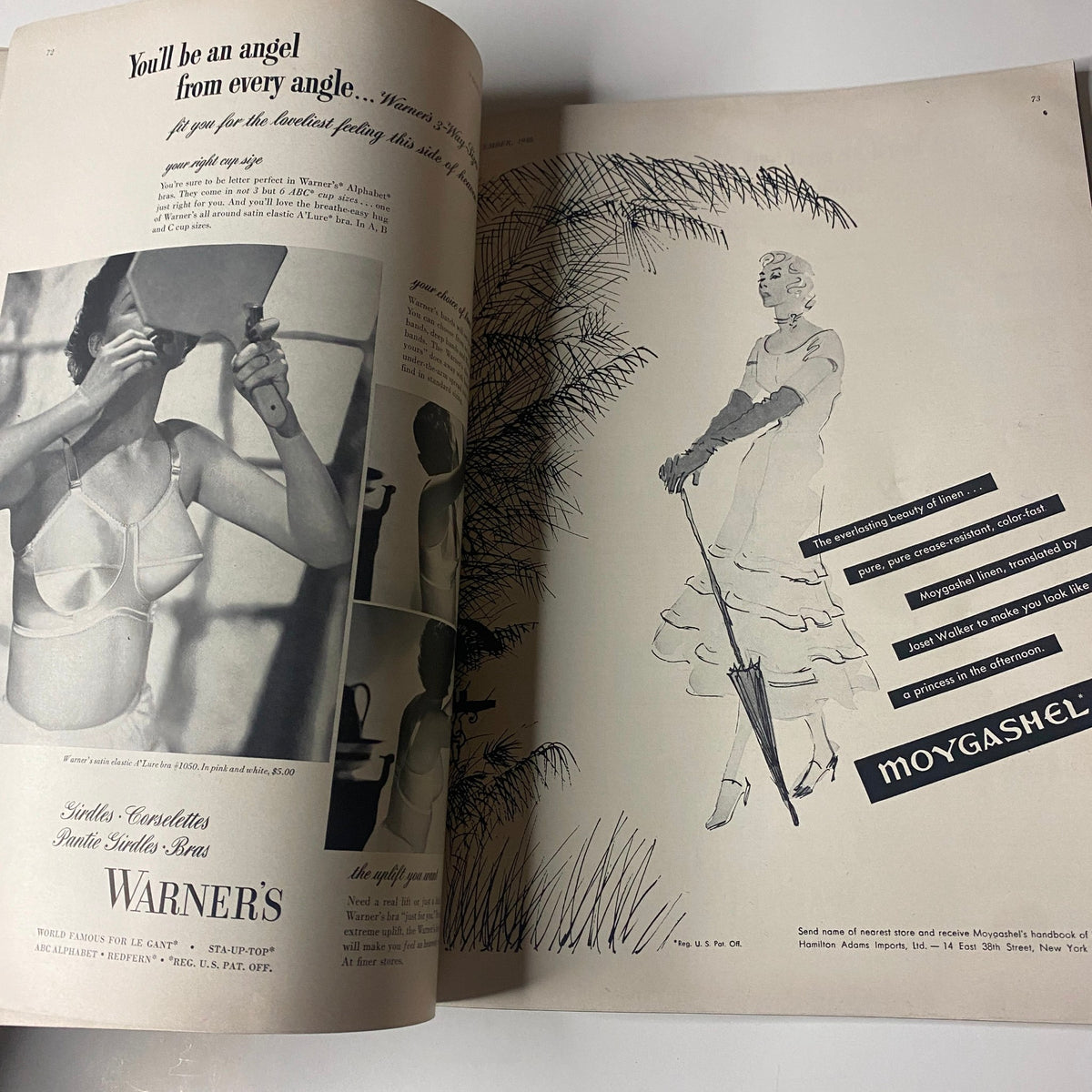
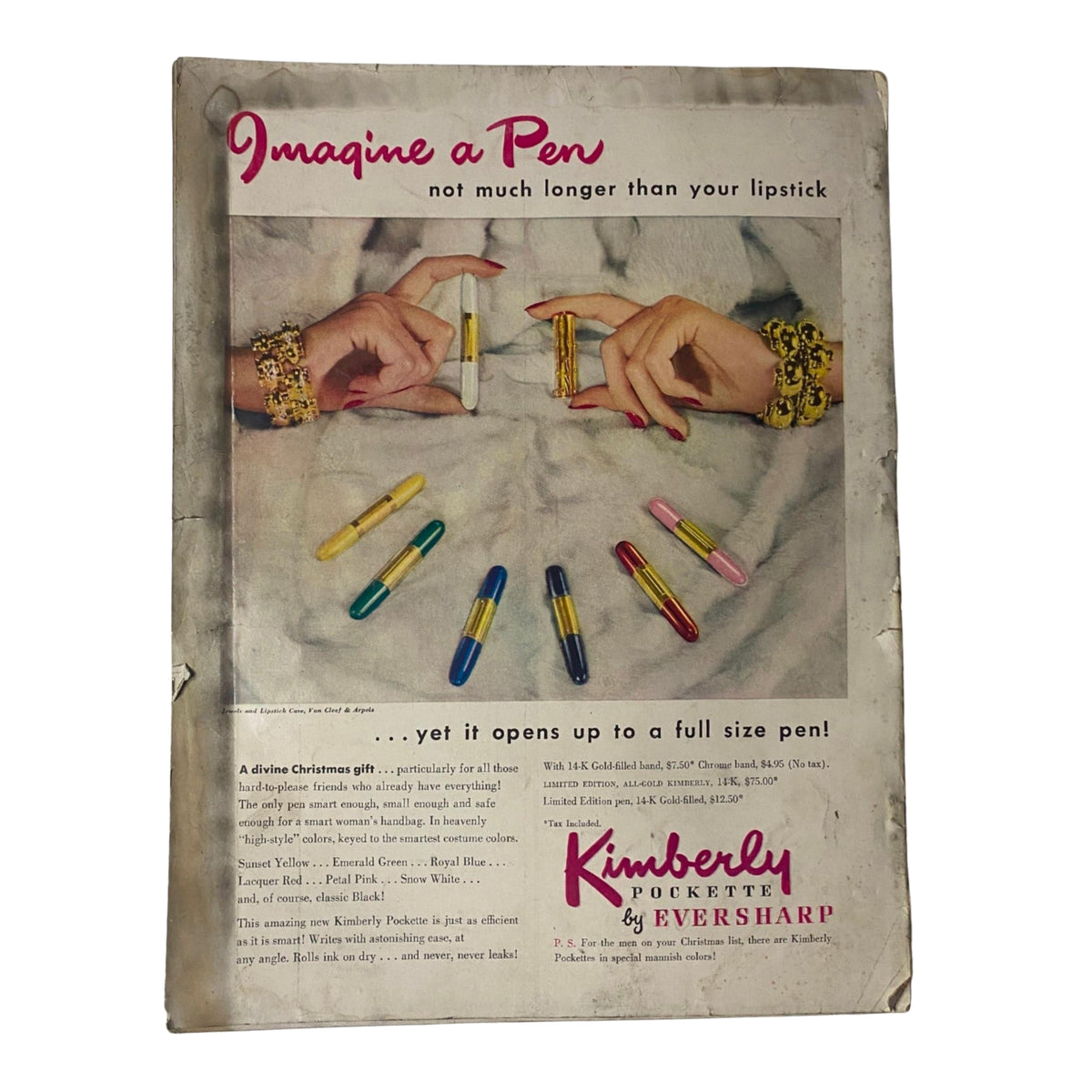
The provenance and condition description for this issue are unusually detailed and merit careful attention. The issue comes from a privately held archive of Vogue issues spanning the 1920s through 1970s that was stored away for decades before being brought back into circulation — a provenance that typically produces copies with honest period characteristics rather than the more severe damage associated with casual attic or basement storage. The seller has performed light dry surface cleaning at the outer spine using vacuum, brush, and smoke sponge methods only, and the issue has been placed in an archival sleeve. Expected characteristics for a copy of this type and age include binding wear or small splits, staple-rust halos, edge toning, and period shelf dust that can appear as black residue along the spine — all of which are consistent with long, earlier storage and do not affect the interior content. The interior pages are described as dry and legible. The vintage paper aroma noted as possible is characteristic of mid-century coated paper stock and is not indicative of moisture damage. When evaluating any surviving copy of the December 1948 Vogue, the condition of the Berman cover illustration, the completeness of the debutante fashion sequence and India feature, and the integrity of the T.S. Eliot and Leo Lerman pieces are the primary assessment criteria.
Looking for More Issues Like This?
An original December 1948 Vogue with a confirmed Eugène Berman cover, a twelve-page color India feature, a T.S. Eliot piece, and the full debutante and resort fashion documentation described here is a specimen of genuine rarity — illustrated-cover Christmas issues from the late 1940s are among the most historically significant and least commonly encountered in the Vogue collecting archive. If this issue is no longer available, the full Vogue archive at OriginalMagazines.com is the best place to continue exploring the publication's remarkable 1940s run. The broader 1948 magazine collection is equally worth browsing for collectors building a comprehensive primary-source record of postwar American publishing at the dawn of the modern era.