




Description
Collector's Note – Why This Issue Matters
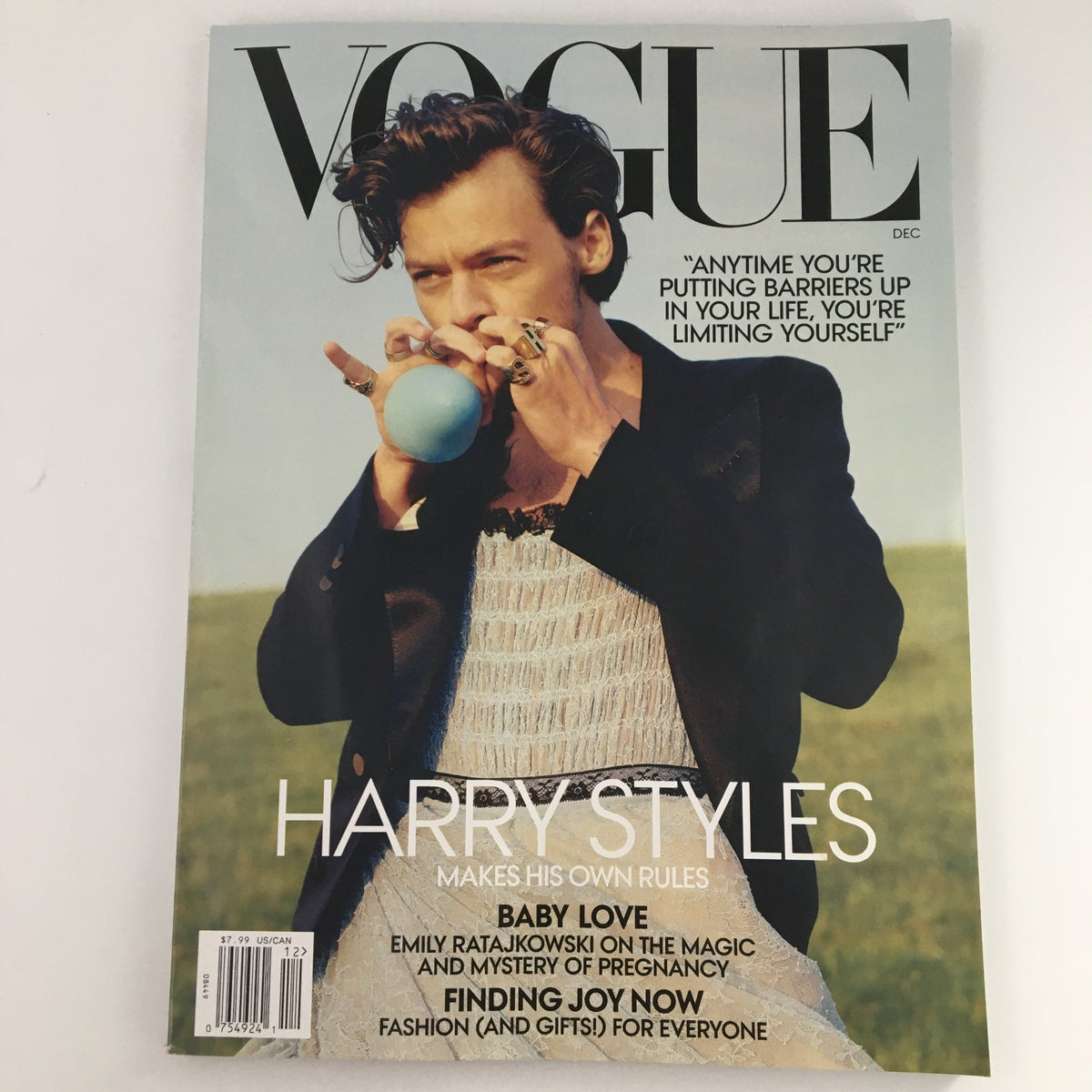
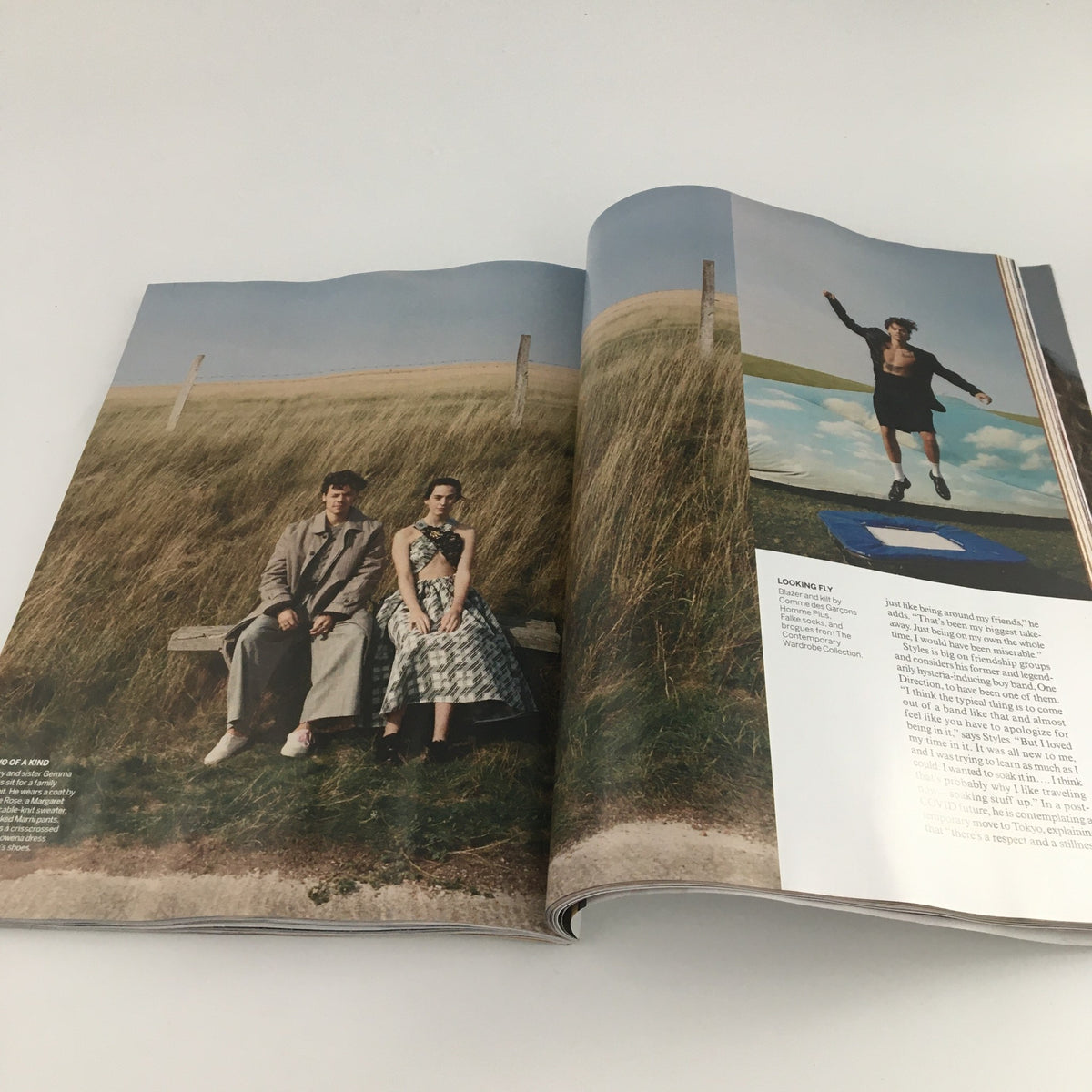
The December 2020 issue of Vogue featuring Harry Styles is one of the most culturally significant and widely discussed magazine covers of the entire decade — and its significance was immediately apparent from the moment it was published. Harry Styles became the first solo male cover subject in the 132-year history of American Vogue, a fact that transformed what might have been a celebrated but relatively conventional celebrity fashion feature into a genuine cultural event. The cover images, shot by photographer Tyler Mitchell, presented Styles in a series of looks that combined traditionally feminine garments — including a lace-trimmed shirt, ruffled collar, and a full ballgown by Gucci — with an ease and confidence that made the editorial feel less like a provocation and more like a natural expression of who Styles had become as a public figure and fashion presence. For collectors who focus on landmark Vogue covers that document shifts in fashion and culture, this issue occupies a category of its own — it is not merely a memorable cover but a document of a specific moment when a mainstream American institution made an explicit and very public statement about the evolving nature of gender, style, and self-expression.
Harry Styles in December 2020 was at a particular apex of his cultural authority. Having established himself as a genuine solo artist of substance with his 2019 album Fine Line — a critically acclaimed record that demonstrated a musical range and emotional depth that surprised many observers who had known him primarily as a member of One Direction — he had become one of the most closely watched and widely discussed figures in contemporary popular culture. His approach to fashion had been a consistent thread throughout his solo career: an embrace of fluid, genre-defying dressing that drew on the traditions of glam rock, 1970s excess, and a distinctly modern comfort with aesthetic experimentation that his fanbase had responded to with remarkable enthusiasm. The Vogue cover was in many ways the logical culmination of that years-long public conversation about clothes, identity, and what masculinity could look like in the twenty-first century. The "Playtime" framing of the feature — suggesting fashion as joy, experimentation, and creative freedom rather than rigid self-presentation — reinforced a message that resonated far beyond the fashion world and generated media coverage and public discussion on a scale that relatively few magazine covers achieve in any era.
The timing of this cover carries additional historical weight that is easy to underestimate from a few years' distance. December 2020 was, of course, the final month of one of the most globally disruptive years in living memory. The COVID-19 pandemic had shuttered fashion weeks, upended the retail industry, and forced every major fashion publication to reckon with its relevance and purpose in a world where physical experience had been radically curtailed. That Vogue chose this particular moment — the close of 2020 — to make its most historically significant cover choice in over a century speaks to an editorial conviction that fashion's capacity to imagine new possibilities was precisely what the cultural moment required. As a physical object, a newsstand copy of this issue is a document of that conviction: a piece of print culture produced at a moment of genuine crisis that responded with creativity, ambition, and a willingness to make history.
About the Publication
American Vogue, founded in 1892 and operating under Condé Nast since 1909, is the most influential and widely recognized fashion magazine in the world — a publication whose editorial decisions carry genuine cultural weight and whose cover choices are understood, both within the fashion industry and in the broader media landscape, as statements about what is beautiful, relevant, and worth celebrating at any given cultural moment. Under editor-in-chief Anna Wintour, who has led the magazine since 1988, Vogue has maintained its position as the definitive arbiter of American fashion while navigating the profound disruptions to print media that characterized the first two decades of the twenty-first century. The magazine's audience by 2020 encompassed both its traditional core readership of fashion professionals, enthusiasts, and aspirational general readers and a significantly expanded digital audience that had grown up engaging with Vogue's content across multiple platforms. A Vogue cover in 2020 remained, despite the fragmentation of media attention, one of the most culturally resonant formats in publishing — a fact that the Styles cover demonstrated with unusual clarity.
Key Highlights Inside
- The historic cover feature on Harry Styles — the first solo male cover subject in American Vogue's 132-year history — presenting an extended fashion editorial shot by photographer Tyler Mitchell featuring Styles in a range of looks that challenged conventional boundaries between menswear and womenswear with a lightness and confidence that defined the feature's cultural impact.
- An in-depth profile of Styles engaging with his thoughts on fashion, identity, and the deliberate fluidity of his approach to self-presentation — a conversation that was widely quoted and discussed across media platforms in the weeks following the issue's publication and that positioned him as a genuinely thoughtful participant in ongoing cultural conversations about gender and style.
- The "Playtime" editorial concept — framing high fashion as an exercise in joy, experimentation, and creative freedom — reflecting a broader editorial sensibility that felt particularly resonant in the context of December 2020, when the restrictions of the pandemic year made the imaginative possibilities of fashion feel both more escapist and more necessary than usual.
- Fashion and beauty editorial content reflecting the specific aesthetic moment of late 2020 — a period when the fashion industry was actively reconsidering its relationship to sustainability, inclusivity, and the pace and purpose of its seasonal cycles in the wake of a year that had forced a fundamental reassessment of its operating assumptions.
- Advertising content from the major luxury fashion and beauty houses that anchored Vogue's December issue — historically one of the most substantial advertising months in the magazine's annual calendar — representing a significant document of how the luxury industry presented itself to consumers at the close of an extraordinarily difficult year.
Condition & Rarity
This copy is identified as a newsstand edition without a mailing label — the preferred form for collectors of contemporary Vogue issues, as it arrived at retail without the subscription processing, label adhesive, and postal handling that can affect the cover surface of mailed copies. For a 2020 issue, the condition considerations differ meaningfully from those that apply to mid-century periodicals: the paper stock, printing technology, and binding methods used in contemporary Vogue production are significantly more durable than those of earlier eras, and a copy described as being in good shape with well-preserved edges and pages represents a genuinely strong survival for an issue that is only a few years old. The plastic protective sleeve adds a further layer of preservation assurance, though its primary value for a recent issue is prevention of surface scratching and moisture exposure rather than the paper brittleness protection that makes sleeving so important for older magazines. For a cover of this specific cultural and historical significance — the first solo male cover in the magazine's entire history — collectors should prioritize copies with clean, undamaged cover surfaces that display the Tyler Mitchell photography and the Styles image at their full visual impact, as the cover is unquestionably the primary collectible element of this issue.
Looking for More Issues Like This?
The Harry Styles December 2020 Vogue is one of those covers that serious collectors recognize immediately as historically significant, and clean newsstand copies with intact cover surfaces are the ones worth holding onto. If this issue is no longer available, the broader vintage and collectible Vogue archive at OriginalMagazines.com is an excellent place to explore for other landmark covers from the magazine's long and remarkable history of making cultural statements through its cover choices — from the mid-century golden age through the present day.