


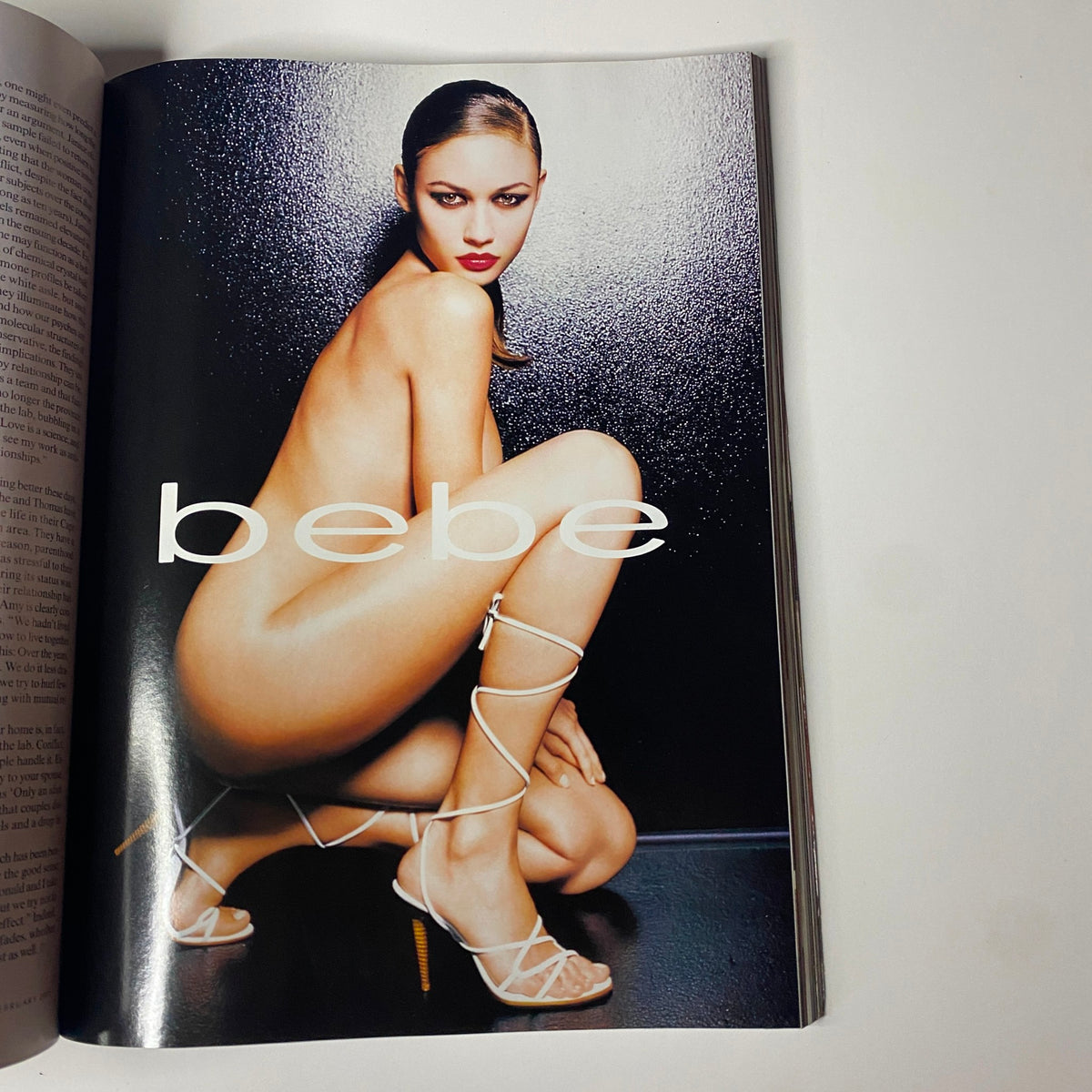


Description
Collector's Note – Why This Issue Matters
The February 2003 issue of Vogue, featuring Debra Messing on the cover, documents a specific and culturally interesting moment in the intersection of television fashion and high-fashion publishing. By February 2003, Will & Grace had been running for five seasons and had established itself as one of NBC's most commercially successful and culturally significant comedies — its Thursday night Must See TV position had made it a genuine mainstream phenomenon, and Messing's character Grace Adler, an interior decorator with an exuberant and eclectic personal style, had become one of the most fashion-influential characters on American network television. A Vogue cover featuring Messing was an editorial acknowledgment of television's growing power to shape fashion consciousness at the mainstream level — the recognition that what Grace wore on NBC's Thursday night lineup was influencing how American women thought about dressing in ways that Vogue could no longer ignore or treat as a separate cultural domain. The confirmed feature "Dressing the part — Debra Messing's television style as Grace reshapes prime-time glamour" makes this editorial position explicit, treating the character's costuming as a legitimate subject of serious fashion analysis rather than merely a celebrity profile opportunity. For collectors building archives around Vogue's history of engaging with television's fashion influence, this February 2003 issue is a primary document of that engagement at a specific and historically interesting moment.
The broader editorial content of this issue — documented in unusual detail through the confirmed table of contents — reveals a Vogue that was actively processing the early-2000s fashion moment with considerable analytical depth. The Manolo Blahnik nostalgia piece is particularly resonant in the context of 2003: Blahnik's shoes had been made famous by another television show, Sex and the City, which had premiered in 1998 and had transformed both Blahnik's commercial profile and the public's awareness of high-end shoe design as a fashion category. His Vogue piece reflecting on silver screen inspirations arrives at a moment when his name had become a household word largely through television rather than through traditional fashion media. The Paco Rabanne revival feature documents a genuine early-2000s trend of revisiting 1960s and 1970s futuristic aesthetics that would accelerate through the mid-decade. The spring runway coverage — encompassing YSL kiss prints, Ralph Lauren chiffons, bows, ruffles, and florals — provides a detailed primary source record of the spring 2003 fashion moment as it was being presented to Vogue's readership. Collectors researching American fashion publishing from 2003 will find this issue a particularly documentable primary source given the unusually detailed table of contents that allows specific editorial content to be confirmed rather than inferred.
The "boy meets girl" feature on men embracing women's jeans and the cartoon icons influencing fashion piece both document specific early-2000s aesthetic preoccupations that fashion historians and cultural researchers find genuinely interesting as period documents — the former reflecting the gender-fluid fashion conversations that were beginning to surface in mainstream publications, the latter documenting the early-2000s nostalgia and pop culture reference culture that would become defining characteristics of the decade's aesthetic. Together with the television fashion angle of the Messing cover story, these features make this issue a richer primary source of early-2000s fashion culture than its standard monthly publication context might initially suggest.
About the Publication
Vogue was founded in 1892 and acquired by Condé Nast in 1909, developing over the following century into the definitive American fashion authority. Under editor-in-chief Anna Wintour, who had led the magazine since 1988, American Vogue by February 2003 was operating as both a fashion industry bible and a broader cultural arbiter whose cover choices and editorial decisions carried genuine commercial and cultural weight beyond the fashion industry itself. André Leon Talley, confirmed as a contributor to this issue through the style fax column credit, was Vogue's creative director during this period — one of the most influential editorial figures in American fashion journalism, whose presence at the publication gave its fashion coverage a particular authority and creative intelligence. The magazine's willingness to put a television actress on its February cover in 2003 reflected Wintour's consistent editorial instinct for recognizing where genuine cultural influence was operating, even when that influence originated in media channels that traditional fashion publishing had historically treated as adjacent rather than central.
Key Highlights Inside
- Debra Messing appears on the cover with a confirmed interior feature on page 264 — "Dressing the part: Debra Messing's television style as Grace reshapes prime-time glamour" — making this a primary document of Vogue's formal editorial recognition that Will & Grace's costume design was exercising genuine influence on American mainstream fashion consciousness at the height of the show's cultural impact.
- André Leon Talley contributes the "Style fax" column on page 74, and Manolo Blahnik reflects on his silver screen inspirations on page 82 — two of the most significant names in early-2000s fashion journalism and shoe design appearing together in an issue whose television-fashion cover story reflects the broader cultural conversation both were participating in.
- The Paco Rabanne revival feature on page 142 documents a genuine early-2000s fashion trend — the rehabilitation of 1960s and 1970s futuristic aesthetics — in Vogue's authoritative editorial context, providing a primary source record of when and how mainstream fashion publishing was acknowledging that revival.
- The spring 2003 runway coverage across multiple features — YSL, Ralph Lauren, romantic silhouettes, bows, ruffles, and florals — provides an unusually detailed primary source record of the spring 2003 fashion moment as Vogue's editors and writers were processing and presenting it to the publication's readership.
- The "boy meets girl" feature on men embracing women's jeans on page 137 and the cartoon icons fashion feature on page 166 document two specific early-2000s aesthetic preoccupations that fashion historians consistently track as period markers of the decade's distinctive cultural moment.
Condition & Rarity
Surviving copies of this issue are graded at the Good level with light edge wear — a condition designation that indicates a complete and readable publication showing minimal aging beyond what the passage of twenty-two years inevitably produces. For a Vogue from February 2003, Good condition with light edge wear means a copy that retains cover gloss, spine integrity, and interior page quality without the significant tanning, surface scuffing, or structural damage that affects lower-grade copies. The confirmed absence of a mailing label indicates newsstand rather than subscriber origin, preserving the full visual integrity of the Messing cover without the adhesive surface disruption of subscriber labels — a meaningful positive condition attribute for a publication whose cover photography is the primary visual collector consideration. The confirmed complete table of contents provided in the listing represents an unusual degree of editorial documentation that allows researchers and collectors to verify specific content rather than inferring it from publication date and cover subject alone. The plastic protective covering provides appropriate stabilization for a publication of this age, maintaining cover surface quality and preventing further edge deterioration during handling and storage. Vogue issues from the early 2000s featuring television celebrities at the height of their cultural influence are among the more specifically historically situated entries in the publication's archive for collectors interested in the intersection of television and fashion culture.
Looking for More Issues Like This?
Vogue issues that engage directly with television's influence on fashion culture — and particularly those from the early 2000s peak of Will & Grace's cultural impact — occupy a specific and increasingly recognized niche within the publication's archive for collectors interested in how mainstream fashion journalism processed television's growing aesthetic influence. The Vogue collection at OriginalMagazines.com is the most comprehensive place to browse available issues across the publication's decades of American fashion documentation, with strong representation from the early 2000s period when the television-fashion conversation was at its most actively engaged. For collectors building a broader picture of American fashion and popular culture in 2003, the 2003 magazines collection offers a wide cross-section of titles that together capture the full range of that year's American print and fashion culture.