







Description
Collector's Note – Why This Issue Matters
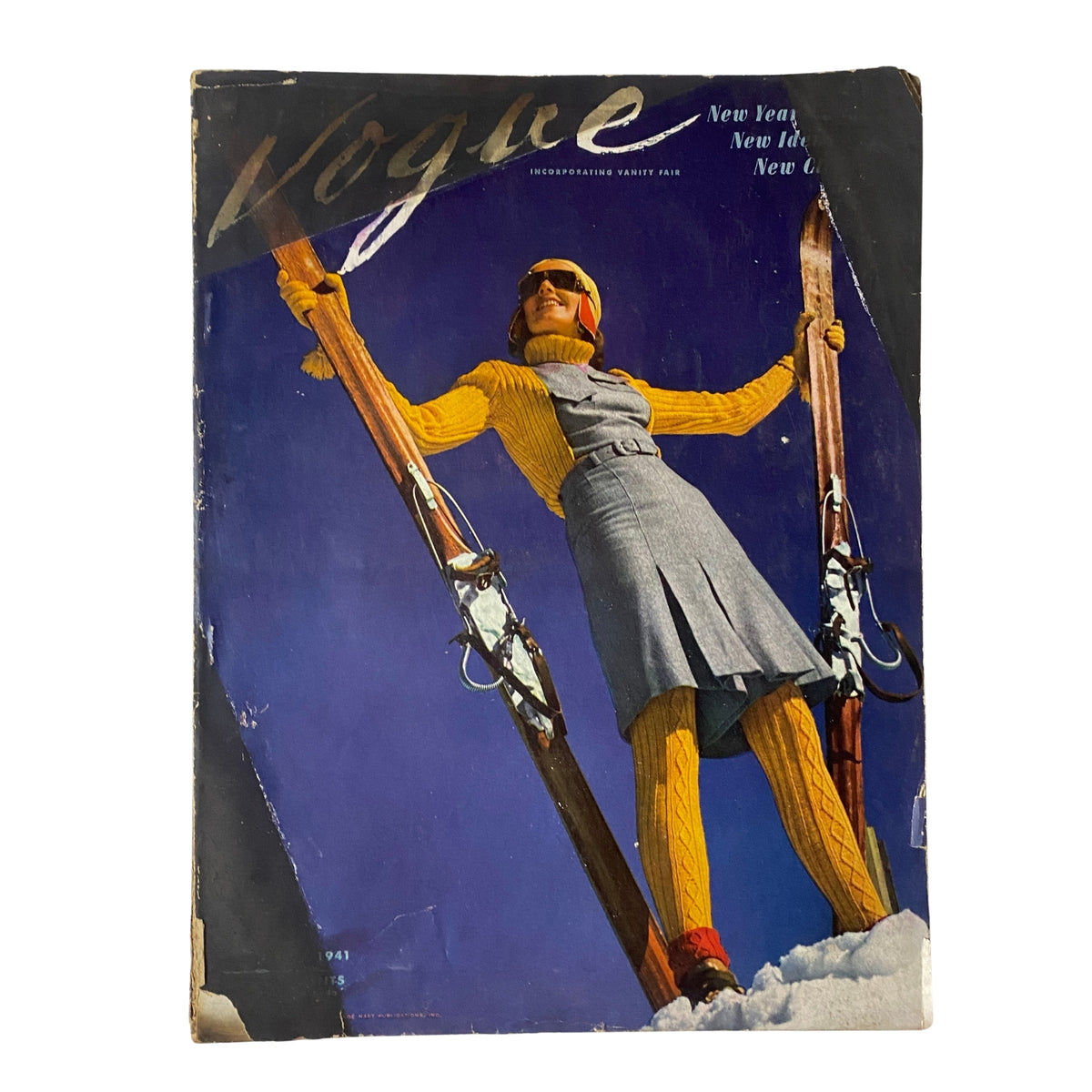
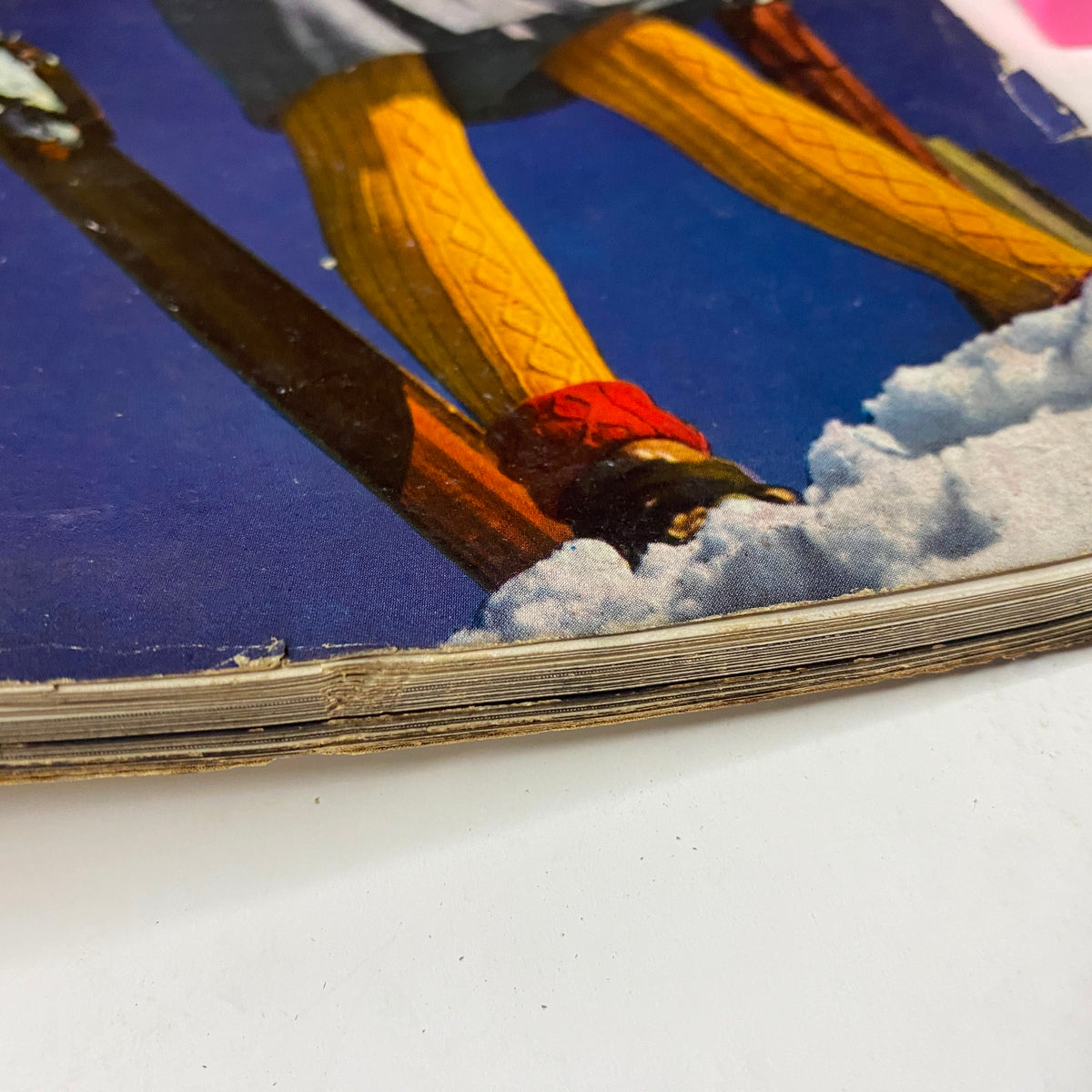
The January 1, 1941 issue of Vogue — with a skiing cover by Toni Frissell — is a primary document of American fashion and cultural life at one of the most historically charged threshold moments in the twentieth century: the opening day of 1941, the final year of American peacetime before Pearl Harbor would bring the country into the Second World War. Toni Frissell's cover credit gives this issue its most significant individual distinction: Frissell was one of the most important American photographers of the mid-twentieth century, and her work for Vogue during the late 1930s and early 1940s was distinguished by its outdoor naturalism and athletic energy — a visual vocabulary that set her apart from the studio-based fashion photography that dominated the period. A skiing subject on January 1, 1941 is characteristic of Frissell at her most creatively confident: outdoor, active, precisely seasonal, and shot with the technical mastery that had made her one of the magazine's most valued contributors. For collectors building archives of vintage Vogue magazines, confirmed Frissell cover credits are among the most photographically distinguished primary documents in the publication's early-1940s run.
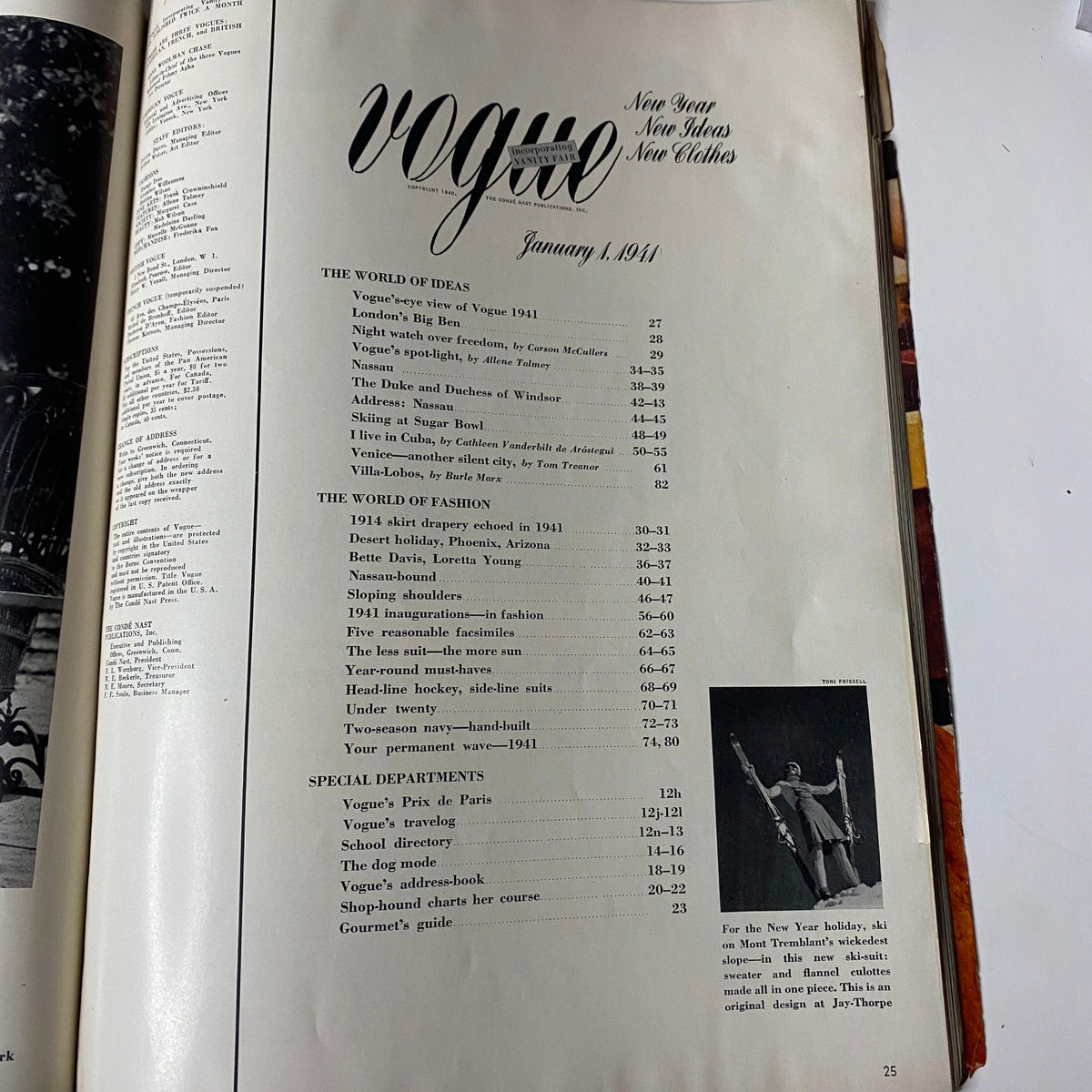
The confirmed editorial content of this January 1, 1941 issue carries a specific historical weight that its original readers could not have fully appreciated. The confirmed Carson McCullers contribution — "Night Watch Over Freedom" — is a primary document of the celebrated American novelist at a specific early-career moment: McCullers had published The Heart Is a Lonely Hunter in 1940 to significant critical attention, and her January 1, 1941 Vogue contribution is a primary source document of her engagement with the specific wartime anxieties of the opening of 1941. The confirmed Duke and Duchess of Windsor feature — "Address: Nassau" — documents the former King Edward VIII and Wallis Simpson at a specific biographical moment: they had arrived in Nassau in August 1940, where Edward had been appointed Governor of the Bahamas in what many observers understood as an effort to keep them removed from the European war theater where their known German sympathies would be problematic. A January 1941 Vogue feature on the Windsors in Nassau is therefore a primary document of one of the most politically loaded social narratives of the early war period, rendered in the specific register of the magazine's social journalism. The confirmed Cuba feature by Cathleen Vanderbilt de Aróstegui and the Venezuela feature add further layers of American hemispheric engagement at a moment when Latin American relationships were a primary strategic concern for the Roosevelt administration. Collectors of 1941 magazines focused on the final months of American peacetime will find this January 1 opener among the most historically layered issues of the year.
The confirmed Bette Davis and Loretta Young fashion feature — two of the most prominent Hollywood actresses of the era appearing together in a Vogue fashion context — and the confirmed "1941 Inaugurations — in Fashion" feature reflect the specific editorial ambitions of the January 1 issue as both a year-opening fashion statement and a social-political document. The inauguration reference is historically precise: Franklin Roosevelt was inaugurated for his unprecedented third term on January 20, 1941, and a January 1 Vogue feature on inaugural fashion was published in the specific nineteen-day window before that historic ceremony.
About the Publication
Vogue, published by Condé Nast and founded in 1892, was by January 1941 under the editorial direction of Edna Woolman Chase, who had held the editorship since 1914. The January 1 bimonthly issue was the publication's formal opening statement for the year, combining fashion editorial with the social, cultural, and international commentary that had characterized Chase's editorial vision throughout her tenure. The Frissell cover and the Carson McCullers literary contribution reflect the specific creative ambition of the Chase era at its most fully realized — a magazine that aspired to be simultaneously a fashion authority and a document of the cultural and political world its readership inhabited.
Key Highlights Inside
- Ski girl cover by Toni Frissell — A confirmed cover credit by one of the most important American photographers of the mid-twentieth century, known for her outdoor naturalism and athletic energy — representing her contribution to Vogue's visual identity at the height of her early-1940s creative period.
- "Night Watch Over Freedom" — Carson McCullers (page 29) — A confirmed contribution by the celebrated novelist published one year after the critical breakthrough of The Heart Is a Lonely Hunter — a primary document of her engagement with the wartime anxieties of January 1941.
- "The Duke and Duchess of Windsor — Address: Nassau" (pages 38–45) — A confirmed extended feature on the former King Edward VIII and Wallis Simpson in their Bahamian exile — primary documentation of one of the most politically loaded social narratives of the early war period.
- "I Live in Cuba" — Cathleen Vanderbilt de Aróstegui (page 48) — A confirmed personal essay documenting American upper-class engagement with Cuba at a moment when hemispheric relationships were a primary American strategic concern.
- "1941 Inaugurations — in Fashion" (pages 56–60) — A confirmed inaugural fashion feature published nineteen days before Franklin Roosevelt's historic third inauguration — a primary document of the intersection of political ceremony and fashion journalism.
- Bette Davis and Loretta Young fashion feature (pages 36–37) — A confirmed fashion editorial featuring two of Hollywood's most prominent actresses, reflecting the magazine's consistent integration of film celebrity into its fashion editorial program.
Condition & Rarity
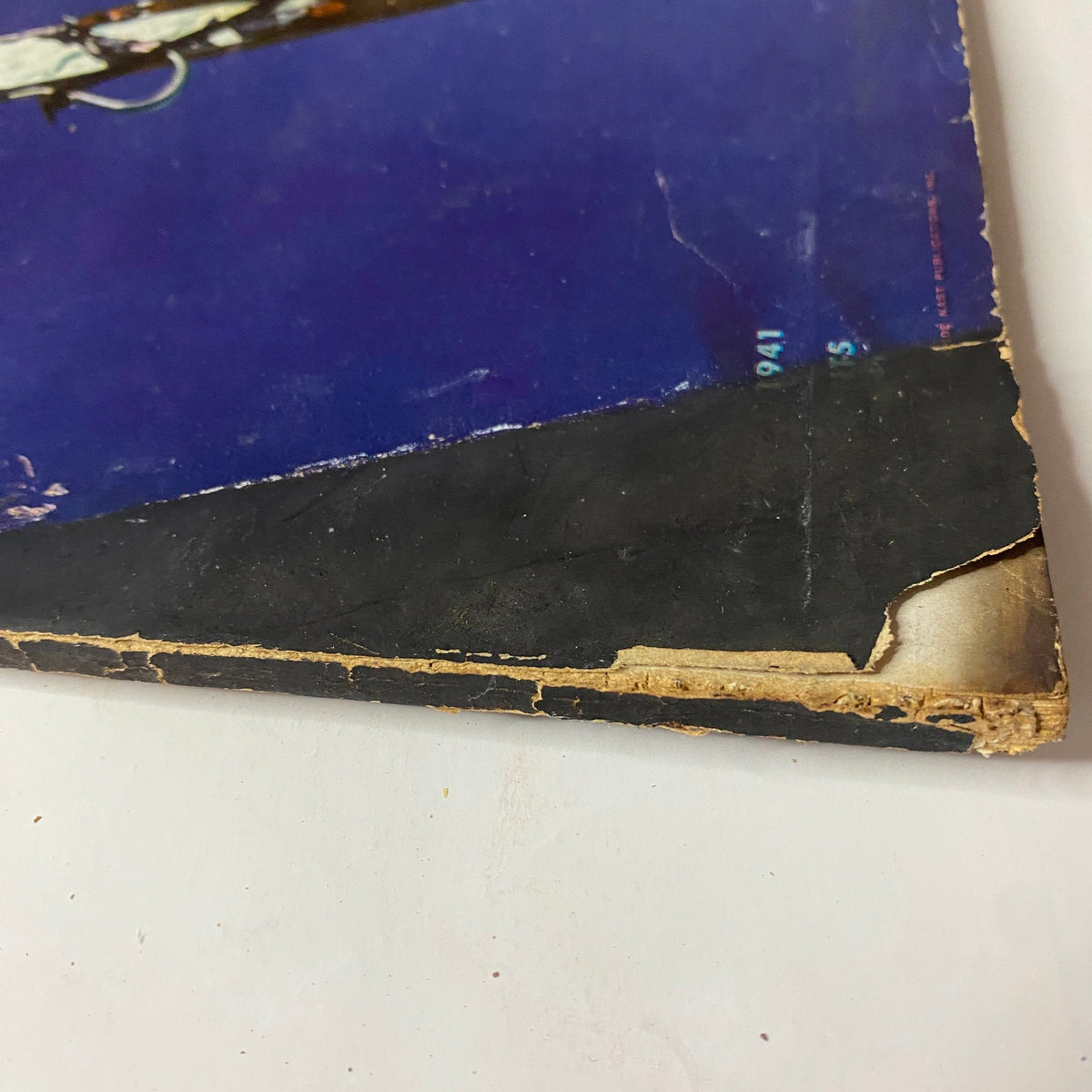
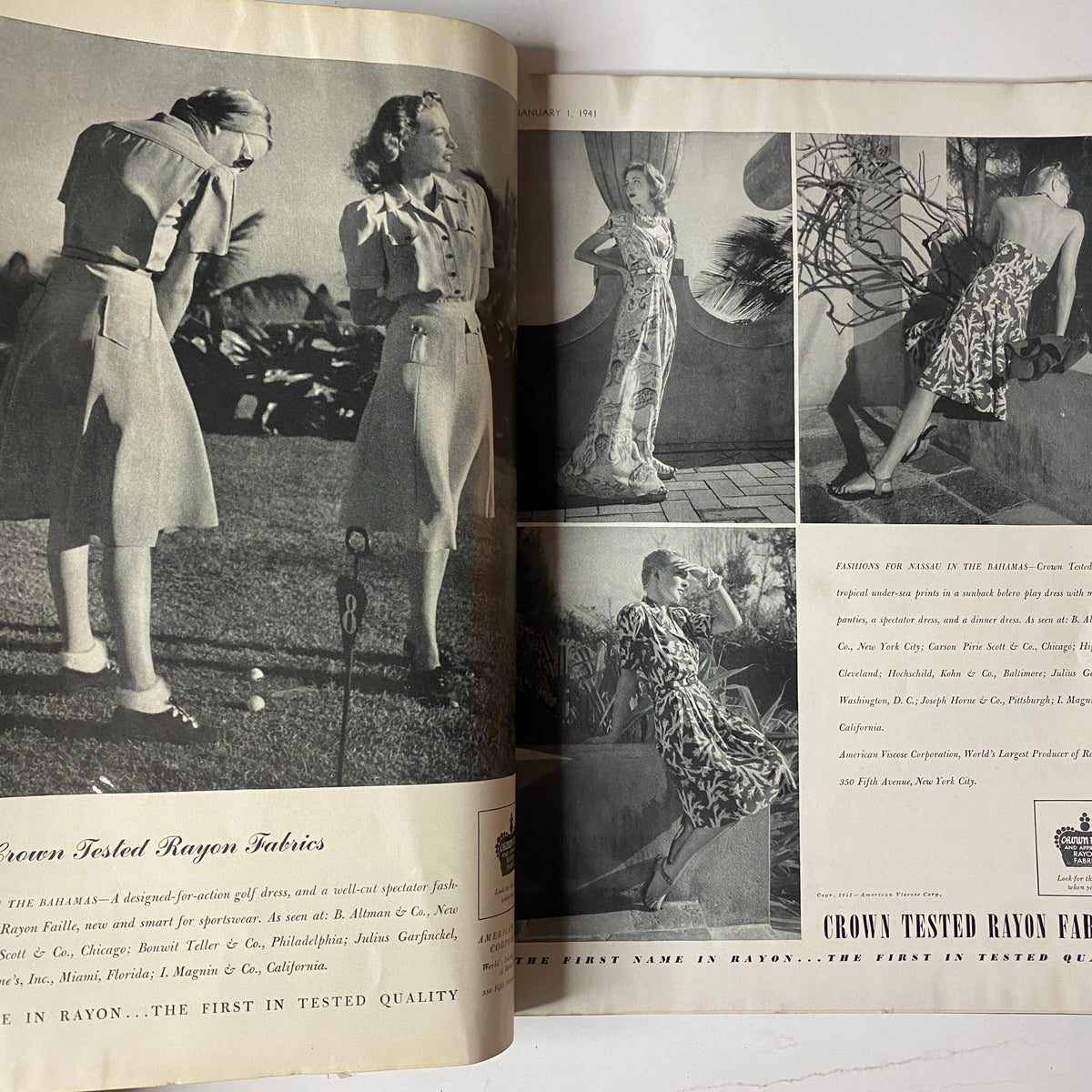
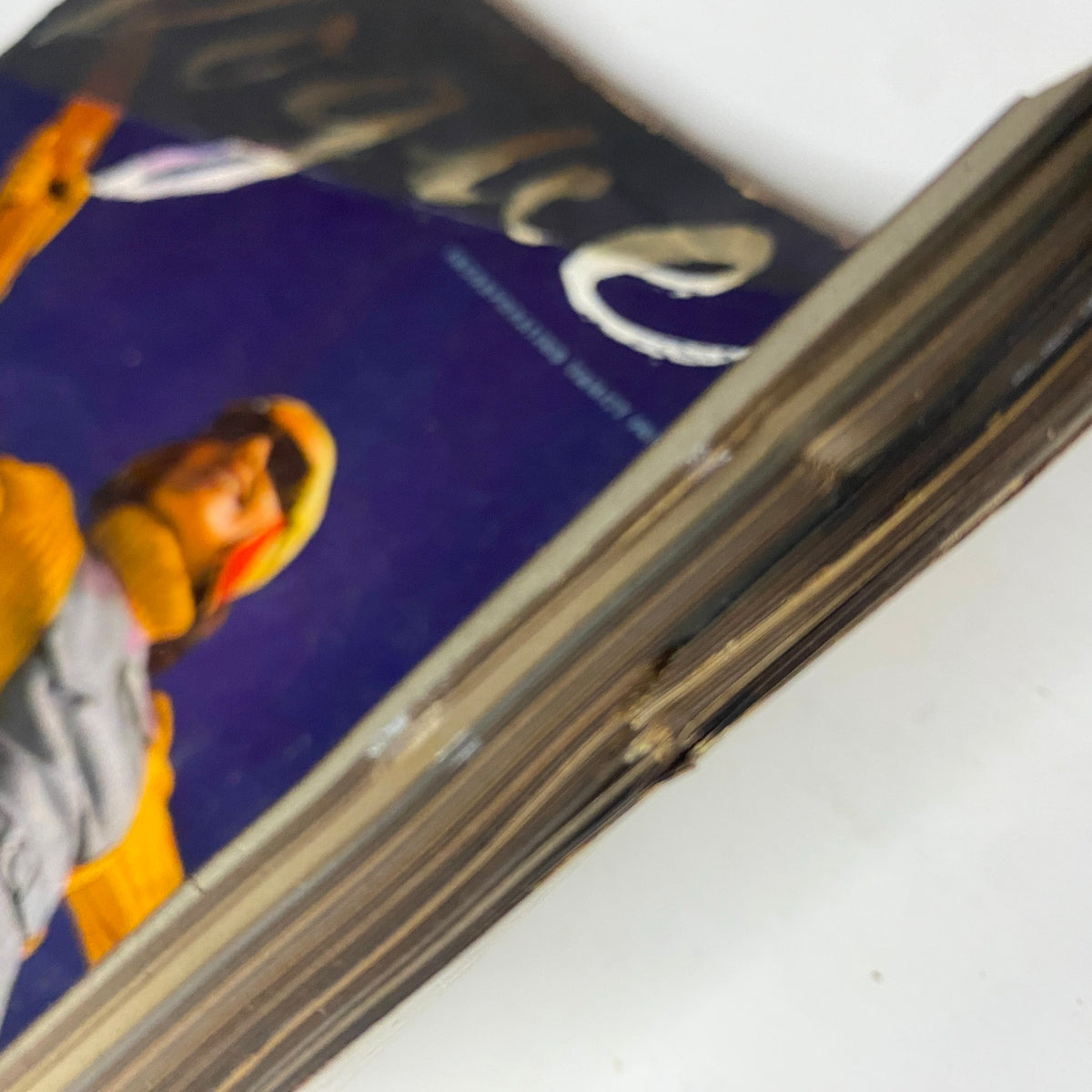
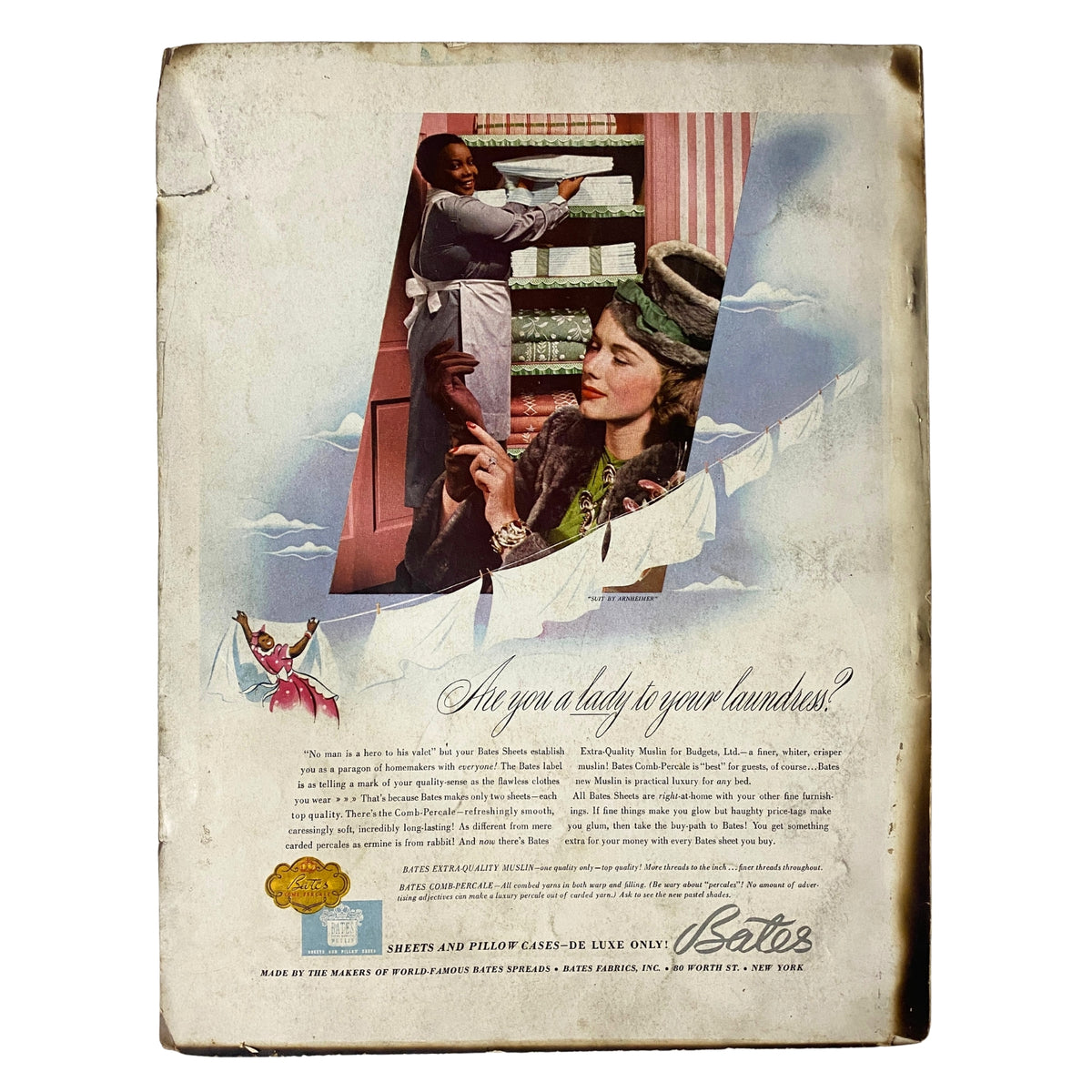
Acceptable condition with good interior, visible creases and marks, possible small rips or blemishes, and archival sleeve housing represents a transparently described lower-grade assessment for an eighty-five-year-old bimonthly fashion magazine from a privately held archive. The confirmed "good interior" is the most meaningful positive attribute for a publication whose confirmed Carson McCullers text, Duke and Windsor feature, and Frissell photography depend on interior legibility for their research and collector value. The archival sleeve housing indicates professional care following acquisition. Cover creases and marks are permanent surface condition factors whose placement relative to the Frissell skiing cover image should be confirmed from available photographs. The "possible small rips or blemishes" are additional structural factors requiring photograph assessment before any specific collector evaluation is finalized.
Looking for More Issues Like This?
A January 1, 1941 Vogue with a Toni Frissell cover, a Carson McCullers essay, and a Duke and Duchess of Windsor Nassau feature is a primary document of American fashion and cultural life at the most historically charged threshold moment of the pre-war era — the opening day of America's final year of peacetime. The broader Vogue magazine archive at OriginalMagazines.com spans many decades of the publication's history and is worth exploring carefully for other early-1940s Frissell-era issues from the Chase editorial period. For collectors focused on the extraordinary historical threshold of 1941, the complete 1941 magazine collection documents the full arc of the year that began in peacetime and ended at war.