






Description
Collector's Note – Why This Issue Matters
January 1, 1969 is one of the most symbolically loaded publication dates in fashion magazine history — the first issue of the year that closed the 1960s and opened the decade that would prove its direct heir and its contradiction simultaneously. A January 1 Vogue was not merely a monthly issue but a formal editorial declaration of where fashion stood at the turn of a year, and the January 1969 edition arrived at a moment of extraordinary cultural and aesthetic tension. The sixties were ending not with a single event but with a cumulative weight of events — the assassinations of 1968, the political upheavals of that year's summer and fall, and the broader sense that the optimistic cultural energy of the mid-decade had curdled into something more complicated and less easily resolved. Fashion was processing that complexity in real time, and the "Pattern Forecast 1969" and "The Shape of the Future" features documented in this issue's table of contents are primary source records of how Vogue's editors were attempting to articulate what the new year's aesthetic would look like in the middle of that unresolved turbulence. For collectors building an archive of Lauren Hutton magazine covers and features, this January 1969 Vogue represents her at the very beginning of the career arc that would make her one of the defining model-turned-actress personalities of the following two decades — a document of early visibility on the most prestigious platform in American fashion publishing.
The cover is a Richard Avedon photograph, and that attribution alone places this issue among the most significant visual documents in its category. Avedon had been associated with Harper's Bazaar for the majority of his career before moving to Vogue in 1966, and by January 1969 he was producing some of the most ambitious and culturally engaged fashion photography of his life — work that was simultaneously technically accomplished and politically and aesthetically conscious in ways that distinguished it from purely commercial fashion imagery. His decision to present Hutton in two looks simultaneously — the chamois dress and the flounced chiffon — on a single cover was an editorial and compositional choice that reflected the specific aesthetic uncertainty of the moment: fashion in early 1969 did not yet know what it was going to be, and Avedon's dual-look cover was a visual acknowledgment of that productive uncertainty. The styling details preserved in the listing — hair by Ara Gallant, makeup by Pablo of Elizabeth Arden, jewelry by David Webb — document the full production apparatus of a Vogue cover shoot at its late-sixties peak, with collaborators whose individual careers were themselves significant documents of the period's fashion and beauty culture. Collectors researching Vogue magazine issues from the Avedon era will find this January 1969 cover one of his most precisely documented contributions to the publication — a cover whose creative and historical context is unusually fully preserved by the listing's detailed production credits.
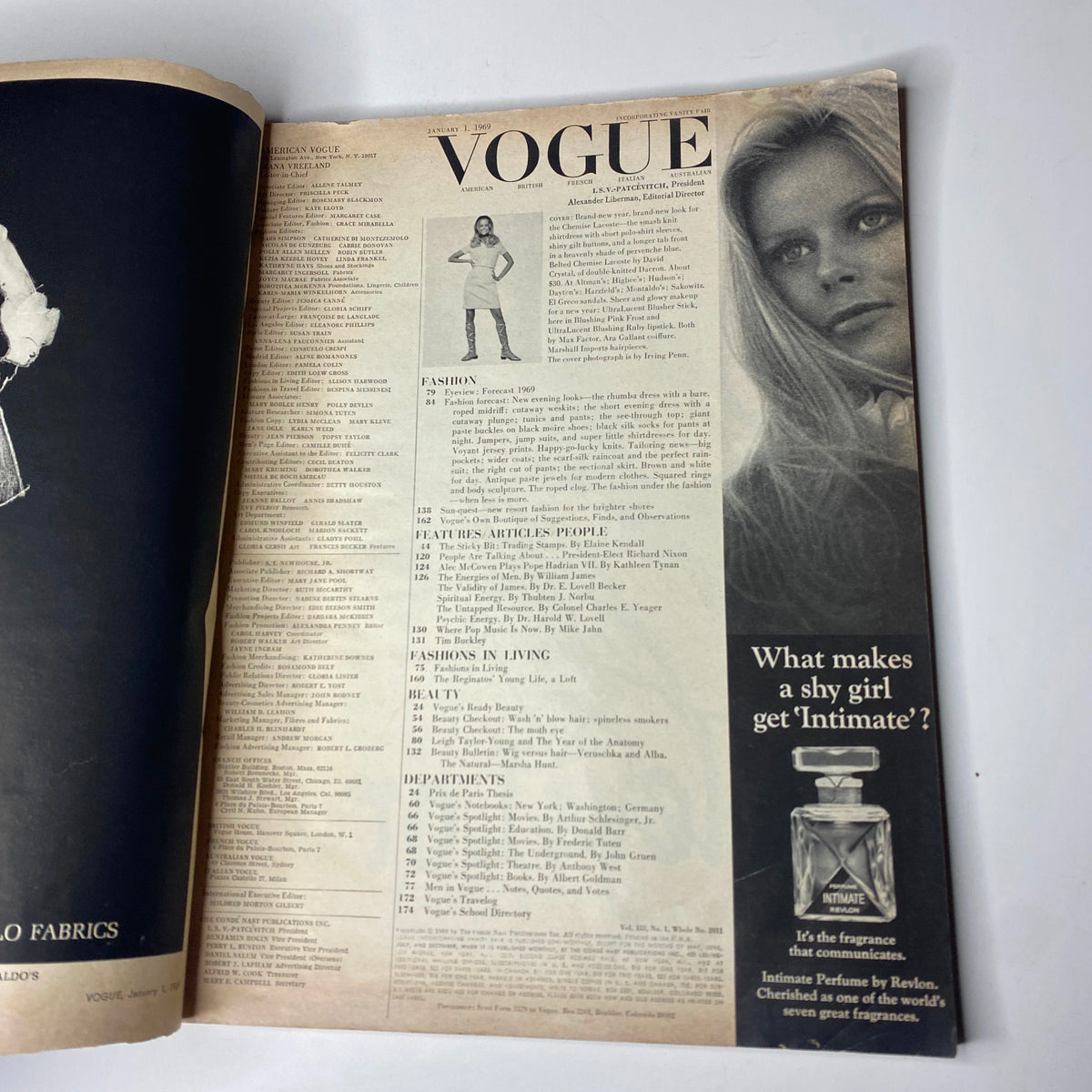
The editorial contents documented in the table of contents make this one of the most substantively rich Vogue issues to surface with full content documentation from the late sixties. The interview with President-Elect Richard Nixon — who was inaugurated less than three weeks after this issue's publication date — is a primary source document of extraordinary significance: a Vogue interview with the incoming American president, published on the first day of the year in which he would take office, at a moment when the political and cultural meaning of his election was still being actively interpreted. Barbara Tuchman's "Princess Vicki" piece — by the Pulitzer Prize-winning historian whose books had already established her as one of the most significant American historical writers of the century — reflects Vogue's consistent engagement with serious intellectual and historical content alongside its fashion pages. The "Sex & the Pill: Pope, Playboys, and public discourse" feature documents one of the most consequential social and political debates of the late sixties at the precise moment of its most active public intensity. The Veruschka appearances — in both the fashion and beauty forecasts — reflect that model's unique position as one of the late sixties' most culturally significant faces, whose art world connections and personal mystique gave her Vogue appearances a meaning beyond pure fashion documentation. Collectors researching Vogue and fashion magazines from 1969 will find this issue a comprehensively documented primary source of fashion journalism, political commentary, and cultural observation at one of the most historically charged moments of the twentieth century.
About the Publication
Vogue was founded in 1892 and has been published by Condé Nast since 1909, operating continuously as the most authoritative fashion magazine in the American market across more than a century of publication. By January 1969 the magazine was operating under the editorial leadership that had shaped its mid-to-late sixties identity — a period widely regarded as one of the most creatively and culturally ambitious in the publication's history, driven by the quality of its photographers (Avedon, Penn, and others), the seriousness of its editorial commitment to cultural journalism alongside fashion coverage, and the specific social and political moment that gave fashion an unusual level of cultural meaning and public attention. The bimonthly format that produced the January 1 date reflected Vogue's mid-sixties publishing schedule, which issued twice-monthly editions during the fashion season. Its readership was affluent, educated, and culturally engaged — women who expected the magazine to address the full complexity of their lives rather than merely their wardrobes — and this issue's combination of an Avedon cover, a Nixon interview, a Tuchman historical essay, and substantive engagement with the Pill debate reflects exactly that editorial ambition at its most fully expressed.
Key Highlights Inside
- Lauren Hutton cover photographed by Richard Avedon — a dual-look cover presenting two of the season's most forward-thinking fashion directions simultaneously, with full production credits preserved (hair by Ara Gallant, makeup by Pablo of Elizabeth Arden, jewelry by David Webb), representing one of Avedon's most precisely documented Vogue cover contributions and a primary document of both his compositional approach and Hutton's earliest major fashion platform visibility.
- Vogue Interview with President-Elect Richard Nixon — a primary source document of the incoming president published on January 1, 1969, less than three weeks before his inauguration, representing one of the more unusual and historically significant pieces of political journalism to appear in a fashion magazine in the late sixties and reflecting Vogue's editorial willingness to engage American political life directly at its most consequential moments.
- "The End of an Era: Princess Vicki" by Barbara Tuchman — a historical essay by the Pulitzer Prize-winning author whose presence in a January 1969 Vogue reflects the publication's serious literary and intellectual ambitions, and constitutes a primary document of Tuchman's engagement with popular magazine journalism alongside her scholarly and book-length historical writing.
- "Sex & the Pill: Pope, Playboys, and public discourse" — a feature engaging the most consequential social and reproductive rights debate of the late sixties at the moment of its most active public intensity, documenting Vogue's consistent willingness under its late-sixties editorial leadership to address the social and political questions most directly affecting its readership's lives.
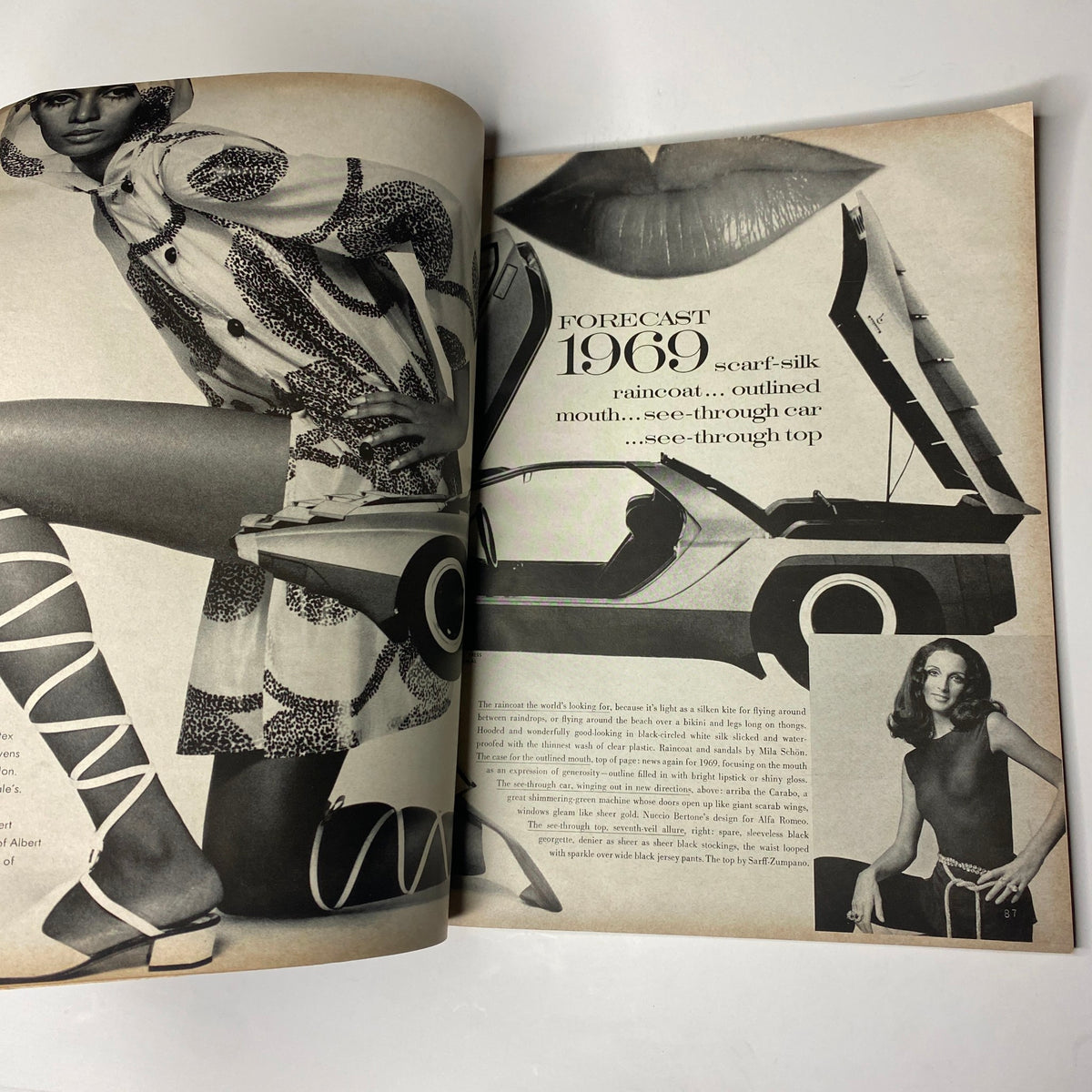
- Fashion forecasts spanning Pattern Forecast 1969, "The Year of the Pants Suit," "The Shape of the Future," Paris young wearable looks, Great Coats, and Accessories Forecast — a comprehensive early-year fashion editorial package documenting the specific aesthetic directions Vogue's editors identified as defining the 1969 season, preserved with the page-level precision that makes the full table of contents an unusually complete research resource for fashion historians.
- Veruschka appearances in both fashion and beauty forecast sections, the "Turnaround in Washington" feature, Diane von Furstenberg in the Spotlight series, "The Big Date: 1969 as the Year of the Anatomy" cultural feature, Harold Pinter profile, and Albert Goldman books column — the full cultural journalism range of a January 1 Vogue operating at its late-sixties editorial peak, documented here with the attribution and page specificity that distinguishes this listing from the undocumented copies that represent the majority of surviving examples.
Condition & Rarity
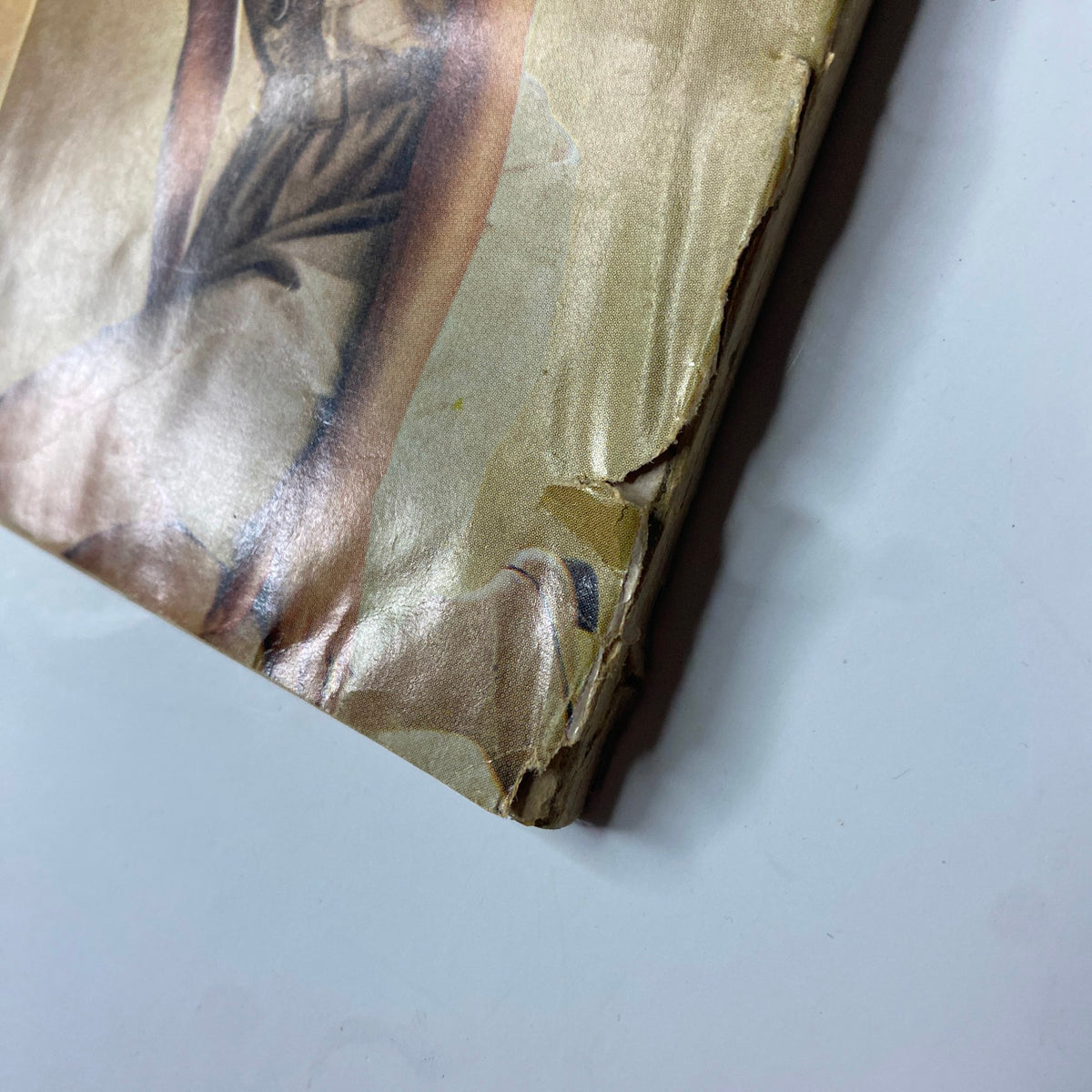
Vogue issues from January 1969 are approaching their fifty-seventh year of existence, and the condition landscape for surviving copies reflects the full physical weight of that age alongside the specific vulnerabilities of the bimonthly format's coated paper stock and the staple binding used in Vogue issues of this period. Good condition for a January 1969 Vogue is an honest and meaningful assessment — it indicates a copy that has maintained structural integrity and sufficient visual clarity to convey both the Avedon cover's compositional sophistication and the Hutton image's documentary identity, while acknowledging the expected evidence of nearly six decades of existence that separates a Good grade from the higher grades that surviving copies of this issue occasionally achieve. The absence of a mailing label is a significant condition attribute for a mid-sixties Vogue bimonthly, where the subscription model meant that the majority of copies in circulation were subscriber copies bearing labels; a label-free newsstand copy preserves the Avedon cover photograph in its full and uninterrupted form — visually and documentarily significant for an image whose compositional integrity is inseparable from its historical value. The plastic protective sleeve provides ongoing archival protection for a publication of this age and paper chemistry. Collectors evaluating surviving examples of this issue should prioritize the Avedon cover image integrity and clarity as the primary condition criterion, followed by the completeness of the Nixon interview and Tuchman essay pages as the secondary content most directly relevant to the issue's research and historical significance.
Looking for More Issues Like This?
A label-free newsstand copy of the January 1, 1969 Vogue with an Richard Avedon cover of Lauren Hutton, a Nixon interview, a Barbara Tuchman essay, and a fully documented table of contents is among the more historically specific and multiply significant entries in the late-sixties Vogue back-catalog — the combination of Avedon photography, presidential journalism, and Pulitzer-winning historical writing in a single issue gives it a collector profile that extends well beyond fashion history into political and literary history simultaneously. If this issue is no longer available, the Lauren Hutton magazine collection at OriginalMagazines.com is the most focused resource for other cover appearances and features from her career. The full Vogue collection offers surviving issues from across the magazine's history for collectors building a broader archive of Avedon's Vogue work or the publication's remarkable late-sixties editorial identity, and the 1969 magazine collection brings together issues from across that year's major publications for collectors working to document the full range of American print journalism at the dawn of a new and defining decade.