




The condition of the item is in good condition. The item being pictured in this listing is exactly the same item you will receive.
Please check picture for condition purposes.
We do offer combined shipping, just ask.
All of our items come with a plastic protective covering.
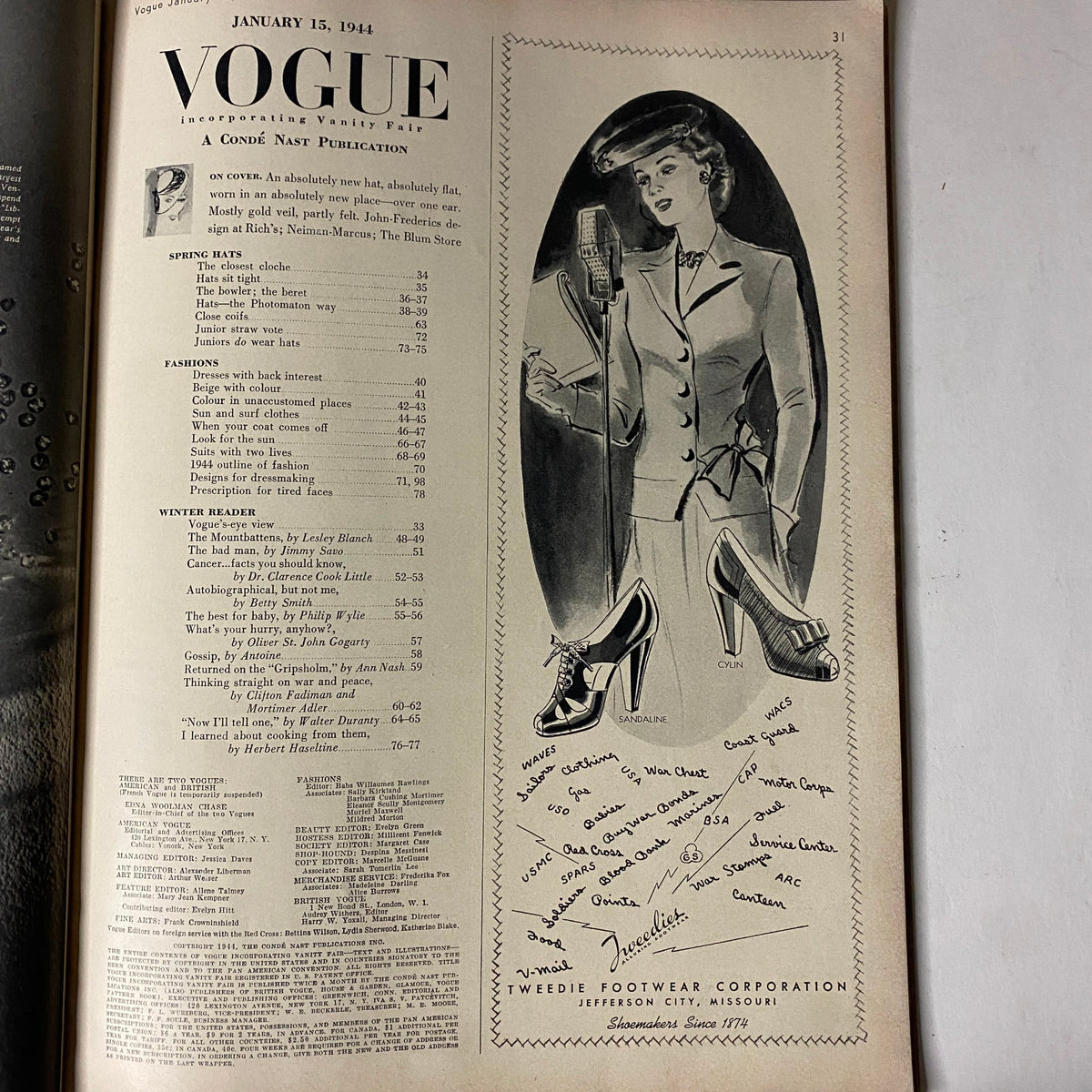
Table of Contents
SPRING HATS
The closest cloche 34
Hats sit tight 35
The bowler; the beret 36–37
Hats—the Photomaton way 38–39
Close coifs 63
Junior straw vote 72
Juniors do wear hats 73–75
FASHIONS
Dresses with back interest 40
Beige with colour 41
Colour in unaccustomed places 42–43
Sun and surf clothes 44–45
When your coat comes off 46–47
Look for the sun 66–67
Suits with two lives 68–69
1944 outline of fashion 70
Designs for dressmaking 71, 98
Prescription for tired faces 78
WINTER READER
Vogue’s-eye view 33
The Mountbattens, by Lesley Blanch 48–49
The bad man, by Jimmy Savo 51
Cancer...facts you should know, by Dr. Clarence Cook Little 52–53
Autobiographical, but not me, by Betty Smith 54–55
The best for baby, by Philip Wylie 55–56
What’s your hurry, anyhow?, by Oliver St. John Gogarty 57
Gossip, by Antoine 58
Returned on the “Gripsholm,” by Ann Nash 59
Thinking straight on war and peace, by Clifton Fadiman and Mortimer Adler 60–62
“Now I’ll tell one,” by Walter Duranty 64–65
I learned about cooking from them, by Herbert Haseltine 76–77
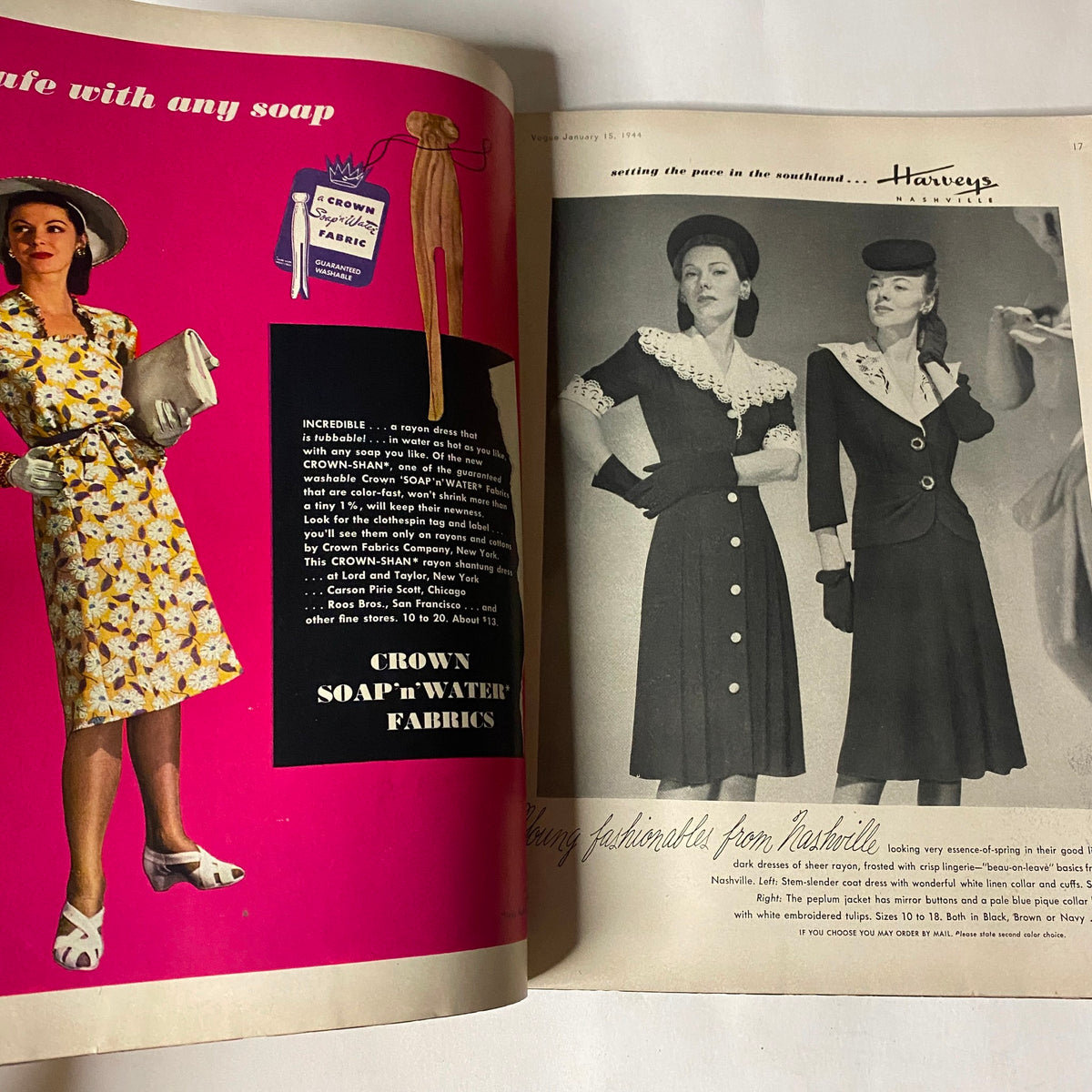
This January 15, 1944 issue of Vogue Magazine features the distinguished cover illustration by Carl Erickson, celebrating postwar optimism through the theme “Spring Hats.” The issue captures the transitional spirit of fashion in wartime—emphasizing elegance, resourcefulness, and renewal. Inside are vibrant features on the season’s hat trends, from tight cloches to youthful straw designs, alongside a comprehensive look at 1944 fashion silhouettes and versatile wardrobes.
In the Winter Reader section, Vogue presents essays by leading writers and thinkers of the era, including Lesley Blanch, Betty Smith, and Clifton Fadiman, exploring topics from wartime reflections to health, art, and society. This issue stands as both a fashion guide and cultural record, encapsulating the resilience and sophistication of women’s style during the Second World War.