




Description
Collector's Note – Why This Issue Matters
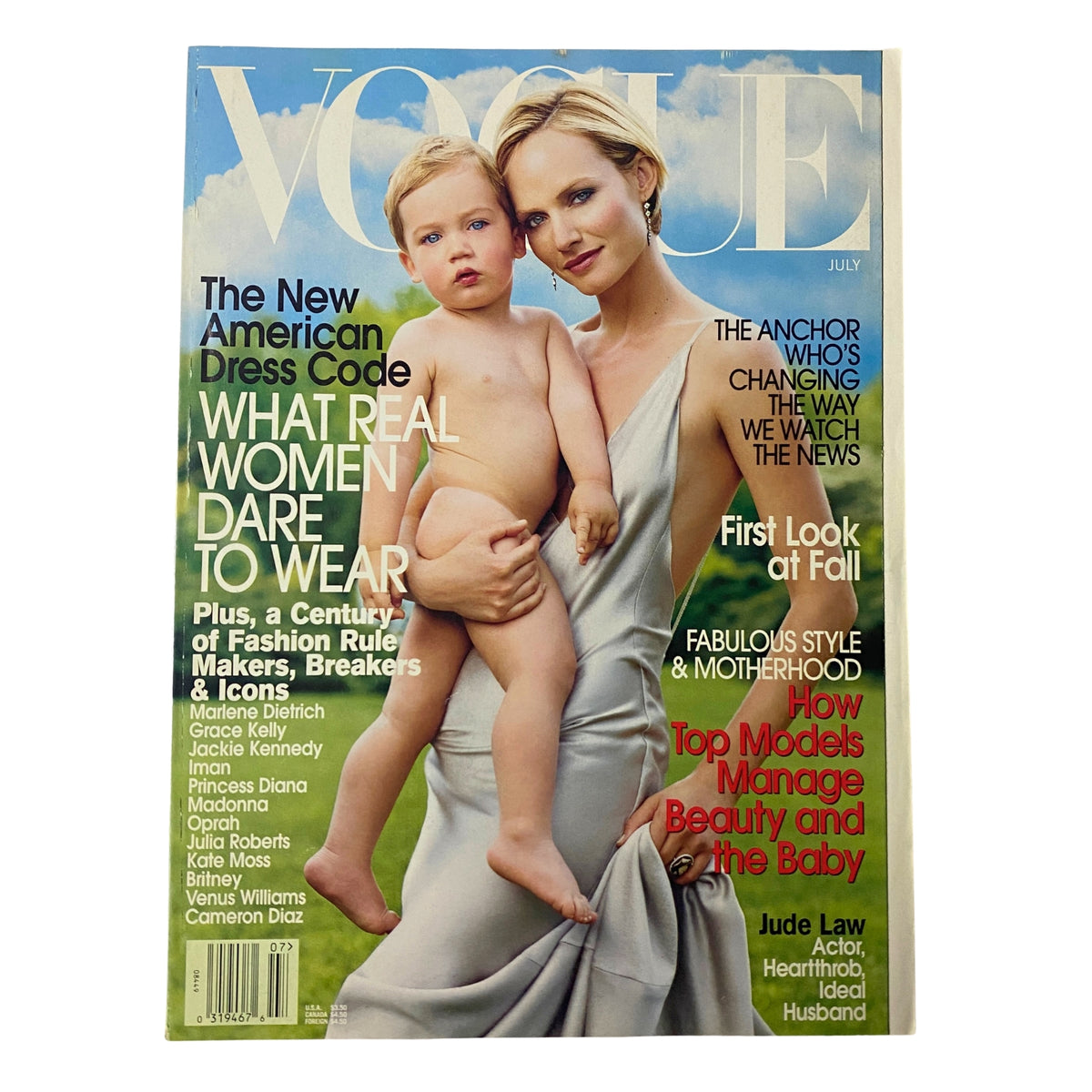
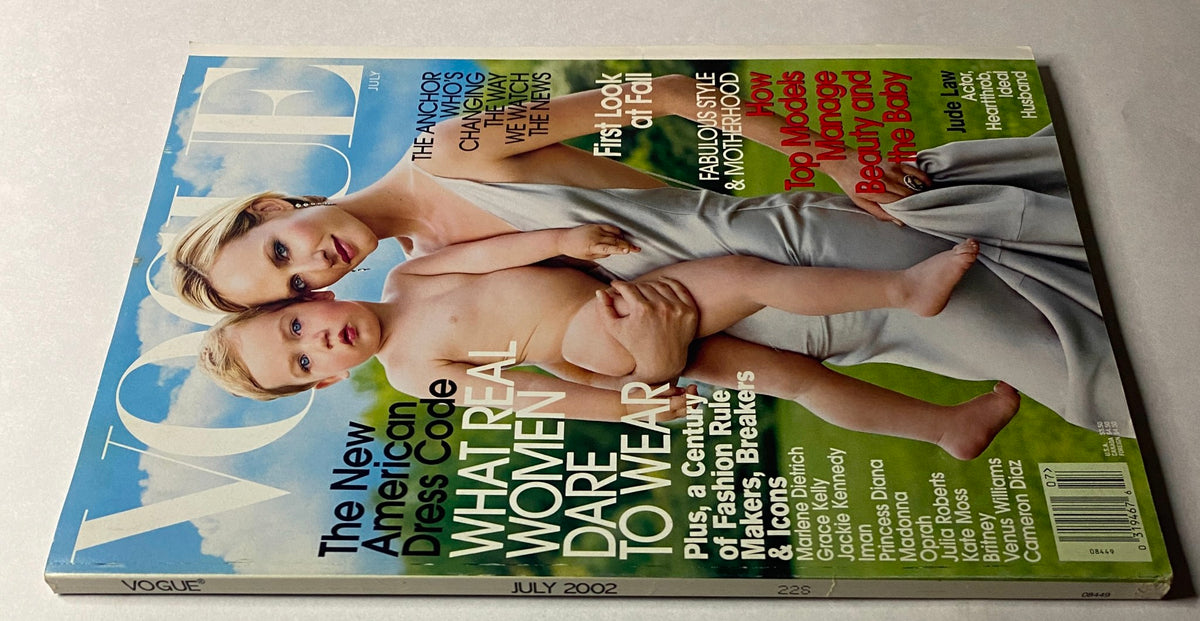
The July 2002 issue of American Vogue featuring Amber Valletta on the cover documents one of the nineties' most significant models at a moment of career reinvention that is itself historically interesting. By July 2002, Valletta had been a dominant presence in fashion media for nearly a decade — her pale, ethereal quality and extraordinary versatility had made her one of the most-photographed models of the nineties, and her Vogue cover appearances from that decade constitute one of the most remarkable cover runs in the magazine's late-twentieth-century history. The July 2002 appearance represents her sustained relevance into the early 2000s, at a moment when the post-supermodel modeling landscape was shifting again and the models who had defined the nineties were negotiating their relationship to a changed industry. That sustained presence across two distinct fashion eras gives this cover a specific kind of historical interest — it is not a first appearance or a peak-of-fame moment but a document of remarkable longevity and adaptability. The full context of the magazine's cover choices across this transition period is traceable through the Vogue magazine collection, which allows collectors to follow the publication's evolving visual identity across the early 2000s.
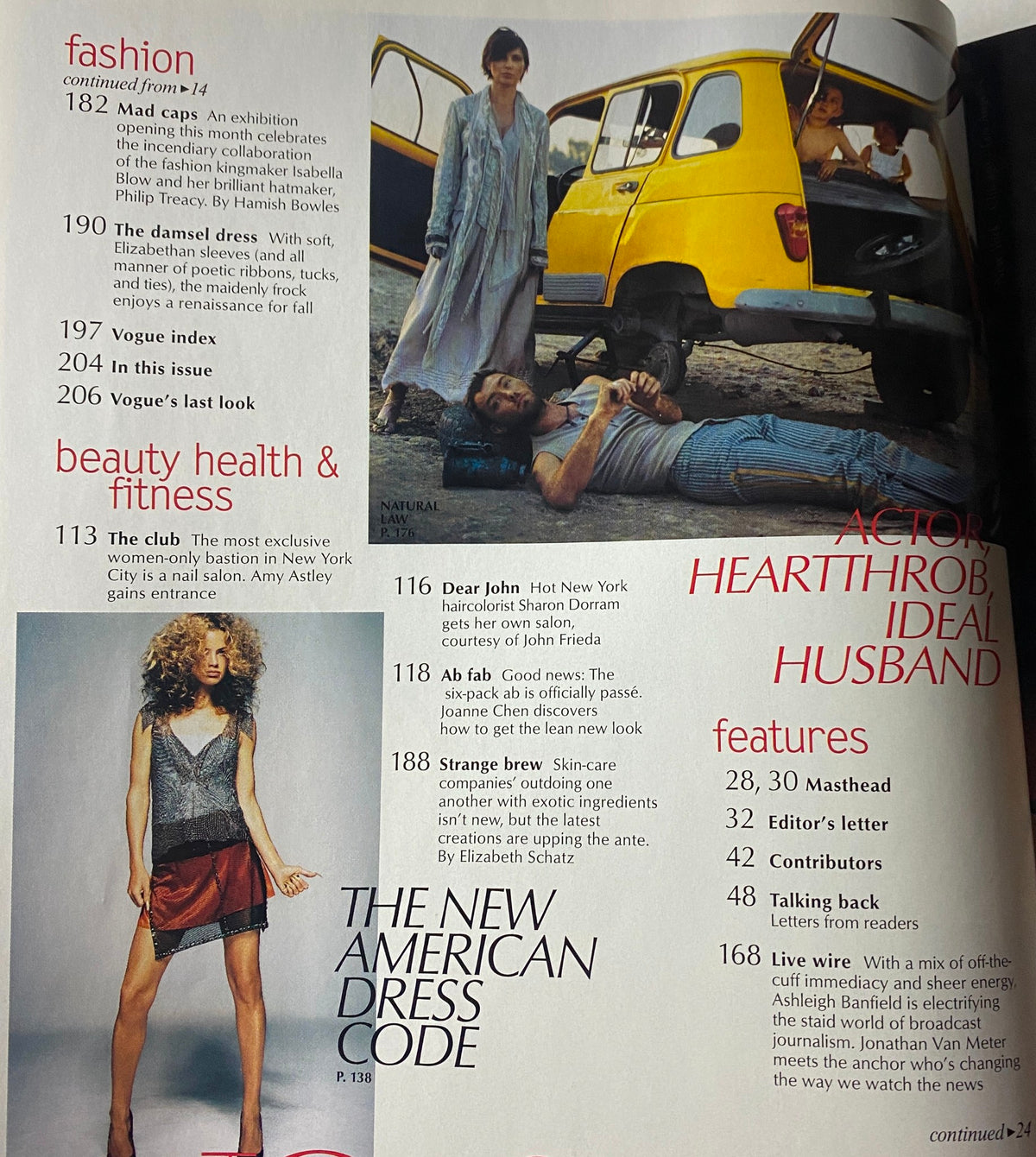
The editorial content of this issue is rich and layered in ways that reward close attention. Hamish Bowles' feature on Isabella Blow's iconic collaborations with Philip Treacy is a document of genuine historical weight — Blow was at this point one of the most influential and distinctive figures in British fashion, her eye for talent having been central to the careers of Alexander McQueen and Treacy himself, and the specific collaborations between Blow and Treacy in their hat designs were among the most celebrated and photographed fashion objects of the nineties and early 2000s. Published in July 2002, Bowles' feature captures Blow and Treacy's partnership while both were at their most creatively active, years before Blow's death in 2007 would transform all coverage of her into retrospective eulogy. Robert Sullivan's "Money Bags" feature on the economics of a $7,000 purse is equally specific to its moment — the early 2000s luxury goods boom and the intensifying consumer obsession with designer handbags as status objects was a genuinely new cultural phenomenon, and Sullivan's piece is a primary document of that phenomenon at an early and still-surprising stage of its development. For collectors building a cross-title archive of early 2000s fashion culture, the 2002 magazine collection provides essential context for the larger conversations this issue was participating in.
Jonathan Van Meter's profile of Ashleigh Banfield adds a cultural journalism dimension that distinguishes this issue from purely fashion-focused collecting interest. Banfield had become one of the most visible broadcast journalists in America in the months following September 11, 2001, her field reporting from Afghanistan in her distinctive glasses becoming one of the defining images of that period's war coverage. A Vogue profile of Banfield in July 2002 — less than a year after those broadcasts — documents the specific cultural moment when the post-9/11 media landscape was still being processed and when certain journalists had achieved a kind of celebrity that extended well beyond their professional contexts. The "Fashion Forward" retrospective by Laird Borrelli on a century of Vogue fashion rules and rebels is also a document worth noting: published in 2002, it represents the magazine's own editorial self-reflection on its publishing history at a specific moment in that history, making it a primary source on how Vogue understood its own legacy at the turn of the millennium.
About the Publication
American Vogue, founded in 1892 and acquired by Condé Nast in 1909, is the flagship publication of the global fashion media industry and the standard against which all other fashion magazines have historically measured themselves. Under the editorship of Anna Wintour, who took the helm in 1988, the magazine developed an editorial identity that combined fashion authority with genuine cultural and political engagement — its covers became carefully negotiated statements of cultural currency, its fashion coverage engaged seriously with the economics and sociology of luxury consumption alongside the aesthetics of dress, and its feature content maintained a level of journalistic and literary seriousness that reinforced its claim to be something more than a fashion magazine. By July 2002, Wintour's tenure was in its fourteenth year and the magazine was navigating the post-9/11 cultural landscape with the full weight of that editorial authority behind it. Its summer issues — typically less advertising-heavy than the September and March peaks but editorially ambitious in their own right — provided space for the kinds of longer cultural features and retrospective pieces that the busier fashion months did not always accommodate.
Key Highlights Inside
- Amber Valletta July 2002 cover — documenting one of the nineties' most significant models in a sustained early-2000s presence that represents remarkable career longevity across two distinct fashion eras, her continued Vogue cover appearances in 2002 reflecting sustained editorial endorsement at a moment when the modeling landscape was actively shifting.
- "Mad Caps" (Hamish Bowles on Isabella Blow and Philip Treacy) — a feature on one of the most celebrated creative partnerships in late-twentieth-century British fashion, documenting Blow and Treacy's iconic hat collaborations while both were at their most creatively active, years before Blow's 2007 death would make all subsequent coverage retrospective.
- "Money Bags" (Robert Sullivan on the economics of a $7,000 purse) — a primary document of the early-2000s luxury handbag obsession at a formative stage of its cultural development, before the designer bag phenomenon had fully normalized into the mainstream consumer behavior it would become by the decade's end.
- "Live Wire" (Jonathan Van Meter profiling Ashleigh Banfield) — a Vogue celebrity profile of one of post-9/11 broadcast journalism's most visible figures, published less than a year after the events that made Banfield nationally prominent, functioning as a primary document of early-2000s media culture and the specific intersection of journalism and celebrity that the period produced.
- "Fashion Forward" (Laird Borrelli on a century of Vogue fashion rules and rebels) — a retrospective on the magazine's own publishing history at the turn of the millennium, constituting a primary source on how Vogue understood its own legacy and editorial tradition at a specific moment of self-reflection.
- Style Fax (André Leon Talley) alongside Sally Singer's "The New American Dress Code" — together representing Vogue's characteristic dual engagement with fashion as both visual culture and social phenomenon, the Talley column providing editorial authority while Singer's piece explores what clothing means to women across the country.
Condition & Rarity
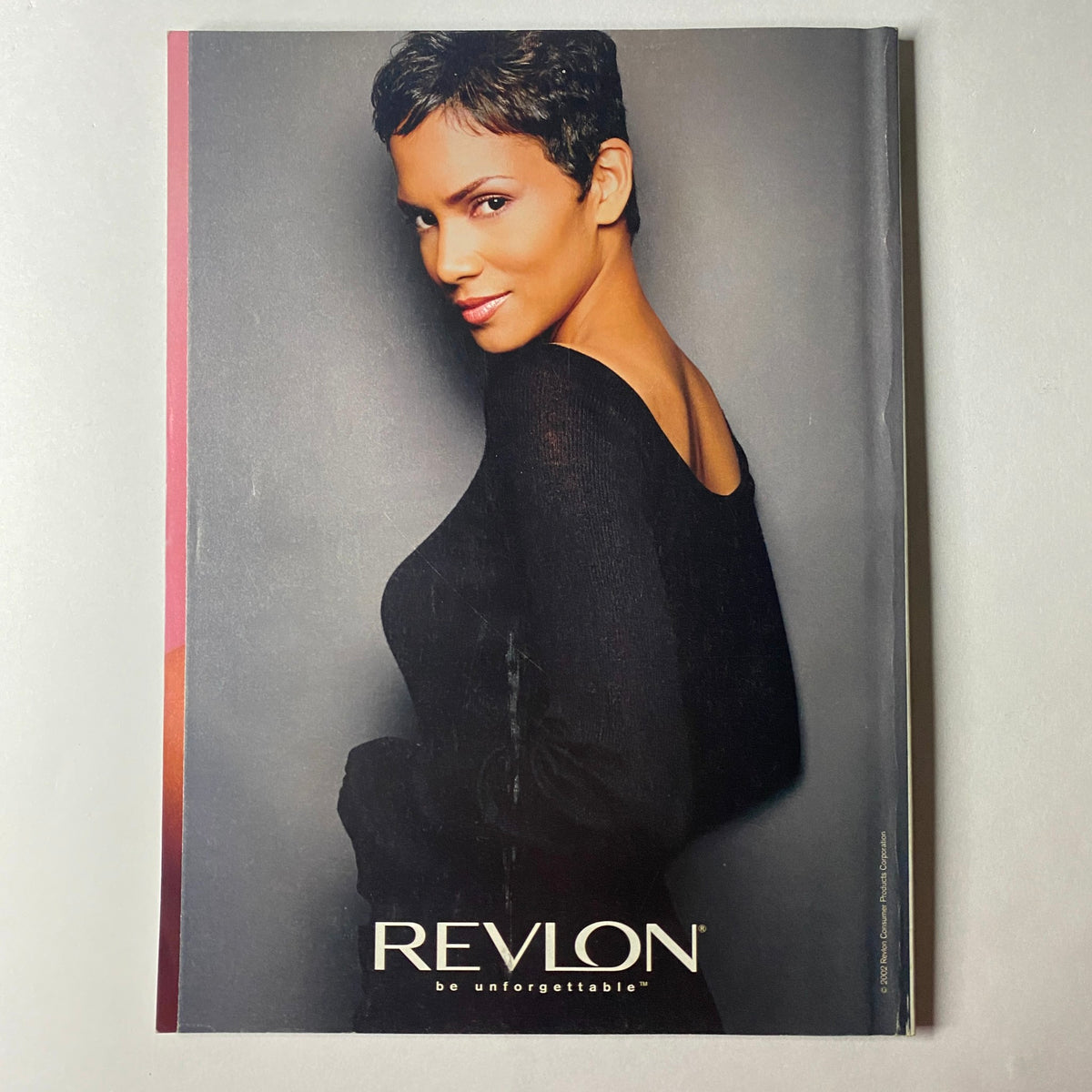
Surviving copies of the July 2002 Vogue in very good condition represent a clean and display-quality example of one of the more editorially layered issues in the magazine's early 2000s run. Minor edge wear on a copy of this vintage is the expected and honest condition profile of an original, unrestored periodical rather than a reproduction. The absence of a subscriber address label is a meaningful positive in collector evaluation: the Amber Valletta cover image survives fully intact as designed and printed, without the adhesive marks or obscured photography that subscription labels permanently leave behind. The protective plastic sleeve on well-preserved copies is the standard archival measure for a magazine of this paper stock and production quality, stabilizing further deterioration from handling and environmental exposure without requiring any alteration to the original item. Early-2000s Vogue issues in no-label condition attract consistent collector interest from multiple audiences — Amber Valletta career collectors, fashion historians working on the post-supermodel transition, and general Vogue cover collectors — making condition a directly meaningful factor in how the market evaluates any given surviving copy.
Looking for More Issues Like This?
A no-label copy of the July 2002 Vogue featuring Amber Valletta — with the Isabella Blow, luxury economics, and Ashleigh Banfield editorial content documented here — is one of the more substantive finds in the magazine's early-2000s run, combining a historically significant cover with feature content that rewards serious research attention from multiple directions. If this particular issue is no longer available, the full Vogue magazine collection at OriginalMagazines.com is the most comprehensive single source for exploring other issues across the publication's long run, with strong representation in the 2000s decades that fashion historians and cultural researchers are increasingly focusing on. For collectors building a broader archive of the early-2000s cultural moment, the complete 2002 magazine collection brings together titles from a year defined by the post-9/11 cultural reckoning and its effects across fashion, media, and American public life.