






Description
Collector's Note – Why This Issue Matters
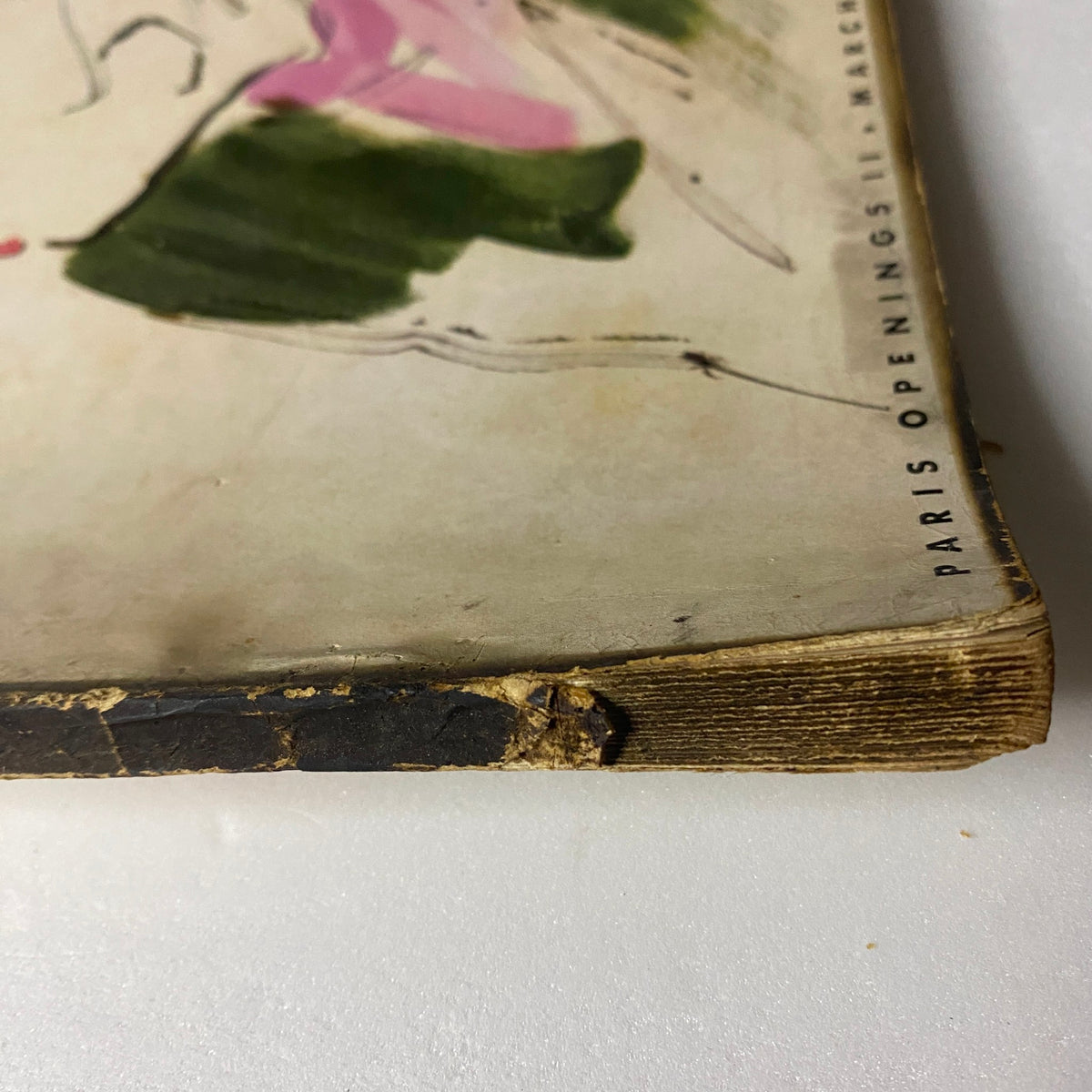
This March 15, 1938 issue of Vogue, titled "Paris Openings II," features a cover illustration by Carl Erickson, who signed his celebrated fashion artwork simply as "Eric" and stood among the most significant fashion illustrators working for Vogue during the 1920s, 30s, and 40s. Erickson's loose, expressive linework and sophisticated sense of fashion silhouette helped define Vogue's visual identity during a period when illustration, rather than photography, still dominated much of the magazine's cover and fashion reporting. By 1938, he had been contributing to Vogue for well over a decade, placing this issue within a mature and highly accomplished phase of his long working relationship with the magazine.
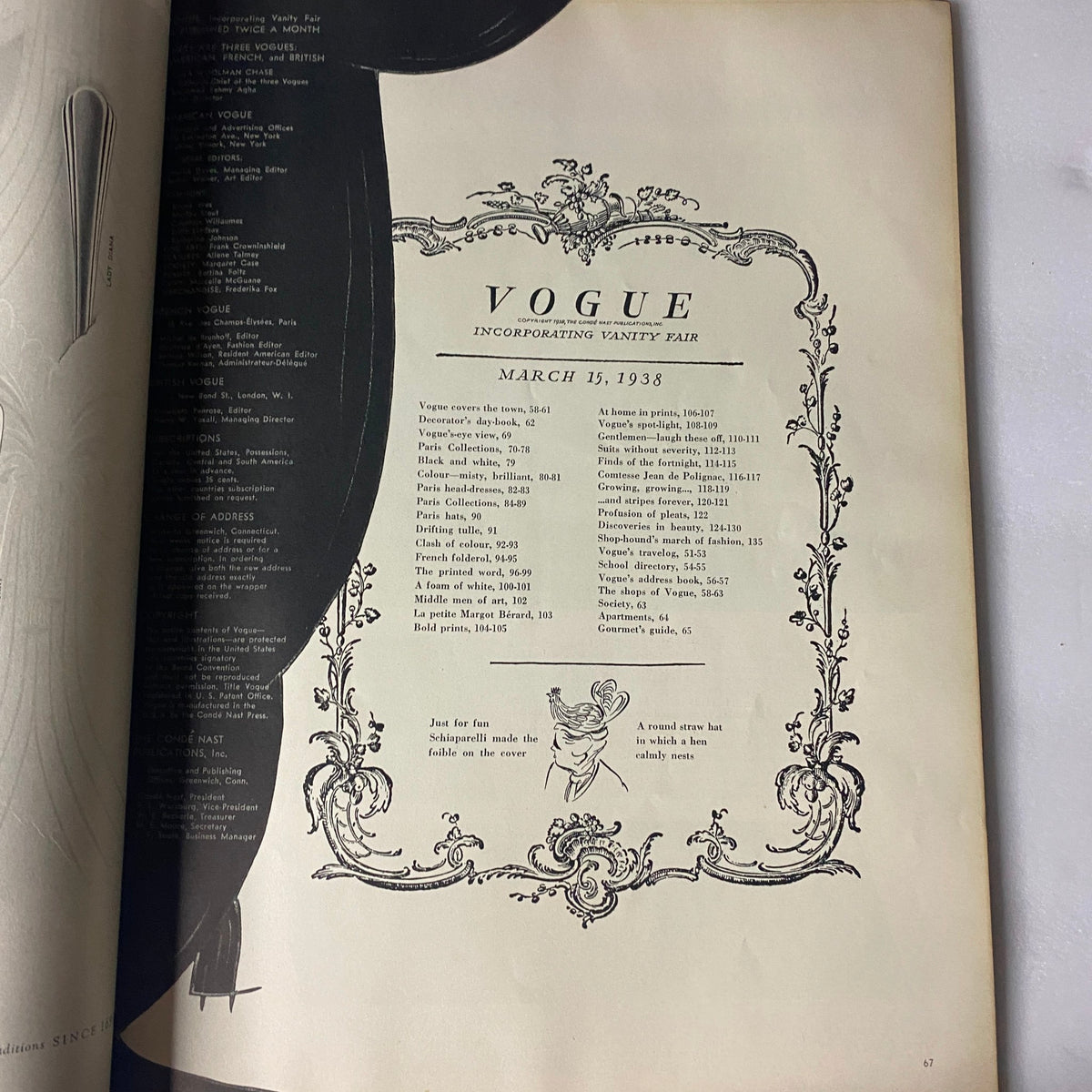
This issue's focus on the Paris collections, reflected directly in its "Paris Openings II" title and reinforced by an extensive run of Paris-focused content throughout its table of contents, situates it within one of the final fully realized seasons of pre-war French couture before the Second World War would fundamentally disrupt the Paris fashion industry beginning in 1939. Features spanning "Paris Collections" across two separate multi-page sections, alongside dedicated coverage of Paris head-dresses and Paris hats, reflect just how central French couture remained to Vogue's editorial identity during this period, with the magazine devoting substantial space specifically to documenting the artistic and technical achievements coming out of Paris ateliers that spring season.
The issue's broader content extends into substantial decorative arts and society coverage, including a profile of the Comtesse Jean de Polignac, a notable figure within French aristocratic and fashion society circles of the period, and a separate feature on "La Petite Margot Bérard," reflecting Vogue's continued practice of pairing its core fashion content with profiles of notable European social figures. A dedicated "Decorator's Day-Book" feature and an extensive beauty section spanning multiple pages further reflect the breadth of Vogue's editorial format during this era, extending well beyond clothing alone into home decor, beauty, and the broader lifestyle interests of its readership.
Taken together, this issue offers a richly detailed cross-section of late-1930s Vogue at a particularly significant moment for Parisian couture, anchored by Erickson's accomplished cover illustration and extended by substantial Paris collections coverage. It sits within the broader context of 1938 magazines and the long editorial history of Vogue itself, capturing a specific, well-documented moment in the final years of pre-war French fashion before world events would reshape the industry. That density of specific, page-referenced content is precisely what gives this issue lasting reference value for collectors of 1930s fashion and illustration history.
About the Publication
Vogue has stood as one of the most influential fashion publications in the world since its founding in the late nineteenth century, evolving into the definitive record of high fashion, photography, and illustration for an international readership well before this 1938 issue's publication. By the late 1930s, the magazine's editorial format combined extensive Paris collections coverage with home decor features, society profiles, and substantial beauty content, reflecting an editorial scope considerably broader than fashion alone. This period predated photography's eventual dominance over illustration in fashion magazine covers, meaning artists like Carl Erickson played a central role in shaping Vogue's visual identity during these decades, working alongside other significant illustrators to define the magazine's distinctive aesthetic. The magazine's deep, recurring coverage of the Paris collections throughout this period reflected the continued centrality of French couture to the international fashion industry in the years immediately preceding the Second World War. Vogue's audience during this period spanned dedicated followers of high fashion as well as readers drawn to its broader coverage of home decoration, society, and beauty. The magazine maintained a highly consistent structural format across its issues during this era, organizing content into clearly defined fashion, home and society, and departmental sections. That consistent format is part of what allows an issue like this one to be so precisely dated and contextualized within the magazine's broader late-1930s output.
Key Highlights Inside
- "Paris Openings II," the issue's titled cover feature with illustration by Carl Erickson, one of Vogue's most significant fashion artists of the 1920s through 1940s, known for signing his work "Eric." This cover reflects the magazine's continued reliance on illustration during this pre-photography-dominant era of fashion publishing. It anchors the issue's broader focus on the Paris spring collections.
- Extensive "Paris Collections" coverage spanning two separate multi-page sections, pages 70 through 78 and 84 through 89, reflecting the substantial editorial weight Vogue placed on documenting French couture during this period. This breadth of coverage situates the issue within one of the final fully realized pre-war Paris fashion seasons. The depth of this coverage underscores Paris's continued centrality to Vogue's editorial identity at this point in the decade.
- Dedicated features on Paris head-dresses and Paris hats, appearing alongside the issue's broader Paris collections coverage. These pieces reflect the granular, accessory-focused detail Vogue brought to its French couture reporting during this period. Together with the issue's other Paris-focused content, they offer a comprehensive view of the season's millinery and styling trends.
- A society profile of the Comtesse Jean de Polignac, a notable figure within French aristocratic and fashion circles of the period. This feature reflects Vogue's practice of pairing its core fashion content with profiles of prominent European social figures. Its inclusion situates the issue within the broader social world surrounding Paris couture at the time.
- "Decorator's Day-Book," a home decor feature reflecting Vogue's editorial scope extending well beyond clothing into interior design and lifestyle content. This piece adds a further dimension to the issue's overall breadth alongside its fashion and society coverage. It reflects the magazine's consistent practice of pairing fashion reporting with broader domestic lifestyle features.
- "Discoveries in Beauty," a substantial multi-page beauty feature spanning pages 124 through 130, reflecting the significant editorial space Vogue devoted to beauty content during this period. This extensive section underscores beauty's standing as a core pillar of the magazine's overall content alongside fashion. Its length reflects the depth of beauty coverage typical of Vogue's late-1930s format.
Condition & Rarity
Condition for fashion magazines of this type and era is generally assessed through cover and binding integrity, page completeness, and the absence of significant tearing or soiling that would obscure printed content or illustration. An issue described as acceptable condition with good interior, showing visible creases and marks on the cover and within, along with the possible presence of minor rips, reflects wear that is genuinely typical for periodicals approaching nine decades of age. Honest vintage traits for magazines of this period commonly include binding wear or small splits, staple-rust halos around fastening points, general edge toning from age, and period shelf dust that can sometimes present as light residue along the spine, none of which typically affects the legibility of interior text or the visual clarity of fashion illustration and photography. Light, dry surface cleaning methods, such as careful vacuuming, brushing, or smoke-sponge treatment, applied without wet processes, are generally considered an appropriate and minimally invasive way to address surface-level spine residue without risking damage to paper or ink. Storage in an archival sleeve, kept upright rather than stacked flat, represents a generally recommended best practice for halting further deterioration of periodicals from this era going forward. Given the issue's age and the genuine richness of its interior fashion content, a copy with good interior legibility despite cosmetic cover wear is generally considered a solid example for collectors prioritizing reference and research value over pristine cosmetic condition. Collectors evaluating any surviving copy of this issue should weigh interior legibility and binding security as the primary indicators of long-term collectible and reference value, alongside the overall clarity of Erickson's cover illustration.
Looking for More Issues Like This?
An issue combining a significant Carl Erickson cover illustration with this much extensive Paris collections coverage represents a particularly well-documented piece of pre-war fashion publishing history, making it an interesting target for collectors focused on this specific period. If this exact March 1938 issue isn't what you're looking for, the broader Vogue collection spans decades of the magazine's history, offering a wide range of covers, illustrators, and editorial eras for collectors interested in the publication's long-running legacy. For those more focused on this specific year, the full range of 1938 magazines brings together material from across that year, spanning multiple publications beyond fashion alone. Browsing the Vogue collection can be especially useful for collectors building a set around specific illustrators, such as Carl Erickson, or specific eras of pre-war Paris fashion coverage. Browsing by year, on the other hand, suits collectors more interested in capturing a broader cultural snapshot of 1938 across different types of publications. Either approach offers a practical way to continue exploring material connected to this issue's particular combination of cover and content. Both collections represent solid starting points for finding comparable issues from this period in Vogue's editorial history.