


Description
Collector's Note – Why This Issue Matters
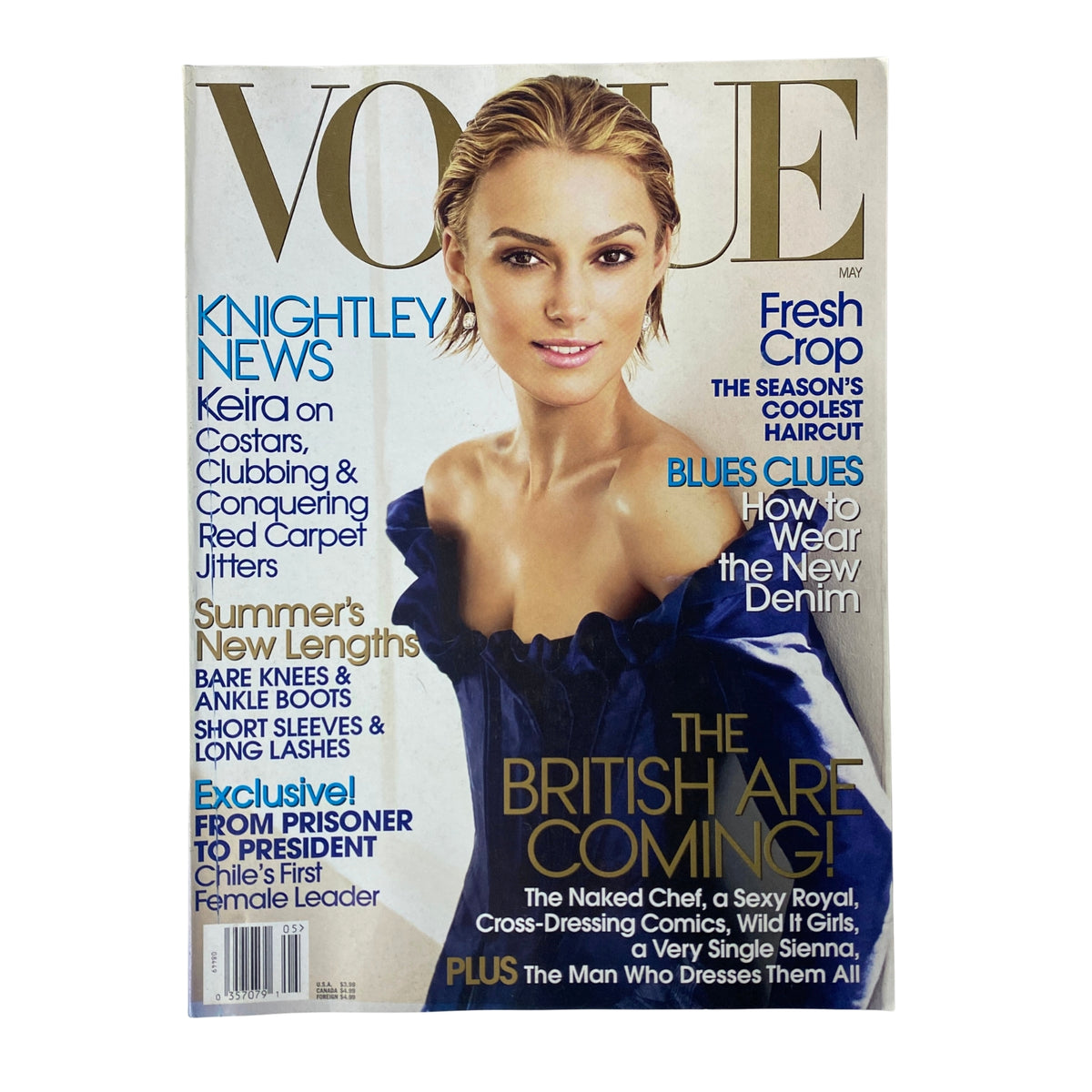
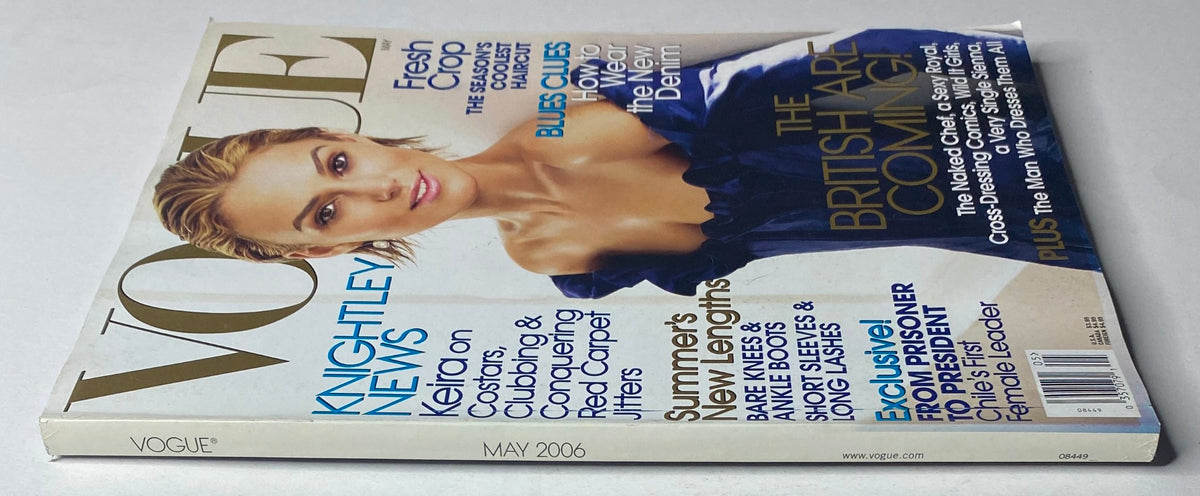
May 2006 captures Keira Knightley at the precise peak of her first wave of mainstream cultural prominence. She had received an Academy Award nomination for Best Actress for Pride and Prejudice just months before this issue's publication, capping a run that had included Bend It Like Beckham, Love Actually, and the Pirates of the Caribbean franchise — a commercial and critical arc that had established her as the most discussed young British actress in Hollywood in the space of roughly four years. The Vogue cover and its "Pirate's Beauty" framing connected directly to the Pirates of the Caribbean mythology that was still very much active in the cultural conversation, while the Vivienne Westwood corset dress and Chopard diamonds provided the kind of high-fashion authority context that Vogue used to confer editorial seriousness on celebrity subjects it considered genuinely significant rather than merely commercially useful. Mario Testino's photography and Tonne Goodman's styling — two of the most trusted creative voices in Vogue's visual apparatus — complete a cover production that represents the magazine's full resources applied to a subject it had specifically identified as warranting them. For collectors building an archive of Vogue magazine issues from the mid-2000s, this May 2006 edition is a primary document of Knightley's peak cultural moment, produced with the creative team and visual ambition that gave the best Vogue covers of this era their lasting documentary value.
The Michelle Bachelet profile on page 268 adds a layer of political historical significance that substantially deepens this issue's documentary value beyond its celebrity cover. Bachelet was "on the verge of becoming Chile's first female president" at the time of this feature — she was inaugurated on March 11, 2006, just weeks before this May issue's publication, making the feature a nearly contemporaneous document of her early presidency rather than a pre-election profile. Her candid discussion of her past as a political prisoner under Pinochet's regime, combined with her aspirations for compassionate governance, gives this Vogue feature a moral and political weight unusual for a fashion magazine's profiles section — and the magazine's decision to devote substantive space to Bachelet's story in a May 2006 issue alongside Keira Knightley and the Met Gala content reflects the editorial breadth that distinguished Vogue under Wintour from publications whose celebrity and fashion authority was comparable but whose political engagement was more superficial. The Christopher Bailey and Burberry profile by Sarah Mower on page 264 adds a significant fashion industry historical dimension — Bailey was in the middle of transforming Burberry from a declining British heritage brand into one of the most commercially and creatively dynamic luxury houses in the world, and a May 2006 Vogue profile captures that transformation at a specific early-chapter moment whose subsequent significance is fully legible only in retrospect. Collectors researching fashion and cultural magazines from 2006 will find this issue a primary source document of unusual political, fashion, and celebrity historical depth.
The May 2006 issue's Met Gala coverage — "My Fair Ladies" by Sally Singer engaging two British icons via Gainsborough at the Costume Institute, and "Dancing with the Stars" profiling the event's high-profile organizing committee — documents the Met Gala at a specific moment in its cultural evolution. By 2006 the event had established itself as the fashion world's most significant annual social occasion, but it had not yet achieved the level of mainstream media saturation it would command in the following decade's social media era. A Vogue treatment of the 2006 Met Gala is therefore a primary source document of the event's institutional identity and cultural significance before its transformation into a fully self-conscious spectacle — a record of what the Gala meant to fashion's inner world before it became what it is today. The Jamie Oliver profile engaging him as "chef, activist, and political voice" and the Lady Gabriella Windsor fashion feature round out an issue whose cultural range — from Chilean politics to British royals to New York theater reviews — reflects the editorial ambition that Wintour's Vogue brought to its most purposefully assembled editions.
About the Publication
Vogue was founded in 1892 and has been published by Condé Nast since 1909, operating continuously as the most authoritative fashion magazine in the American market across more than a century of publication. Under Anna Wintour's editorial direction, which began in 1988 and extended well through this 2006 issue and beyond, the magazine combined its traditional fashion authority with expanded cultural journalism, celebrity profiles, and serious feature writing on politics, arts, and culture that distinguished it from competitors whose fashion credentials were comparable but whose intellectual range was narrower. By May 2006 Vogue was producing some of the most culturally ambitious editorial content in its history, with an editorial team and contributor roster capable of moving within a single issue from a profile of Chile's first female president to Keira Knightley in Westwood to Christopher Bailey's Burberry transformation — all of it produced with the visual and editorial standards that gave Vogue's best issues their status as primary cultural documents rather than merely commercial fashion vehicles.
Key Highlights Inside
- Keira Knightley cover photographed by Mario Testino, styled by Tonne Goodman in a Vivienne Westwood corset dress with Chopard diamond earrings — a fully documented primary production record of one of Testino's most precisely attributed Vogue cover shoots, featuring Knightley at her peak mid-2000s cultural prominence and capturing the "Pirate's Beauty" editorial concept with the full resources of Vogue's creative apparatus.
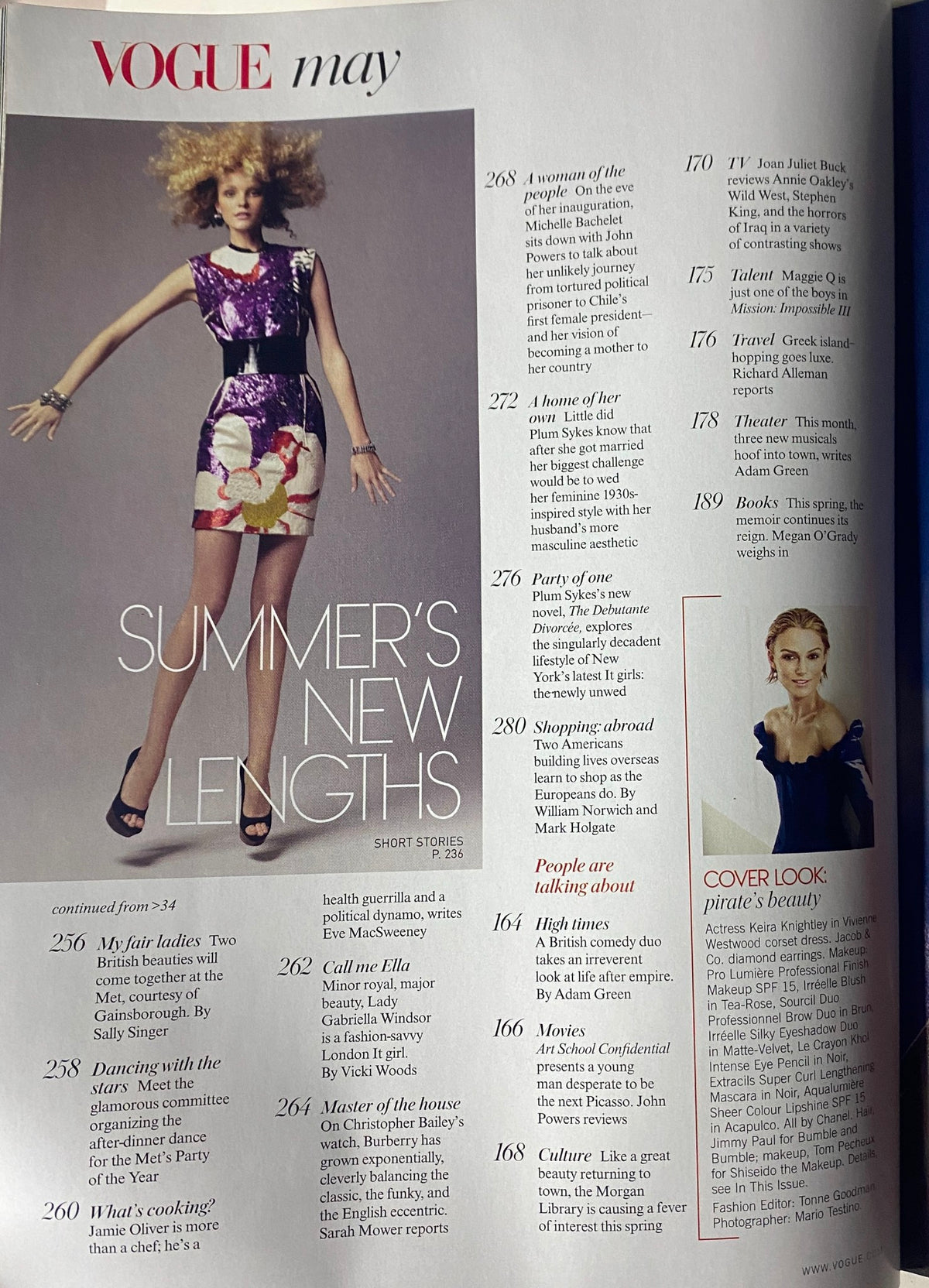
- Michelle Bachelet profile "A Woman of the People" on page 268 — a feature on Chile's first female president published just weeks into her inauguration, in which she discusses her history as a political prisoner under Pinochet's regime, constituting one of the more substantively political features in mid-2000s Vogue and adding a primary historical document of Bachelet's early presidency to what is otherwise a fashion and celebrity editorial context.
- Christopher Bailey and Burberry profile "Master of the House" by Sarah Mower on page 264 — a documented early treatment of the creative director whose transformation of Burberry into a globally dominant luxury brand would prove one of the most significant fashion industry stories of the decade, captured at a specific moment in that transformation's progress and constituting a primary source for fashion industry historians studying the Burberry reinvention.
- Met Gala coverage including "My Fair Ladies" by Sally Singer on page 256 and "Dancing with the Stars" committee profile on page 258 — documentation of the Costume Institute Gala in its pre-social-media-saturation era, capturing the event's institutional significance within fashion's inner world at a specific historical moment before its cultural meaning was transformed by the publicity dynamics of the following decade.
- Jamie Oliver profile "What's Cooking?" by Eve MacSweeney on page 260, Lady Gabriella Windsor fashion feature "Call Me Ella" on page 262, and Plum Sykes's novel excerpt "Party of One" on page 276 alongside her newlywed design feature — the full cultural journalism range of a May 2006 Vogue spanning celebrity chefs, fashion-forward royals, and Manhattan social comedy, documented with the attribution specificity that makes this table of contents an unusually complete research resource.
- "People Are Talking About" section documenting Maggie Q in Mission: Impossible III (p.175), the Morgan Library reopening (p.168), a trio of new Broadway musicals (p.178), spring memoir reviews by Megan O'Grady (p.189), and Greek island-hopping travel by Richard Alleman (p.176) — a comprehensive cross-cultural survey of May 2006 American and international cultural life, providing the full editorial context within which the cover and major features were positioned for Vogue's readership.
Condition & Rarity
Vogue issues from May 2006 are approaching their twentieth year of existence — recent enough that surviving copies remain relatively available, but old enough that condition variation is meaningful, particularly for issues with documented cover production credits and confirmed newsstand provenance that make them specifically valuable within the broader Vogue back-catalog. Very Good condition with minor edge wear is an honest and strong grade for a nineteen-year-old monthly fashion magazine, indicating a copy that displays cleanly, reads completely, and retains the full visual integrity of the Keira Knightley cover without the structural damage that would compromise its collector value. The absence of a mailing label is a significant condition attribute for Vogue specifically, where the magazine's enormous subscription base means that label-free copies represent a minority of surviving examples; the Testino cover image and the Westwood corset dress detail are preserved in their full uninterrupted form, which is both visually and documentarily preferable for a cover production this completely credited. The plastic protective sleeve provides ongoing archival protection. Collectors evaluating surviving examples should prioritize cover surface quality and the Knightley-Testino image integrity, spine condition, and the completeness of the Bachelet profile and Bailey feature pages as the primary condition criteria most relevant to both the display and research value of this editorially significant issue.
Looking for More Issues Like This?
A Very Good newsstand copy of Vogue May 2006 with a fully documented table of contents, confirmed Testino-Knightley cover credits, a Michelle Bachelet presidential profile, and the Christopher Bailey Burberry feature is a more historically layered find than its relatively recent vintage might suggest — the combination of celebrity cover authority, serious political journalism, and significant fashion industry documentation gives this issue a research and collector profile that extends well beyond standard celebrity fashion coverage. If this issue is no longer available, the full Vogue collection at OriginalMagazines.com is the most comprehensive place to browse surviving issues from across the magazine's history and locate other Mario Testino covers, notable celebrity features, or significant issues from the Wintour era's mid-2000s peak. The 2006 magazine collection brings together issues from across that year's major publications for collectors interested in the full fashion and cultural landscape of a year that sat squarely at the mid-decade's most confident moment.