



Description
Collector's Note – Why This Issue Matters
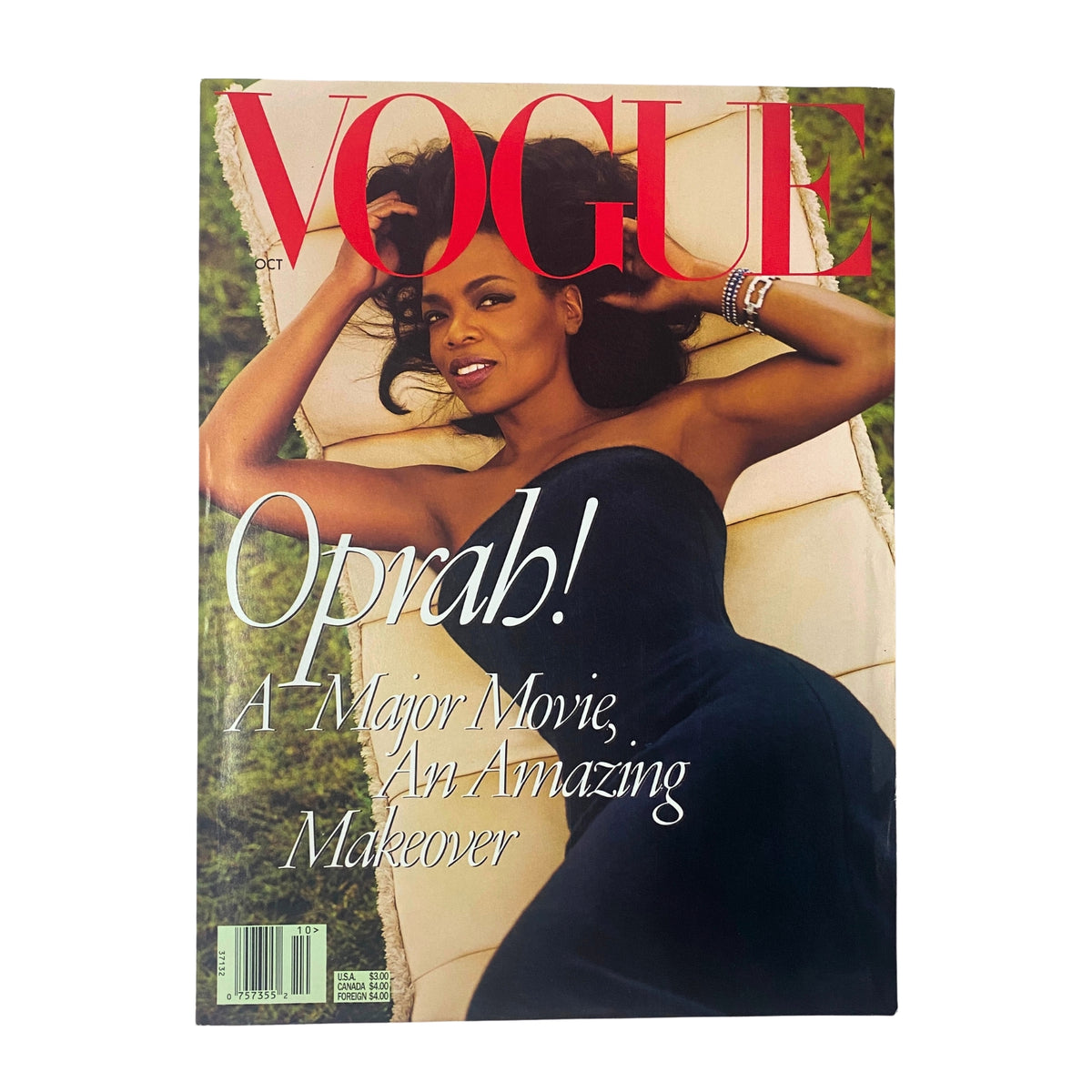
The October 1998 issue of American Vogue featuring Oprah Winfrey on the cover is one of the most historically significant covers in the magazine's publishing history — and the significance is not primarily about fashion. Vogue covers had, under Anna Wintour's editorship since 1988, been almost exclusively reserved for models and actresses. The appearance of Oprah Winfrey — a television personality, producer, and media entrepreneur rather than a fashion figure — was understood at the time and has been recognized consistently since as a deliberate statement by Wintour about who belonged on the cover of the most powerful fashion magazine in the world. Oprah was photographed by Annie Leibovitz and styled with considerable editorial investment, and the resulting cover was widely discussed in the fashion and media press as a meaningful cultural event rather than a routine celebrity placement. For collectors, this issue represents the October cover of Vogue's most important annual issue featuring a subject whose presence was itself a statement — a combination that makes the editorial and historical significance compound in ways that most celebrity fashion covers do not. The full scope of Oprah's media presence and the cultural conversations surrounding this cover are traceable through the Oprah Winfrey magazine archive, which documents her appearances across major publications across her career.
October 1998 was also a specific and significant moment in Oprah's biography that amplifies the cover's meaning. She had spent years speaking publicly about her struggles with weight, and the October 1998 Vogue cover — in which she appeared in glamorous, carefully styled fashion photography at a moment when she had worked to reclaim her physical confidence — was understood by many observers as a statement about her own self-image and the cultural conversation about women's bodies and appearance that she had been participating in for years. The intersection of that personal narrative, her extraordinary cultural power as America's most influential media personality, and the specific authority of a Vogue October cover gave this issue a resonance that extended well beyond fashion collecting into the broader history of women's media and body image culture. The broader publishing context of the late nineties is documented across the 1998 magazine collection, and the full arc of Vogue's cover history and editorial evolution under Wintour is traceable through the Vogue magazine collection.
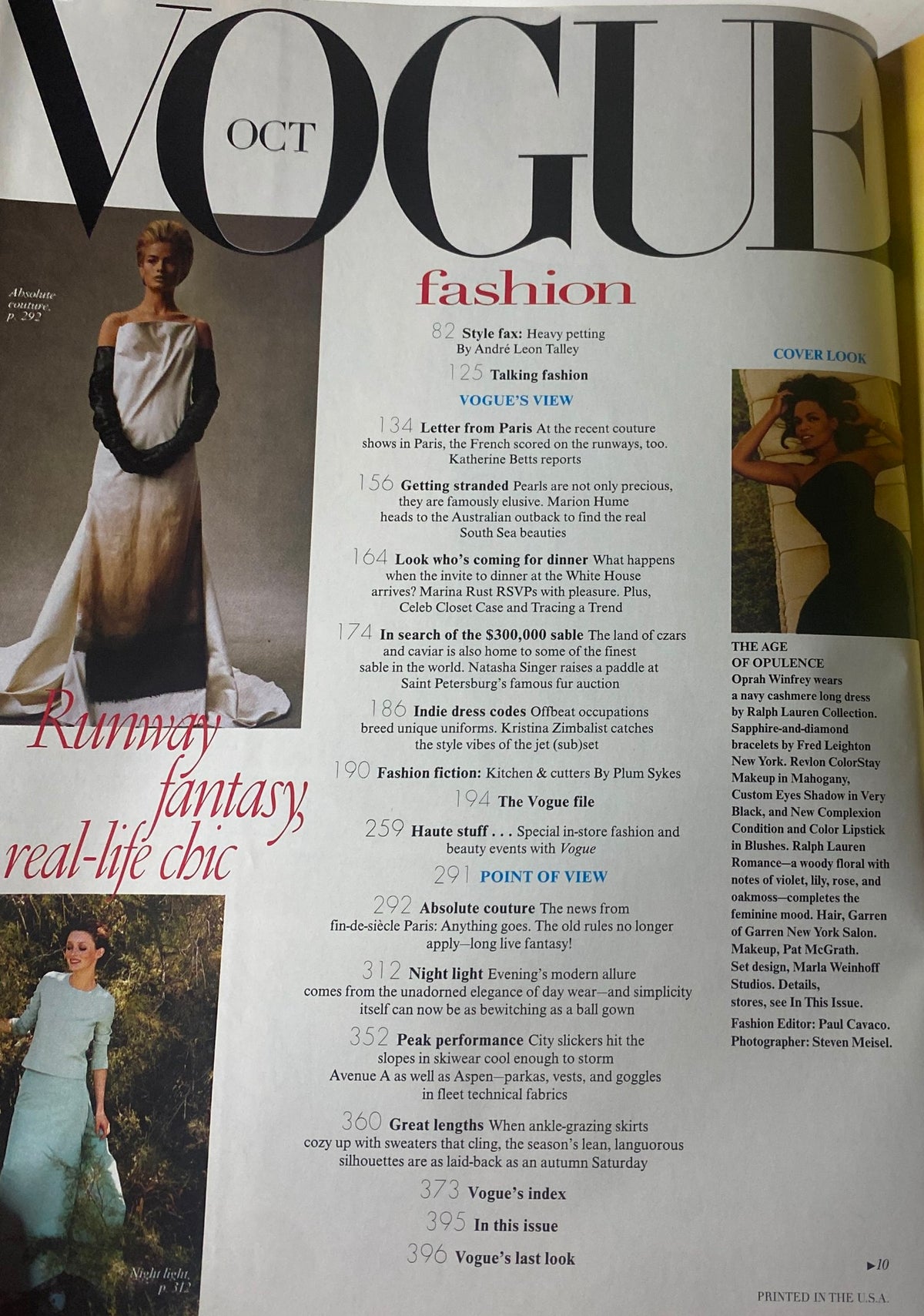
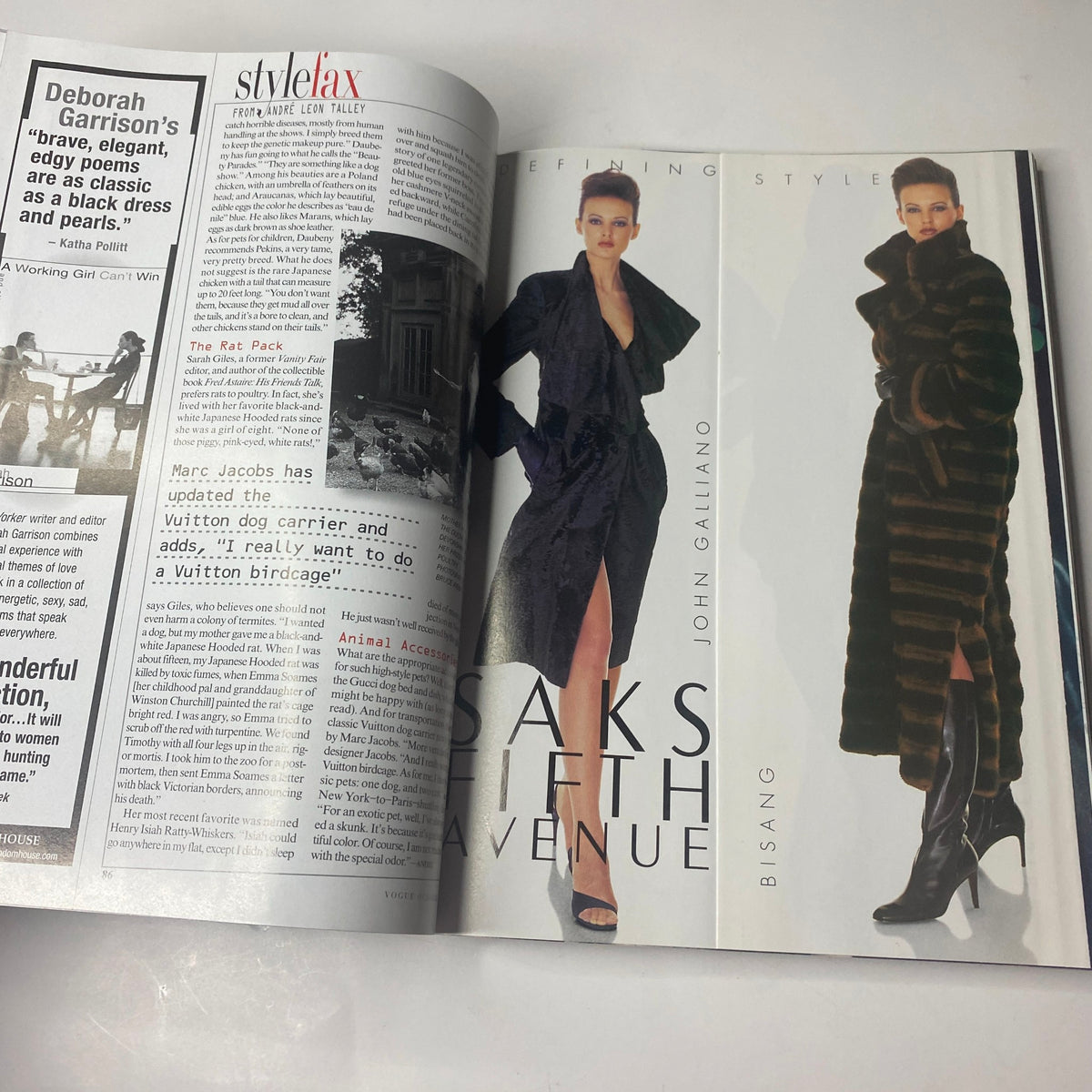
The editorial content surrounding the Oprah cover is also worth attention. André Leon Talley's "Heavy Petting" Style Fax and the "In Search of the $300,000 Sable" feature reflect the late-nineties luxury fashion moment at its most unapologetically opulent — the pre-millennium economy was producing levels of high-end consumer spending that made the sable feature's price point not merely aspirational but commercially relevant to at least a portion of the readership. The "Indie Dress Codes" feature documents the late-nineties independent fashion movement that was beginning to challenge luxury fashion's dominance, and "Fashion Fiction: Kitchen & Cutters" represents the editorial experimentation that Vogue's interior pages pursued alongside its more conventional fashion coverage. Together these features make this a more editorially varied issue than the Oprah cover alone might suggest.
About the Publication
American Vogue, founded in 1892 and acquired by Condé Nast in 1909, is the flagship publication of the global fashion media industry and the standard against which all other fashion magazines have historically measured themselves. Under the editorship of Anna Wintour, who took the helm in 1988, the magazine developed an editorial identity that combined fashion authority with genuine cultural and celebrity engagement — its covers became carefully negotiated statements of cultural currency, and its October issues in particular carried the full weight of its editorial authority as the year's most heavily advertised and elaborately produced annual statement. By October 1998, Wintour's tenure was in its tenth year and the magazine's willingness to use its most important annual cover to make a statement about cultural relevance and inclusion — through the Oprah placement — reflected its fully mature editorial confidence and ambition.
Key Highlights Inside
- Oprah Winfrey October 1998 cover — one of the most historically discussed covers in Vogue's publishing history, photographed by Annie Leibovitz, marking the appearance of America's most powerful media personality on the year's most important fashion magazine cover and the editorial statement that entailed about who belonged in the world of high fashion.
- "Style Fax: Heavy Petting" (André Leon Talley) — a fashion feature on luxe textures and statement pieces from one of the era's most distinctive and authoritative fashion editorial voices, reflecting the late-nineties luxury fashion moment at its most confident and unapologetically opulent.
- "In Search of the $300,000 Sable" — a feature that captures the late-nineties pre-millennium luxury spending culture at its most extreme, providing a primary document of the specific economic confidence and conspicuous consumption ethos that defined high fashion's commercial context in 1998.
- "Indie Dress Codes" — documentation of the independent fashion movement that was in 1998 beginning to challenge luxury fashion's cultural dominance, capturing a specific moment in the late-nineties fashion landscape when alternative and independent aesthetics were gaining mainstream editorial recognition.
- Fall 1998 couture and fashion coverage including "Absolute Couture" and the seasonal Point of View editorial package — the comprehensive fall fashion content that made Vogue's October issue the year's definitive seasonal statement, providing a complete picture of where luxury fashion stood in the fall of 1998.
Condition & Rarity
Surviving copies of the October 1998 Vogue in very good condition represent a clean and display-quality example of one of the most historically significant covers in the magazine's recent publishing history. Minor edge wear on a copy of this vintage is the expected and honest condition profile of an original, unrestored periodical rather than a reproduction. The absence of a subscriber address label is a meaningful positive in collector evaluation: the Oprah Winfrey cover image — the Annie Leibovitz photography, the specific styling, and the complete visual statement — survives fully intact as designed and printed, without the adhesive marks or obscured photography that subscription labels permanently leave behind. For a cover whose cultural and historical significance rests on the complete visual presentation of its subject, the label-free condition is a meaningful distinction that matters both to display-focused collectors and to researchers documenting this specific moment in magazine publishing history. The protective plastic sleeve on well-preserved copies is the standard archival measure for a magazine of this paper stock and production quality.
Looking for More Issues Like This?
The October 1998 Vogue with Oprah Winfrey on the cover is one of the more historically significant issues in the magazine's post-1988 run under Anna Wintour — a cover whose cultural meaning extends well beyond fashion collecting into the broader history of women's media and the question of who is represented in its most authoritative spaces. If this particular issue is no longer available, the Oprah Winfrey magazine collection is the best starting point for finding other issues that document her presence and influence across major publications throughout her career. The full Vogue magazine archive covers the complete run of the title, and the 1998 magazine collection provides broader context for anyone building an archive of the late-nineties cultural and fashion moment.