




Description
Collector's Note – Why This Issue Matters
The October 2004 issue of American Vogue featuring Charlize Theron on the cover — photographed and profiled by Jonathan Van Meter in Berlin — documents one of Hollywood's most significant actresses at the peak of her post-Oscar momentum, and the specific timing of this cover is historically precise in ways that reward attention. Theron had won the Academy Award for Best Actress for Monster in February 2004, a win that was itself one of the more discussed in recent Oscar history: her physical transformation for the role of serial killer Aileen Wuornos had been radical and her performance widely recognized as transformative, and the combination of physical courage and acting depth it represented had definitively repositioned her from action-film commercial actress to one of the most respected performers of her generation. A Vogue October cover — the magazine's most important issue of the year — eight months after that win, with Van Meter's Berlin portrait documenting her life after Oscar, captures Theron at the specific transitional moment when the award's implications for her career and public image were still being actively worked out. The choice to profile her in Berlin rather than Los Angeles is itself editorially significant: it frames Theron as an internationally mobile, culturally serious figure rather than merely a Hollywood star, which reflects both the Van Meter approach and the specific post-Oscar identity Vogue was helping to construct. The full arc of Vogue's cover choices and editorial identity across this period is traceable through the Vogue magazine collection.
The editorial content of this issue is unusually rich and extends well beyond the Theron cover in ways that make it a more layered research document than a standard celebrity October would be. The "Sexual Revolution" feature on page 184 — described as revisiting the Tom Ford years and fashion's provocative edge through a new book — is a specific and historically significant document of how Vogue was processing Ford's Gucci legacy just a year after his departure from the house in 2004, at a moment when the critical and cultural reassessment of his tenure was actively underway. Sarah Mower's "Dressed in Shanghai" feature on China's new generation of fashionable women constitutes a primary document of the early stages of the Chinese luxury fashion market's emergence as a global force — a development that was in October 2004 genuinely new and editorially forward-looking rather than the consolidated reality it would become within a decade. Hamish Bowles' Manhattan socialite feature, the fashion illustration revival documented in "Painted Ladies," and Tim Blanks' timepiece piece together provide a comprehensive cross-section of where fashion journalism's major voices were directing their attention in October 2004. The broader publishing context of this culturally rich year is documented across the 2004 magazine collection.
André Leon Talley's "Life with André" opening and the "All Tomorrow's Muses" new faces feature together constitute a specific editorial pairing that rewards attention as a primary document of how Vogue was simultaneously honoring its most distinctive journalistic personality and looking toward the next generation of fashion's inspirational figures, in the same October 2004 issue. The Chanel Fifty-seventh Street boutique reopening feature with limited editions provides primary documentation of a specific retail and luxury event, while the denim and fine jewelry features capture the specific consumer fashion conversations of the fall 2004 season with period-specific precision.
About the Publication
American Vogue, founded in 1892 and acquired by Condé Nast in 1909, is the flagship publication of the global fashion media industry and the standard against which all other fashion magazines have historically measured themselves. Under the editorship of Anna Wintour, who took the helm in 1988, the magazine developed an editorial identity that combined fashion authority with genuine cultural and celebrity engagement — its covers became carefully negotiated statements of cultural currency, its fashion coverage engaged seriously with the economics and sociology of luxury consumption alongside the aesthetics of dress, and its October issues in particular carried the full weight of its editorial authority as the year's most heavily advertised and elaborately produced annual statement. By October 2004, Wintour's tenure was in its sixteenth year and the magazine's authority within both the fashion industry and broader cultural conversation was at a sustained and well-documented peak.
Key Highlights Inside
- "Bombshell" — Charlize Theron cover story (Jonathan Van Meter, pp.318, 372) — a portrait of the Oscar-winning actress in Berlin, documenting her life and international profile in the months following her Academy Award for Monster, framed as a study of the post-Oscar evolution of one of Hollywood's most versatile and critically respected performers.
- "Sexual Revolution" (p.184) — a feature engaging with a new book on the Tom Ford Gucci years, constituting a primary document of how mainstream fashion media was processing Ford's legacy just a year after his departure, at the precise moment when critical reassessment of his transformative tenure was actively underway.
- "Dressed in Shanghai" (Sarah Mower, p.336) — an early major Vogue feature on China's new generation of fashionable women, documenting the embryonic stage of the Chinese luxury fashion market's emergence as a global cultural force at a moment before that development had consolidated into the dominant reality it would become.
- "Life with André" (André Leon Talley, p.100) alongside "All Tomorrow's Muses" (p.171) — together providing the issue's editorial framing between its most distinctive established journalistic voice and its forward-looking identification of the next generation of fashion's inspirational figures.
- Chanel Fifty-seventh Street boutique reopening coverage (p.192) — primary documentation of a specific luxury retail event, alongside Tim Blanks on timepieces (p.232) and the fashion illustration revival feature (p.200), providing a comprehensive cross-section of the October 2004 fashion media's major aesthetic and commercial conversations.
Condition & Rarity
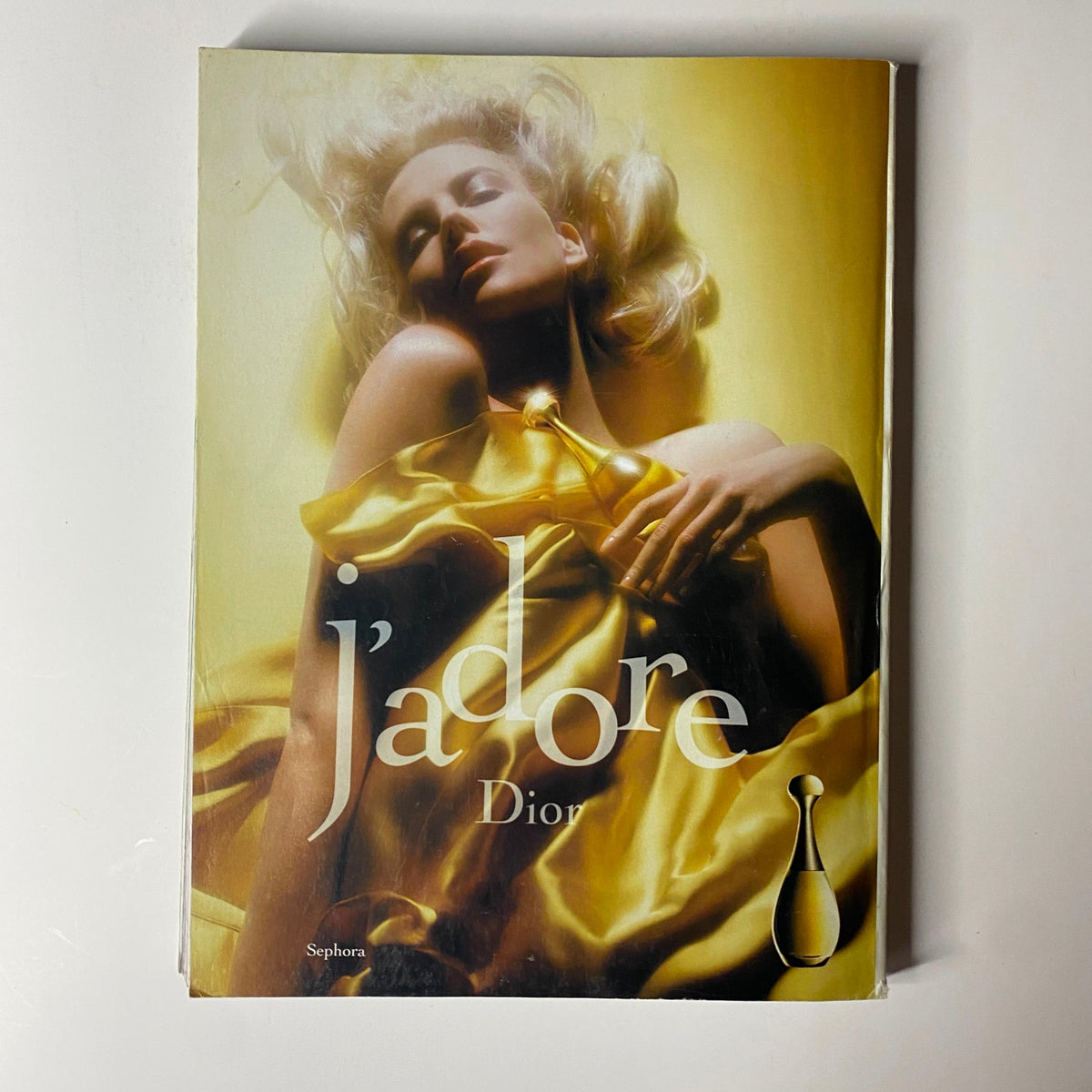
Surviving copies of the October 2004 Vogue in very good condition represent a clean and display-quality example of one of the more editorially substantial issues in the magazine's mid-2000s run. Minor edge wear on a copy of this vintage is the expected and honest condition profile of an original, unrestored periodical rather than a reproduction. The absence of a subscriber address label is a meaningful positive in collector evaluation: the Charlize Theron cover image survives fully intact as designed and printed, without the adhesive marks or obscured photography that subscription labels permanently leave behind. October issues of Vogue were the year's most heavily produced — larger page counts, heavier advertising load, and more elaborate physical construction than any other monthly edition — making intact binding alongside well-maintained interior pages a particularly meaningful positive attribute in evaluating any surviving October issue from this period. The protective plastic sleeve is the standard archival measure for a magazine of this paper stock and production quality.
Looking for More Issues Like This?
A no-label very good condition copy of the October 2004 Vogue with Charlize Theron on the cover — with the Tom Ford legacy, Shanghai fashion, and Jonathan Van Meter portrait content documented here — is one of the more editorially layered entries in the magazine's mid-2000s October run, combining a post-Oscar celebrity cover with feature content that rewards serious research attention from multiple directions simultaneously. If this particular issue is no longer available, the full Vogue magazine collection at OriginalMagazines.com is the most comprehensive single source for exploring other issues across the publication's long run, with strong representation in the 2000s decades that fashion historians and cultural researchers are increasingly prioritizing. For collectors building a broader archive of the mid-2000s cultural and fashion moment, the complete 2004 magazine collection brings together titles from a year rich in significant cultural, political, and aesthetic events.