
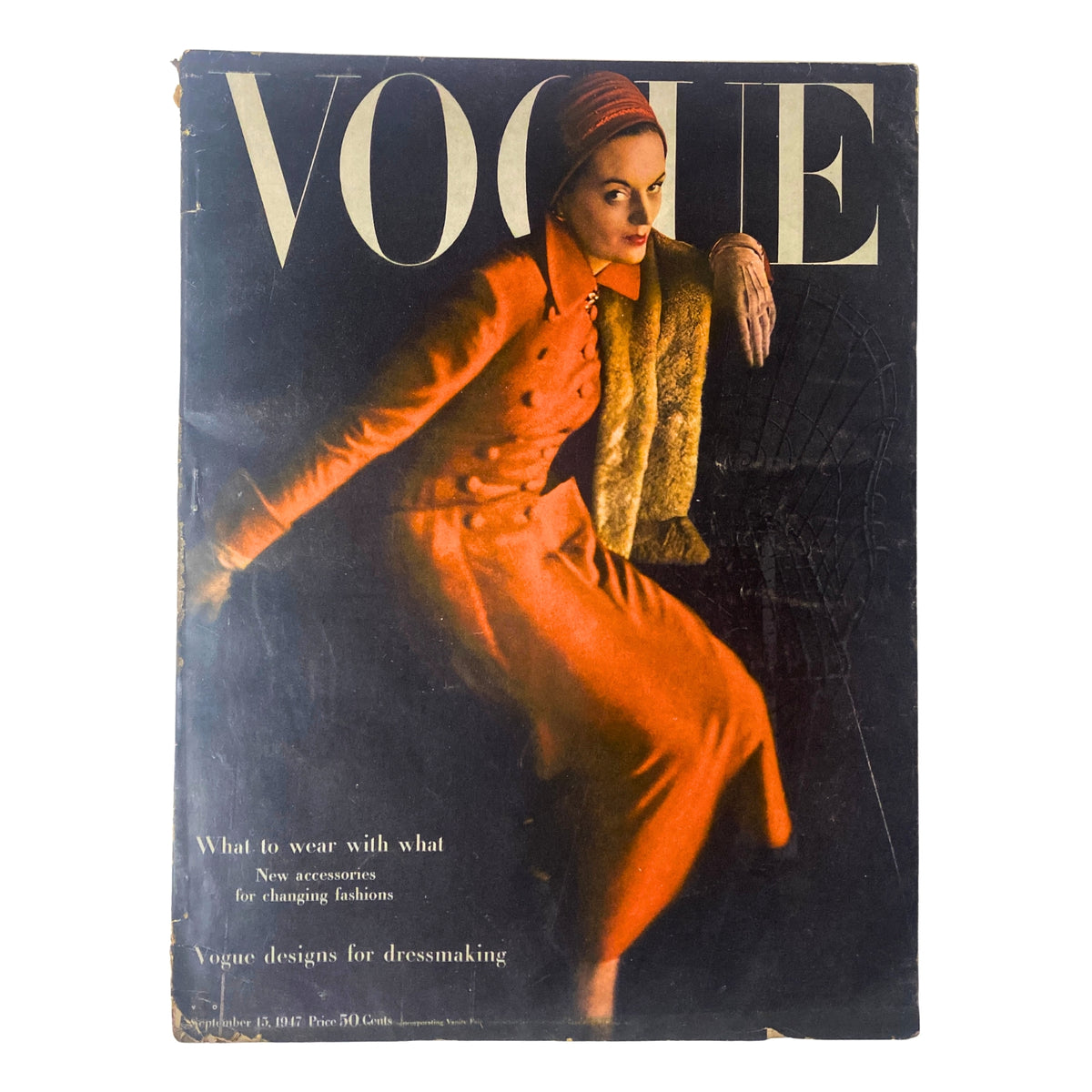
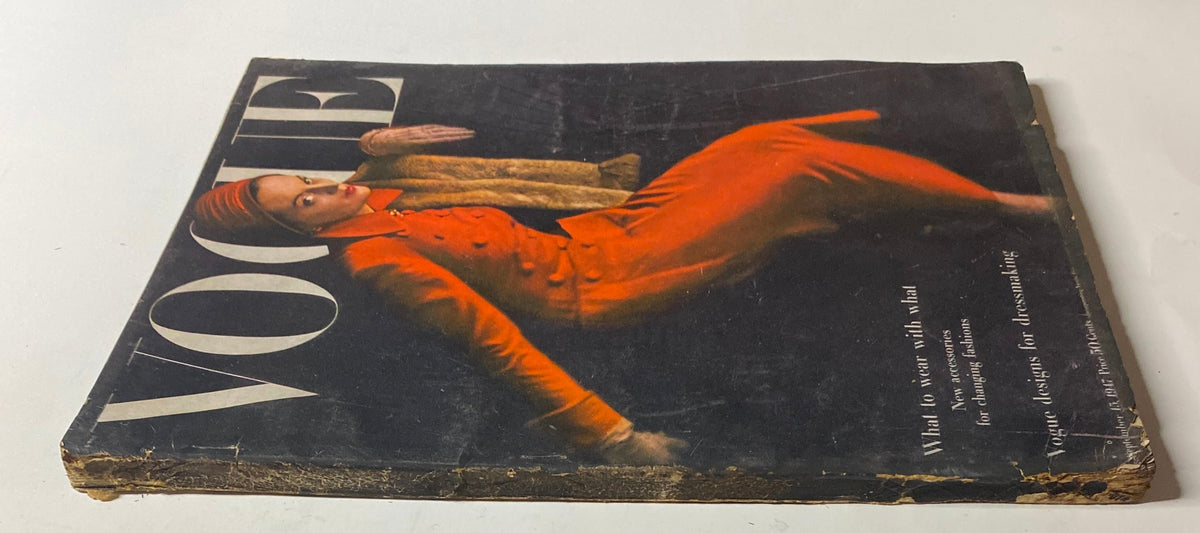
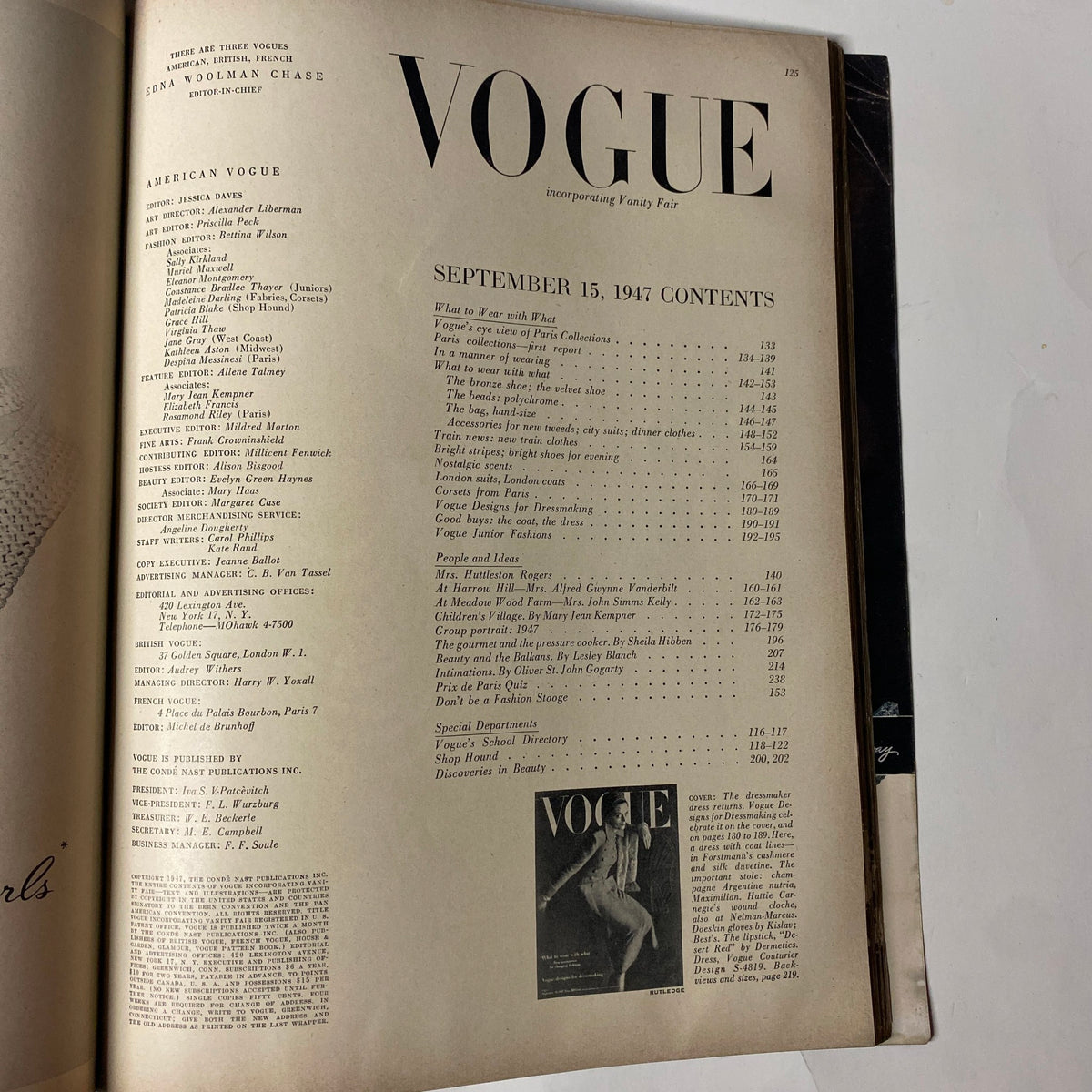
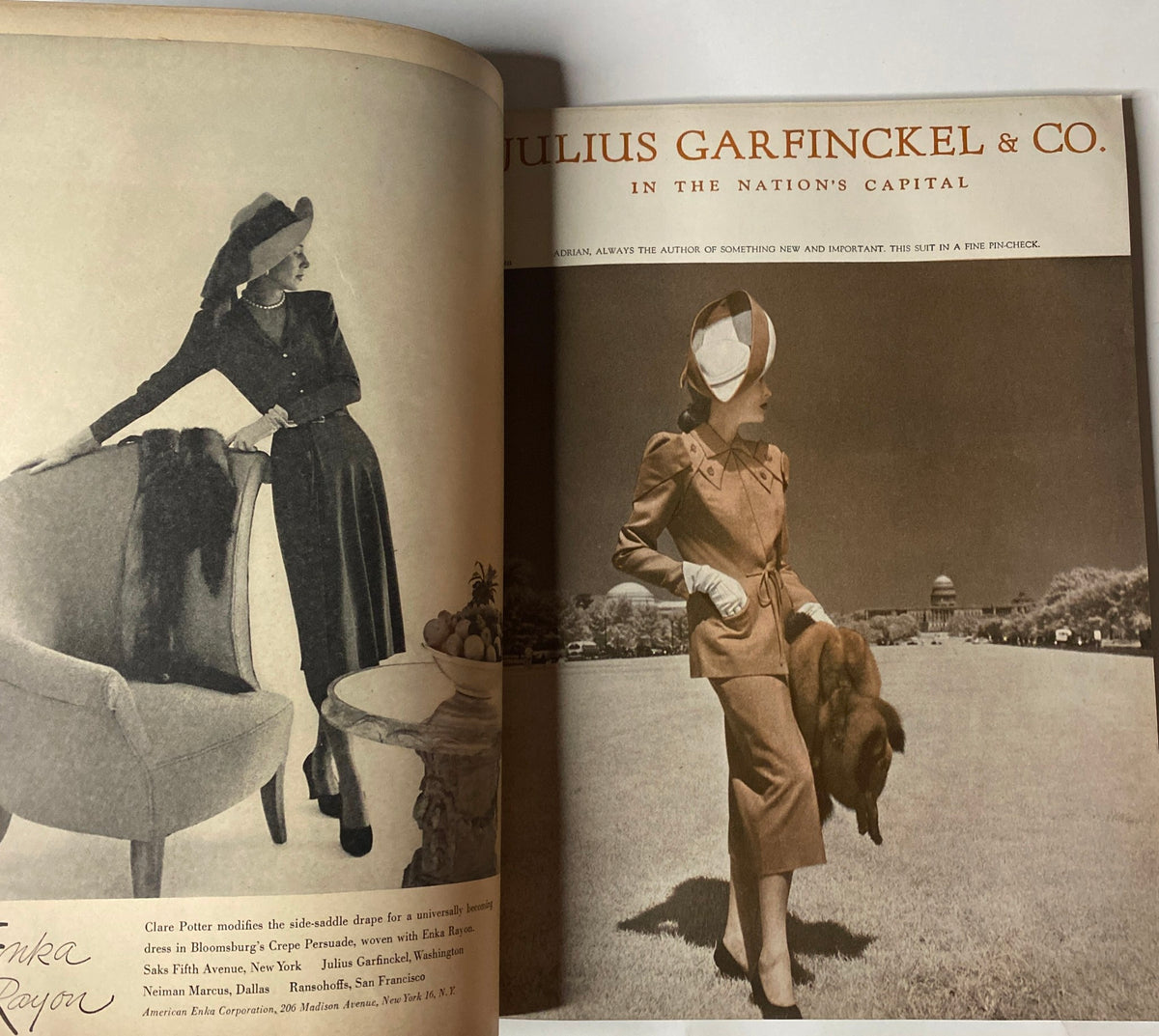
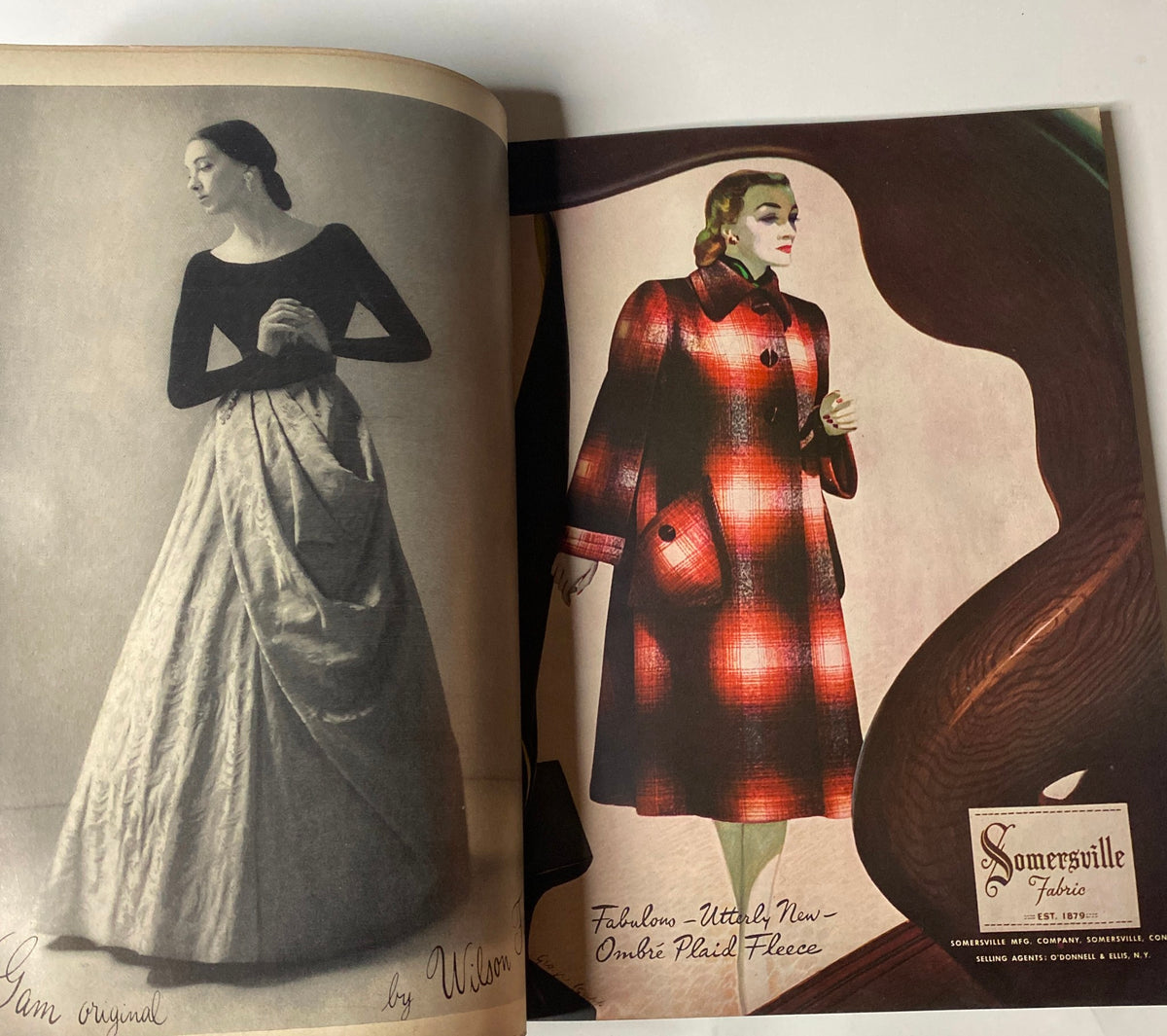
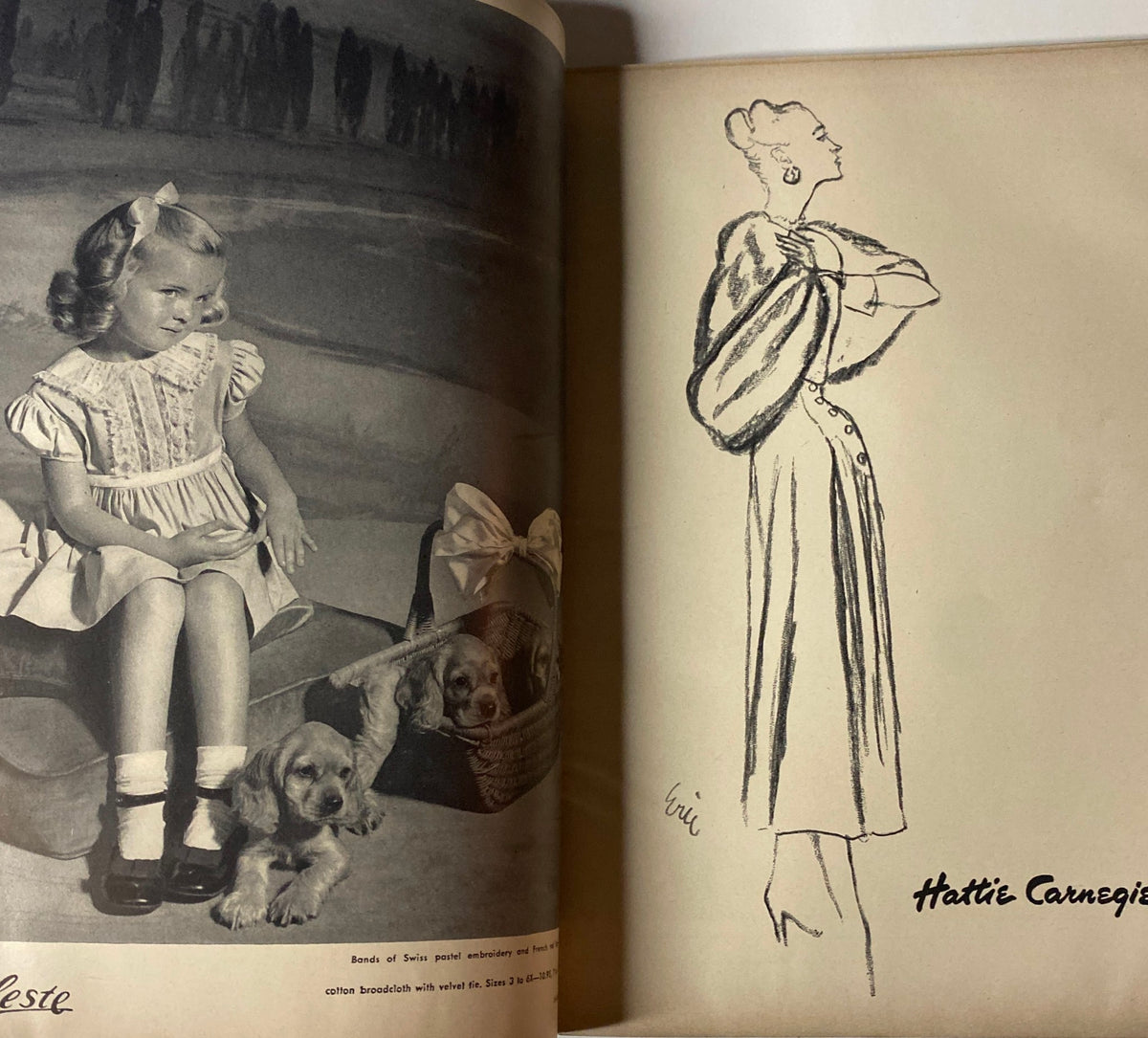
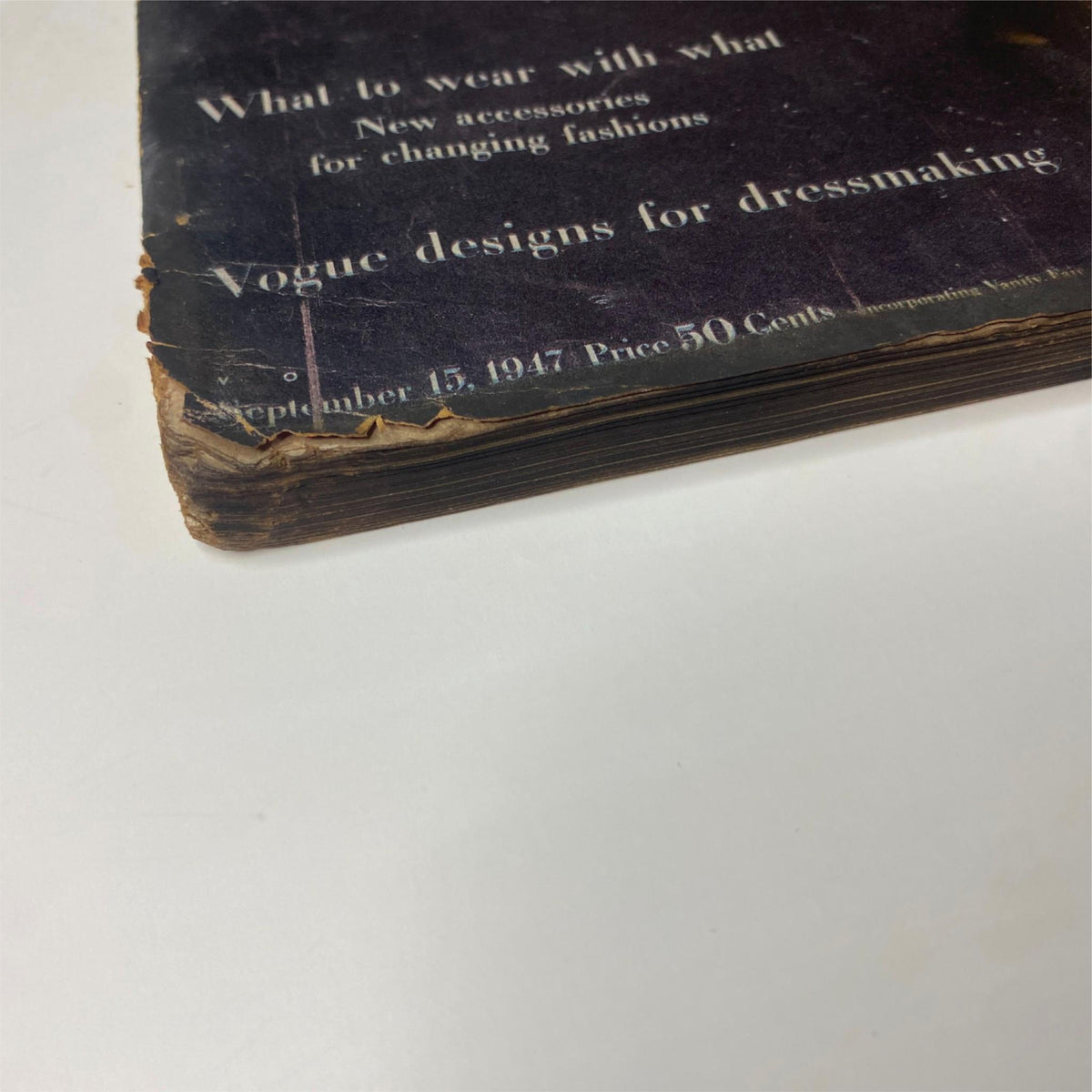
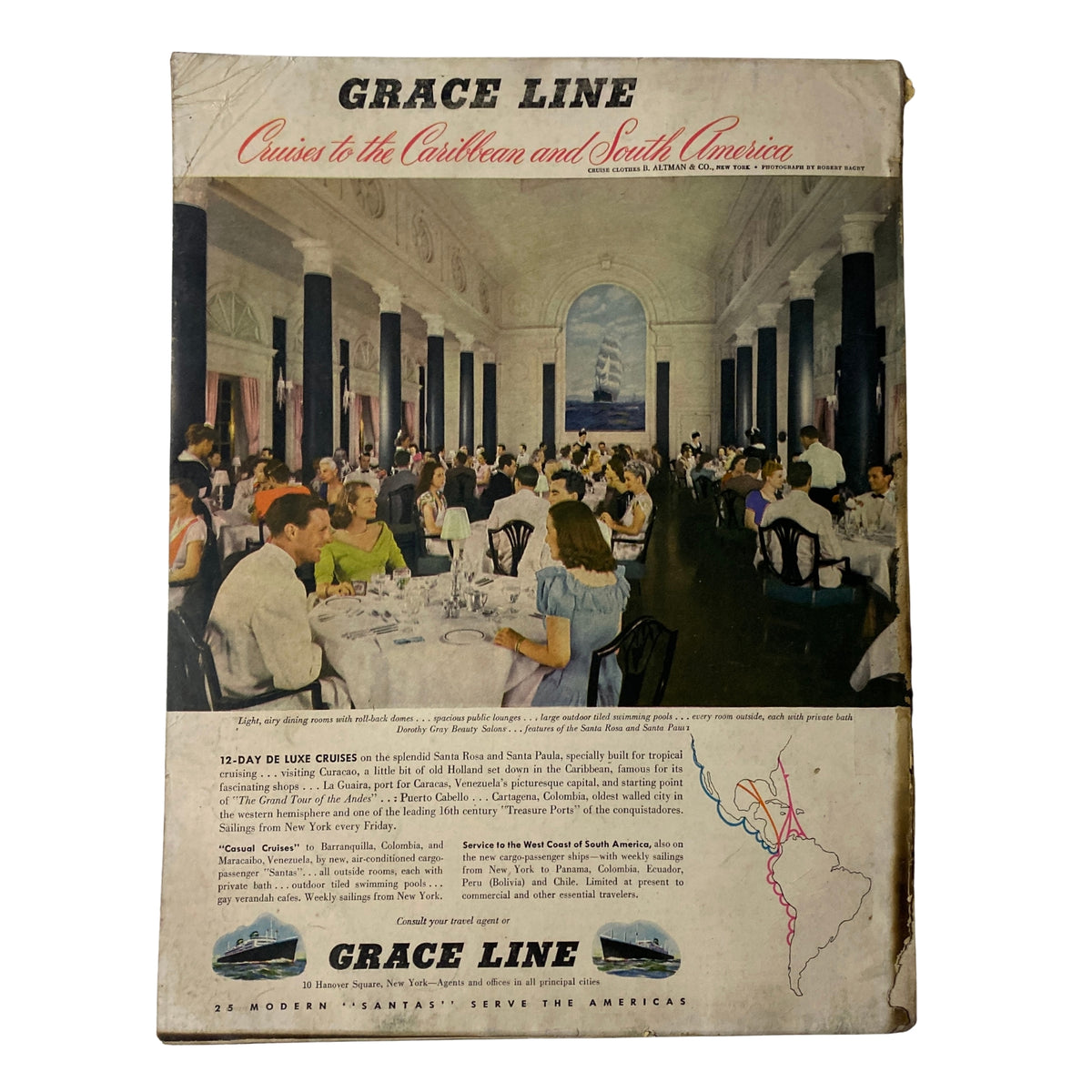


This September 1947 issue of Vogue, photographed by Richard Rutledge and featuring Kitty Kopet on the cover, reflects the postwar revival of high fashion, as Vogue guides readers through the rebirth of Paris couture and the refined art of “what to wear with what.” Balancing transatlantic trends from Paris to London, this issue captures an era of elegance defined by practicality and imagination in design.
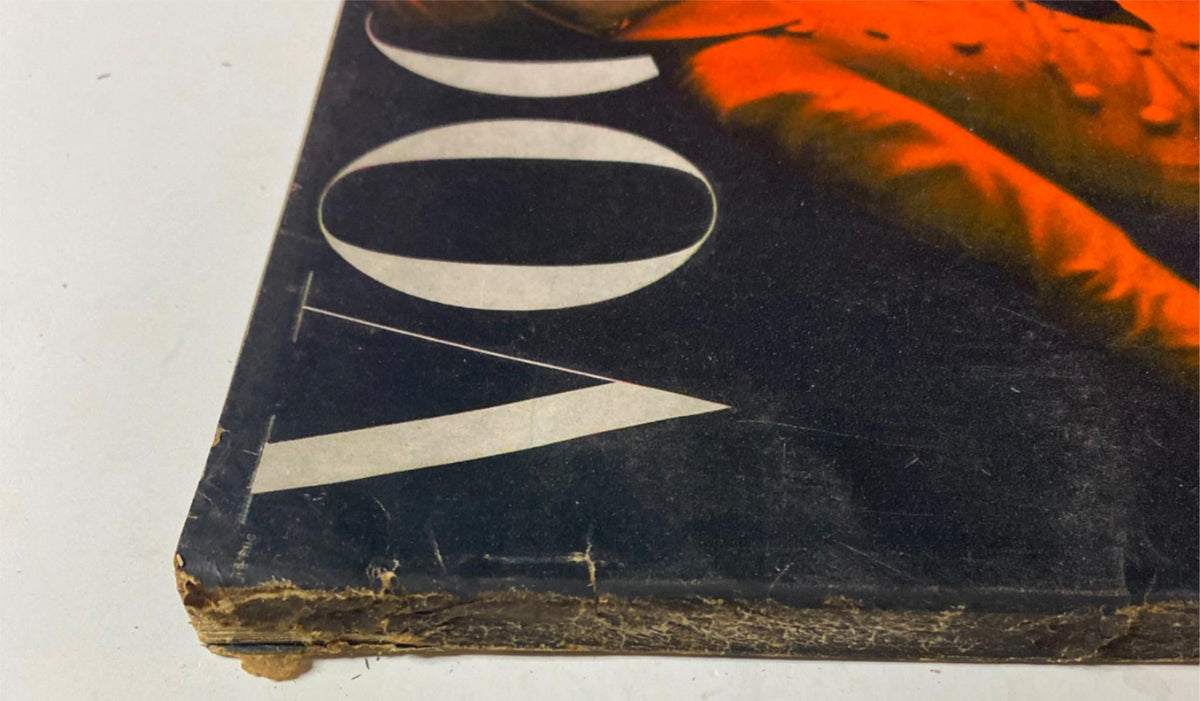
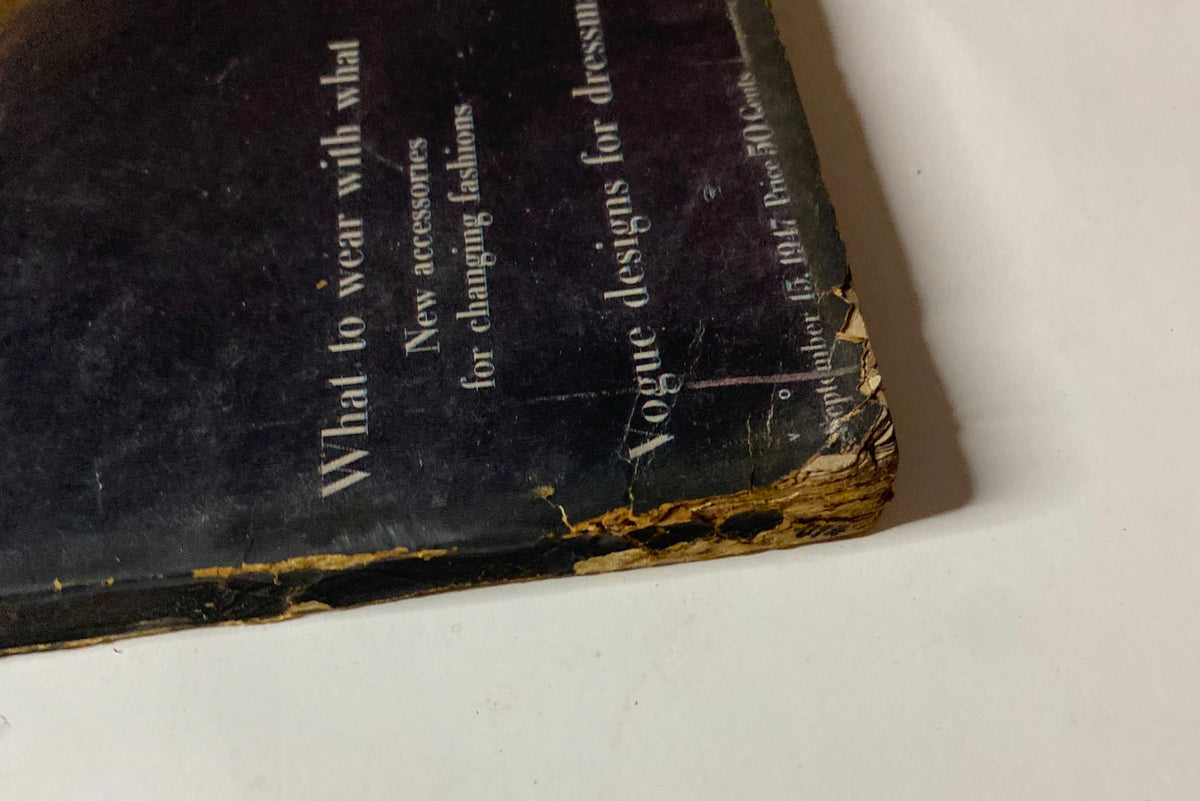
The condition of the item is in good condition. The item being pictured in this listing is exactly the same item you will receive.
Please check picture for condition purposes.
We do offer combined shipping, just ask.
All of our items come with a plastic protective covering.
TABLE OF CONTENTS
WHAT TO WEAR WITH WHAT
Vogue’s eye view of Paris Collections — 133
Paris collections—first report — 134–139
In a manner of wearing — 141
What to wear with what — 142–153
The bronze shoe; the velvet shoe — 143
The beads: polychrome — 144–145
The bag, hand-size — 146–147
Train news: new train clothes — 148–152
Bright stripes; bright shoes for evening — 154–159
Nostalgic scents — 164
London suits, London coats — 165
Corsets from Paris — 166–169
Vogue Designs for Dressmaking — 170–171
Good buys: the coat, the dress — 180–189
Vogue Junior Fashions — 190–191
PEOPLE AND IDEAS
Mrs. Huttleston Rogers — 140
At Harrow Hill—Mrs. Alfred Gwynne Vanderbilt — 160–161
At Meadow Wood Farm—Mrs. John Simms Kelly — 162–163
Children’s Village. By Mary Jean Kempner — 172–175
Group portrait: 1947 — 176–179
The gourmet and the pressure cooker. By Sheila Hibben — 196
Beauty and the Balkans. By Lesley Blanch — 207
Intimations. By Oliver St. John Gogarty — 214
Prix de Paris Quiz — 238
Don’t be a Fashion Stooge — 153
SPECIAL DEPARTMENTS
Vogue’s School Directory — 116–117
Shop Hound — 118–122
Discoveries in Beauty — 200, 202
This issue marks Vogue’s elegant return to Parisian sophistication after the war, pairing travel and lifestyle features with polished postwar fashion photography. A highlight for collectors, it represents a pivotal moment in fashion history—the transition from utility to luxury, from wartime simplicity to renewed artistry.