




Description
Collector's Note – Why This Issue Matters
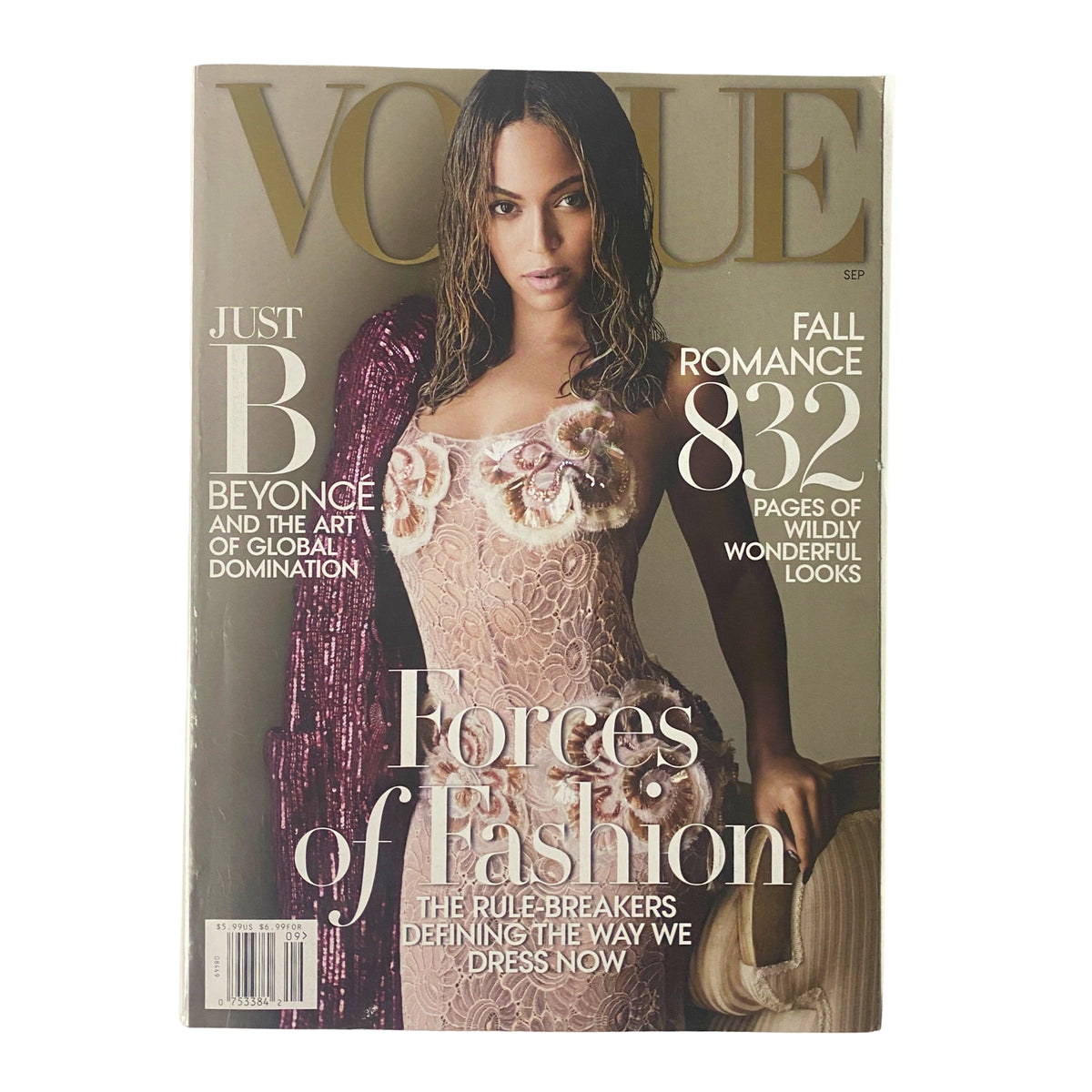
The September 2015 issue of Vogue features Beyoncé on its cover, placing one of the world's most significant contemporary performers at the center of the magazine's single most important issue of the year. September issues have long held a uniquely elevated status within Vogue's publishing calendar, traditionally serving as the magazine's largest and most heavily anticipated edition, packed with substantially more advertising and editorial content than any other month. Choosing Beyoncé to anchor an issue of this scale reflects the level of cultural significance Vogue attached to her at this specific point in her career, several years removed from her earliest solo successes and firmly established as one of the defining performers of her generation. Her cover feature, titled "B Strong," was written by Margo Jefferson, a Pulitzer Prize-winning critic whose involvement signals the seriousness with which Vogue approached this particular profile. Pairing a writer of Jefferson's literary and critical stature with a performer of Beyoncé's cultural standing reflects an unusually weighty editorial pairing, even by the standards of a magazine accustomed to high-profile cover collaborations.
This issue's interior content extends well beyond its cover feature into substantive political journalism, most notably with "Making Her Case," profiling Loretta Lynch's path to becoming United States Attorney General. Including a feature of this nature within Vogue's flagship issue of the year reflects the magazine's continued willingness to engage with serious political subject matter alongside its core fashion content, treating Lynch's historic appointment as a story worth the same editorial attention as the issue's fashion portfolios. Elsewhere, "All in the Timing" captures a specific and culturally significant television transition, profiling Trevor Noah as he prepared to succeed Jon Stewart as host of The Daily Show, a changeover that was closely watched across American media at the time. A separate feature on Star Wars newcomers Daisy Ridley and John Boyega, appearing ahead of their breakout roles in the franchise's then-upcoming sequel, captures both actors at a particularly early and notable point in their careers.
The issue's fashion and culture content is similarly dense, anchored by "Forces of Fashion," a portfolio examining how the proliferation of images was reshaping the way style itself was consumed and understood in the mid-2010s. A feature on the "Irving Penn: Beyond Beauty" exhibition connects the issue to a significant museum retrospective of one of Vogue's own most historically important photographers, while a profile of designer Donna Karan reflecting on both her early career and her future adds a substantial designer retrospective to the issue's broader content. A feature on the cast of Empire alongside musician The Weeknd and director Lee Daniels further situates the issue within the specific television and music landscape of late 2015, capturing a show then at the height of its cultural relevance.
Taken together, this issue stands as one of the most substantively documented editions covered in this format, anchored by Beyoncé's landmark cover feature and extended by significant political journalism, a major museum exhibition tie-in, and profiles of figures spanning television, film, and design. It reflects Vogue's September issue at its traditional scale and ambition, combining its single most important cover story of the year with an unusually wide-ranging set of features. Few single issues carry this much specific, attributable content across so many distinct cultural domains. That density and breadth is precisely what gives this issue lasting reference value for collectors of mid-2010s fashion and culture media.
About the Publication
Vogue has stood as one of the most influential fashion publications in the world since its founding in the late nineteenth century, evolving into the definitive record of high fashion, photography, and style for an international readership well before this 2015 issue's publication. By the mid-2010s, the magazine's September issue had become a widely recognized cultural event in its own right, traditionally serving as the year's largest and most heavily anticipated edition, combining major celebrity cover features with substantial fashion portfolios, designer profiles, and significant cultural and political journalism. Under longtime editor-in-chief Anna Wintour, Vogue had become known for using its September issue specifically to make its most significant cover and editorial statements of the year, a pattern reflected clearly in this issue's choice of Beyoncé as cover subject and its pairing with a Pulitzer Prize-winning writer. The magazine's audience by this period spanned dedicated followers of high fashion as well as readers drawn to its broader cultural, political, and entertainment coverage. Vogue's editorial format by this point combined front-of-book culture and trend coverage with extensive fashion portfolios and substantial feature-length profiles toward the back of the issue. That consistent structural approach, maintained across decades, is part of what allows an issue like this one to be so precisely dated and contextualized within the magazine's broader publishing history. This September 2015 issue, with its combination of a landmark cover story and unusually wide-ranging feature content, reflects the September issue tradition at a representative and well-documented point in its history.
Key Highlights Inside
- "B Strong," the issue's landmark cover feature on Beyoncé, written by Pulitzer Prize-winning critic Margo Jefferson. The piece explores her influence, artistry, and cultural power at a significant point in her career. This feature anchors the issue's status as one of the year's most coveted editions.
- "Making Her Case," profiling Loretta Lynch's path to becoming United States Attorney General. This feature reflects Vogue's willingness to engage with serious political subject matter within its flagship issue of the year. It situates the magazine's fashion content alongside a genuinely historic political appointment.
- "All in the Timing," covering Trevor Noah's preparation to succeed Jon Stewart as host of The Daily Show. This piece captures a closely watched television transition at the moment it was unfolding. It reflects the issue's attention to significant media industry change beyond fashion itself.
- "Empire Rises," featuring the cast of the television drama Empire alongside musician The Weeknd and director Lee Daniels. This feature situates the issue within the specific television and music landscape of late 2015. It captures Empire at a height of its cultural relevance during this period.
- "Bella Donna," a profile of designer Donna Karan reflecting on both her early career and her plans for the future. This piece offers a substantial designer retrospective within the issue's broader feature content. It reflects Vogue's continued attention to major design figures alongside its celebrity and political coverage.
- A feature on Star Wars newcomers Daisy Ridley and John Boyega, appearing under the issue's "Talent" section. This piece captures both actors at a particularly early point in their careers, ahead of their breakout roles in the franchise. It reflects the issue's attention to emerging talent across film alongside its more established subjects.
- A feature tied to the "Irving Penn: Beyond Beauty" photography exhibition, connecting the issue to a significant retrospective of one of Vogue's own historically important photographers. This piece situates the issue within a broader institutional conversation about photographic legacy. It reflects the magazine's continued engagement with its own photographic history.
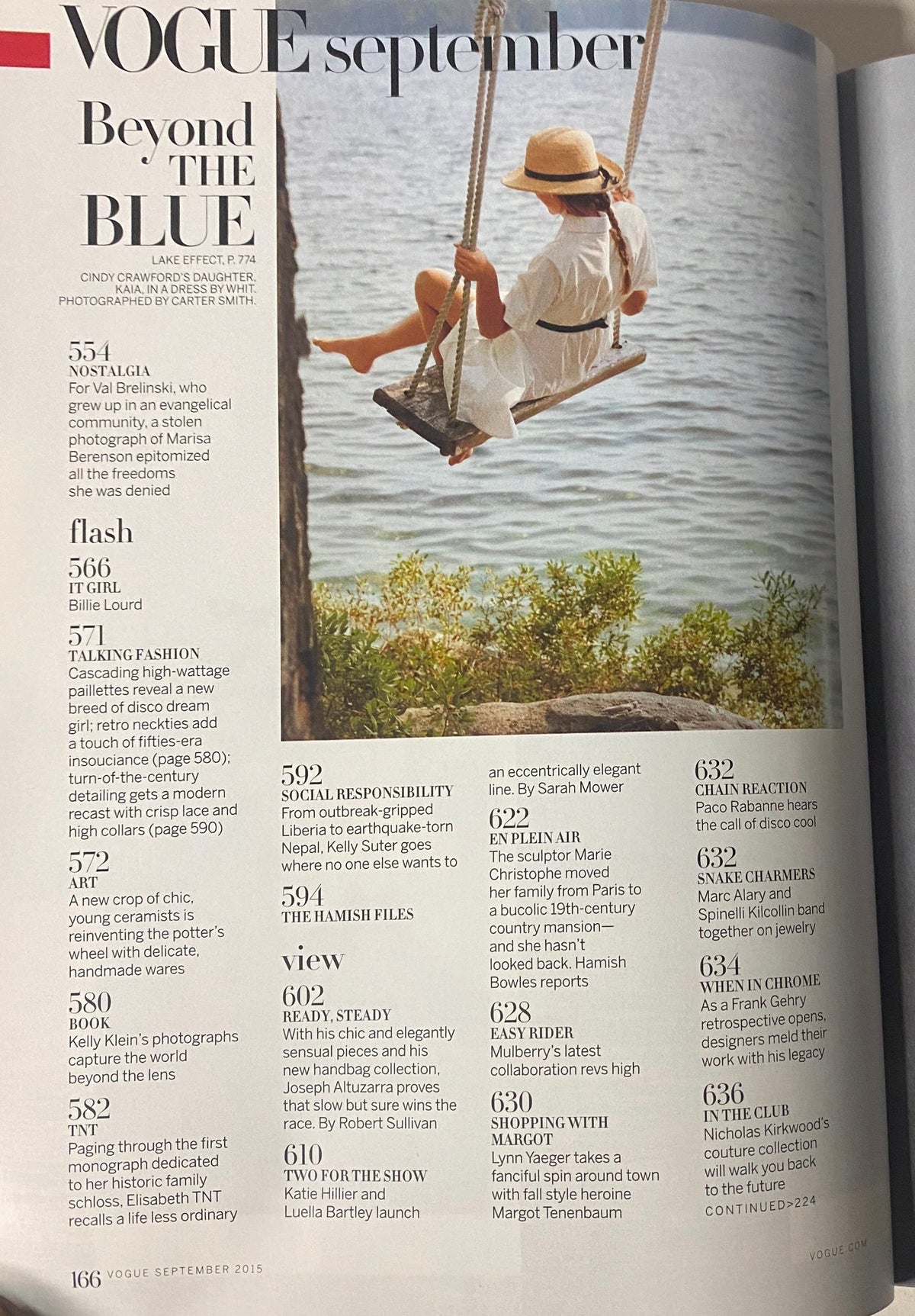
- "Lake Effect," documenting supermodel Cindy Crawford's family getaway in central Ontario, including her daughter Kaia Gerber photographed by Carter Smith. This feature offers a more personal, lifestyle-oriented profile alongside the issue's larger cultural and political features. It reflects the issue's range, extending from serious journalism to more intimate celebrity lifestyle content.
Condition & Rarity
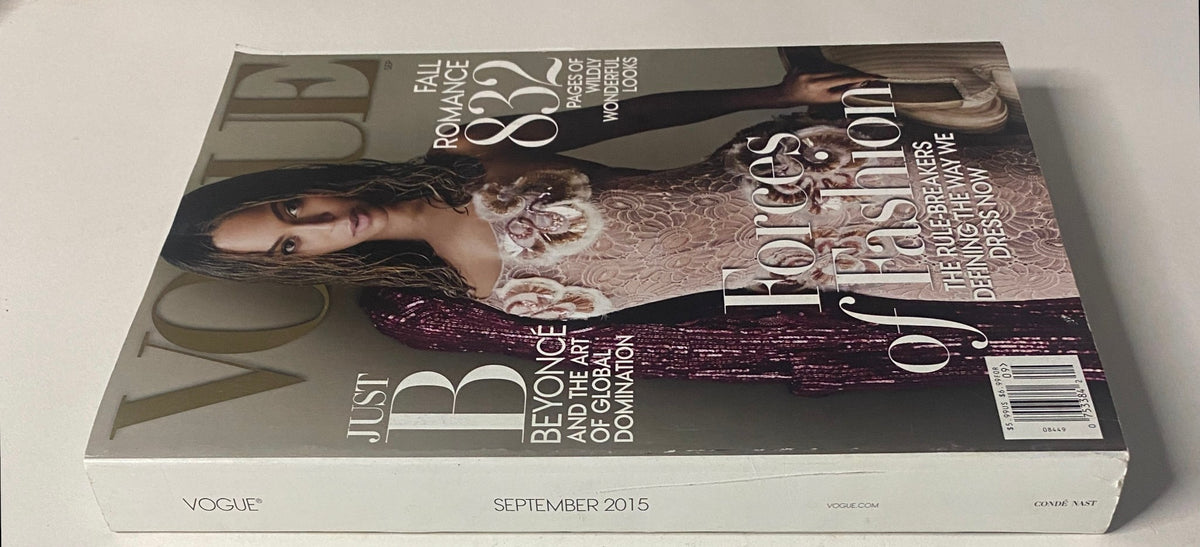
Condition for fashion magazines of this type and era is generally assessed through cover gloss retention, spine and binding integrity, page completeness, and the absence of significant creasing, tearing, or soiling. An issue described as very good condition with only minor edge wear generally indicates a cover that retains strong color saturation and gloss, with binding and interior pages intact and free from major structural damage. The absence of a subscriber label is generally viewed favorably among collectors, since newsstand copies without label residue or sticker removal marks tend to present a cleaner, unobstructed cover image, which matters significantly for an issue valued in part for its landmark Beyoncé cover. A protective plastic covering plays a meaningful preservation role for glossy fashion magazines of this kind, guarding against humidity, handling wear, and gradual fading of the cover's color and gloss over time. September issues in particular tend to be considerably thicker than standard monthly editions, given their significantly higher page count and advertising volume, which can make long-term binding integrity an even more important factor than with thinner issues from other months. Binding integrity is especially significant here, since a complete and intact set of this issue's unusually extensive feature content adds considerably to its reference value for collectors. Given the issue's combination of a major Beyoncé cover story and its status as one of Vogue's flagship September editions, well-preserved copies are likely to hold particular interest among collectors focused on either Beyoncé specifically or significant September issues generally. Collectors evaluating any surviving copy of this issue should weigh cover clarity and overall structural completeness, particularly spine integrity given the issue's substantial size, as the primary indicators of long-term collectible condition.
Looking for More Issues Like This?
An issue combining a landmark Beyoncé cover story with significant political journalism, a major museum exhibition tie-in, and profiles spanning television, film, and design represents a particularly well-documented piece of fashion publishing history, making it an interesting target for collectors focused on this specific period. If this exact September 2015 issue isn't what you're looking for, the broader Beyoncé collection spans material connected to her career across music, fashion, and entertainment media. For collectors more interested in the publication itself, the wider Vogue collection offers decades of covers and editorial eras, including the magazine's broader tradition of flagship September issues. Browsing by person tends to suit collectors building a career-spanning archive around a specific cultural figure, while browsing by publication suits those more interested in a particular magazine's editorial identity or its most significant individual issues. Both collections offer a practical way to continue exploring material connected to this issue's particular combination of cover and content. Either approach can surface comparable pieces worth considering for a collection centered on this period in fashion and culture publishing. Together, they represent the most direct path to material connected to this landmark issue.