



Description
Collector's Note – Why This Issue Matters
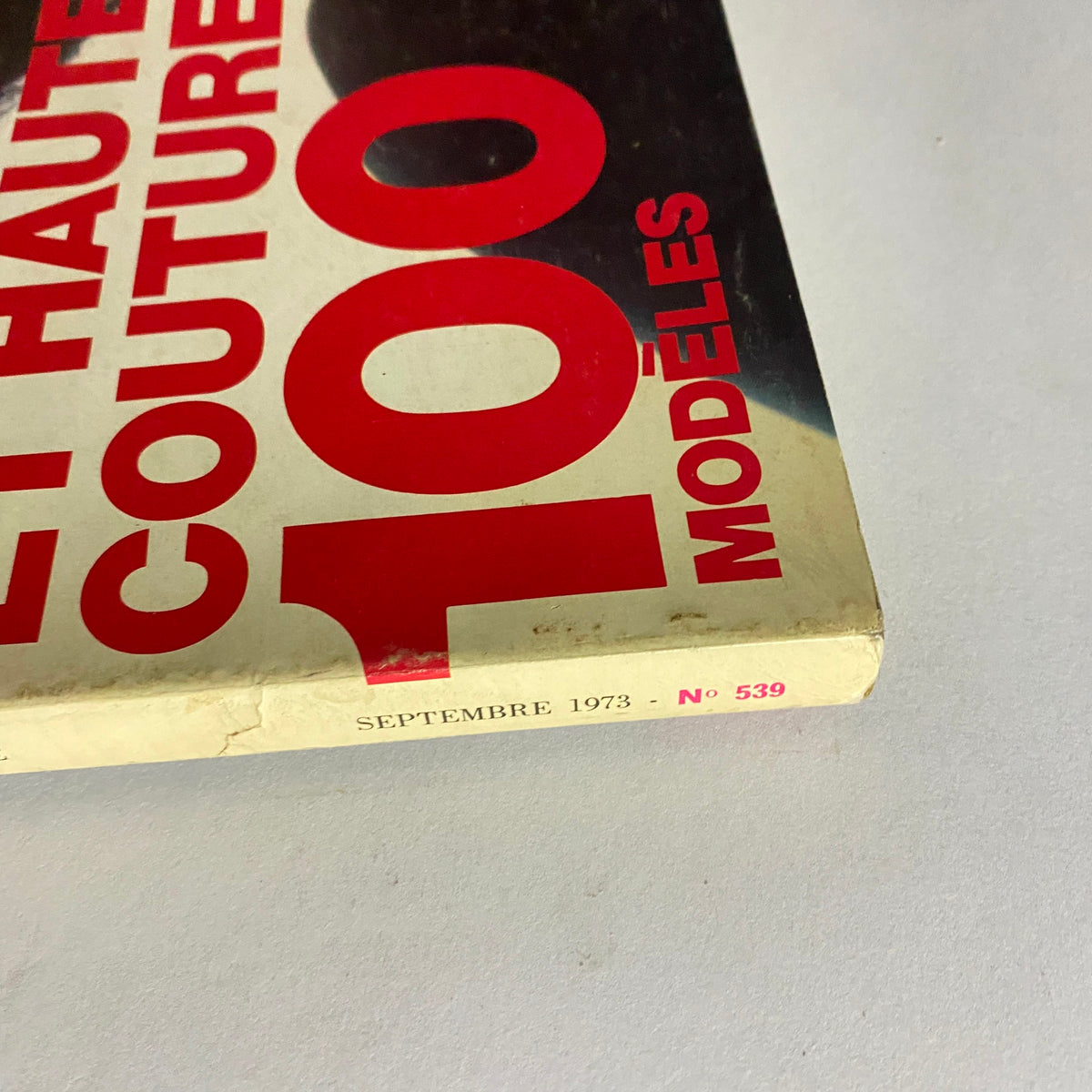
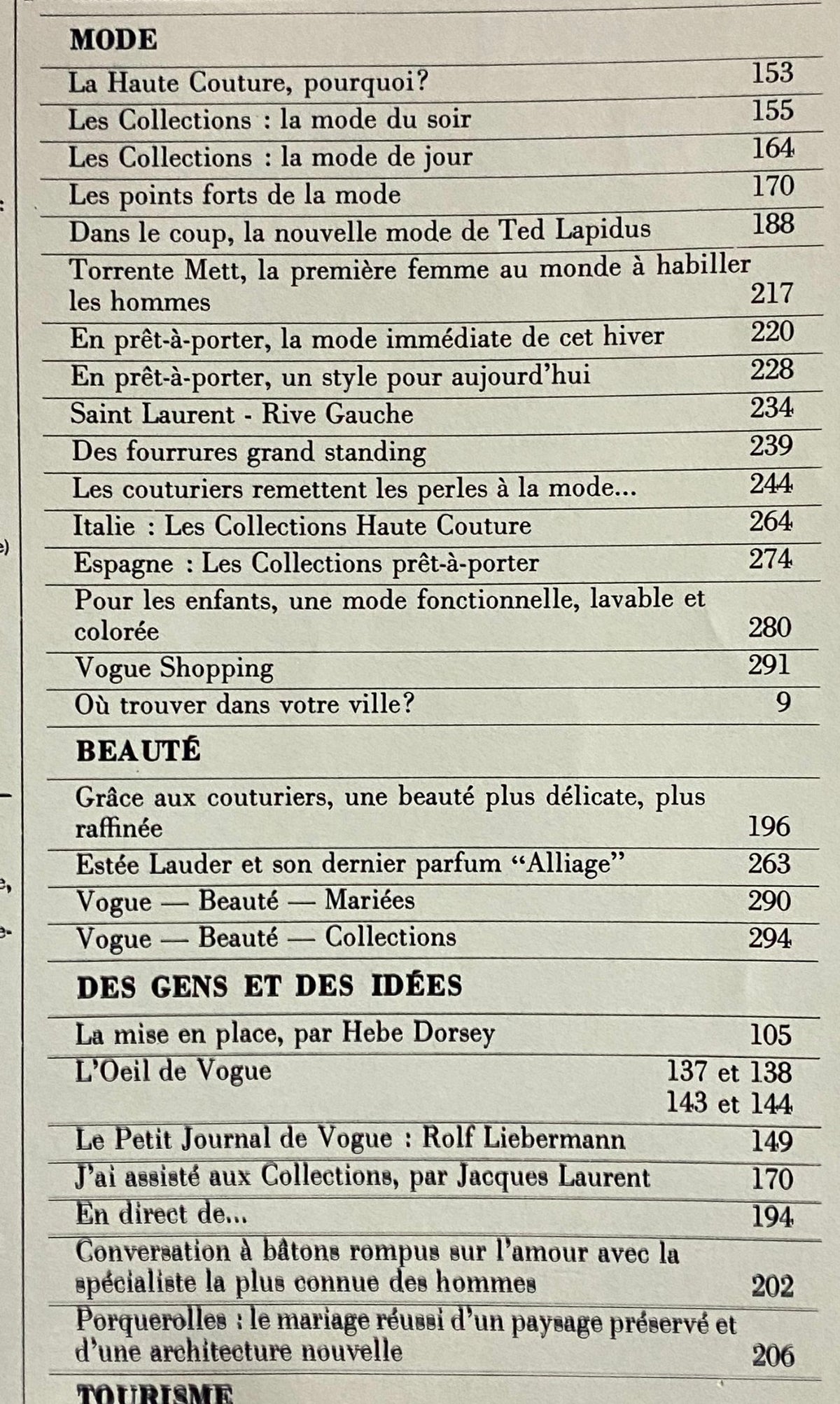
The September 1973 issue of Vogue Paris, with French actress Anny Duperey on the cover, is the most significant single issue in any fashion magazine's annual calendar — the September collections number, which traditionally serves as both the fall season's primary fashion statement and the year's editorial standard-bearer. By September 1973, Duperey was one of the most visible actresses in French cinema — she had appeared in Stavisky, in films with Claude Chabrol, and had established the specific combination of intelligence and beauty that made her a natural Vogue Paris cover subject at the publication's most important annual moment. The confirmed table of contents confirms that this issue was produced as a comprehensive collections document: "La Haute Couture, pourquoi?", "Les Collections: la mode du soir" and "Les Collections: la mode de jour" together constitute a full editorial survey of the Paris autumn 1973 collections. For collectors building an archive of Vogue magazine issues from the 1970s, a September 1973 Vogue Paris collections issue with a Duperey cover is the most editorially substantial configuration of this year's French fashion journalism.
The confirmed designer content gives this issue specific historical weight within the 1973 collections season. The Ted Lapidus feature — "Dans le coup, la nouvelle mode de Ted Lapidus" — documents a designer who was at the peak of his influence in early-1970s French fashion, having pioneered unisex clothing and safari suits that became defining garments of the period. The Yves Saint Laurent Rive Gauche coverage documents the ready-to-wear arm of the most culturally significant fashion house of the decade at a moment when Rive Gauche was consolidating its position as the defining expression of Saint Laurent's influence on how Parisian women actually dressed. The feature on Torrente Mett — "la première femme au monde à habiller les hommes" — documents one of the first female designers to build a major menswear business, a historically specific story in the context of early-1970s fashion's engagement with gender. Publications from 1973 document French fashion at a specific and energetic moment between the haute couture tradition and the ready-to-wear revolution that would reshape the industry's commercial structure through the decade, and this Vogue Paris September issue captures that tension in detail.
About the Publication
Vogue Paris, the French edition of Condé Nast's flagship fashion title, was by September 1973 one of the most editorially authoritative fashion publications in the world — the September collections issue being its most significant production of the year, commanding the largest advertising investment, the most ambitious editorial content, and the closest attention from the international fashion community. Published in French, the magazine combined haute couture coverage, ready-to-wear reporting, beauty content, cultural journalism, and travel features in a format that treated fashion as inseparable from broader cultural life. The September issue's scope — confirmed here by its comprehensive collections documentation from haute couture through Spanish ready-to-wear — reflects the publication at full annual editorial ambition.
Key Highlights Inside
- Cover featuring Anny Duperey — one of French cinema's most prominent actresses in the early 1970s, appearing on Vogue Paris's most important annual issue, the September collections number.
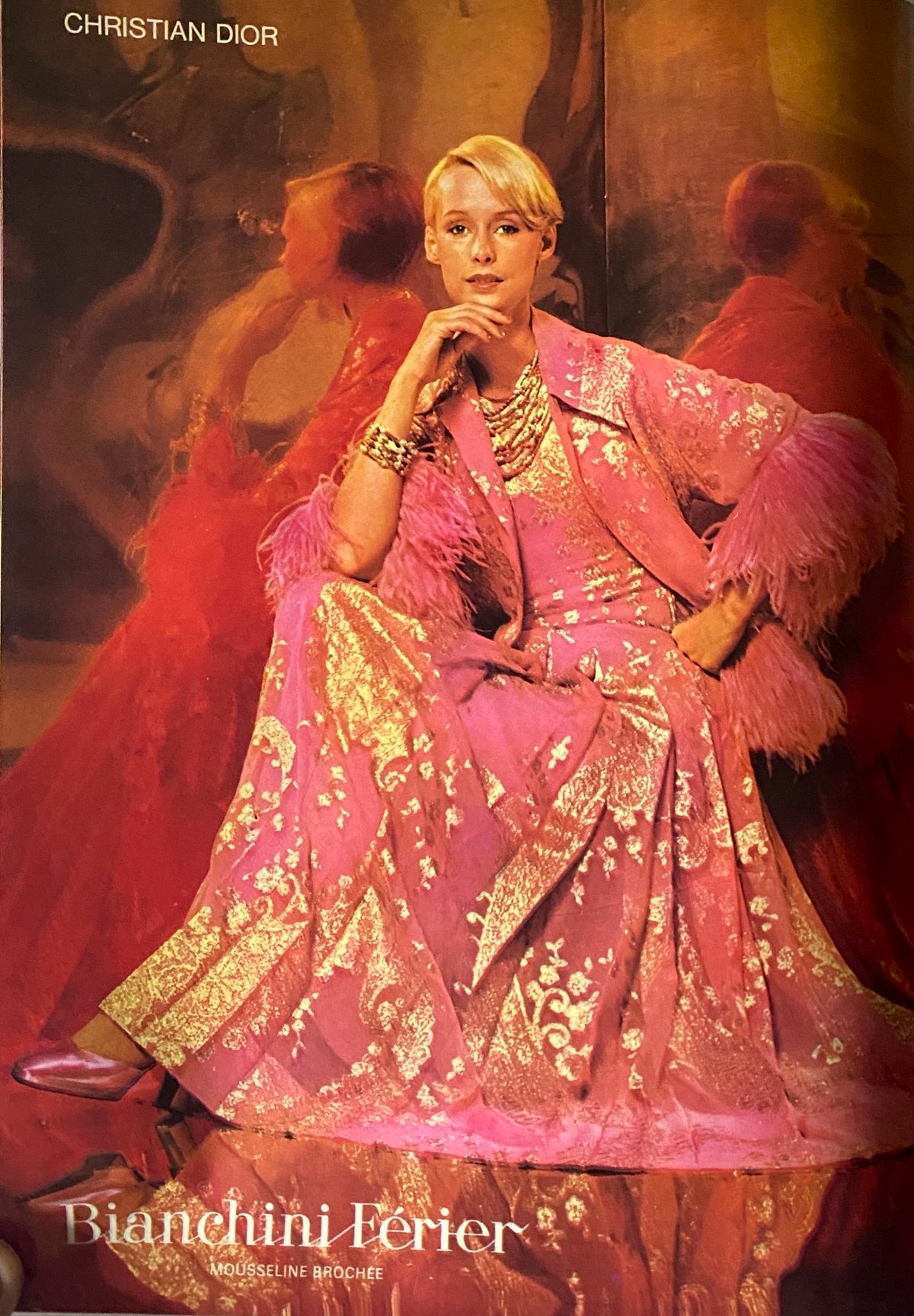
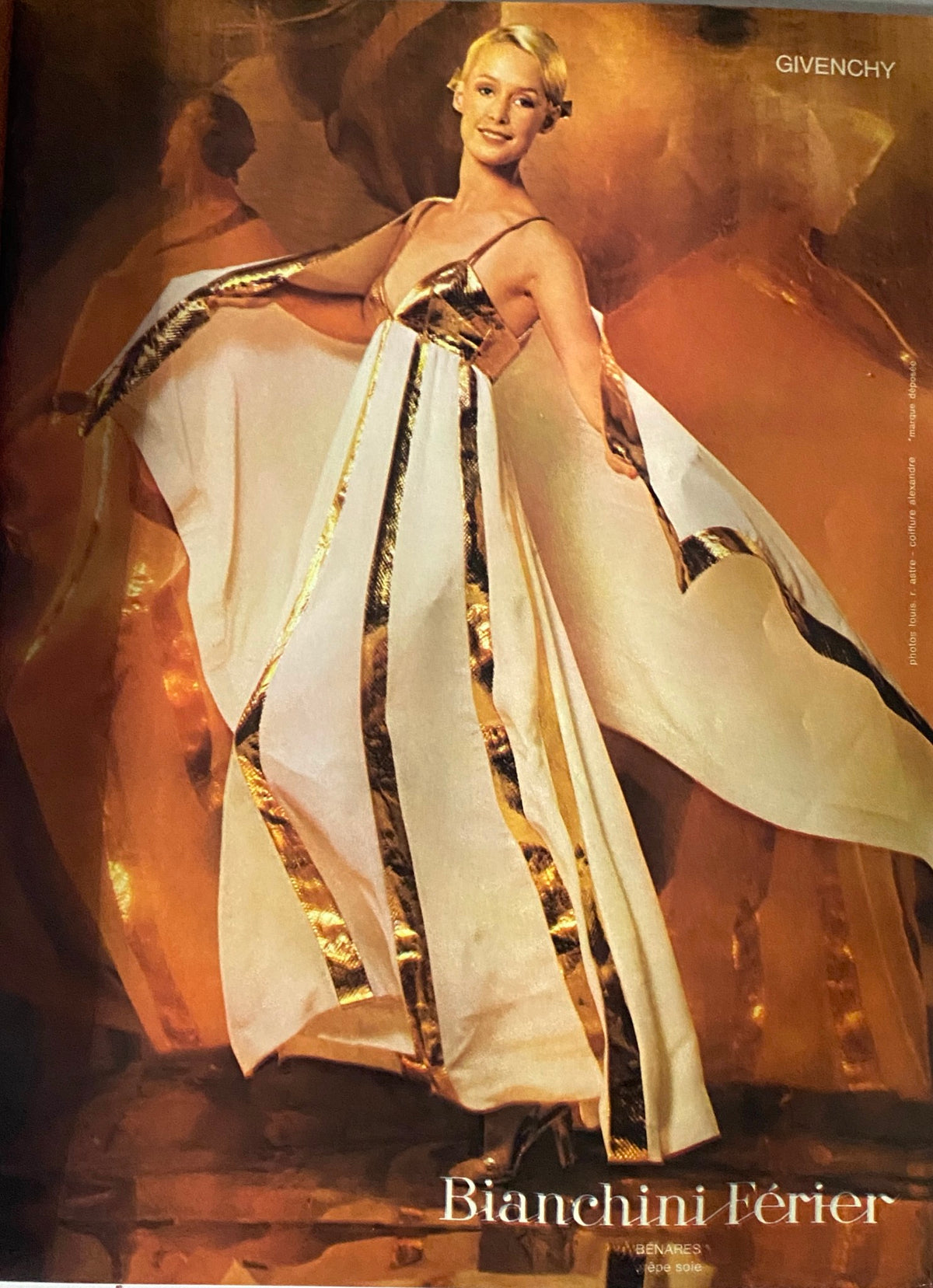
- "La Haute Couture, pourquoi?" (p.153) and full collections coverage — "Les Collections: la mode du soir" and "Les Collections: la mode de jour" — constituting a comprehensive editorial survey of the Paris autumn 1973 season across both daywear and eveningwear.
- "Dans le coup, la nouvelle mode de Ted Lapidus" (p.188) — coverage of one of early-1970s French fashion's most influential designers, whose unisex clothing and safari suit aesthetics were defining garments of the period.
- "Saint Laurent — Rive Gauche" (p.234) — documentation of the ready-to-wear arm of the most culturally significant French fashion house of the decade at the moment of its consolidated commercial influence.
- "Torrente Mett, la première femme au monde à habiller les hommes" (p.217) — a historically specific feature on one of the first female designers to build a major menswear business, documenting an unusual story in early-1970s fashion's engagement with gender.
- "Espagne: Les Collections prêt-à-porter" (p.274) — Spanish ready-to-wear collections coverage, reflecting Vogue Paris's consistent documentation of the emerging European fashion markets beyond France and Italy.
Condition & Rarity
Very good condition with minor edge wear is a strong rating for a monthly fashion magazine now over fifty years old — and particularly significant for the September collections issue, which was typically the largest and most densely produced edition of the publishing year. The absence of a mailing label confirms non-subscriber origin, the preferred configuration for collectors of Vogue Paris issues from this period. The plastic protective covering indicates deliberate preservation storage. For a glossy-stock monthly of this vintage, the primary condition factors are cover surface brightness and the clarity of the Duperey photograph, spine integrity given the September issue's likely substantial page count, and the completeness and flatness of the interior collections photography that represents the issue's primary historical and visual content.
Looking for More Issues Like This?
A label-free, very good condition September 1973 Vogue Paris collections issue with Anny Duperey on the cover and this depth of confirmed editorial content — including Lapidus, Saint Laurent Rive Gauche, and the Torrente Mett menswear feature — is one of the more historically substantive configurations in the early-1970s Vogue Paris archive. If this one has already been claimed, the full archive of Vogue magazine issues spans multiple national editions and decades and is worth exploring for other significant 1970s collections issues. The broader 1973 magazine collection offers additional context for this specific and energetic year in French and international fashion history.