
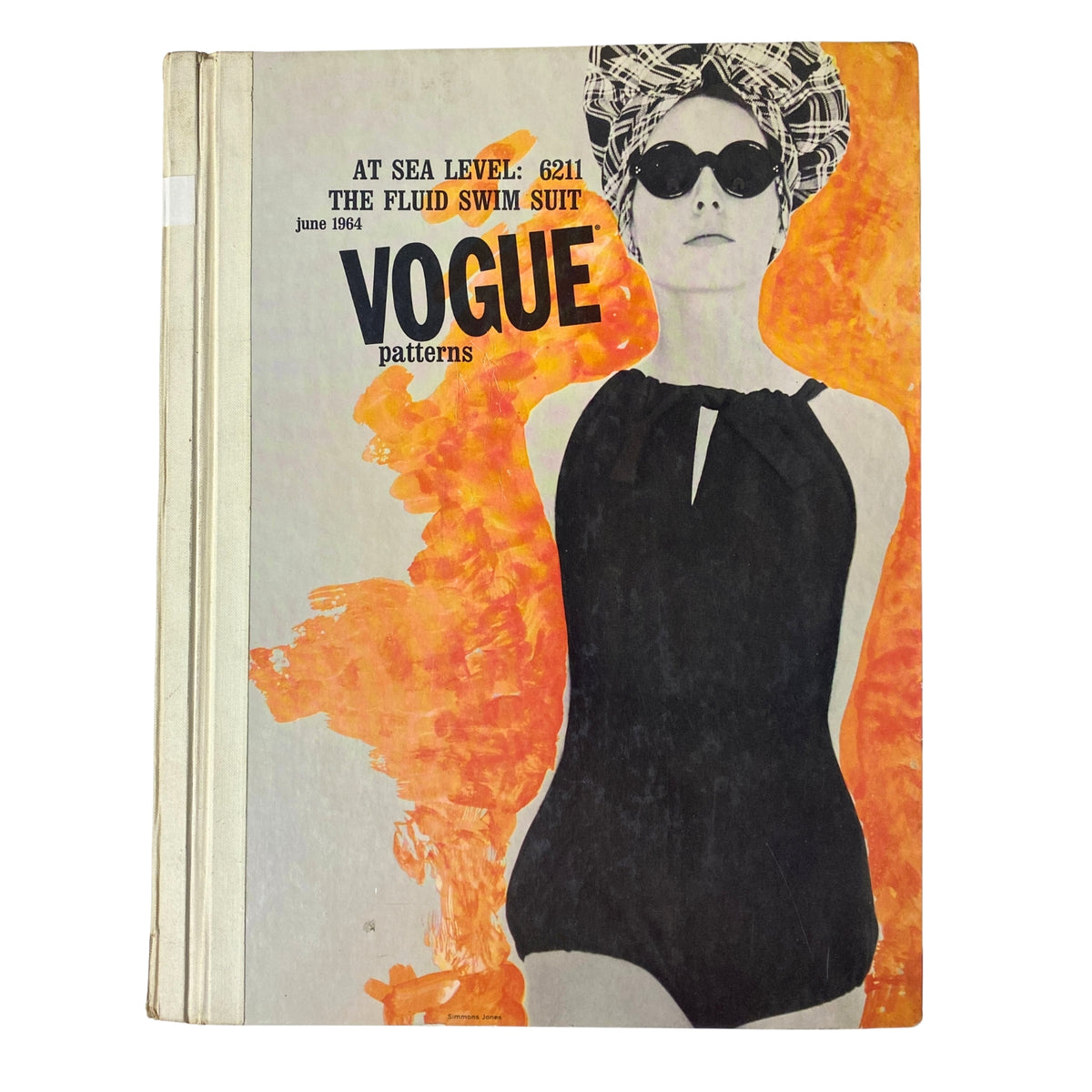
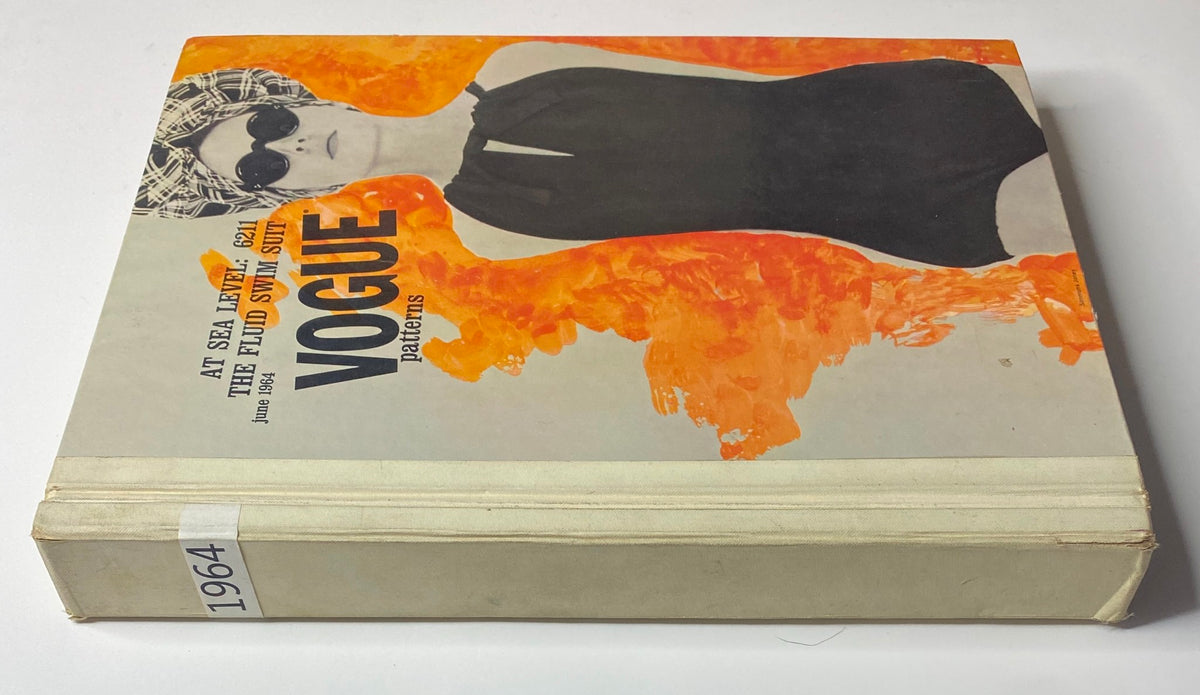
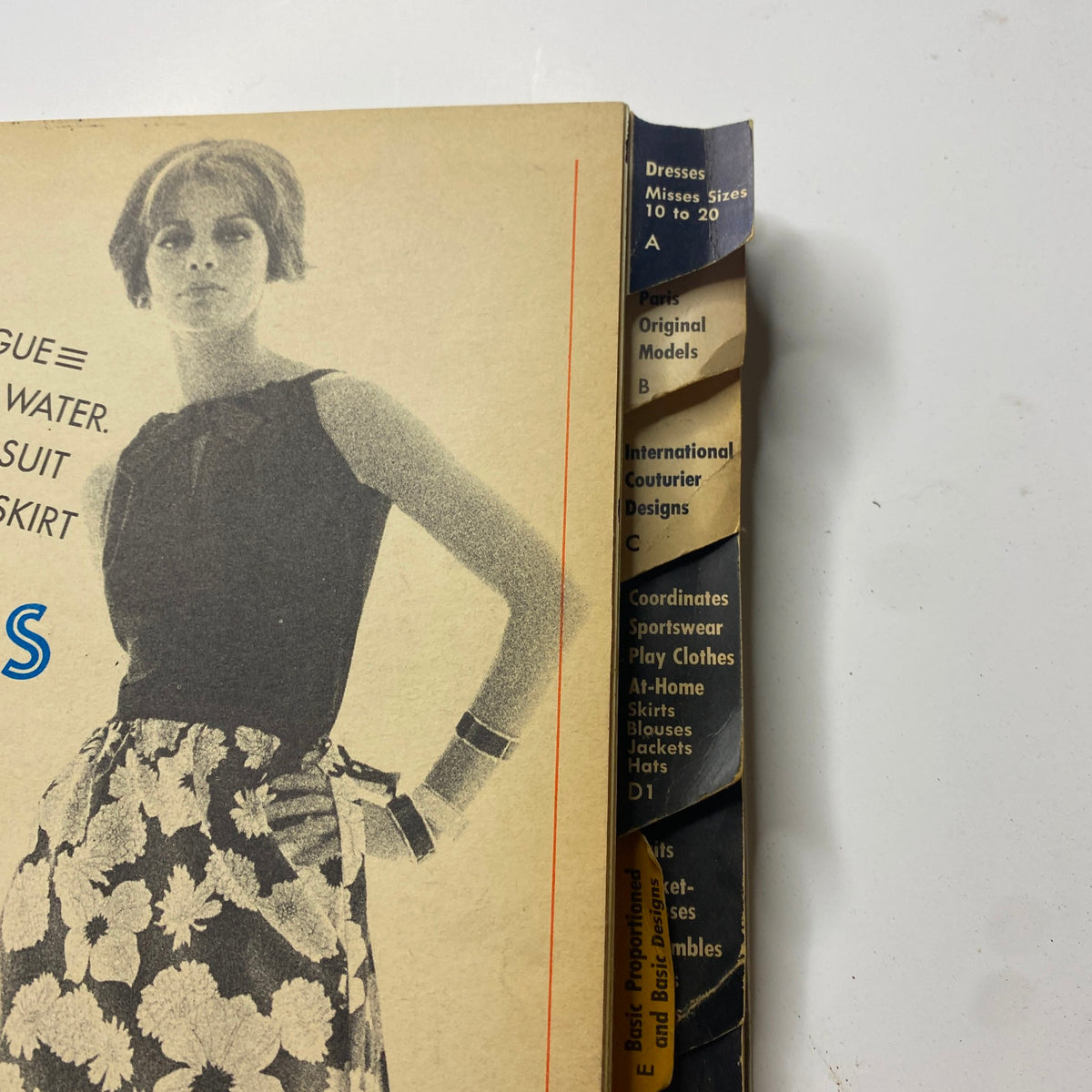
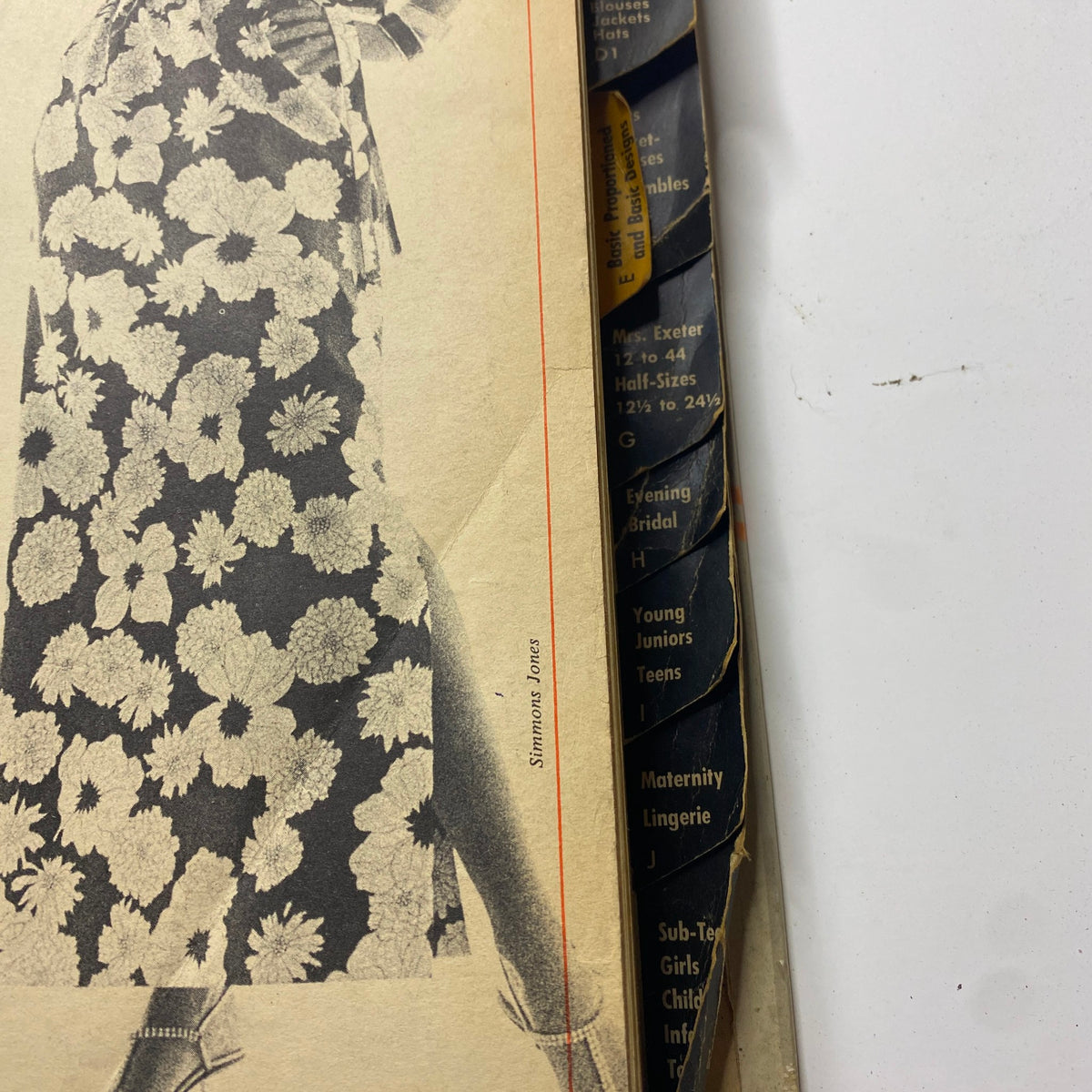
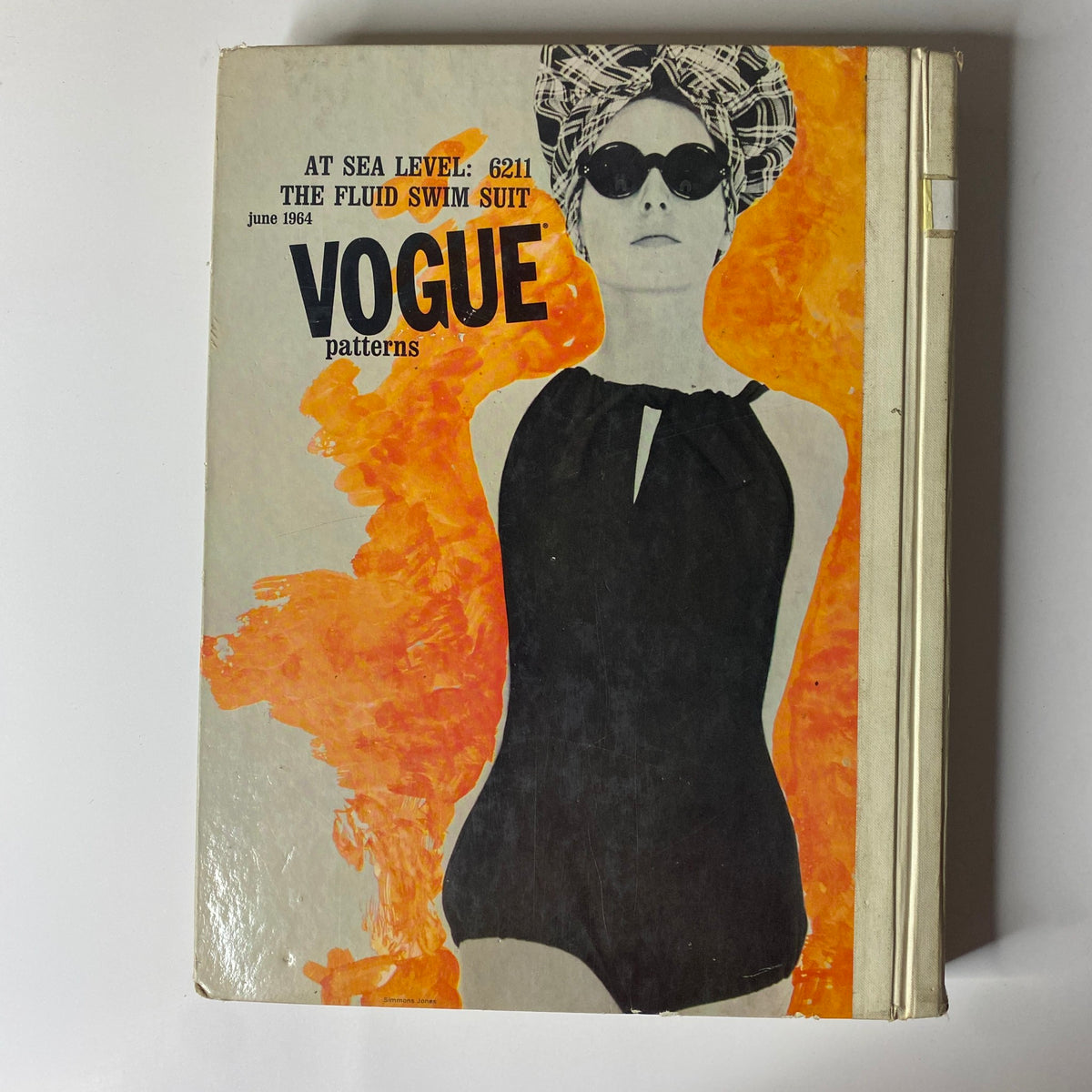


Description
Collector's Note – Why This Issue Matters
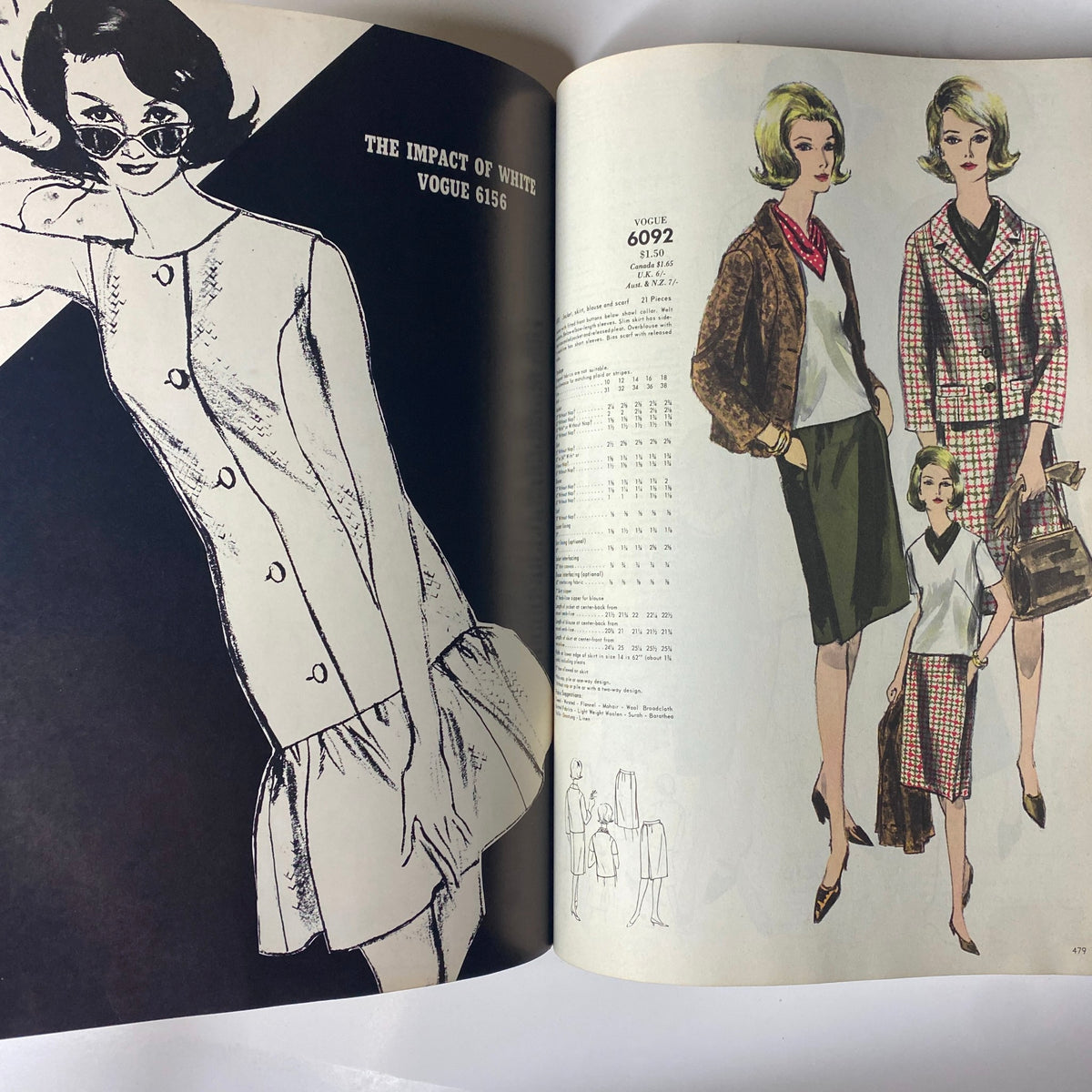
The June 1964 Vogue Patterns catalog arrives at what many fashion historians regard as the last sustained expression of classical mid-century elegance before the seismic stylistic shifts of the later 1960s fully took hold. In the summer of 1964, couture still commanded genuine cultural authority — Balenciaga was at the height of his late-period mastery, Givenchy was defining Parisian refinement, and Dior under Marc Bohan was producing the structured, waist-conscious silhouettes that had defined the house since the New Look of 1947. That Vogue Patterns was translating designs from these houses into home-sewable form for American women is itself a remarkable cultural fact — a direct pipeline between the ateliers of Paris and the fabric stores of the American Midwest and South. For collectors of vintage Vogue Patterns catalogs, the 1964 editions occupy a particularly significant position: they document the moment when couture influence on home sewing was at its most direct and most seriously pursued.
The June timing of this catalog is meaningful within the annual pattern publishing cycle. A June catalog would have presented the transitional offerings between spring and summer — daywear, warm-weather separates including capris and light jackets, cocktail attire for the social season, and evening gowns for summer formal occasions. The breadth of that range, from practical summer separates to floor-length evening drapes, reflects the genuine ambition of what Vogue Patterns was asking of its customers in 1964: women who sewed from this catalog were expected to be capable of executing complex, couture-adjacent construction techniques. The pattern instructions and illustrations in a catalog of this period were correspondingly detailed, making surviving examples valuable working references for contemporary sewers pursuing historically accurate reproduction as well as primary documents for design researchers. Among collectors building out a record of publications from 1964, the Vogue Patterns counter catalog is a category of object that illuminates fashion history from a different angle than editorial magazines — less about how fashion was presented and more about how it was actually made and worn.
The large store counter format situates this catalog within a specific retail history that is itself worth understanding. In 1964, fabric stores and department store sewing departments were central institutions in American domestic life — home sewing was not a niche hobby but a mainstream practice, and the counter catalog was the primary commercial interface between pattern companies and their customers. These oversized reference books sat on cutting counters where they were consulted daily, handled by store staff and browsed by customers making purchasing decisions. Their working-object status meant that few were preserved with any care, and a surviving June 1964 counter catalog in good condition represents a meaningful survival against considerable odds.
About the Publication
Vogue Patterns was the pattern division of Condé Nast, leveraging the fashion authority of Vogue magazine to position its home sewing patterns at the prestigious end of the American market. Founded in 1899 and operating continuously through the twentieth century, Vogue Patterns distinguished itself from competitors such as McCall's, Simplicity, and Butterick through its licensing arrangements with European couture houses and its consistent emphasis on sophisticated, fashion-forward design. By 1964, the brand's Paris Original and Couturier Design lines — featuring patterns adapted directly from Balenciaga, Dior, Givenchy, and other houses — represented the apex of what home sewing pattern publishing could offer. The seasonal counter catalogs served as the primary retail reference tool distributed to fabric stores and sewing departments, presenting the complete current pattern range in large-format illustrated volumes designed for counter display and customer browsing.
Key Highlights Inside
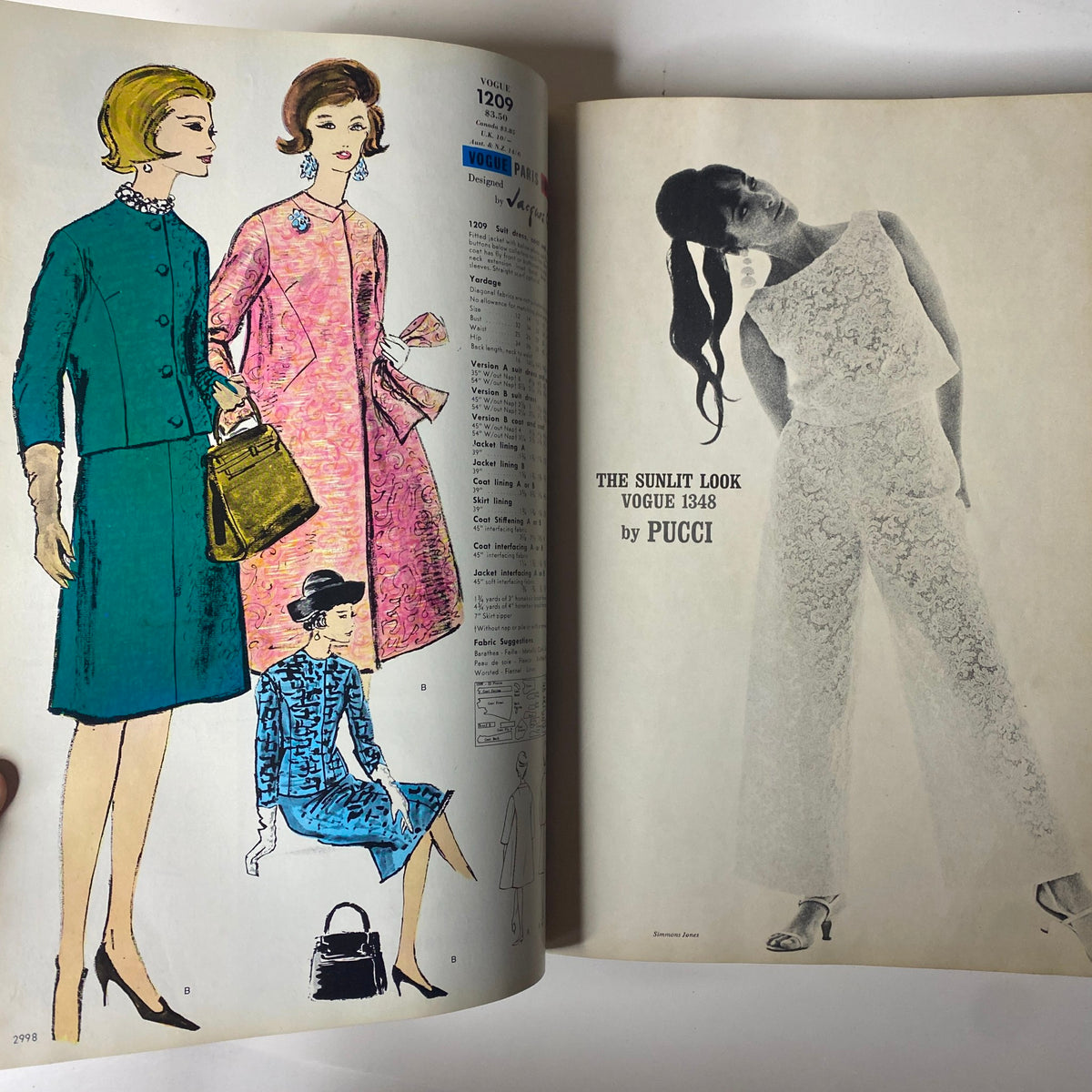
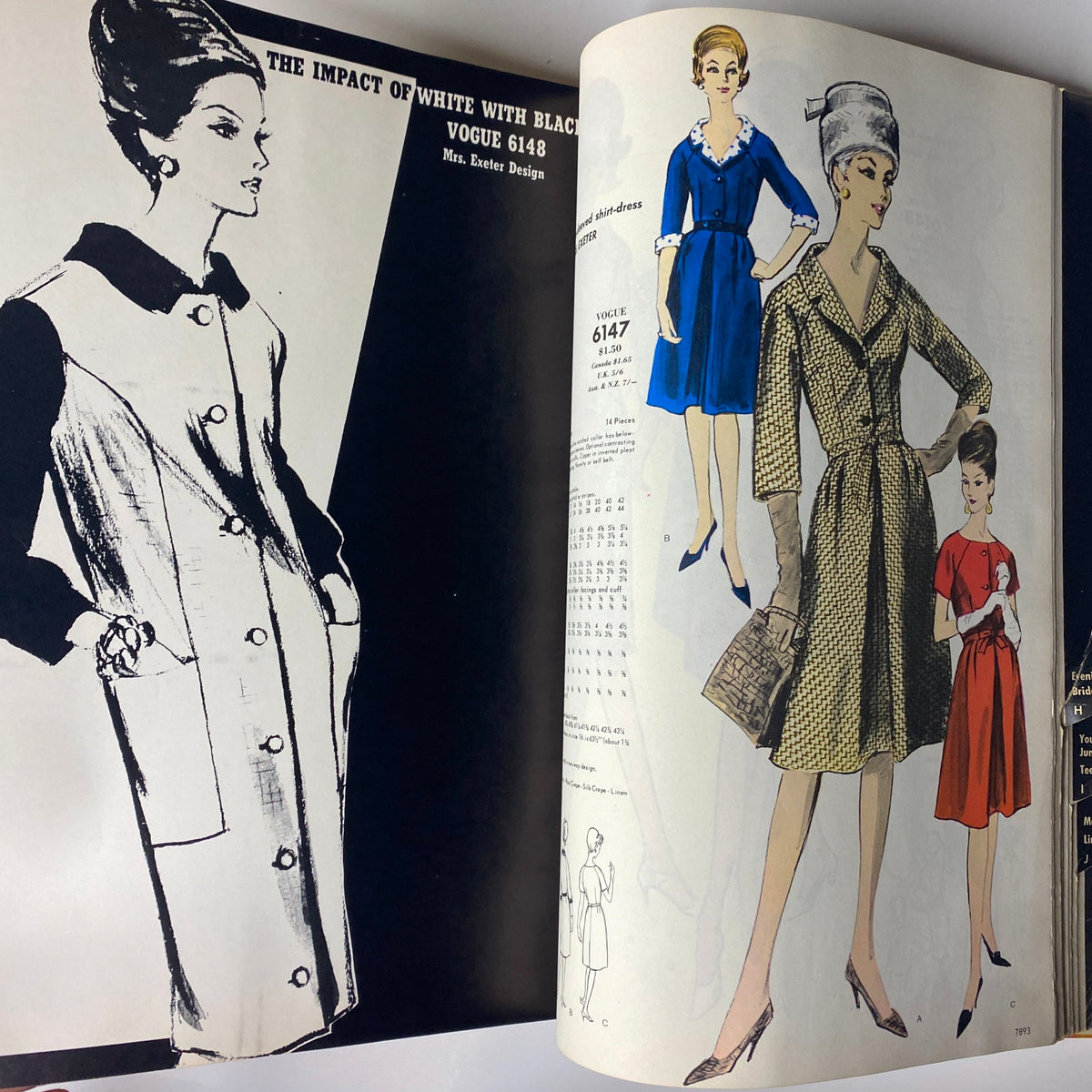
- Designer patterns adapted from Balenciaga, Dior, and Givenchy, representing the brand's couture licensing program at its most active and culturally significant period — patterns that brought genuine Parisian design authority into the American home sewing market.
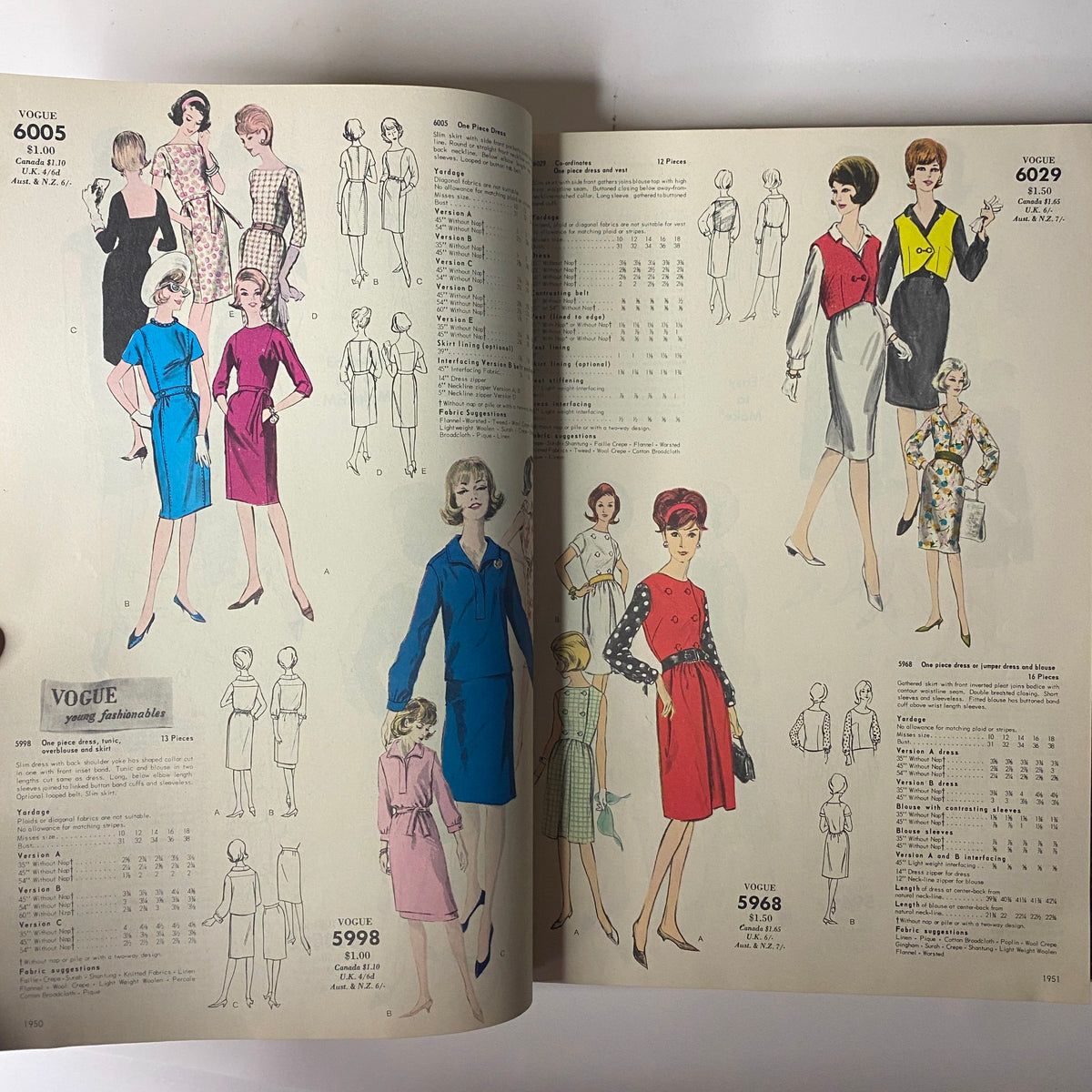
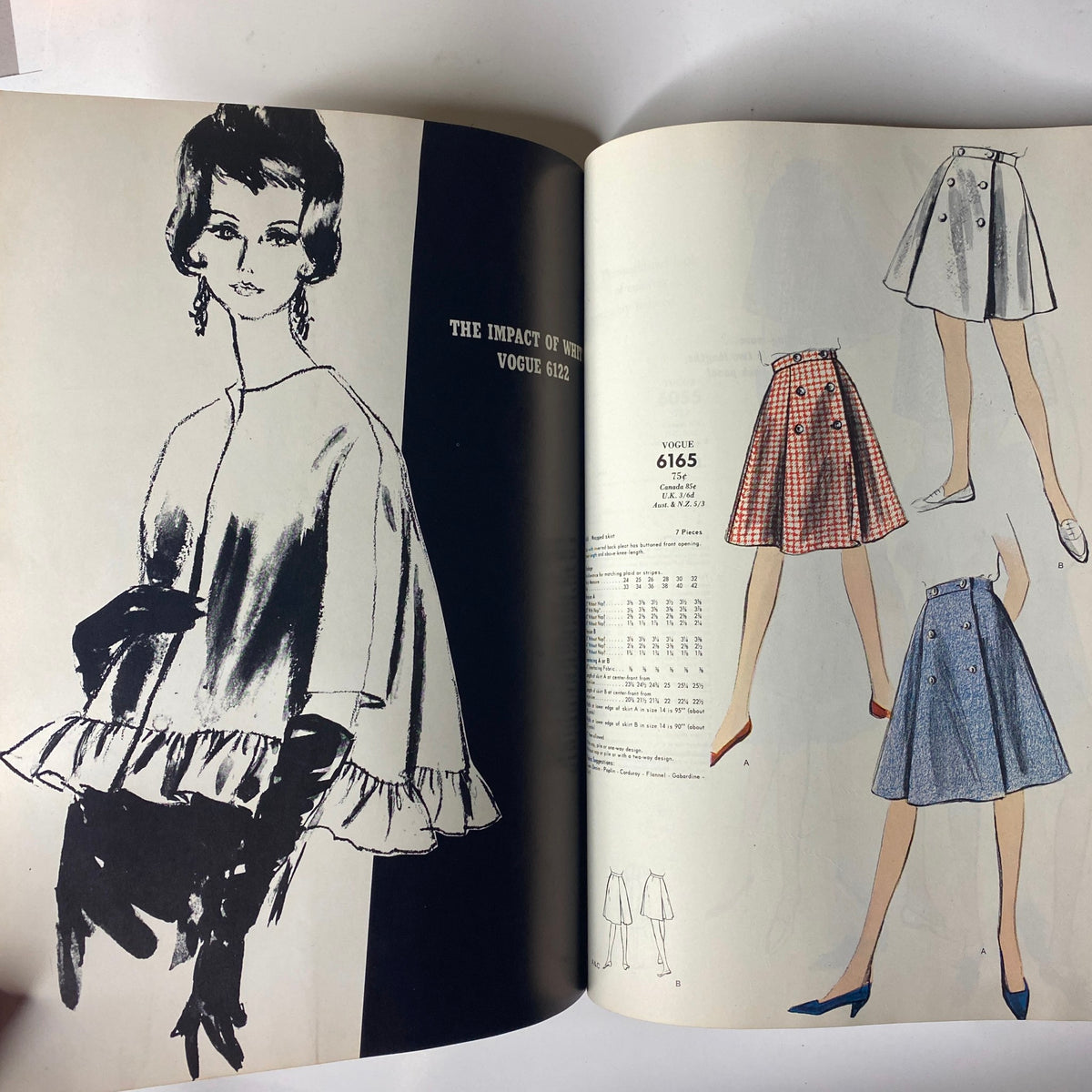
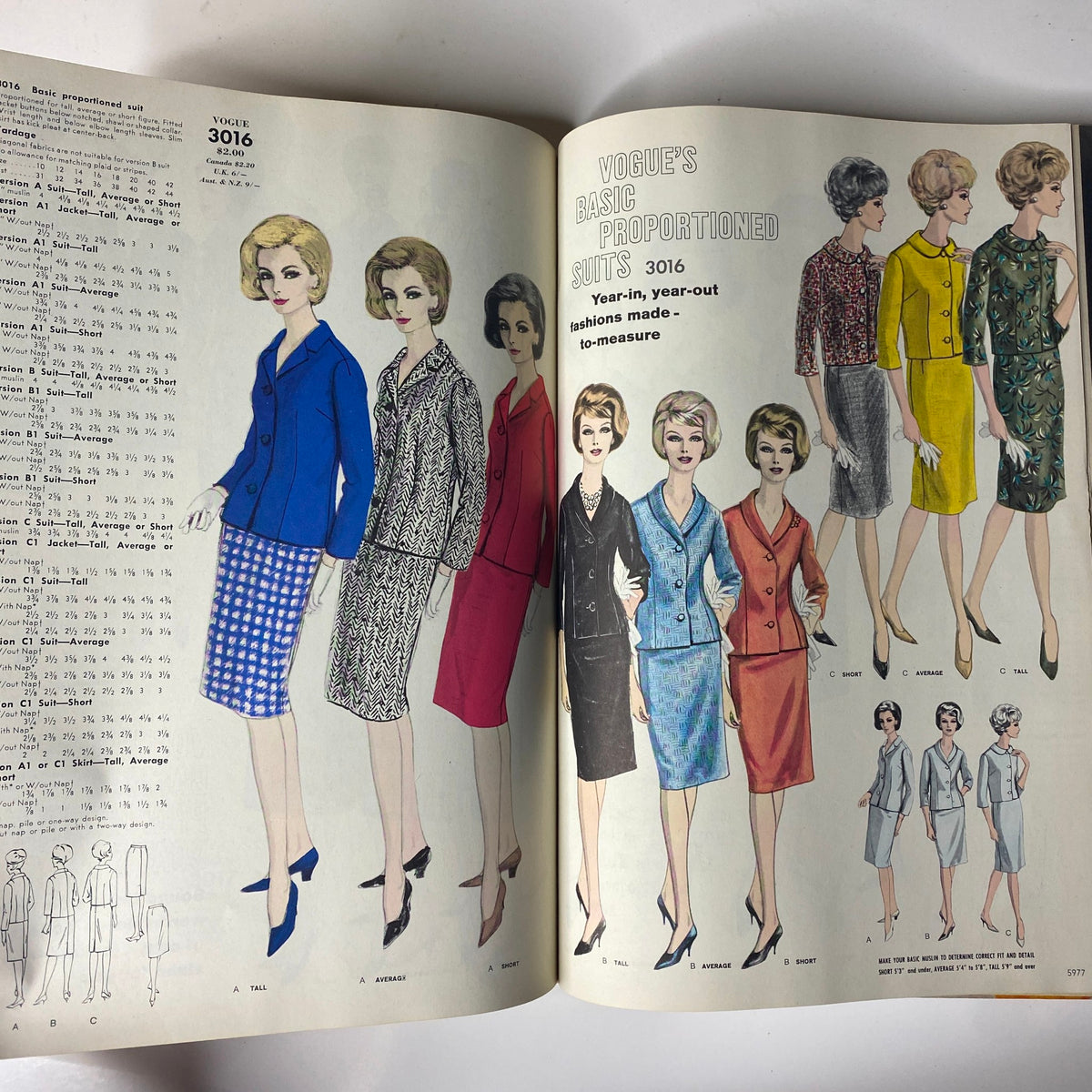
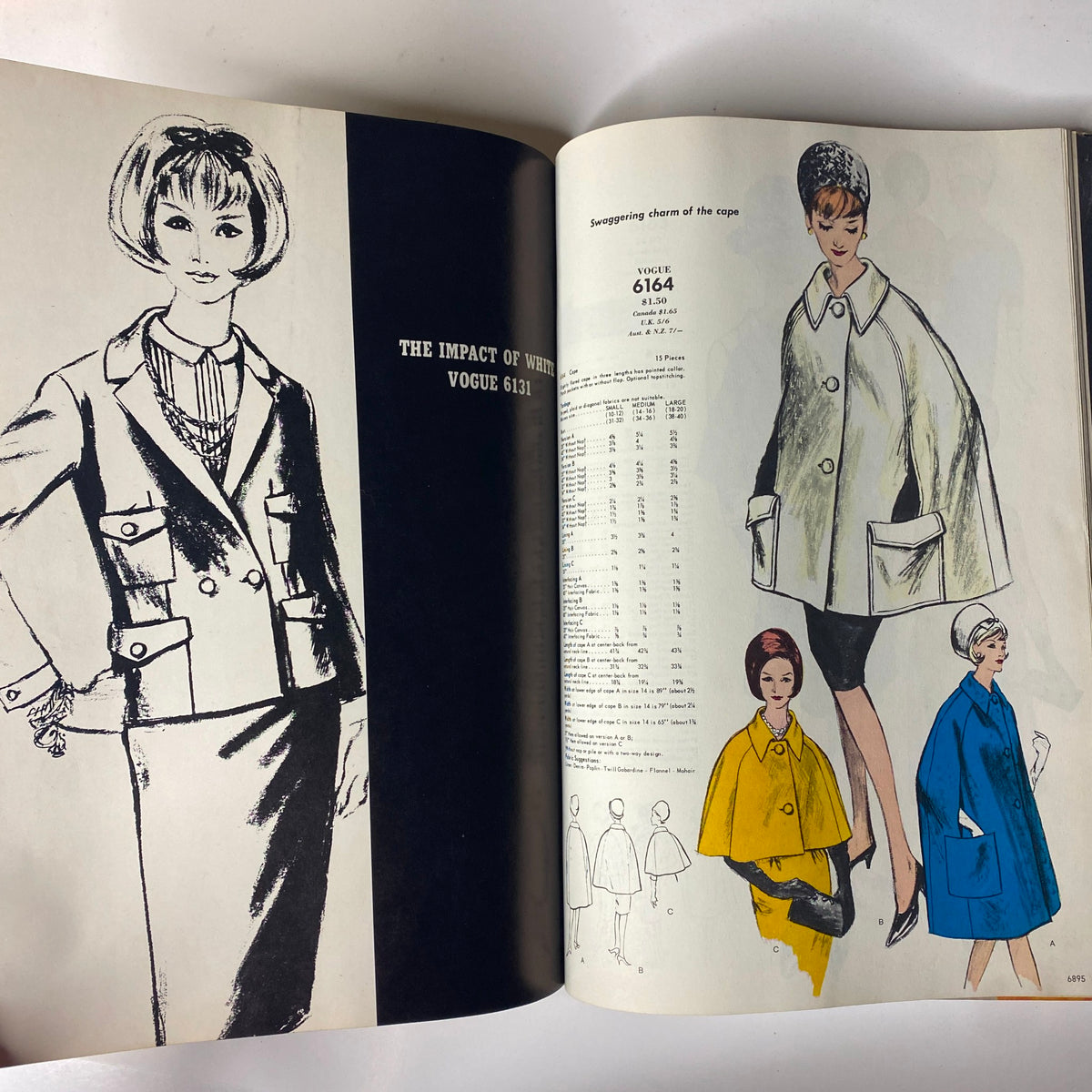
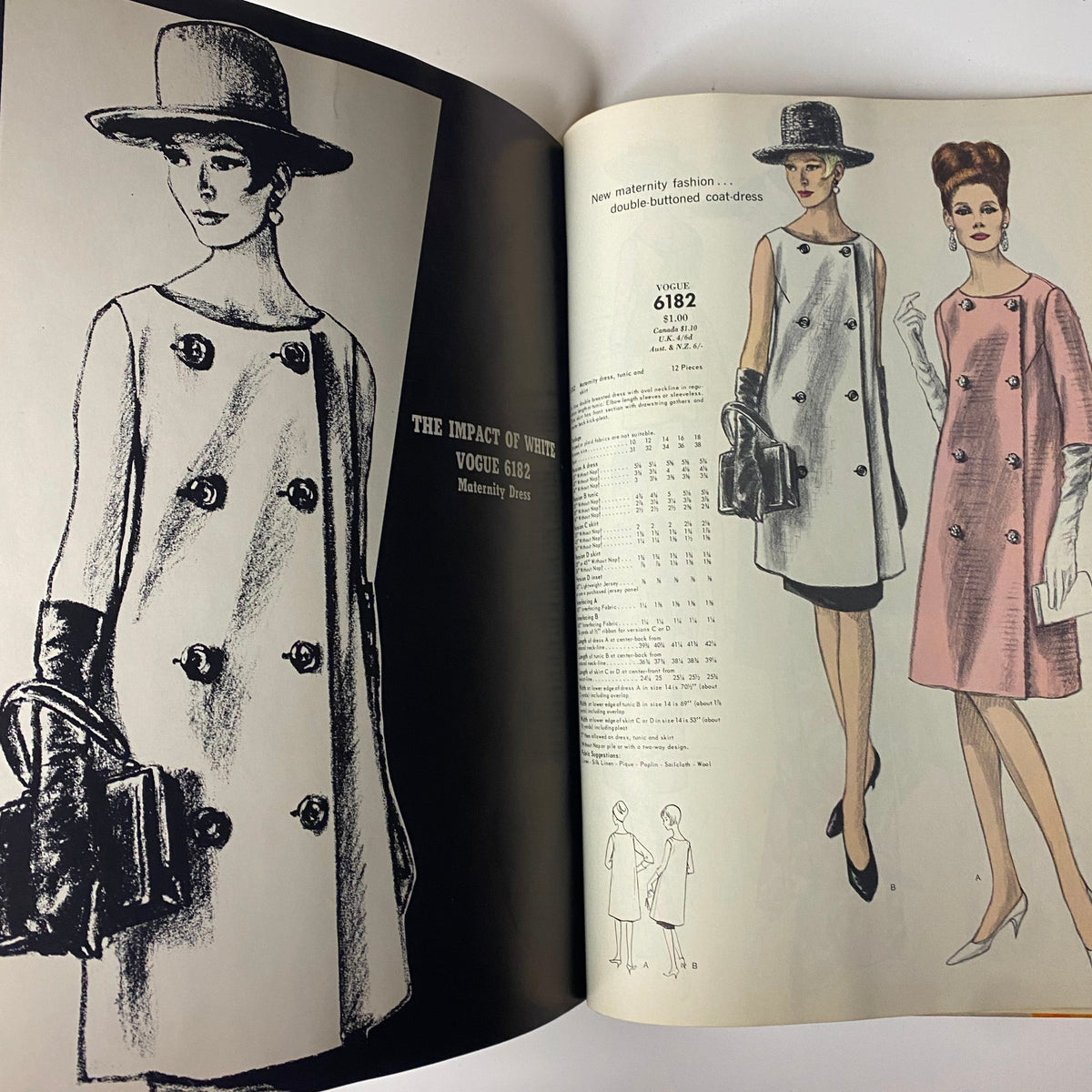
- Daywear and cocktail attire featuring the refined, structured silhouettes characteristic of early-to-mid 1960s fashion — waist emphasis, clean lines, and the tailored elegance that defined the era before the mod revolution arrived later in the decade.
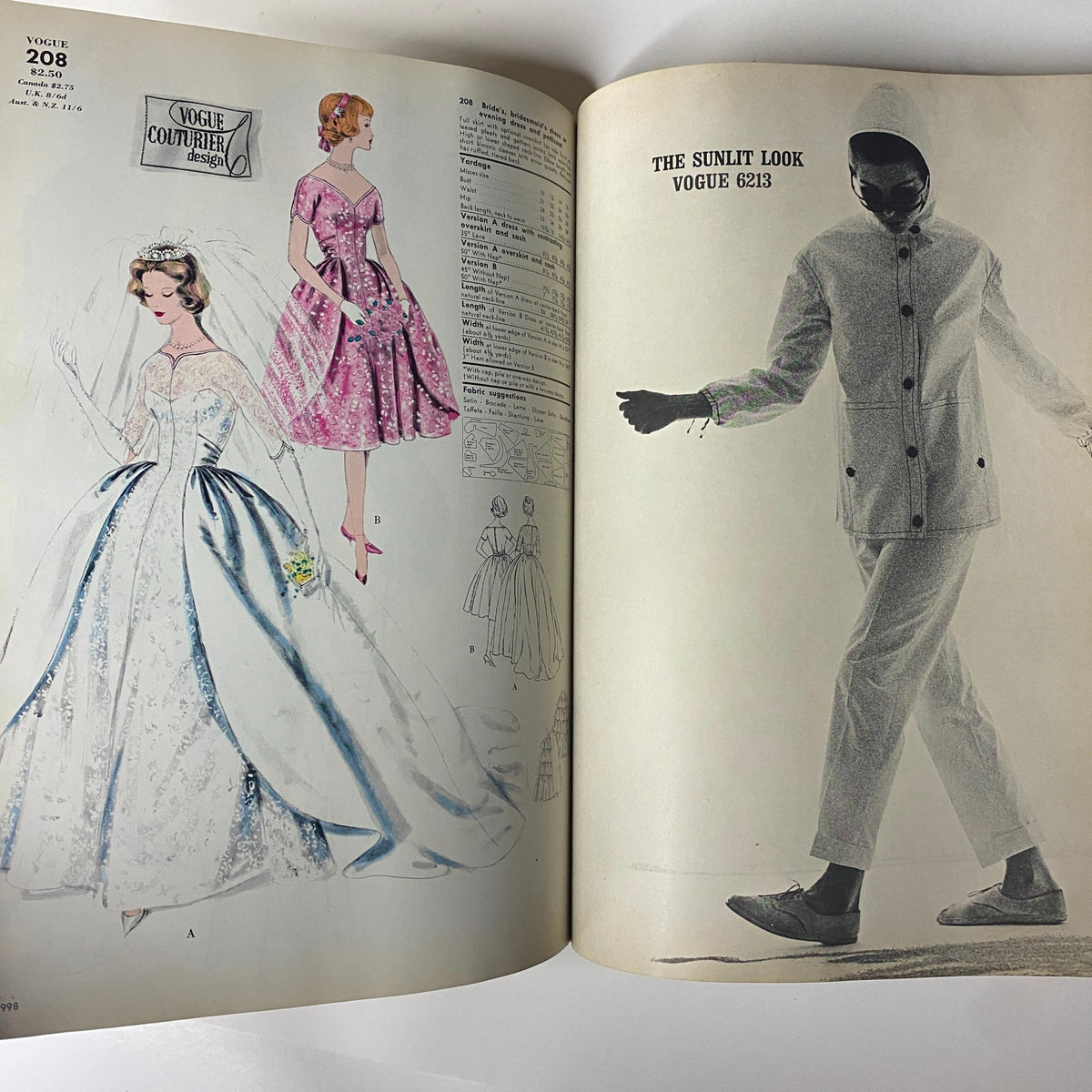
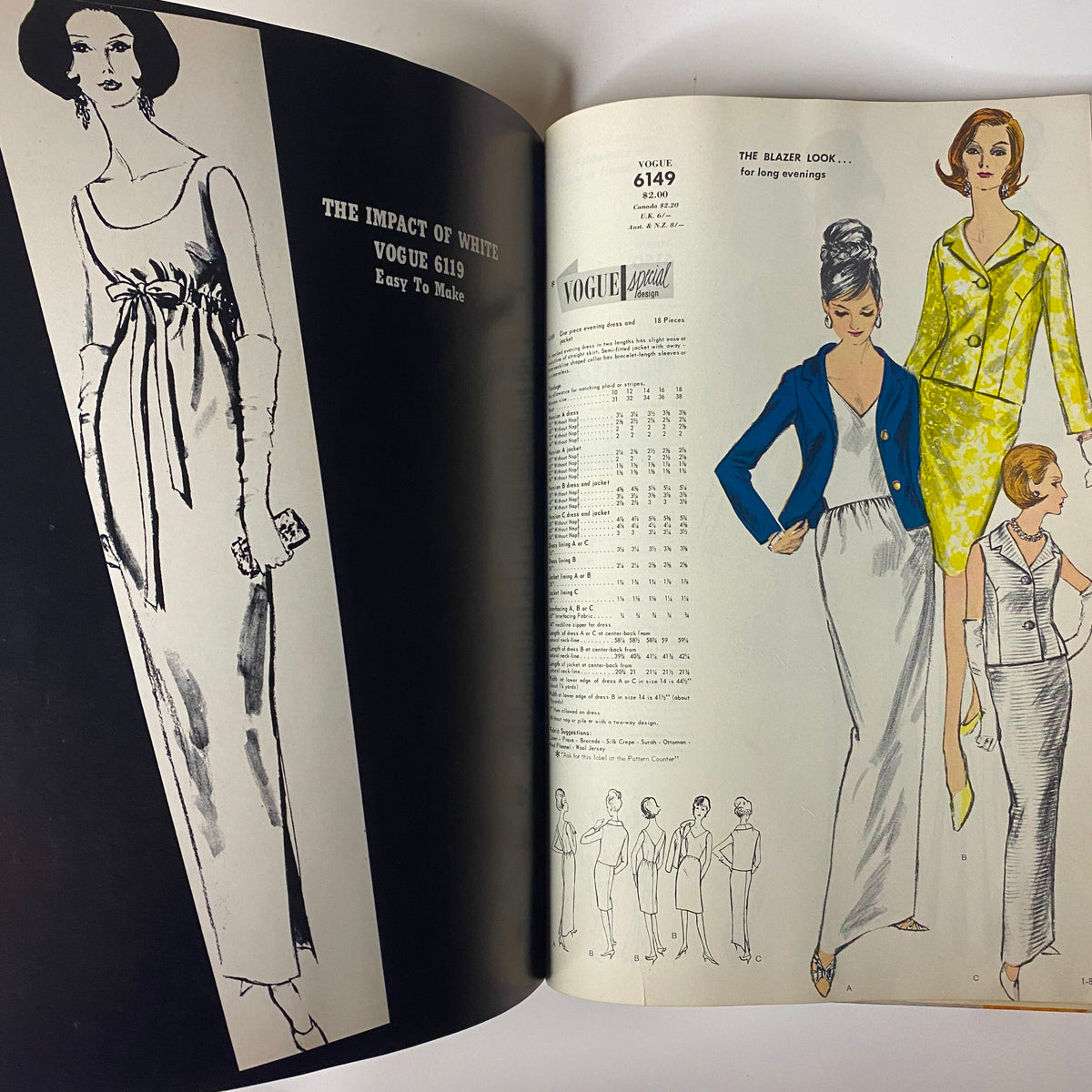
- Evening gowns including floor-length draped designs, documenting the formal dressing culture of the period when black-tie and formal social occasions remained a significant part of middle- and upper-middle-class American life.
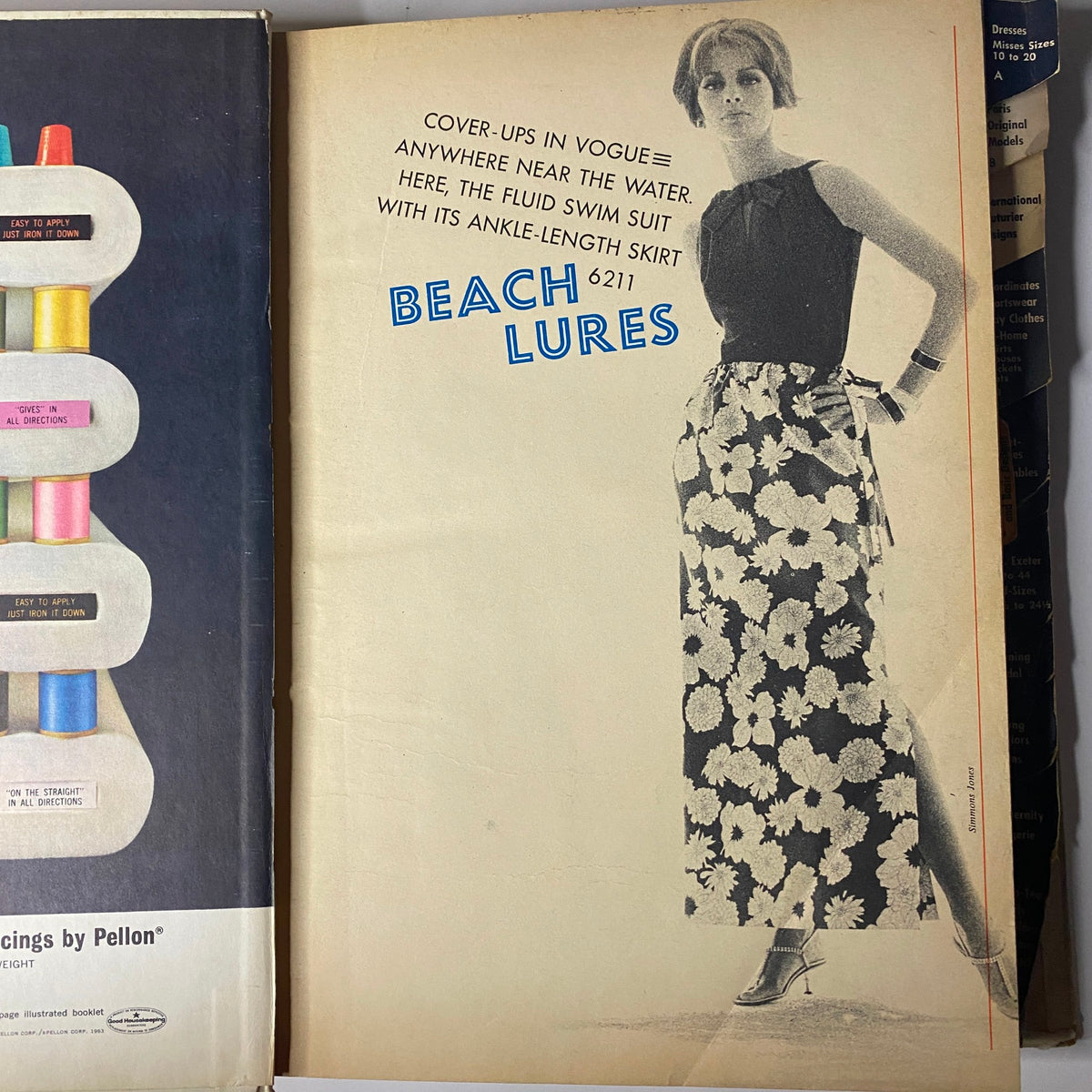
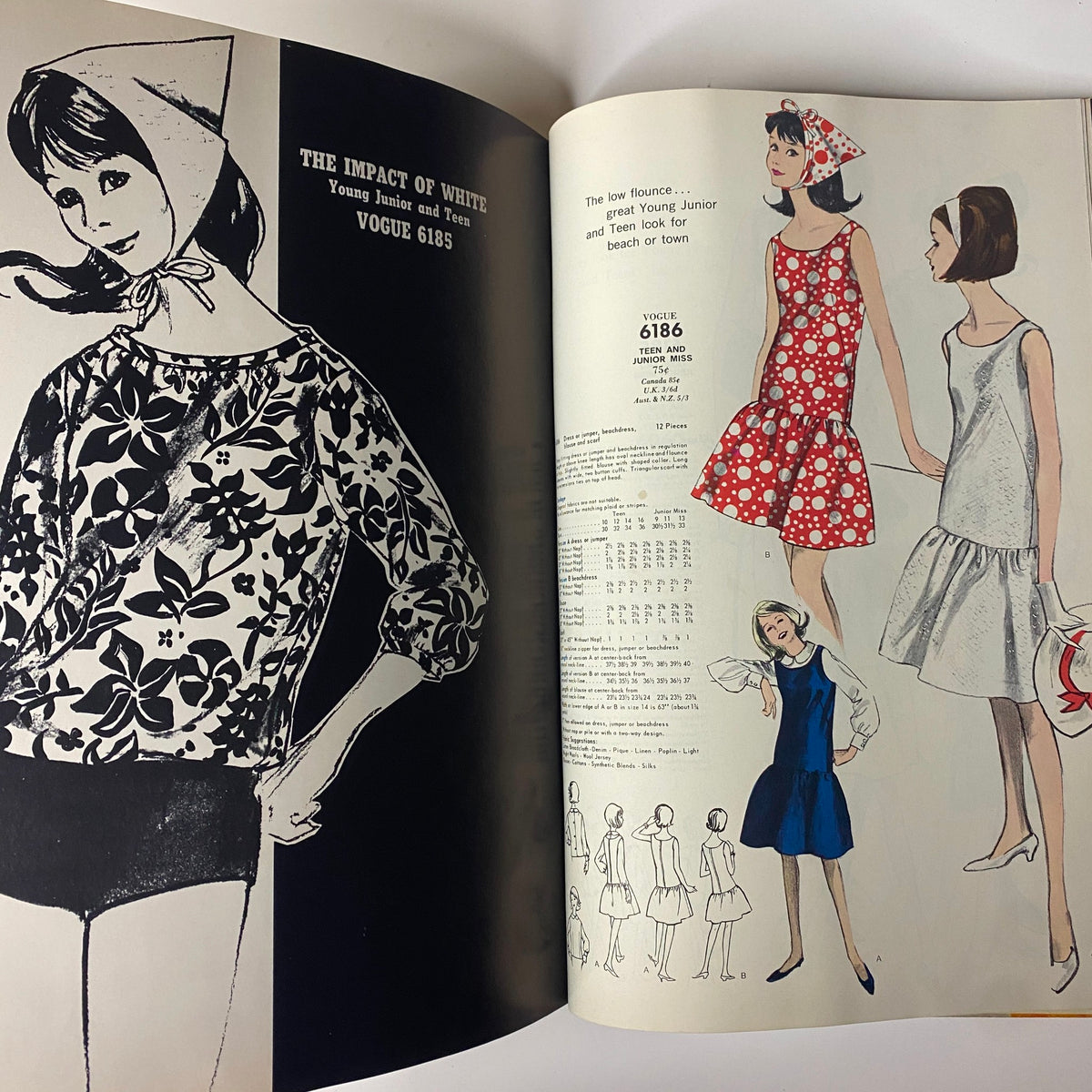
- Summer separates including capris, skirts, and light jackets — practical warm-weather offerings that document the casual end of the 1964 Vogue Patterns range alongside the couture-level formal designs.
- Pattern instructions and technical illustrations consistent with Vogue Patterns' reputation for detailed, construction-focused guidance — valuable both as historical documents and as working references for contemporary reproduction projects.
Condition & Rarity
Store counter catalogs from 1964 were functional retail objects handled daily in commercial environments, and their survival rate in any condition is considerably lower than that of standard newsstand magazines from the same period. A surviving June 1964 Vogue Patterns counter catalog presenting in good condition — with intact binding, legible illustrations, and complete page content — represents a preservation outcome that runs against the typical fate of these objects. The plastic protective covering indicates collector-conscious storage at some point in the catalog's history. Good condition on a working retail publication of this age implies the kind of distributed minor wear — cover softening, edge wear, possible light marks — that results from careful use and storage rather than neglect or damage. The coated-stock illustration pages that Vogue Patterns used for its catalog photography are more resistant to tanning and brittleness than the newsprint used in contemporary newspapers and some magazines, which is a modest advantage for long-term survival of image quality. Collectors evaluating examples of this catalog should prioritize binding integrity and completeness of pages over cosmetic surface condition, as structural completeness is the more meaningful variable for a reference object of this type.
Looking for More Issues Like This?
Original store counter catalogs from the early 1960s Vogue Patterns archive — particularly those featuring couture designer patterns — are among the harder finds in vintage sewing and fashion collecting, and June 1964 is a especially rich edition given the breadth of its offerings. The full collection of vintage Vogue Patterns catalogs at OriginalMagazines.com is the best place to explore what survives across different seasons and years. For collectors and researchers drawn to the broader fashion and design culture of this pivotal moment, the 1964 magazine collection offers a wide range of titles documenting the last full year of classical mid-century style before the decade's more radical transformations began to take hold.