
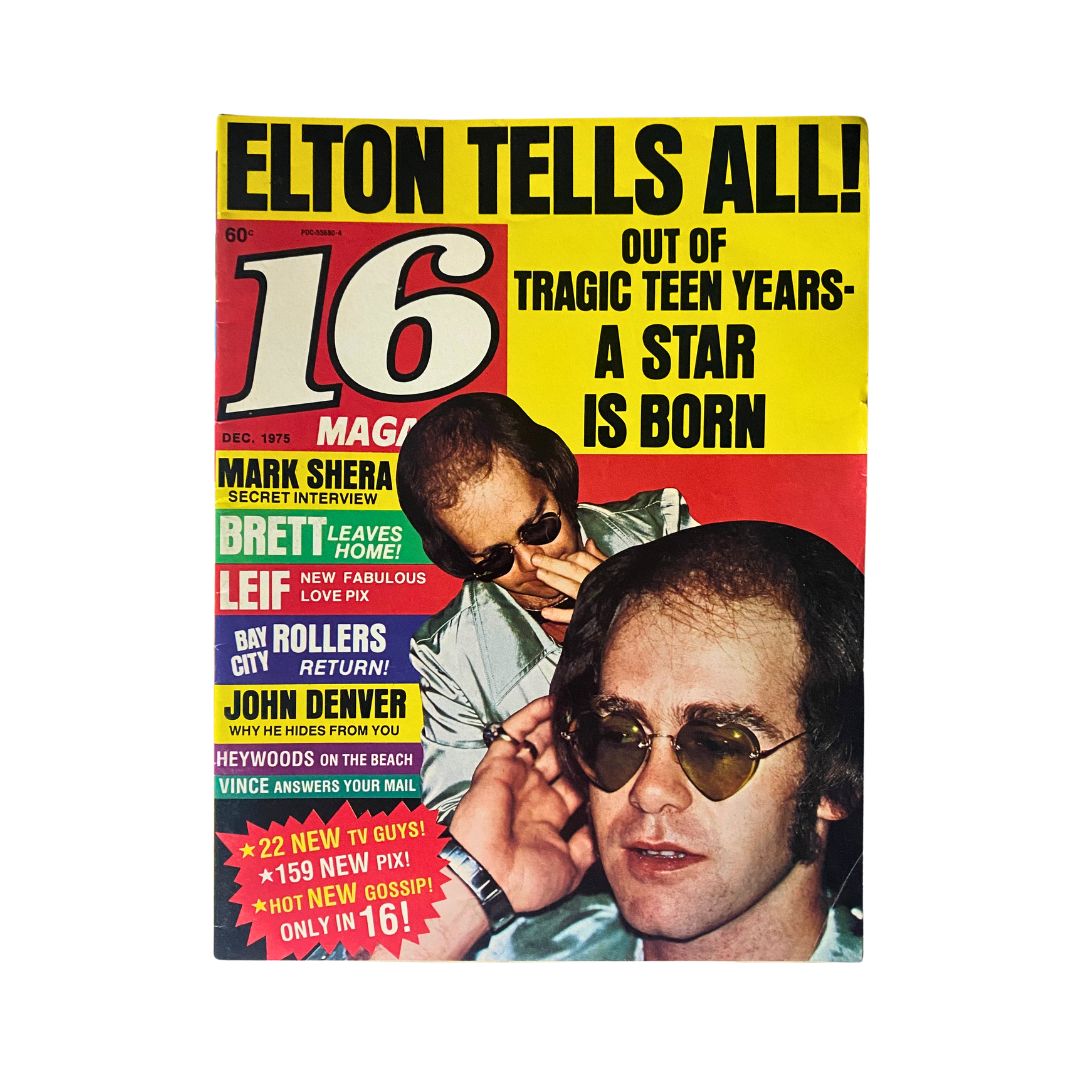



Description
Collector's Note – Why This Issue Matters
The December 1975 issue of 16 Magazine, Volume 17, Number 6, brings Elton John to its cover at the absolute peak of his commercial and cultural dominance. Just weeks before this issue would have reached newsstands, John had played two legendary sold-out shows at Los Angeles' Dodger Stadium on October 25 and 26, 1975, becoming the first artist to headline the venue since the Beatles nearly a decade earlier and drawing over 100,000 fans across the two nights. Los Angeles mayor Tom Bradley had declared it "Elton John Week," and the singer received a star on the Hollywood Walk of Fame that same year. The shows themselves became legendary for their spectacle, including a Bob Mackie-designed sequined Los Angeles Dodgers uniform and a guest backing-vocal appearance from tennis star Billie Jean King, and they capped off a year in which John achieved something no artist, not the Beatles, not Elvis, had managed before: two consecutive studio albums, "Captain Fantastic and the Brown Dirt Cowboy" and "Rock of the Westies," both debuting at number one on the Billboard 200.
This issue's publication therefore falls at almost the exact moment John's fame reached its commercial high-water mark. Between 1972 and 1975, he had achieved seven consecutive number-one albums in the United States, a record unmatched at the time, and his run during these years is now widely regarded by critics as both his most commercially successful and most artistically significant period, with six of his albums from this stretch later included on Rolling Stone's list of the 500 greatest albums of all time. His stage wardrobe by 1975 had become legendarily theatrical, including ostrich feathers, glasses spelling his name in lights, and costumes ranging from the Statue of Liberty to Donald Duck, reflecting a flamboyant performance style that made him as much a visual phenomenon as a musical one during this period. A teen magazine cover feature on John in December 1975 arrived at the precise moment this combination of record-breaking commercial success and outsized personal showmanship had made him one of the most talked-about figures in popular music.
It's worth noting, with appropriate care, that this triumphant public moment coincided with genuine personal difficulty for John privately. He has written candidly in his own memoir about struggling with the pressures of this period, including an incident shortly before the Dodger Stadium shows that he has since discussed publicly as part of his broader, more recent openness about mental health and the toll that sustained fame took on him during these years. None of that difficulty would have been visible to readers of this issue at the time, which would have presented John as the unstoppable commercial phenomenon the public saw on stage, but it offers a useful, more complete picture for collectors and readers approaching this material today.
For collectors, this issue captures Elton John at a uniquely well-documented inflection point in popular music history, arriving in the immediate afterglow of what he himself would later describe as the pinnacle of his career, and just two years before his November 1977 announcement that he was retiring from live performance, a retirement that would prove temporary but that marked a clear end to this particular, extraordinarily intense chapter of his career.
About the Publication
16 Magazine was a long-running American teen fan publication that became one of the defining titles in the teen idol publishing category from the 1950s through the 1970s. Under longtime editor Gloria Stavers, the magazine built its identity around accessible, fan-focused content rather than serious music journalism, typically favoring questions about a featured star's favorite color, food, or "ideal" romantic partner over probing biographical or artistic inquiry, while deliberately omitting information about marriages, relationships, or anything that might complicate a star's appeal to its young readership. The magazine had covered major teen idols across multiple decades, from Elvis Presley and Paul Anka in the 1950s through the Beatles, the Monkees, and other major rock acts of the 1960s, and Stavers in particular sought to expand the format's range by featuring artists not always considered conventional teen idols, including figures like Alice Cooper. By the mid-1970s, the period of this December 1975 issue, the magazine was navigating a broader shift in teen entertainment culture, increasingly focusing on bubblegum and pop-oriented stars including the Osmond Brothers, David Cassidy, Bobby Sherman, and the Bay City Rollers, even as it continued covering major mainstream rock figures like Elton John whose commercial reach extended well beyond a strictly teen audience. The magazine's decades-long run made it one of the most significant and closely studied publications in the history of American teen idol media, and its back catalog remains an actively collected resource for tracing how popular culture's biggest stars were marketed to young audiences across multiple eras. For collectors, this issue represents the magazine at a moment when its subject matter, a globally dominant adult rock superstar, reflected the format's continued relevance even as the specific teen idol landscape around it was shifting.
Key Highlights Inside
- A cover feature on Elton John, published just weeks after his legendary October 1975 Dodger Stadium concerts and at the height of an unprecedented run of two consecutive number-one debut albums, "Captain Fantastic and the Brown Dirt Cowboy" and "Rock of the Westies." Specific interior article content and interview material for this issue are not confirmed from available listing information.
- An included poster of Elton John, consistent with 16 Magazine's established format of pairing feature content with poster and pin-up material as a central draw for its readership throughout this period.
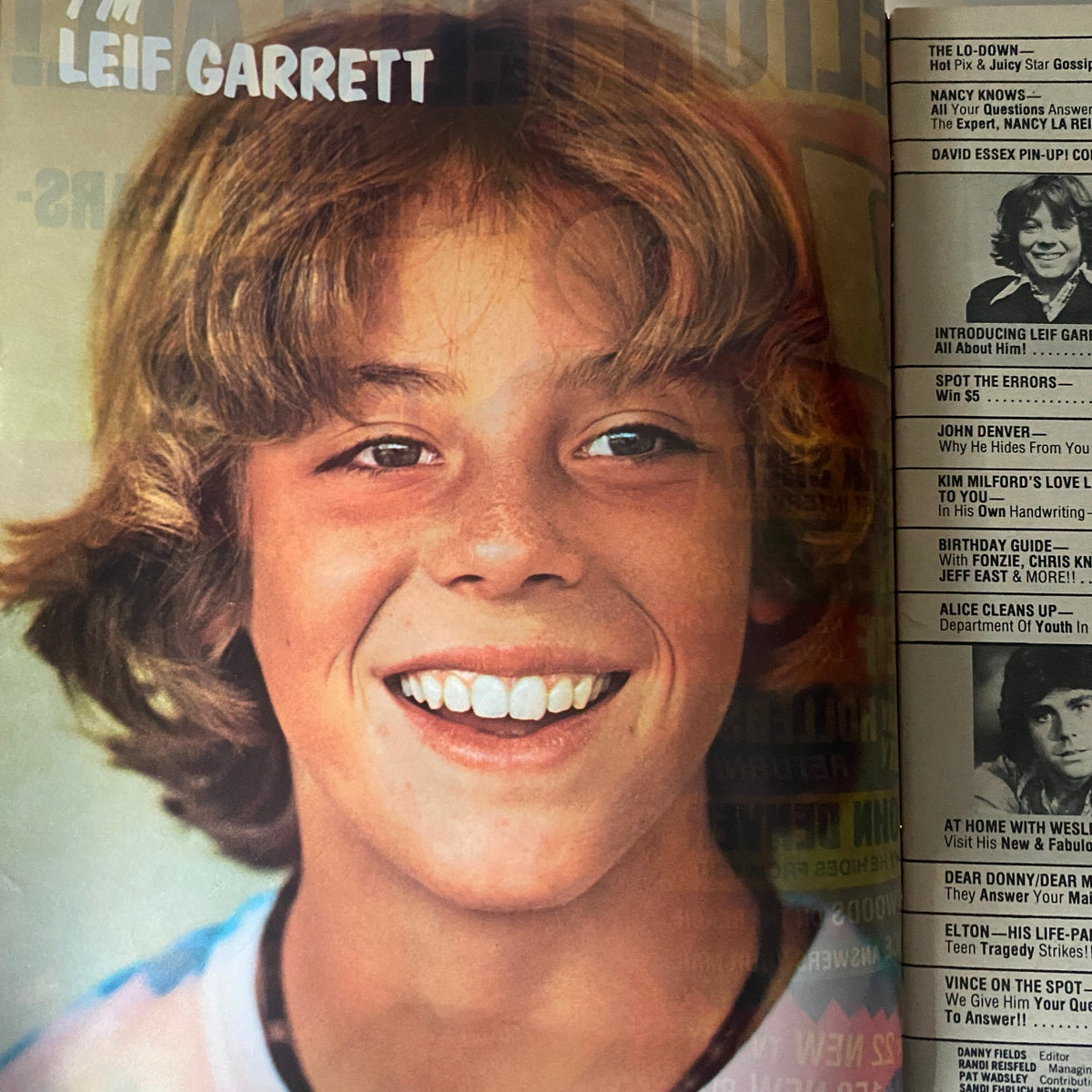
- Likely additional coverage of contemporary pop and rock acts popular with teen audiences in late 1975, consistent with 16 Magazine's established format of profiling multiple artists within a single issue. Specific additional names and content for this issue are not confirmed from available listing information.
- Likely lighter feature content typical of the magazine's editorial approach under longtime editor Gloria Stavers, which favored accessible, fan-friendly personal details over serious biographical or musical analysis.
- Photography capturing John during the period of his most elaborate and theatrical stage costuming, a visual hallmark of his mid-1970s touring and public persona that made him a particularly compelling subject for a visually driven teen magazine format.
Condition & Rarity
Surviving copies of mid-1970s 16 Magazine issues are generally evaluated using collector standards specific to this category, where the completeness of included poster content carries particular weight alongside the standard considerations applied to the magazine itself. The absence of a mailing label on this copy indicates it likely reached its original owner through newsstand purchase rather than subscription, a trait collectors typically favor since it preserves the cover image without obstruction. Because this issue specifically includes a poster, collectors should confirm that this insert remains fully intact and uncut, since posters in magazines of this category were frequently removed by original readers for display, making complete surviving examples meaningfully more desirable than incomplete ones. General condition factors for a periodical of this vintage include the integrity of the remaining pages, the state of the binding, and typical handling wear such as light creasing or cover scuffing, all of which are common and expected for magazines produced for casual newsstand consumption by a young readership rather than long-term archival preservation. Protective plastic sleeving, as provided with this copy, represents a sensible and standard precaution for preserving both the magazine and its poster against further handling wear. Given Elton John's status as one of the most significant and enduringly popular musical figures of the 1970s, and this issue's particularly well-timed connection to his Dodger Stadium triumph, well-preserved surviving copies hold strong and broad collector interest well beyond the general vintage teen magazine category.
Looking for More Issues Like This?
Original issues of 16 Magazine featuring Elton John from his extraordinary mid-1970s commercial peak are a genuinely rewarding area for collectors of classic rock memorabilia, given how thoroughly his fame during this period extended into virtually every category of music and entertainment publishing. The broader 16 Magazine collection offers a useful resource for tracing the magazine's coverage of major music and entertainment figures across its decades-long run, situating this issue within a much longer publishing history. Readers drawn to this issue's connection to the October 1975 Dodger Stadium concerts may also find related interest in other period publications covering those same historic shows, which were extensively documented in both the music press and mainstream entertainment media at the time. For collectors building a year-specific archive rather than a title-specific one, the 1975 magazines collection offers a wider cross-section of what was being published that year across multiple titles and genres, situating this issue within the broader media landscape of the period. Because teen magazines of this category were frequently disassembled by original readers for their poster content, locating complete copies with intact inserts can require some persistence. The Elton John, 16 Magazine, and 1975 collections are all reasonable starting points for collectors pursuing an artist-focused, title-claimed, or year-focused approach to material from this era.