


Description
Collector's Note – Why This Issue Matters
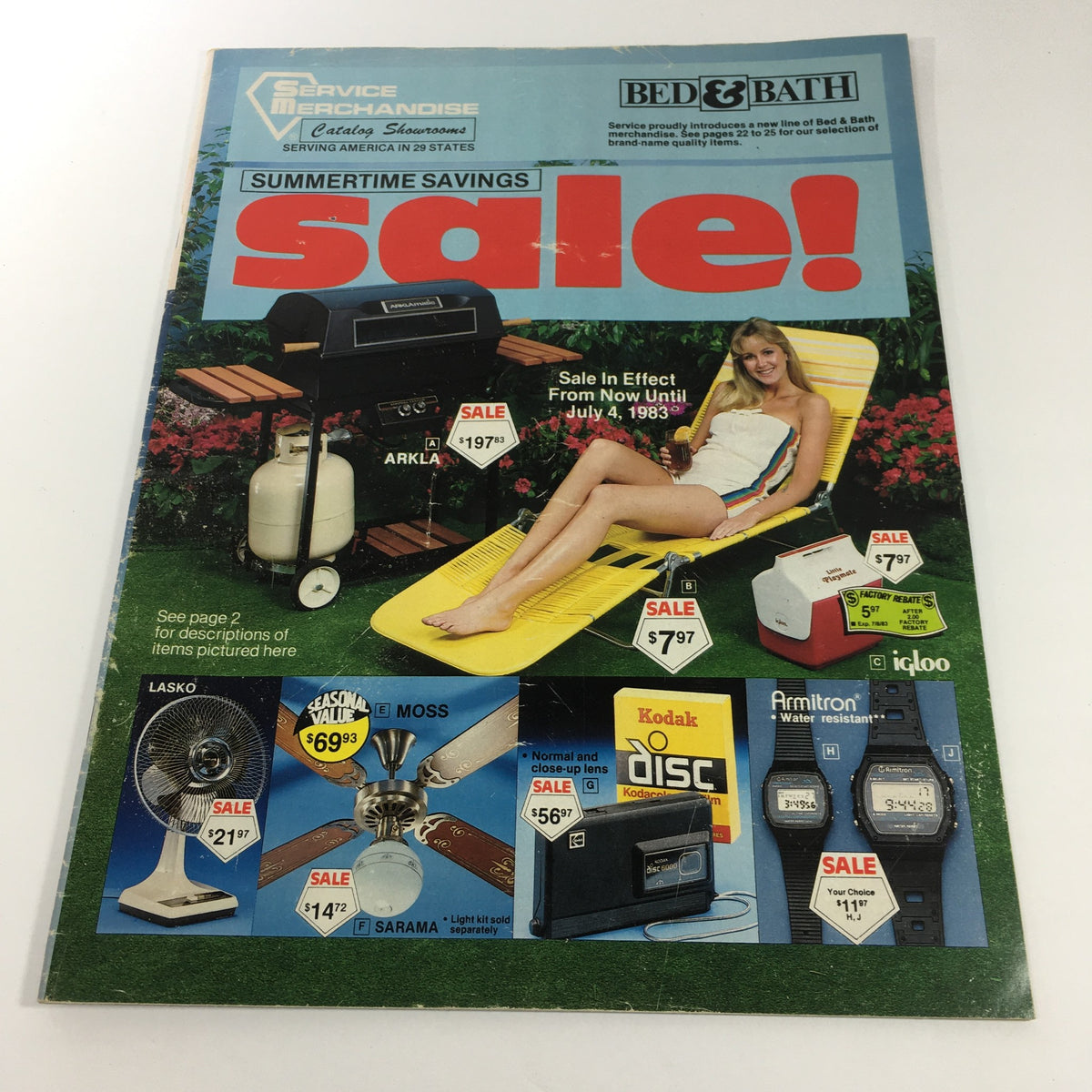
The 1983 Service Merchandise Catalog Showroom Summertime Savings Sale Guide is a primary document of a retail format that was genuinely distinctive in the American consumer landscape and that has largely disappeared from the commercial environment — the catalog showroom, a hybrid retail model that combined the comprehensive product photography and pricing of a mail-order catalog with the physical showroom experience of a retail store where customers could examine display models before ordering from warehouse stock. Service Merchandise was one of the most prominent practitioners of this format in the American retail market, and the summer of 1983 finds the company operating at the peak of the catalog showroom model's commercial viability, before the big-box retail revolution of the late 1980s and the discount mass-market expansion of the early 1990s would fundamentally challenge the competitive position of the catalog showroom concept. A summer sale guide from 1983 documents the specific merchandise mix, pricing strategies, and consumer presentation through which Service Merchandise was competing for the American consumer's discretionary spending during one of the most commercially active seasons of the Reagan-era economic recovery. The summer of 1983 was occurring in the specific economic context of the early Reagan recovery — interest rates were falling from their historic early-1980s peaks, consumer confidence was rebuilding, and the specific categories of merchandise in which catalog showrooms specialized — jewelry, watches, electronics, small appliances, giftware, and sporting goods — were benefiting from the returning consumer appetite for discretionary purchases. For collectors building a documentary archive of early-1980s American consumer culture and retail history, the full range of 1983 magazines and publications from this year provides essential primary source context for understanding the specific commercial moment this catalog documents.
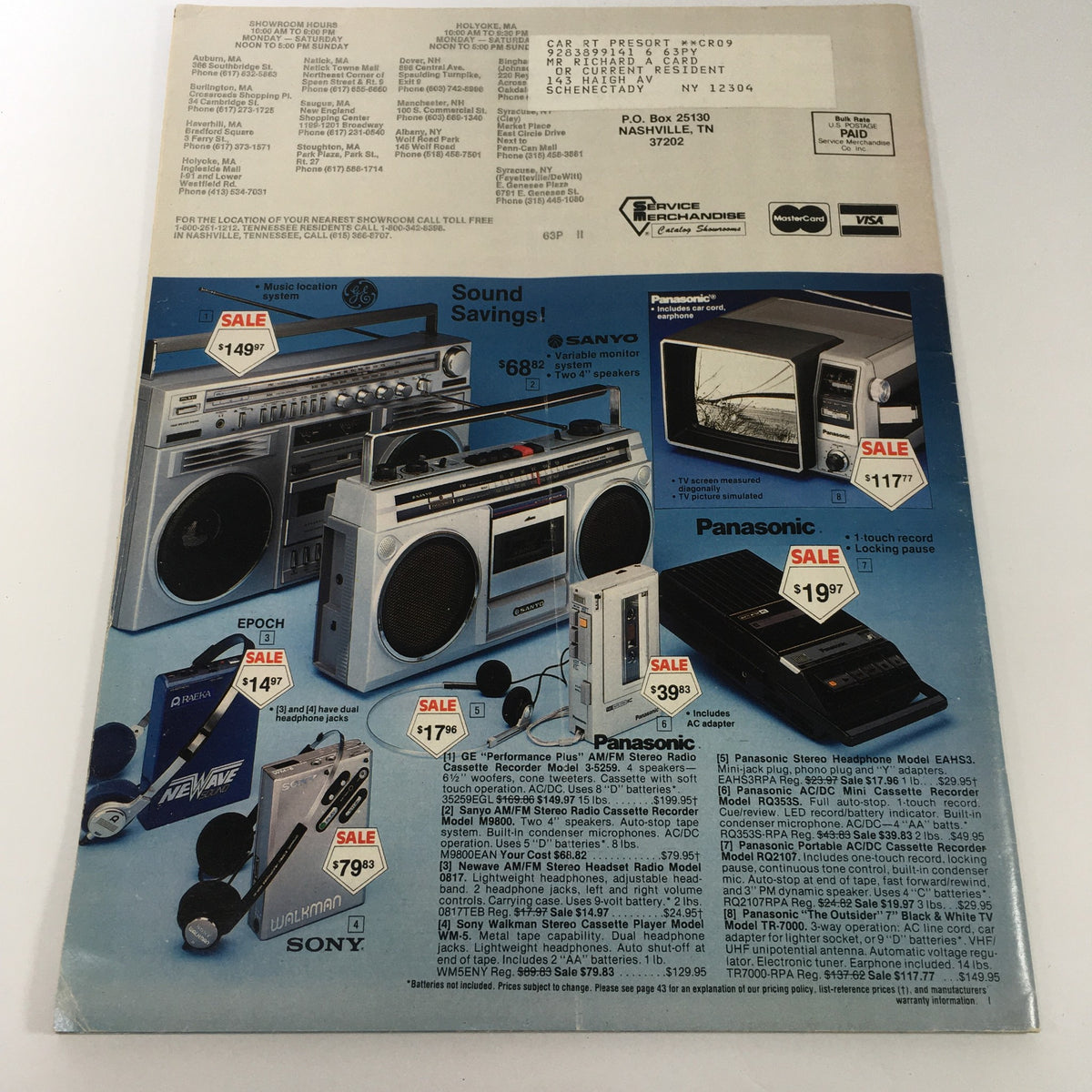
The catalog showroom format's specific commercial logic — offering brand-name merchandise at discount prices by combining catalog economies with a showroom experience that allowed customers to see products before ordering — made Service Merchandise publications a primary document of a specific tier of the American consumer market: the value-oriented buyer who wanted brand-name quality at prices below traditional department store retail but expected more service and selection than pure discount retailers provided. This positioning gave Service Merchandise catalogs a merchandise mix that was itself historically distinctive, combining the jewelry and watch categories that were the company's traditional strength with electronics, cameras, sporting goods, and the full range of gift-oriented consumer goods that defined its broader offering. A summer sale guide from 1983 would have documented the specific price reductions and promotional merchandise that Service Merchandise was deploying to drive summer traffic, giving it a more commercially urgent and more price-specific character than the regular seasonal catalogs — a document not just of what the company sold but of what it considered most competitively priced and most likely to drive consumer response in the summer of 1983. The address label confirmed on the front cover is a documentary detail that connects this specific catalog to the direct-mail marketing infrastructure through which Service Merchandise maintained its customer relationships, and the label's presence is authentic evidence of how this publication actually reached its intended audience in 1983.
The specific catalog showroom retail model that Service Merchandise exemplified in 1983 has genuine historical significance as a transitional form between the traditional department store and the big-box discount retailer that would eventually displace both. The showroom model's emphasis on the physical examination of display models combined with warehouse-price ordering created a consumer experience that was genuinely novel in the American retail landscape of the early 1980s, and the specific merchandise categories and pricing structures visible in a 1983 summer sale guide document that experience in the specific commercial form through which it was being presented to consumers at the model's commercial peak. Service Merchandise would eventually close its last stores in 2000, making its catalogs from the 1980s primary documents of a retail institution that no longer exists — publications whose documentary value increases rather than diminishes as the specific commercial culture they represent recedes further into history.
About the Publication
The Service Merchandise Catalog Showroom Summertime Savings Sale Guide was a promotional seasonal publication produced by Service Merchandise Company, a Nashville-based catalog showroom retailer that operated stores across the American Southeast and Midwest offering brand-name jewelry, electronics, small appliances, sporting goods, and giftware at catalog-discount prices through a showroom format that allowed customers to examine display models before ordering from warehouse inventory. Sale guides of this type were produced as promotional supplements to the regular seasonal catalogs, focused specifically on discounted merchandise and sale pricing rather than the full product range, and distributed through both direct mail to existing customers and in-store distribution to showroom visitors. The 1983 summer edition documents the specific promotional merchandise and pricing strategies that Service Merchandise was deploying at one of its most commercially active sales periods during the Reagan-era economic recovery.
Key Highlights Inside
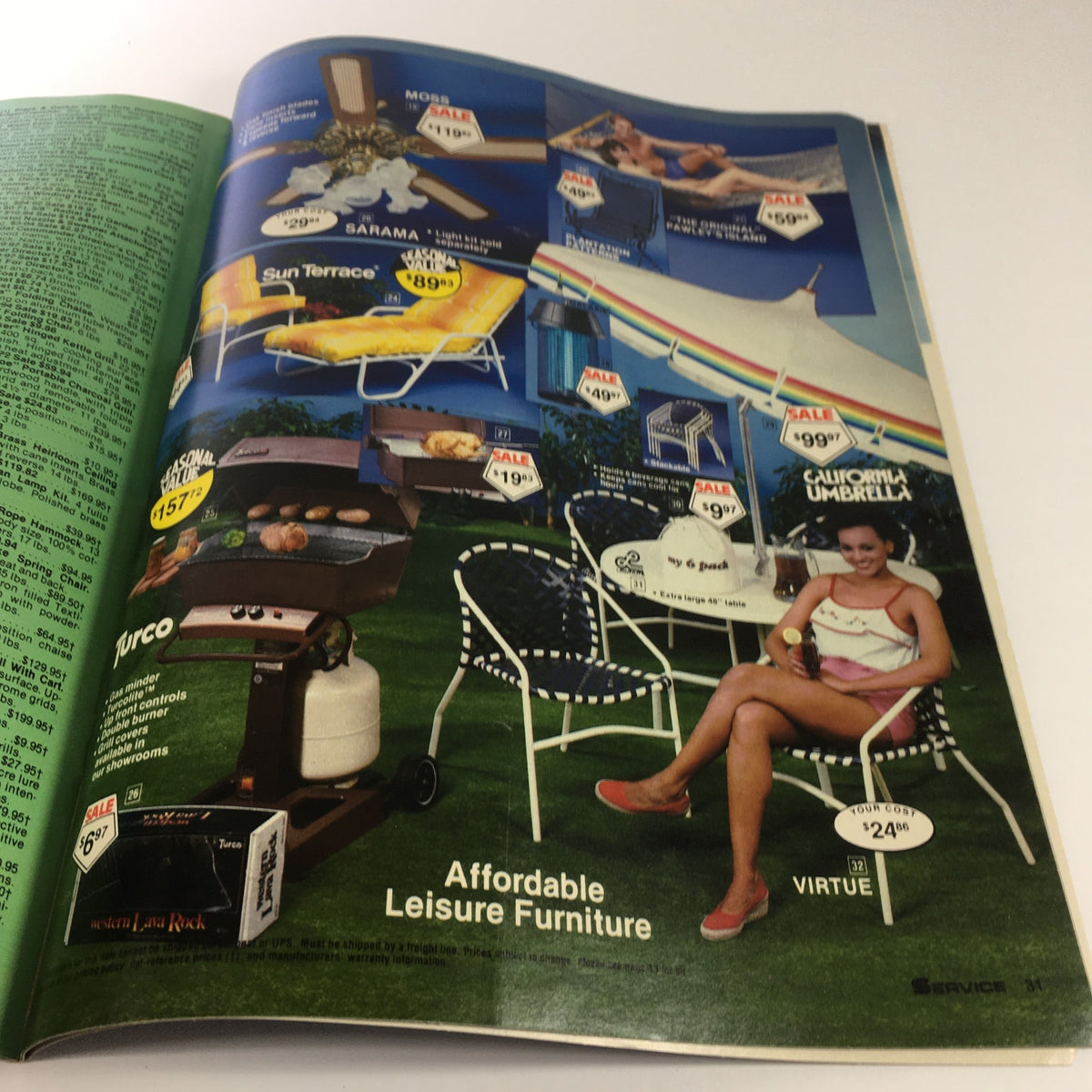
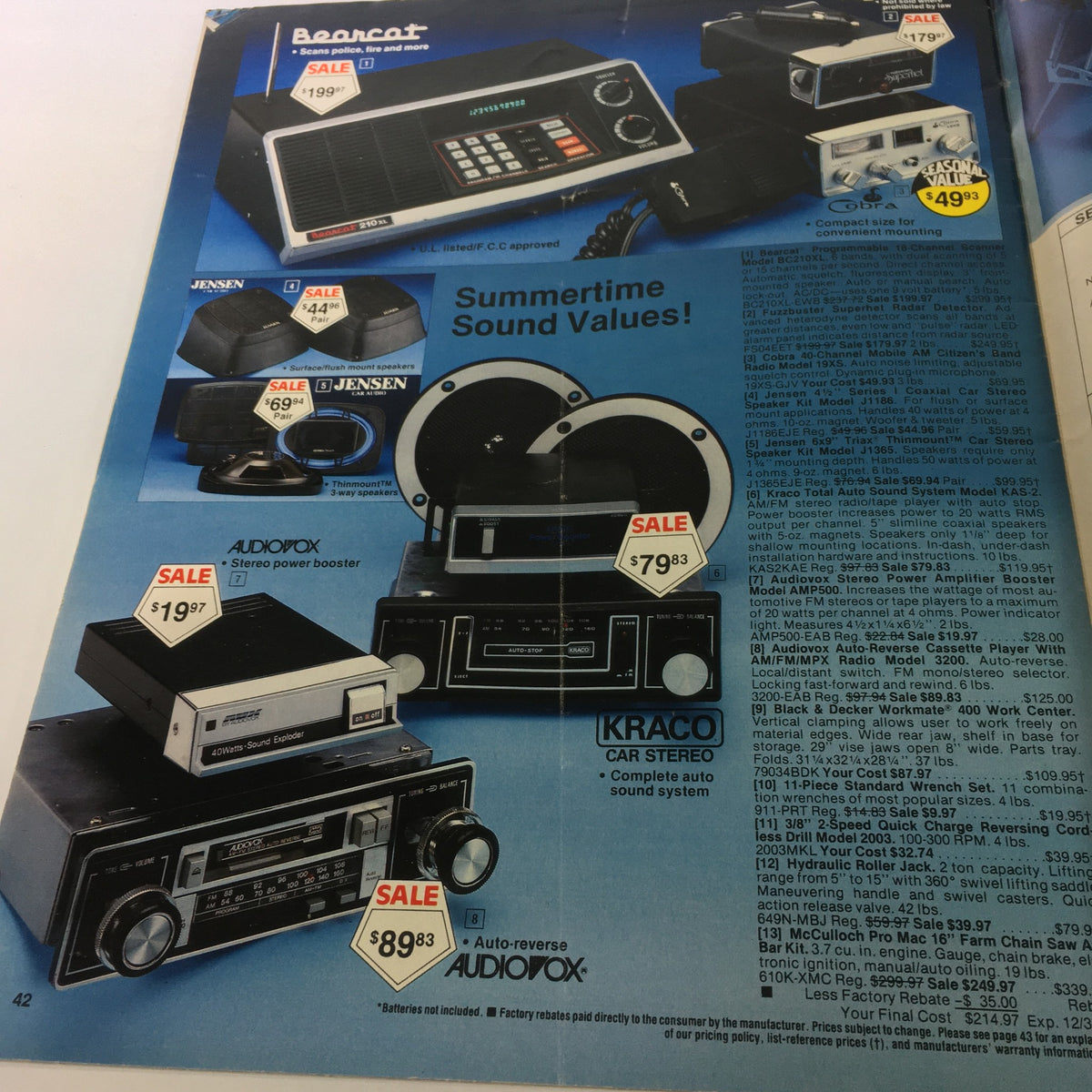
- Summer 1983 sale pricing — catalog showroom discount structure documented — As a dedicated summer sale guide rather than a regular seasonal catalog, this publication documents the specific promotional pricing and merchandise selection that Service Merchandise was deploying to drive summer consumer traffic in 1983, preserving primary commercial evidence of the catalog showroom's discount pricing strategy at a specific seasonal and economic moment.
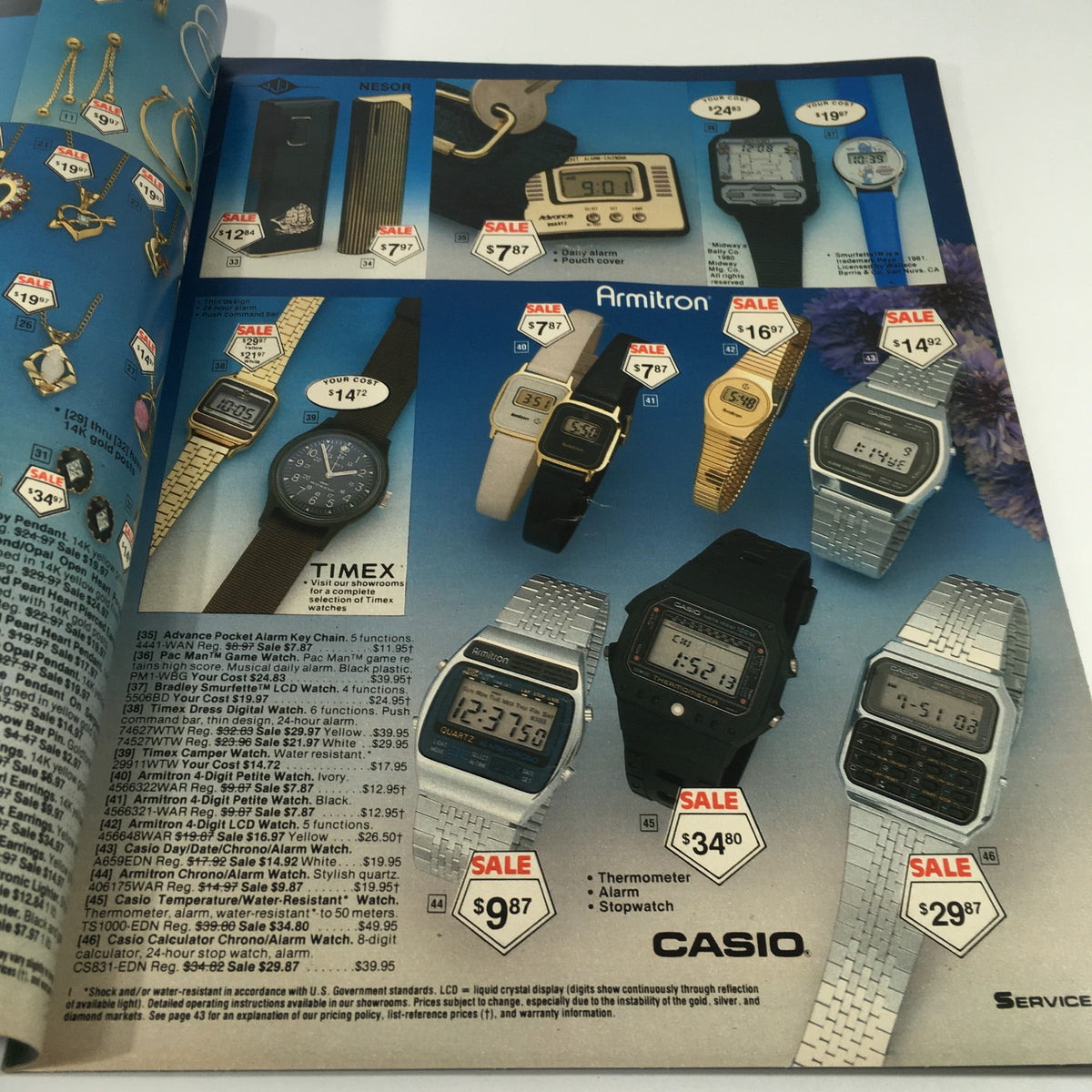
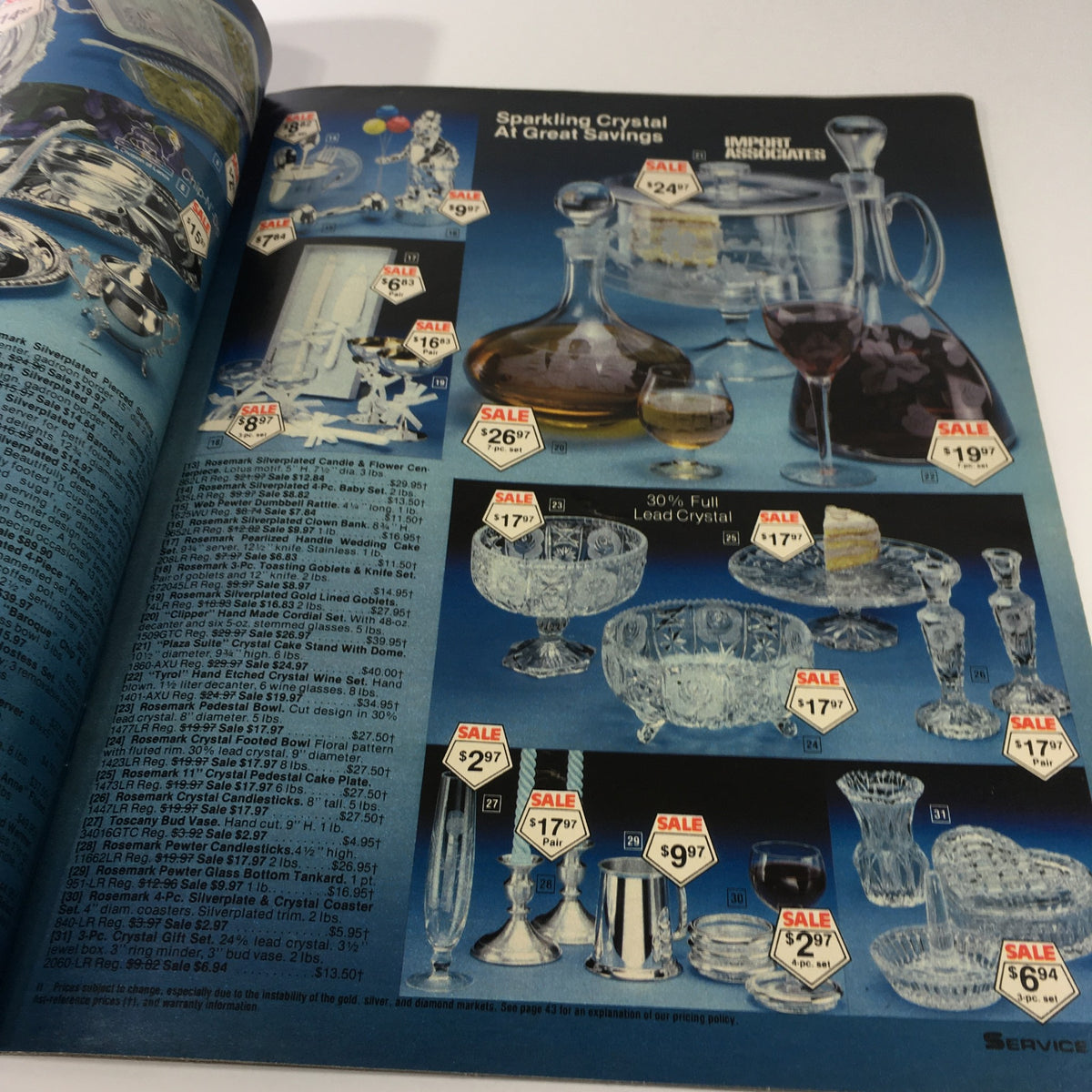
- Catalog showroom merchandise mix — jewelry, electronics, and giftware documentation — The Service Merchandise merchandise mix typical of this period — brand-name jewelry, watches, electronics, cameras, small appliances, and sporting goods — documents the specific product categories that defined the catalog showroom format's competitive positioning in the American consumer market of the early 1980s, preserving primary evidence of what this distinctive retail model was selling and at what prices in the summer of 1983.
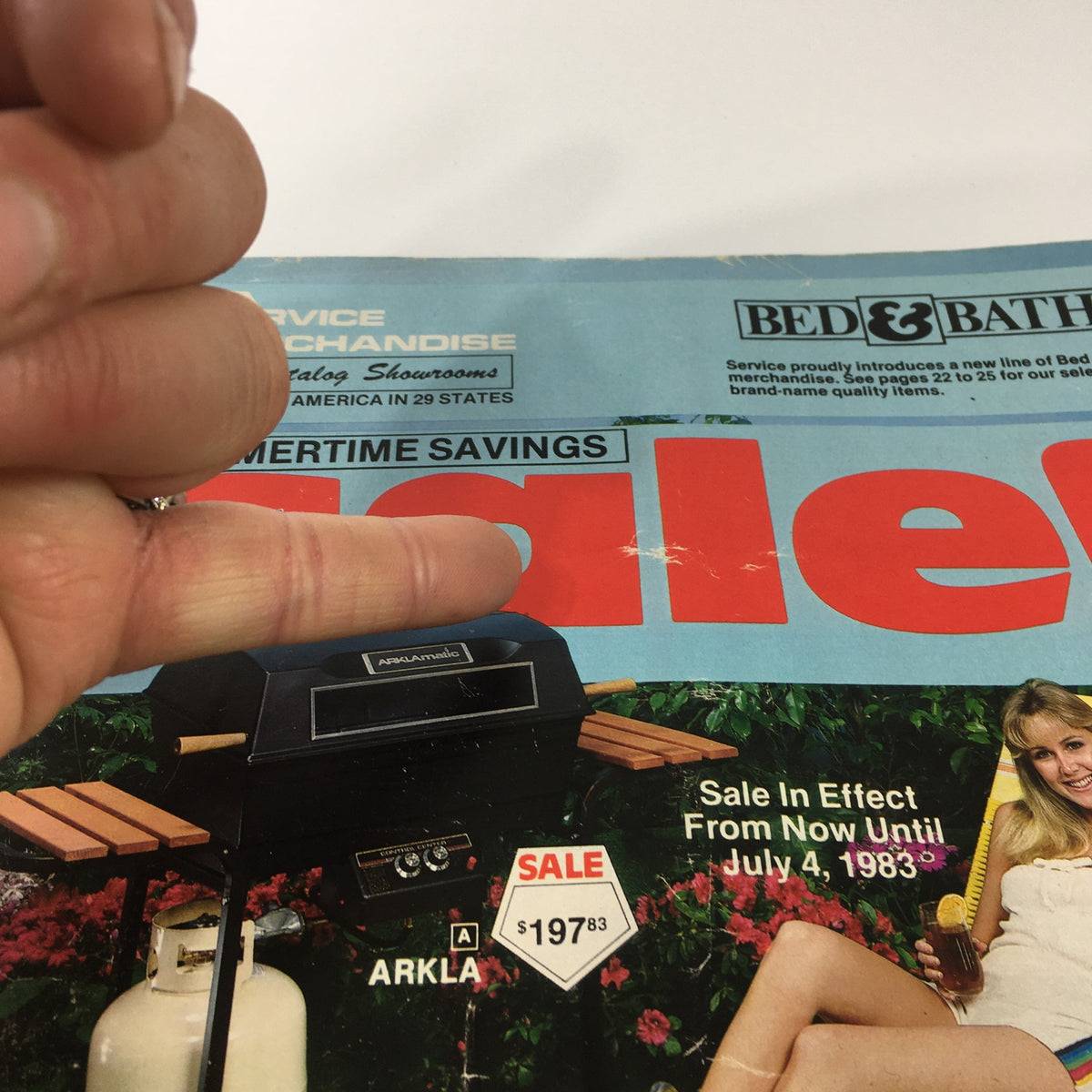
- Address label front cover — direct-mail retail relationship documented — The confirmed address label on the front cover preserves authentic evidence of the specific direct-mail distribution infrastructure through which Service Merchandise maintained its customer relationships in 1983, connecting this publication to the actual household that received it and documenting the commercial mechanics of catalog showroom customer retention in primary form.
- Early Reagan-era consumer pricing — 1983 retail economics documented — The specific pricing documented in a 1983 summer sale guide preserves primary commercial evidence of consumer goods pricing during the early Reagan economic recovery, when interest rates were falling from their historic peaks and consumer confidence was rebuilding, providing economic data that has genuine research value for historians of the period's consumer market.
- Note: Specific products, individual pricing, featured merchandise categories, and the complete contents of this sale guide have not been independently verified beyond the listing description. The highlights above reflect what is documentable from the listing and the well-established historical context of Service Merchandise's 1983 summer catalog showroom operations.
Condition & Rarity
This sale guide is described as being in good used condition with edge and binding wear, possible rips, marks on the front, and an address label on the cover — protected by a plastic covering. The condition profile is honest and consistent with a direct-mail promotional publication that was produced for consumer use rather than archival preservation and has survived approximately four decades in storage. The address label is the most prominent surface condition attribute, bonded to the front cover through decades of storage in ways that cannot be resolved without surface disruption — it is authentic evidence of the publication's original distribution method and should be understood as a provenance feature rather than simply a condition defect. The marks on the front and the edge and binding wear are expected for a catalog of this age and original function, and their impact on research utility depends on their placement relative to the merchandise categories and pricing documentation that constitute the sale guide's primary research value. The plastic protective covering indicates preservation care that has stabilized the publication against further deterioration. Service Merchandise promotional sale guides from the early 1980s are not systematically archived and survive primarily through the individual storage choices of original direct-mail recipients, making surviving examples in usable condition meaningfully useful as primary sources for the specific retail culture and consumer economics they document.
Looking for More Issues Like This?
Service Merchandise catalog showroom publications from the early 1980s — and particularly summer sale guides that document the specific discount pricing and promotional merchandise strategies of this historically distinctive retail format at the Reagan-era economic recovery's opening phase — are sought by retail history researchers, consumer culture historians, and early-1980s Americana collectors who recognize these publications as primary documents of a commercial institution that no longer exists and a retail format that the subsequent decade's big-box revolution rendered commercially obsolete. If this 1983 summer sale guide is no longer available, the 1983 magazines collection at OriginalMagazines.com brings together a wide range of primary source material from that pivotal year in American consumer culture, economic recovery, and retail history.